
Practise the Rules of the Road for the Ontario G1 Test
Half of your G1 knowledge test is about the rules of the road — and this is the quiz that prepares you for it. The 151 questions here cover the topics the real test draws on: who goes first at intersections and four-way stops, speed limits and safe following distances, traffic lights and pavement markings, sharing the road with cyclists, pedestrians, school buses and emergency vehicles, parking rules, demerit points, and the conditions that come with a G1 licence. Every question is written from the Official MTO Driver’s Handbook — the same source the real test is based on — and every question includes an explanation of why the correct answer is right.
On the real G1 test, the rules section has 20 multiple-choice questions, and you need at least 16 of them correct — 80% — to pass that section. The two sections are scored separately, so a perfect score on road signs cannot make up for a weak rules score. This practice bank is much larger than the real 20-question section on purpose: by the time you have worked through all 151 questions, you will have met the handbook’s rules in many different situations, instead of memorizing a handful of answers.
How to Use This Practice Test
This quiz is untimed, so slow down and think. Read each explanation, even when you answer correctly — sometimes a right answer is a lucky guess, and the explanation turns it into knowledge. When you miss a question, the explanation tells you the rule behind it; if it still feels unclear, that is the topic to revisit in the handbook before you move on. Repeat the quiz until the reasoning feels automatic and your score sits comfortably above 80%, not right at it.
What to Study Next
The rules are only half of the test. Pair this quiz with the Traffic Signs practice test for the other half, and use the Regulatory Road Signs practice test to go deeper on the signs that state the law. Before test day, read our guide to G1 licence restrictions in Ontario so you know exactly what a G1 licence allows. When both halves feel solid, finish with the full G1 test simulator to rehearse the real 40-question format in one sitting. For a one-page recap of every number on the test, keep our Ontario G1 cheat sheet handy.
-
Q1. Unless signs show a different limit, what is the maximum speed limit in Ontario inside a city, town or village, and outside a built-up area?

g1practiceteston.ca -
Q2. Where a school zone speed limit is posted in Ontario, what is the maximum speed in that zone when the limit is in effect?

g1practiceteston.ca -
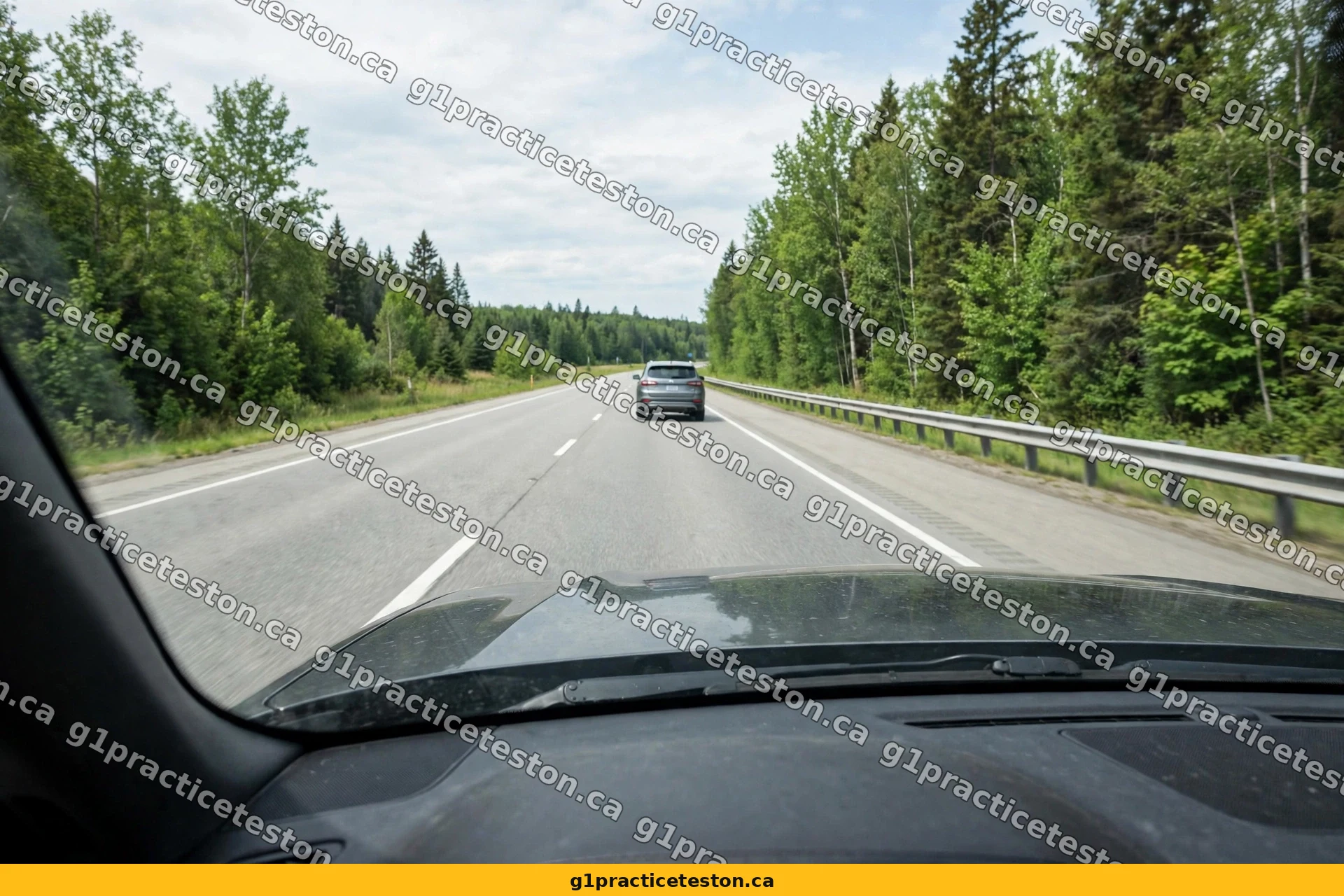
Q3. In good weather, what is the minimum following distance you should keep behind the vehicle ahead, using the time-interval method?
g1practiceteston.ca -
Q4. A flashing red traffic light at an intersection means:

g1practiceteston.ca -
Q5. A flashing amber (yellow) traffic light means:

g1practiceteston.ca -
Q6. At a red light in Ontario, when may you turn right?

g1practiceteston.ca -
Q7. You stop at a stop sign where there is no stop line, no crosswalk and no sidewalk. Where must you stop?

g1practiceteston.ca -
Q8. The light ahead is green, but traffic in front of you is stopped and there is no room for your vehicle on the other side of the intersection. What should you do?

g1practiceteston.ca -
Q9. At an all-way stop (four-way stop), which driver should go first?

g1practiceteston.ca -
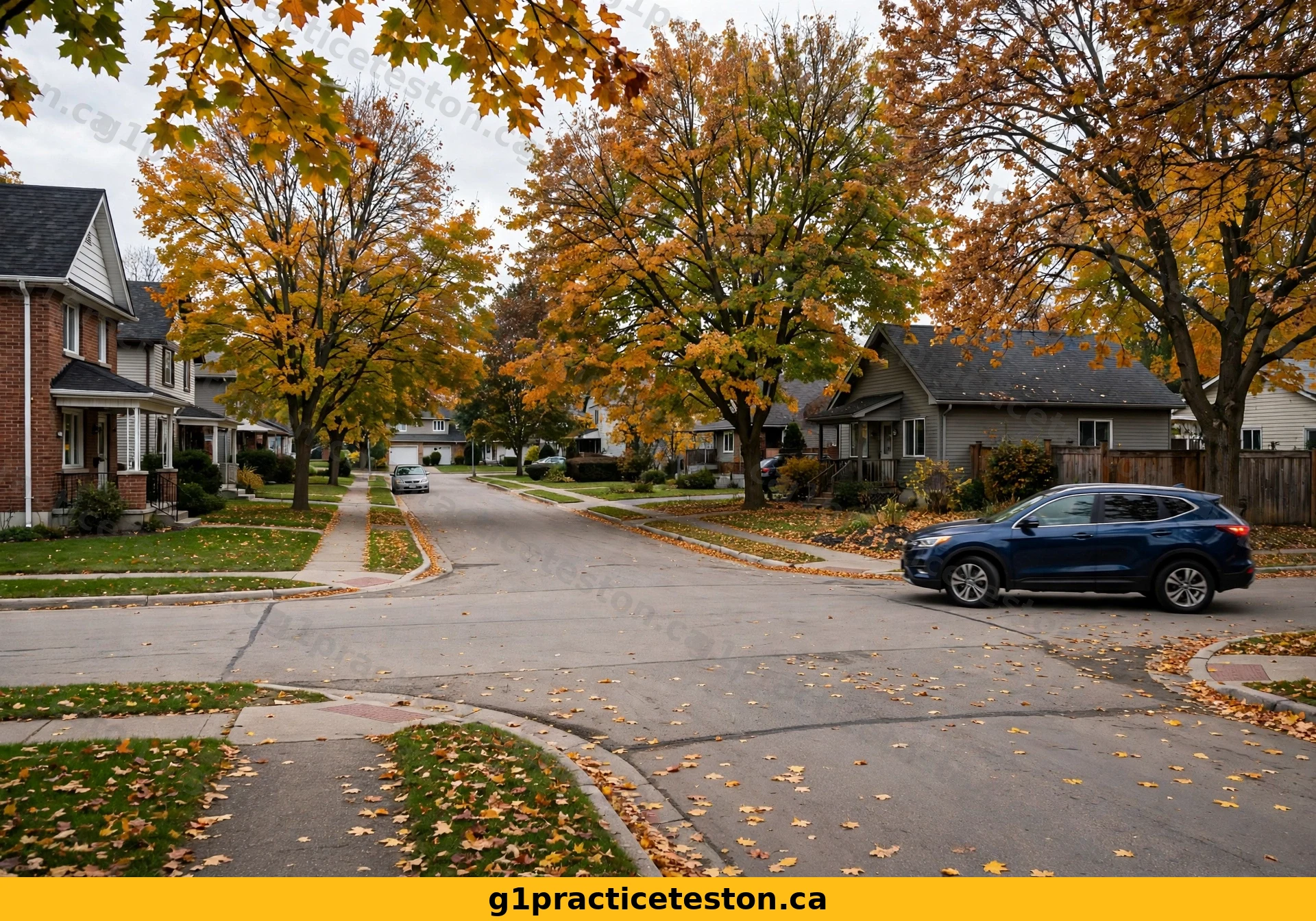
Q10. At an intersection with no traffic lights, no stop signs and no yield signs, you must yield to:
g1practiceteston.ca -
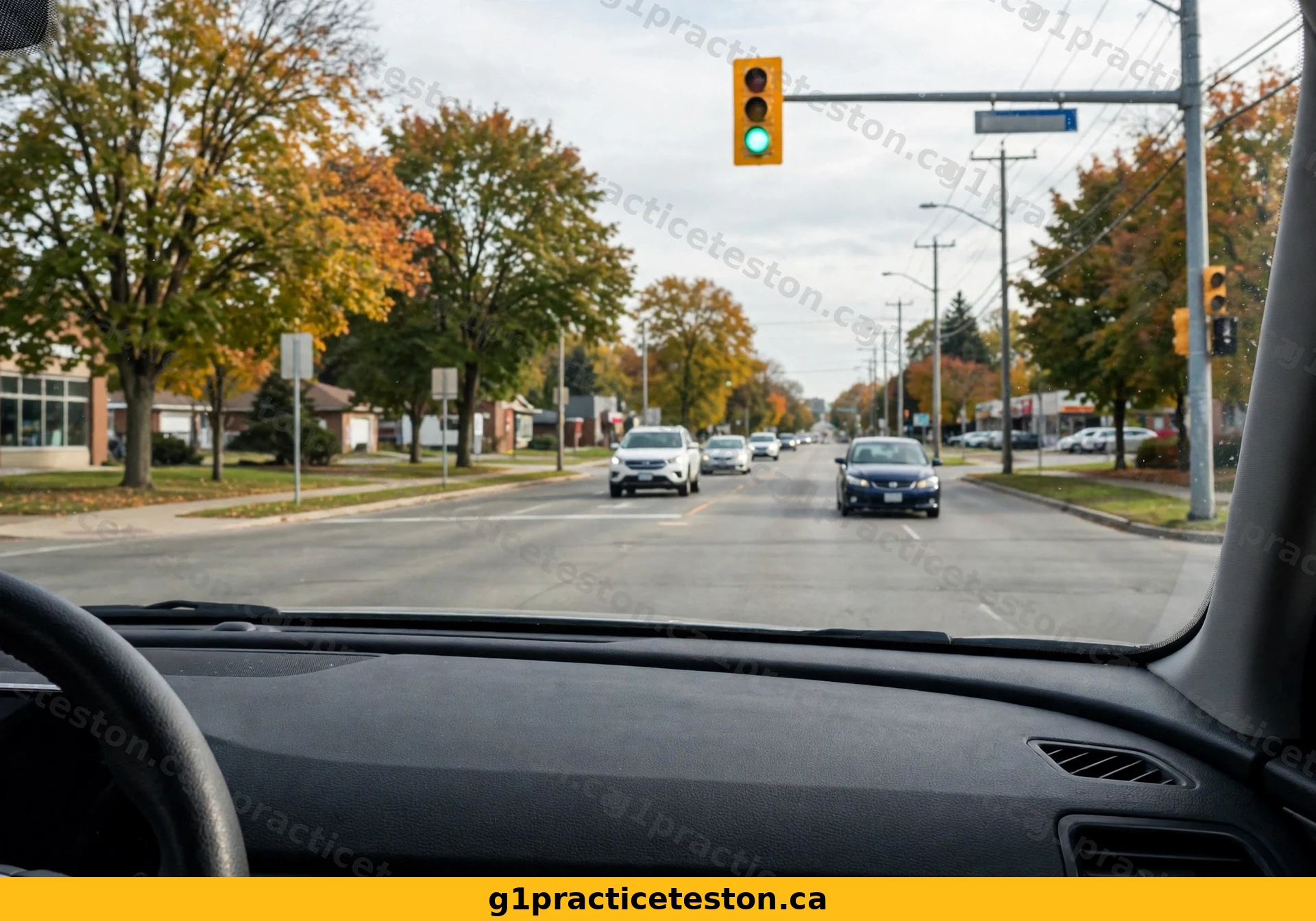
Q11. When making a left turn, you must yield the right-of-way to:
g1practiceteston.ca -
Q12. When you turn right at an intersection, you should finish your turn in:

g1practiceteston.ca -
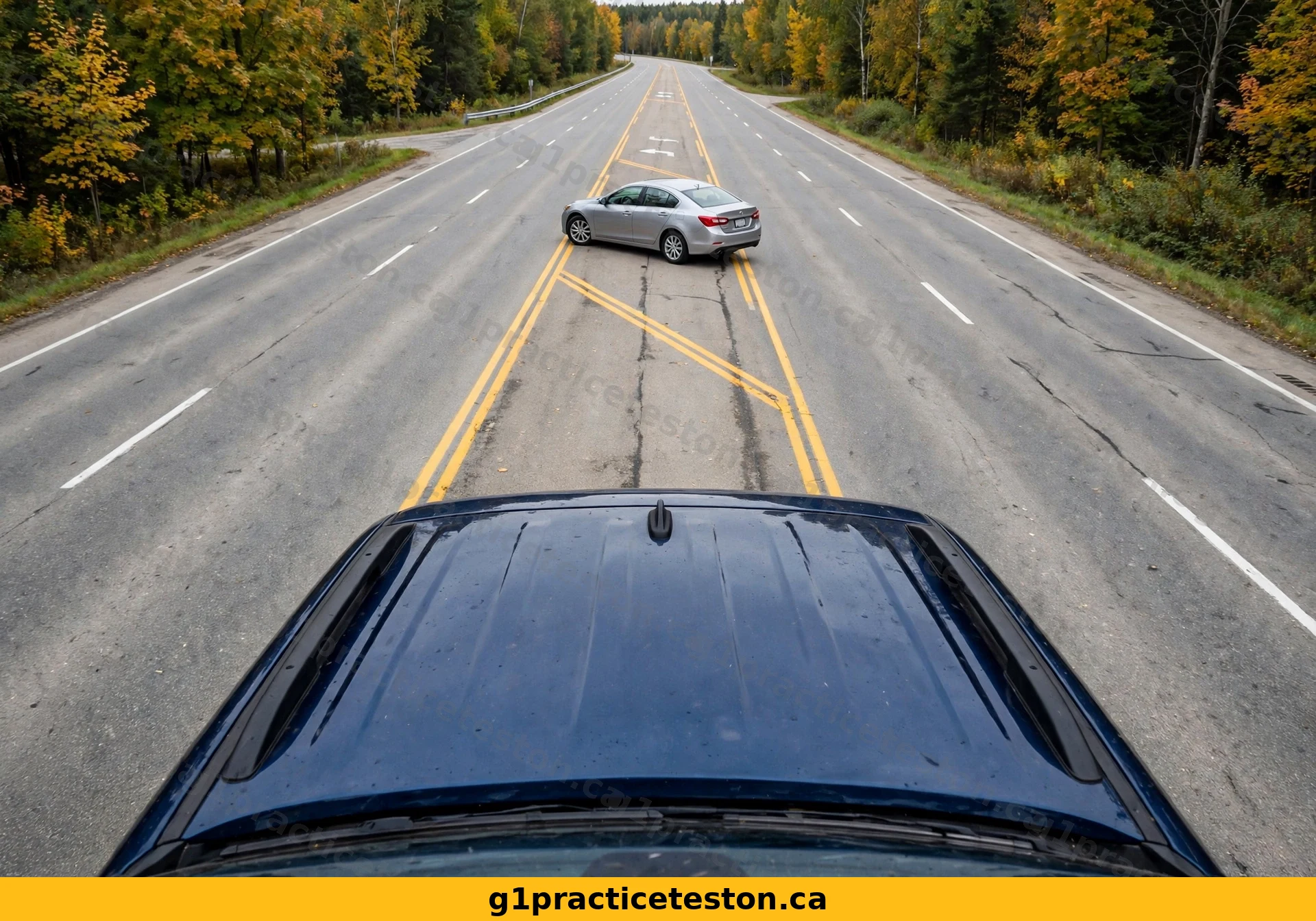
Q13. The wide centre lane marked with both solid and broken yellow lines on a five-lane road is:
g1practiceteston.ca -
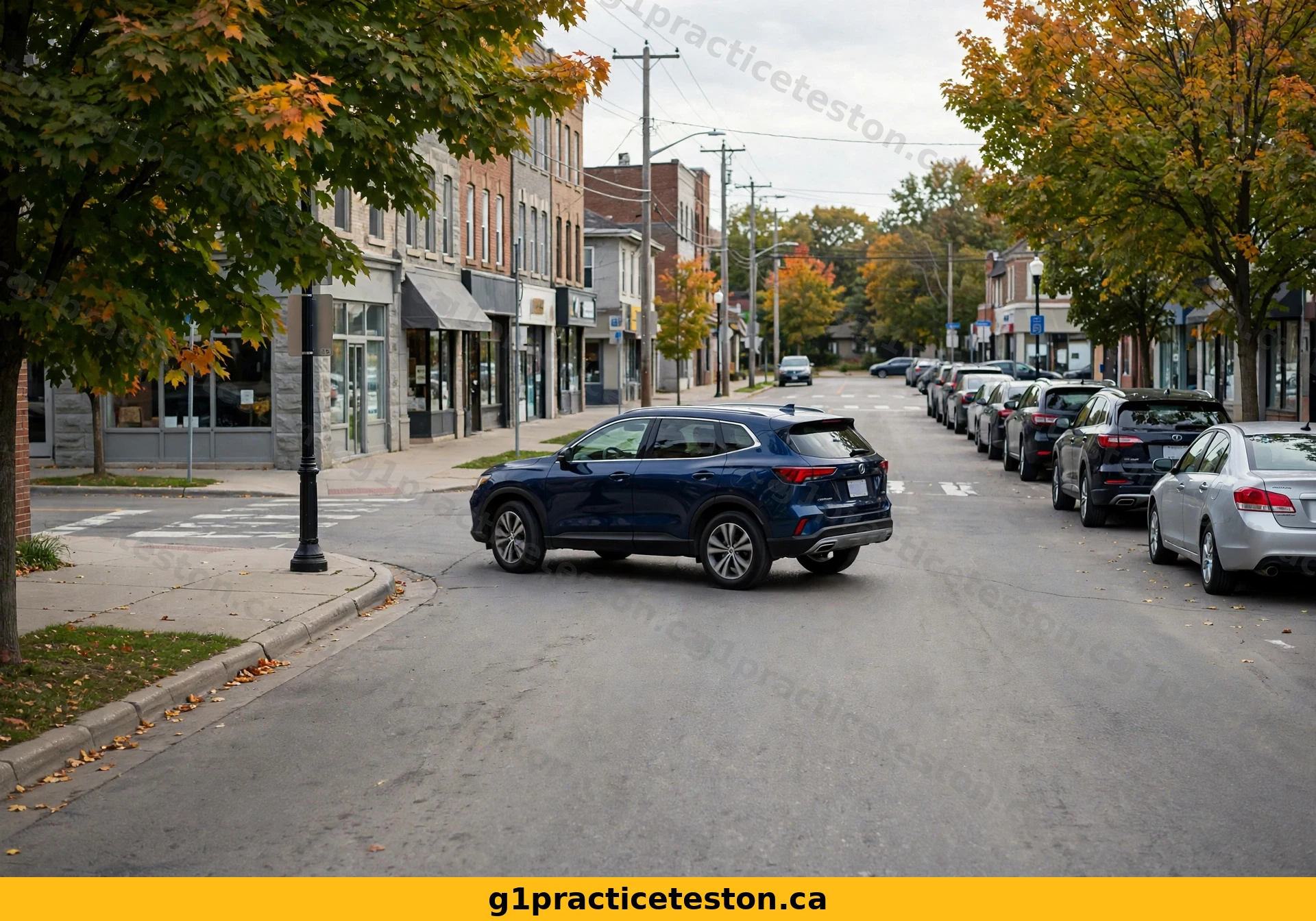
Q14. In Ontario, making a U-turn is prohibited:
g1practiceteston.ca -
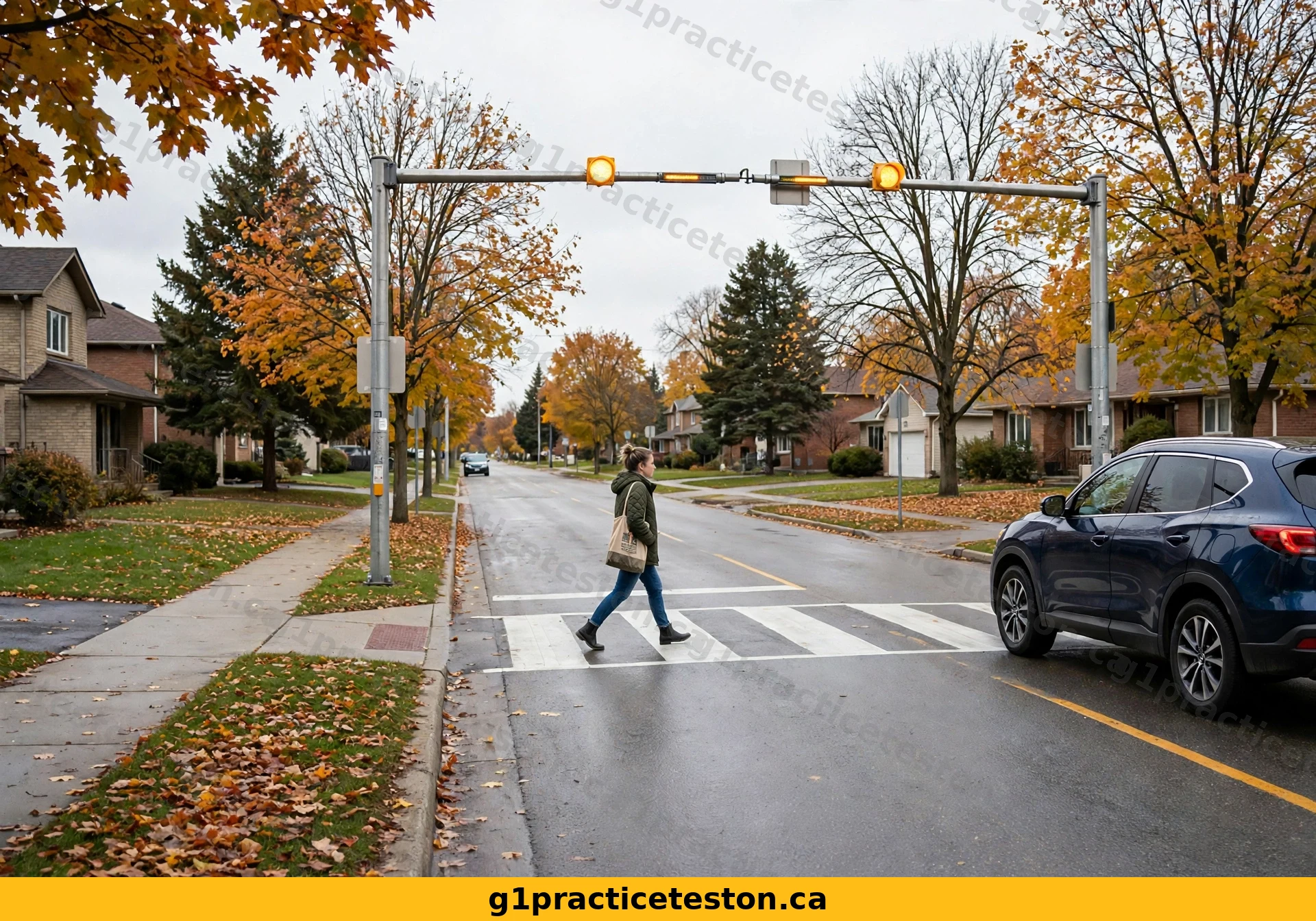
Q15. At a pedestrian crossover (with overhead lights and a marked crossing), a driver must:
g1practiceteston.ca -
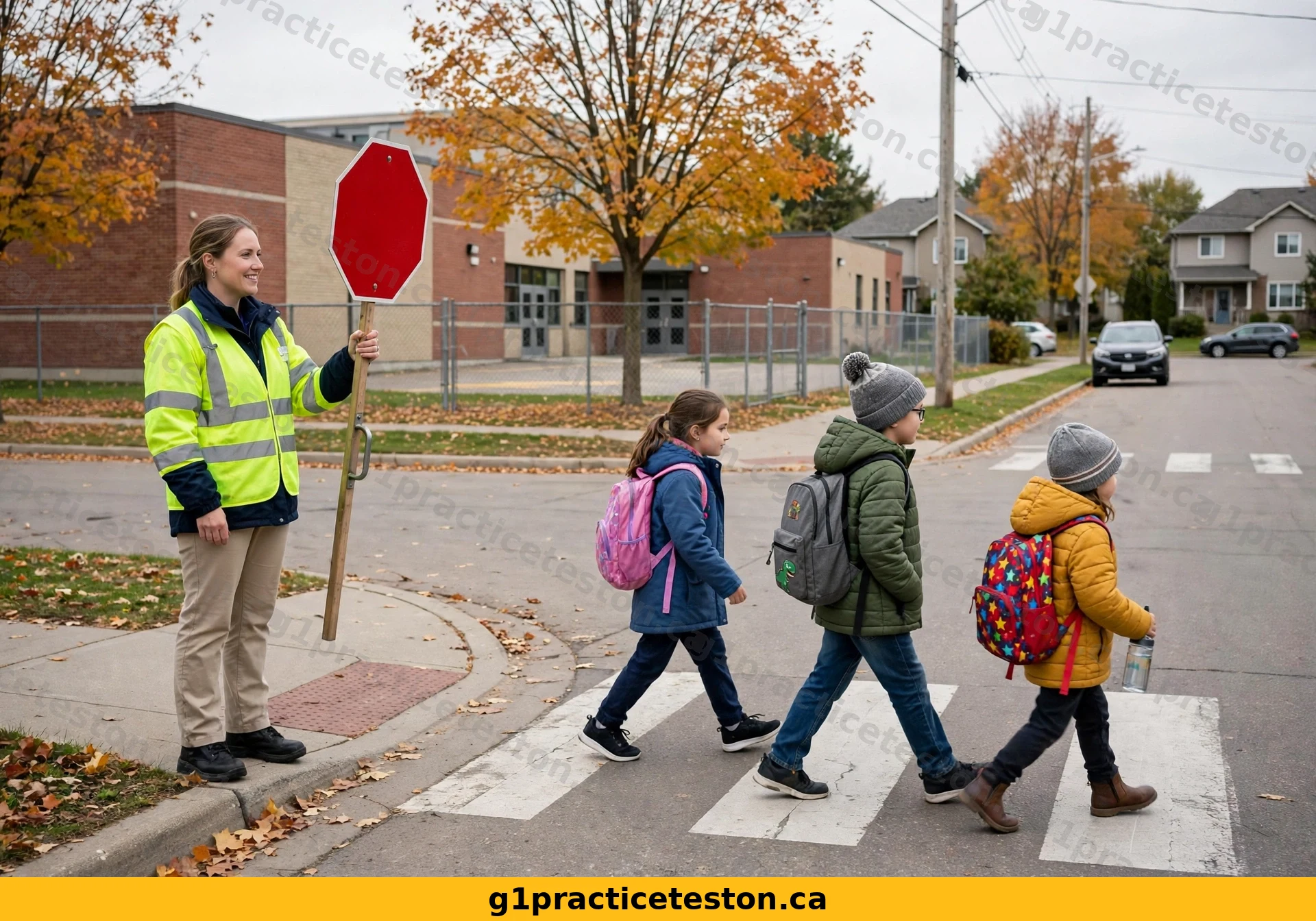
Q16. A school crossing guard is holding up a stop sign in a school crossing. When may drivers proceed?
g1practiceteston.ca -
Q17. You are driving in the opposite direction from a stopped school bus with its red lights flashing, on a highway divided by a median. What does Ontario law require?

g1practiceteston.ca -
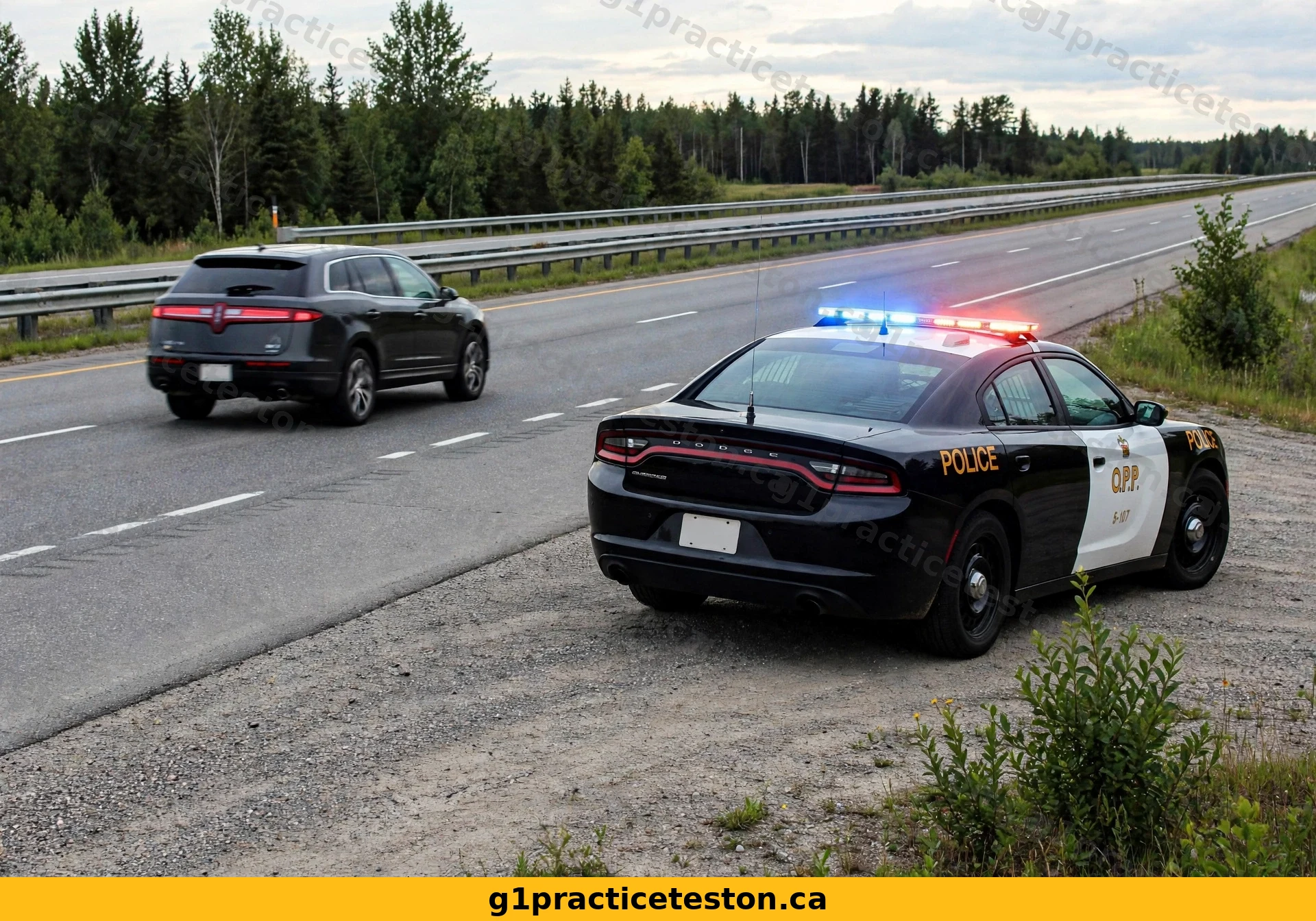
Q18. You approach an emergency vehicle (or tow truck) stopped at the side of the road with its flashing lights on. Ontario's "Move Over" law requires you to:
g1practiceteston.ca -
Q19. A train is approaching a railway crossing and you are required to stop. How close to the nearest rail may you stop?
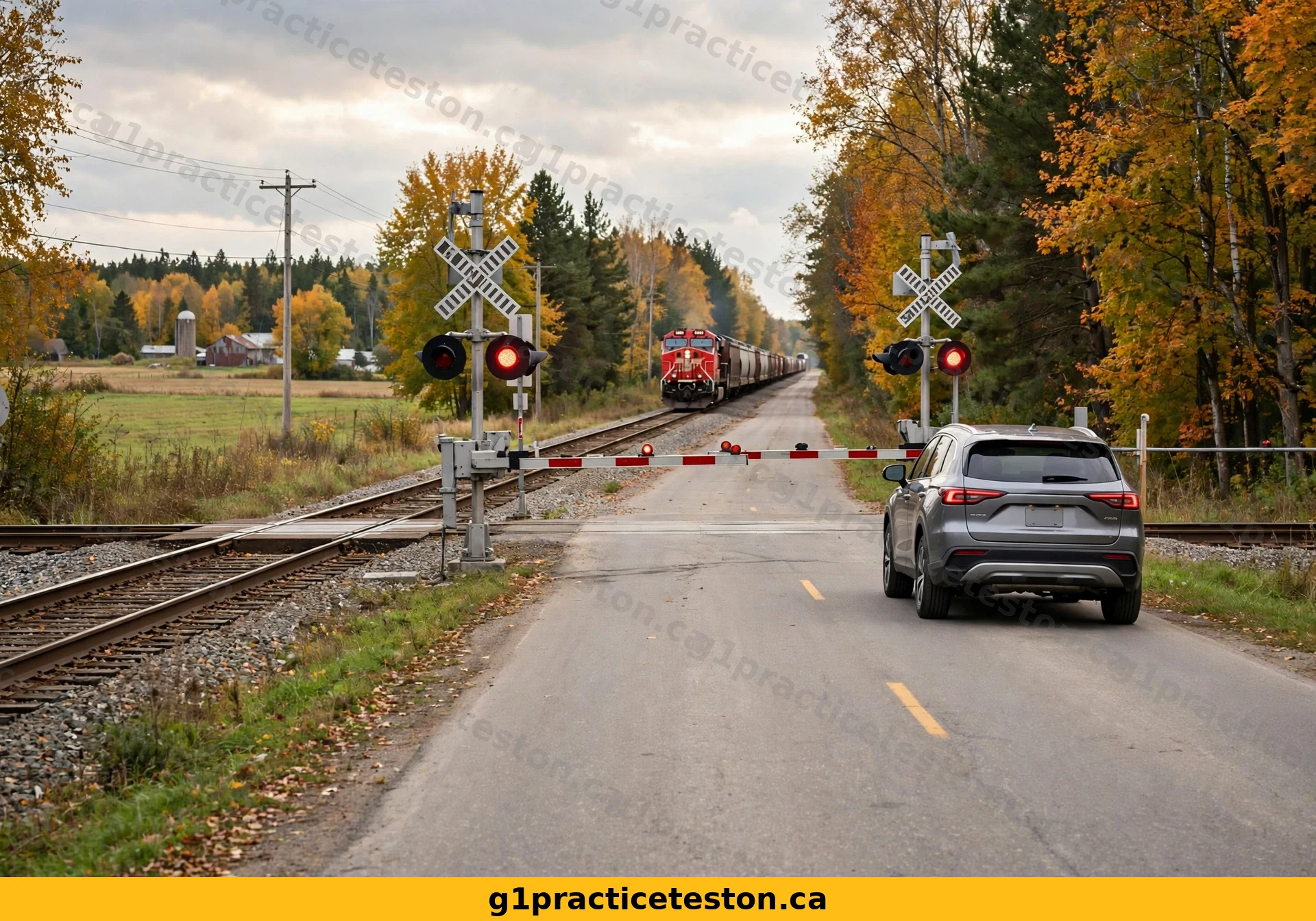
g1practiceteston.ca -
Q20. In Ontario, a child may stop using a booster seat and use a regular seatbelt when they reach ANY ONE of these — which set is correct?

g1practiceteston.ca -
Q21. As a G1 or G2 driver, and for drivers age 21 and under, what amount of alcohol or cannabis is permitted in your system when driving?
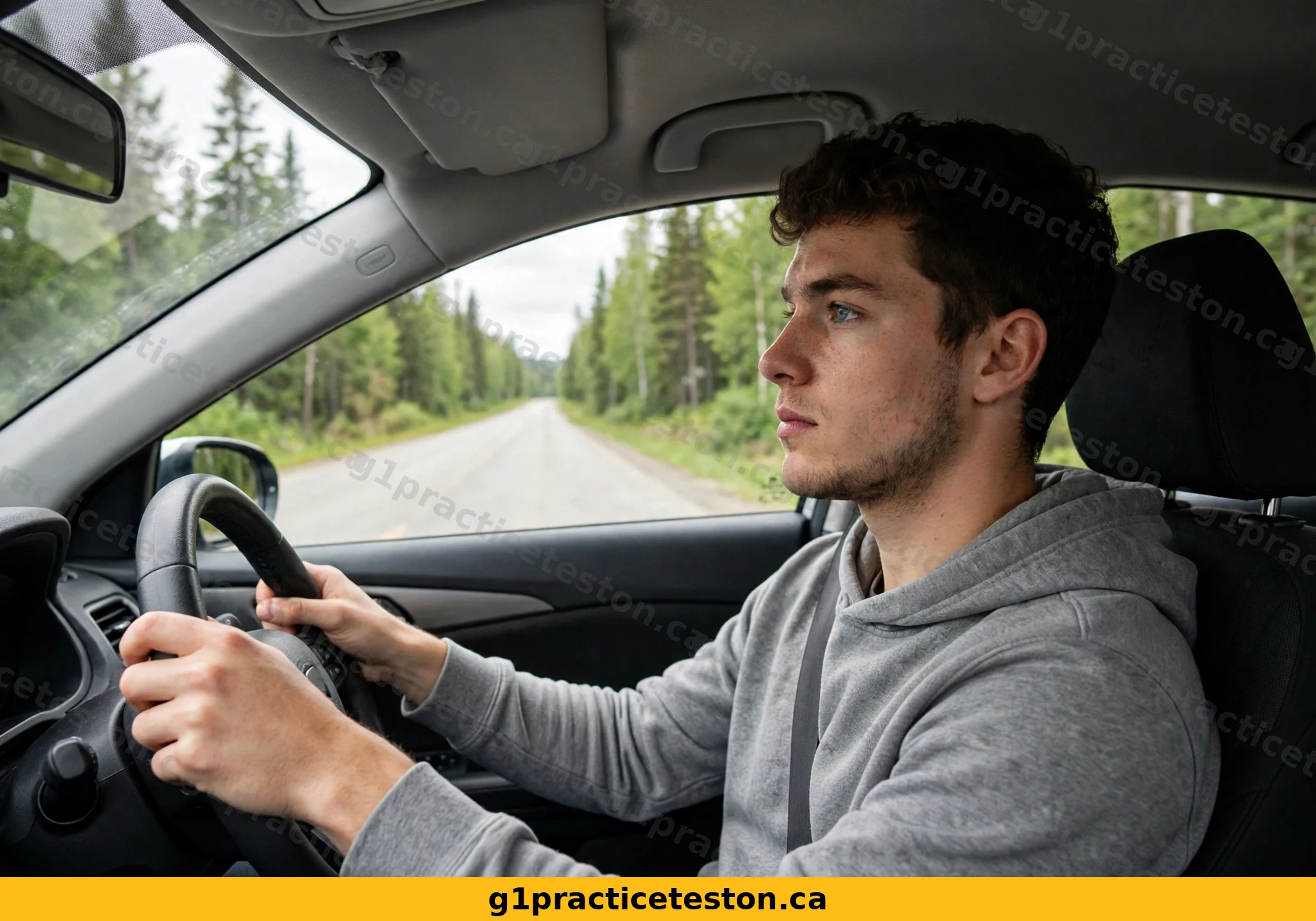
g1practiceteston.ca -
Q22. A driver with a G1 licence is NOT permitted to drive:
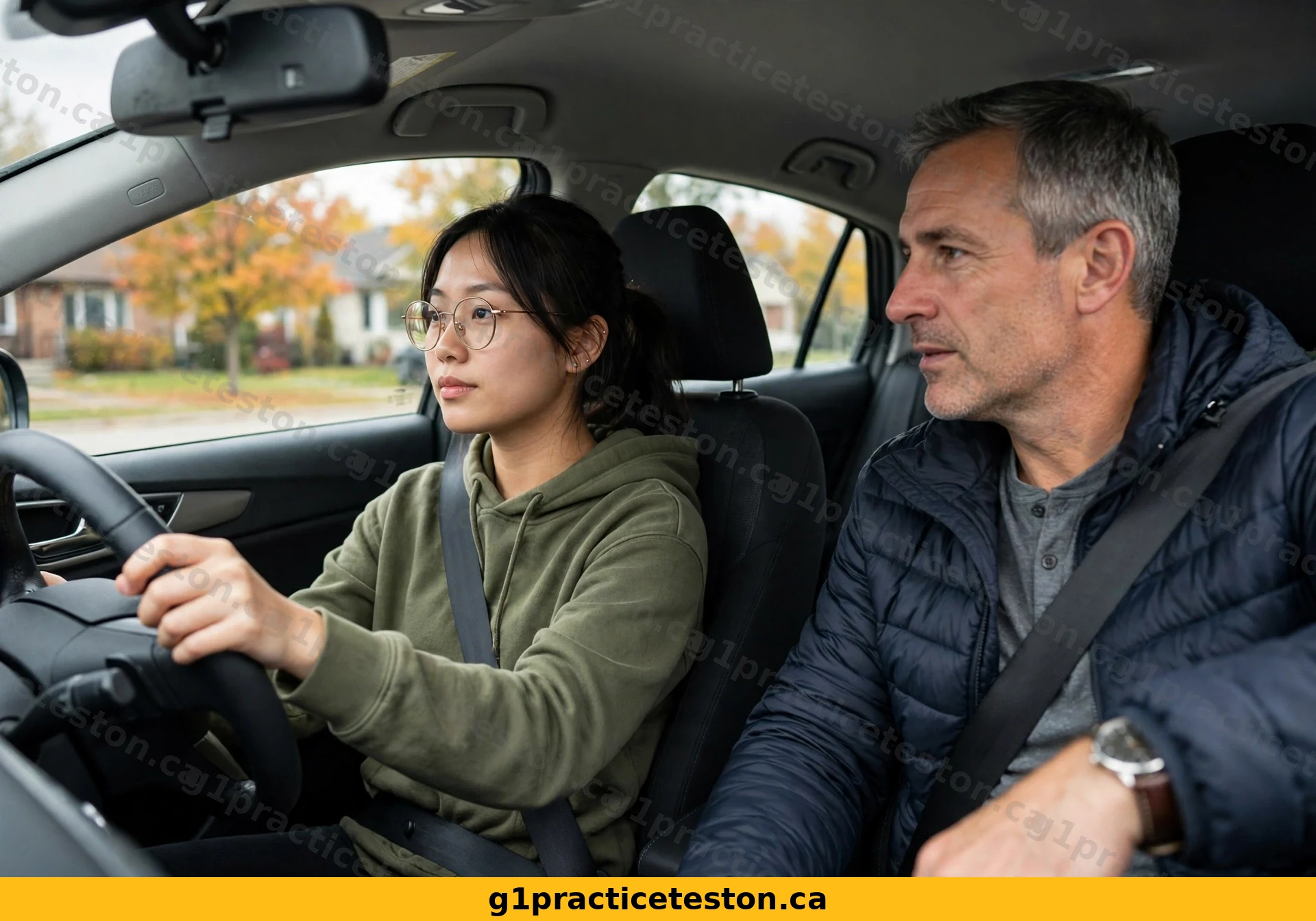
g1practiceteston.ca -
Q23. When may a G1 driver drive on a 400-series highway or a high-speed expressway where the posted limit is more than 80 km/h?
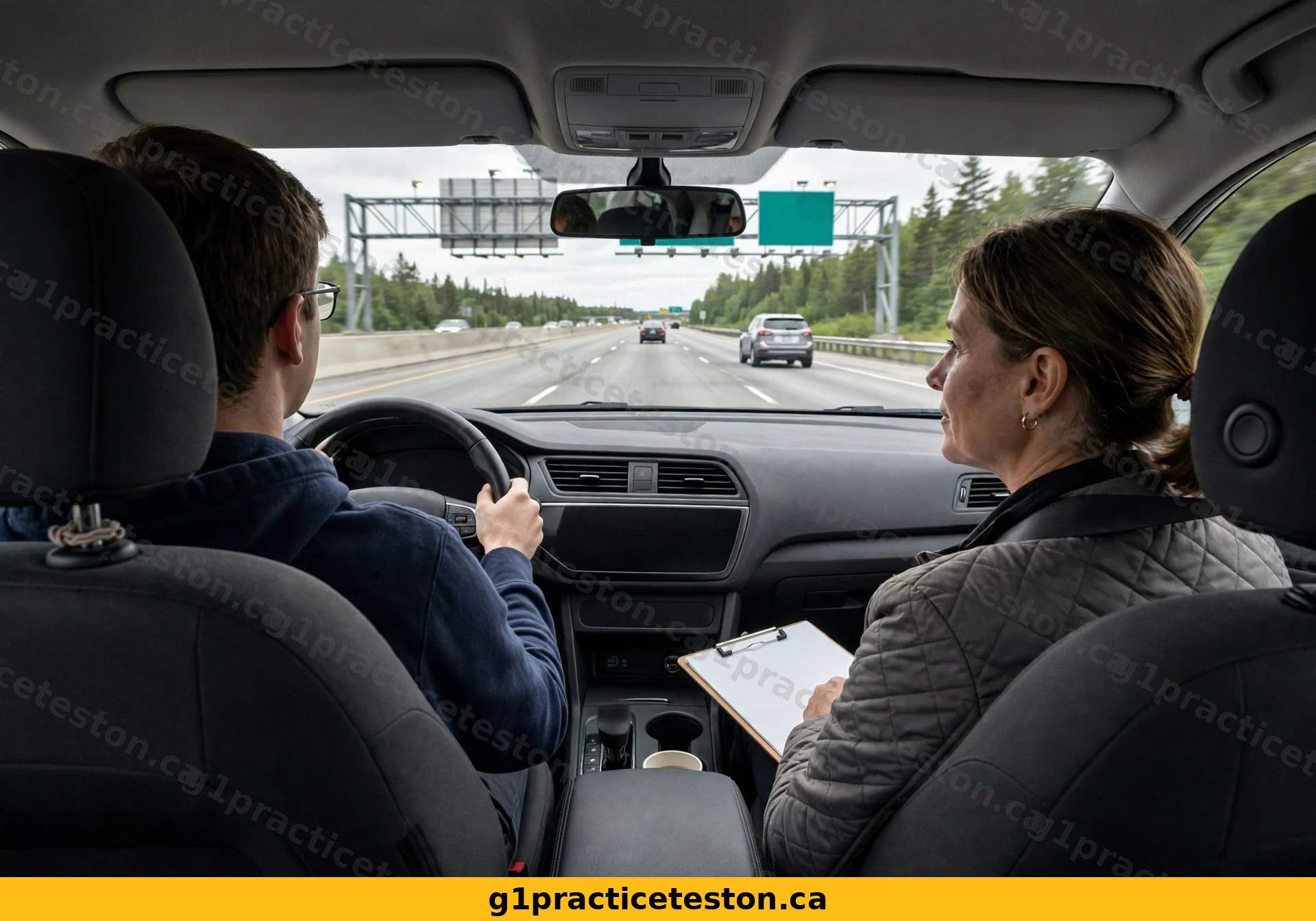
g1practiceteston.ca -
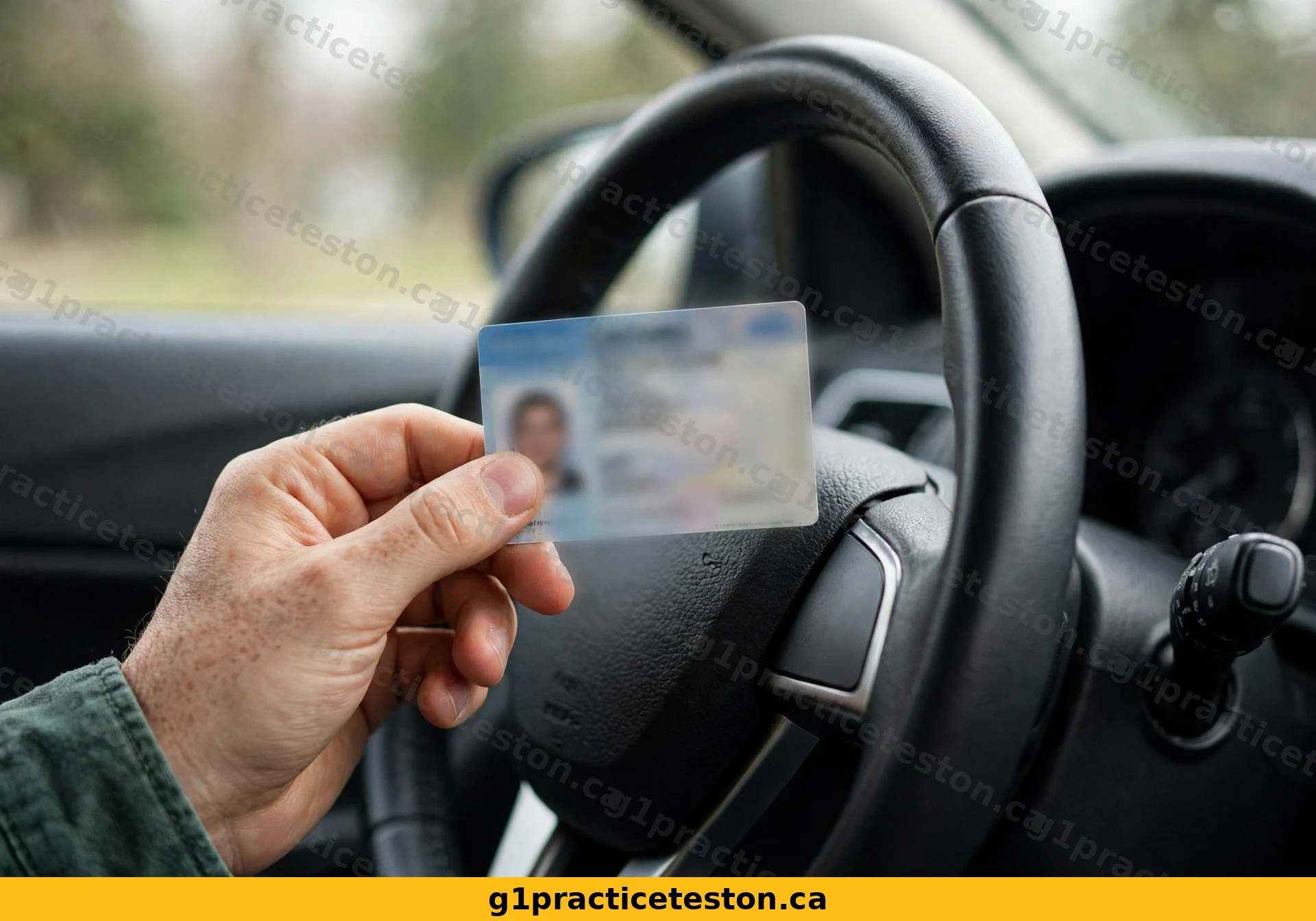
Q24. A G1 or G2 (novice) driver who accumulates nine or more demerit points will have their licence:
g1practiceteston.ca -
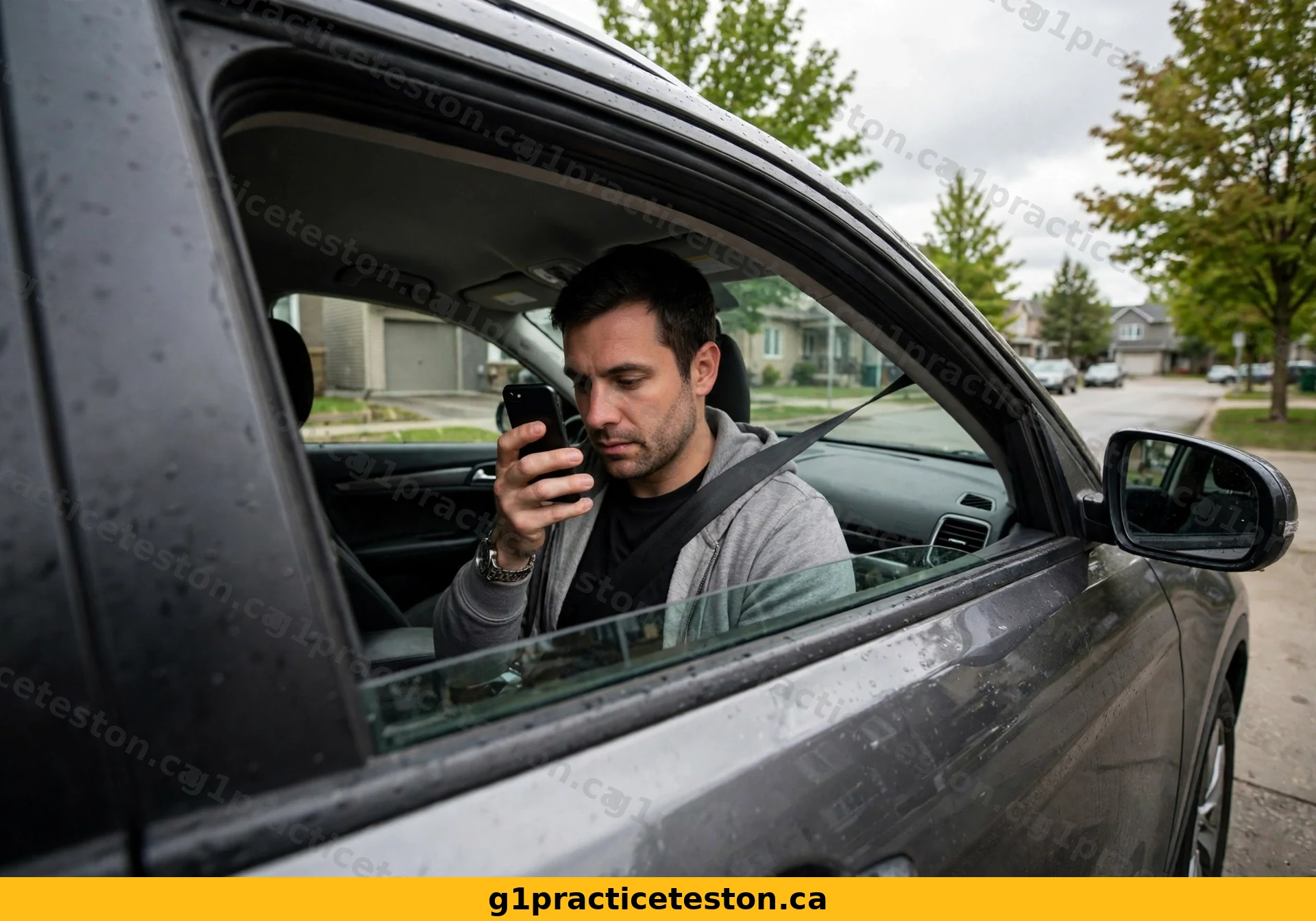
Q25. A fully licensed (full G) driver who is convicted for the first time of driving while holding a mobile phone faces:
g1practiceteston.ca -
Q26. Driving a vehicle in Ontario with no insurance at all can result, on a first conviction, in a fine of:

g1practiceteston.ca -
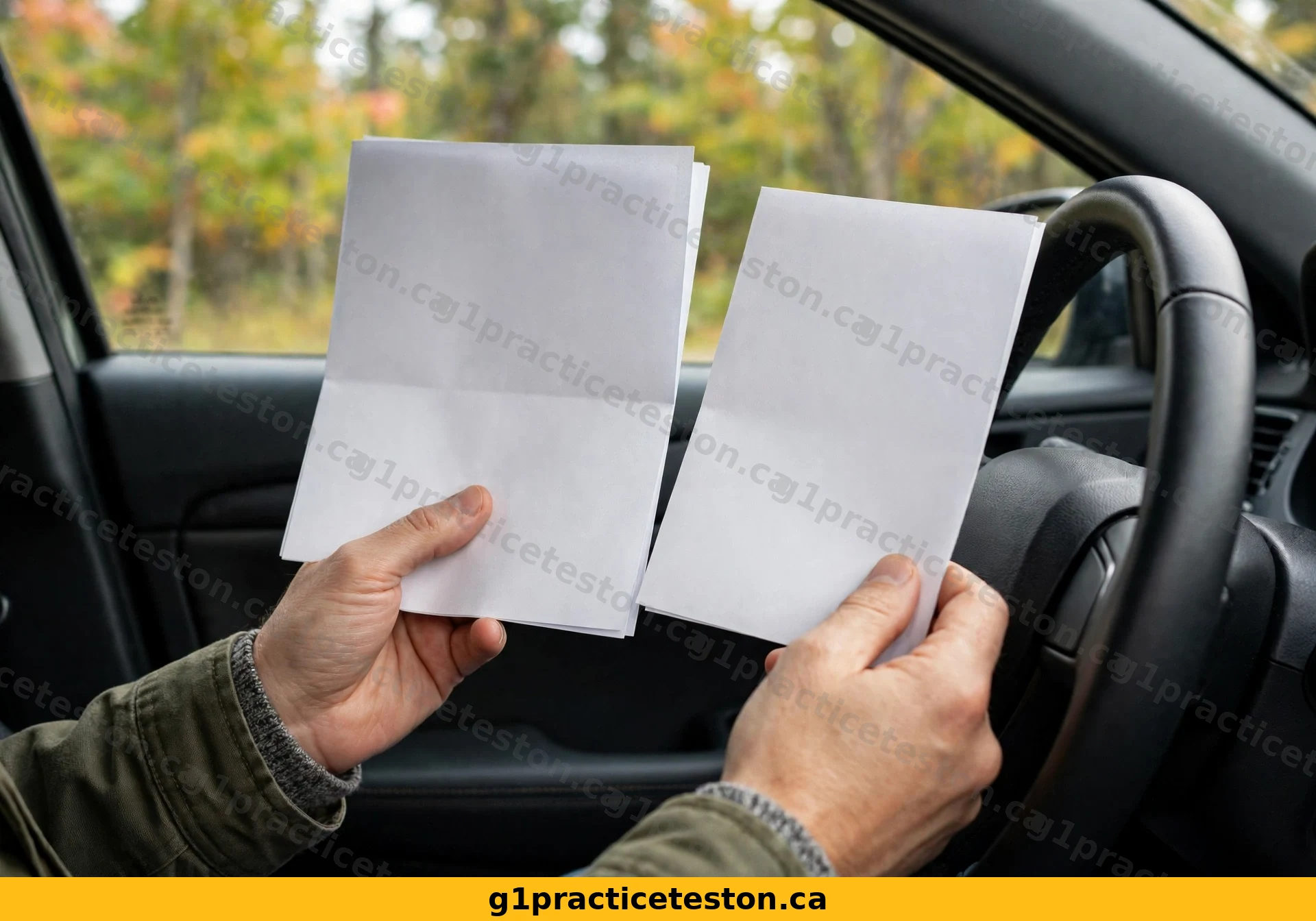
Q27. When a police officer stops you, which documents must you be able to show on request?
g1practiceteston.ca -
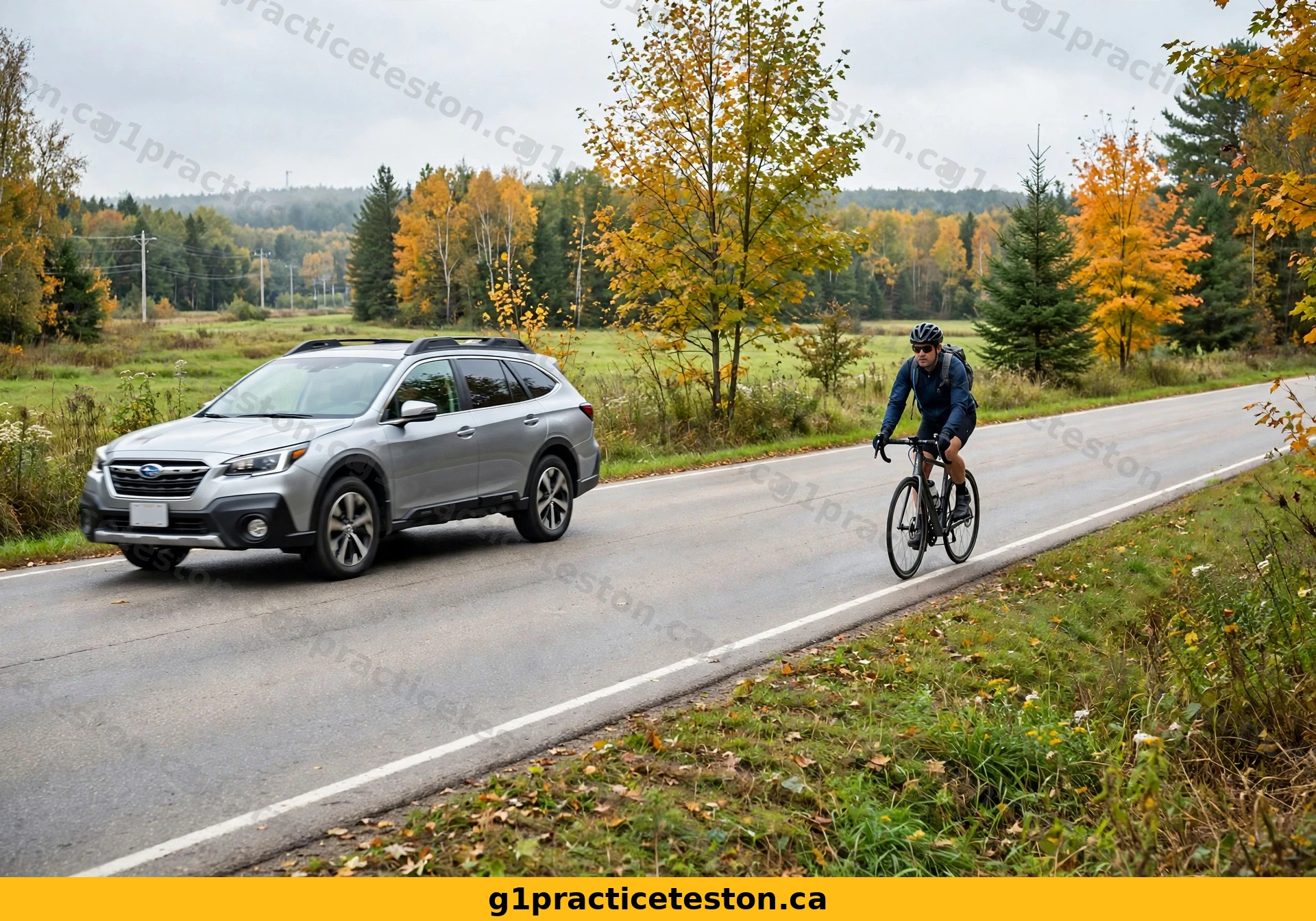
Q28. When passing a cyclist in Ontario, you must leave a minimum distance of:
g1practiceteston.ca -
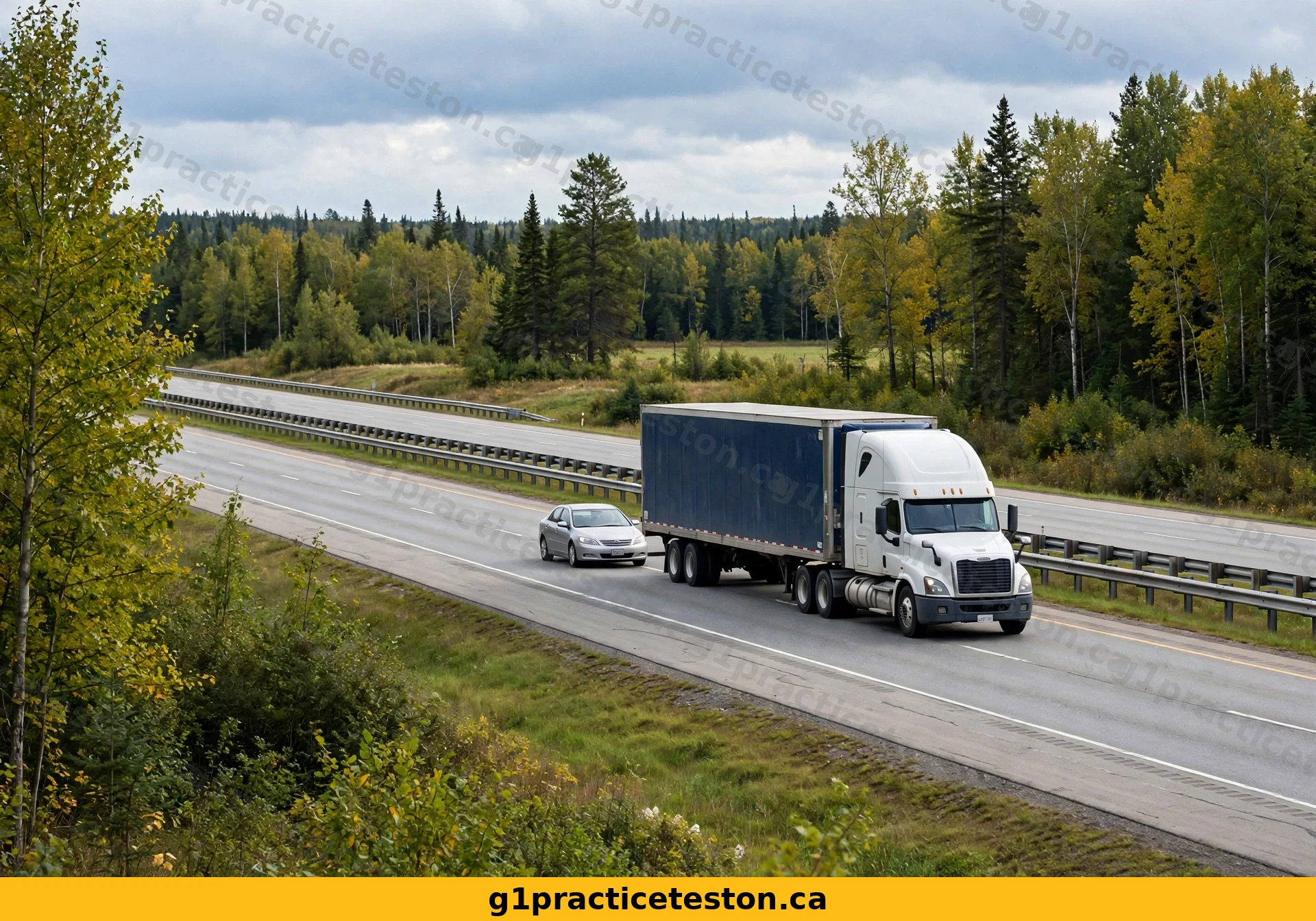
Q29. Large trucks have big blind spots ("No-Zones") around them. A good rule for knowing whether a truck driver can see you is:
g1practiceteston.ca -
Q30. When sharing the road with a motorcycle, drivers should remember that:

g1practiceteston.ca -
Q31. How close to a fire hydrant is parking prohibited in Ontario?

g1practiceteston.ca -
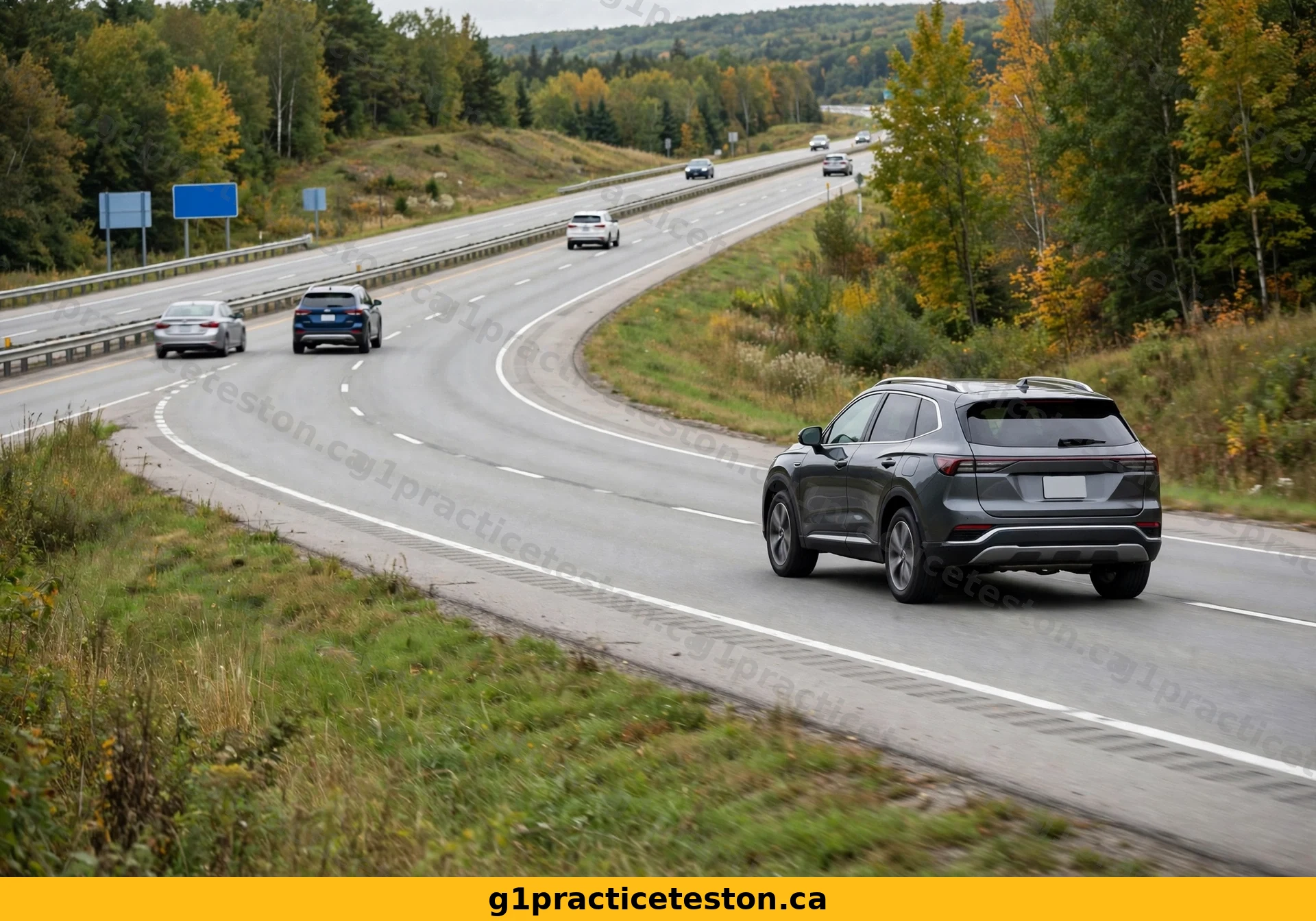
Q32. You are entering a freeway using an acceleration (merge) lane. You should:
g1practiceteston.ca -
Q33. On a two-lane highway, when is it unsafe and against the rules to pass the vehicle ahead?

g1practiceteston.ca -
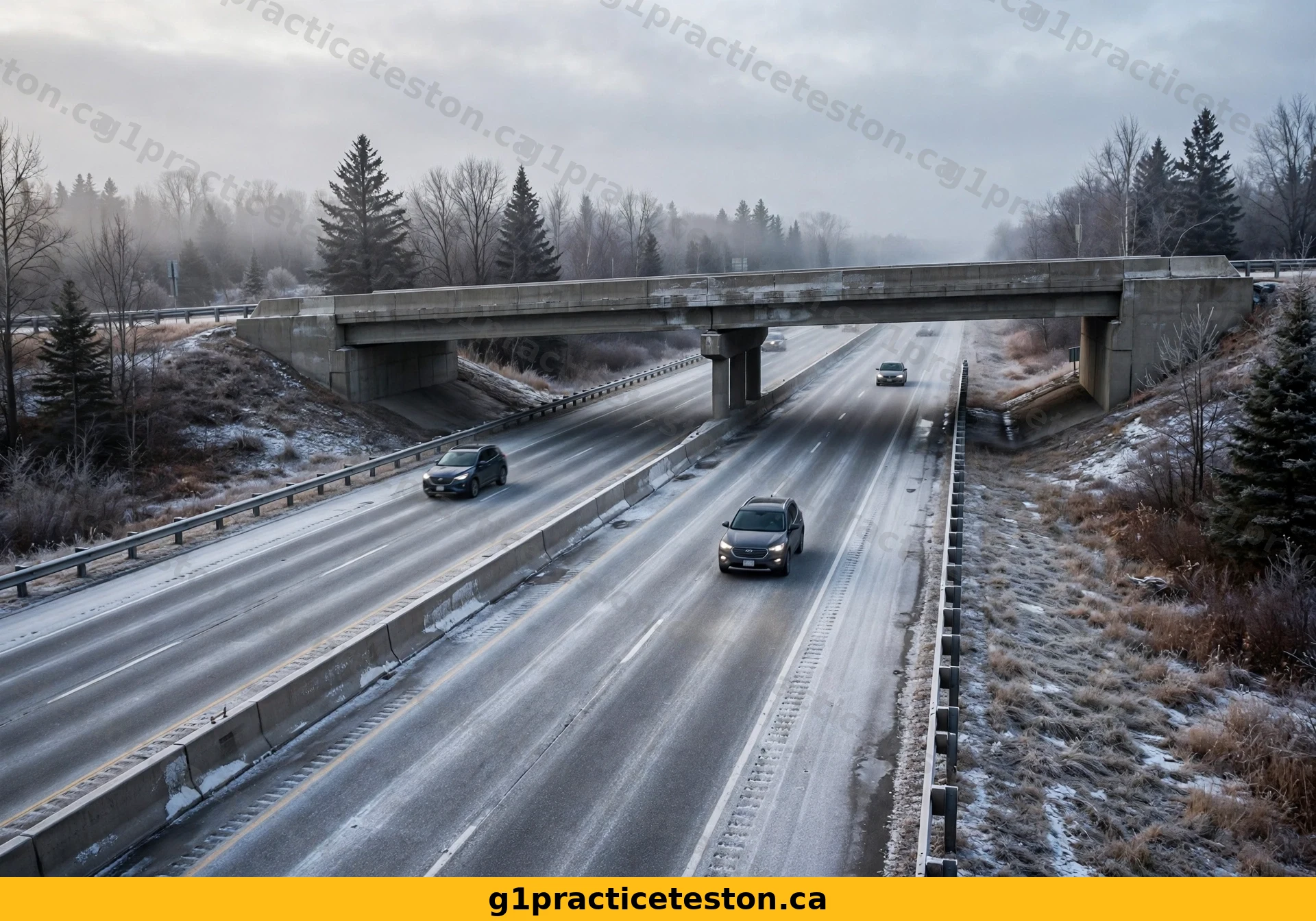
Q34. In cold weather, which parts of the road often freeze and become icy FIRST?
g1practiceteston.ca -
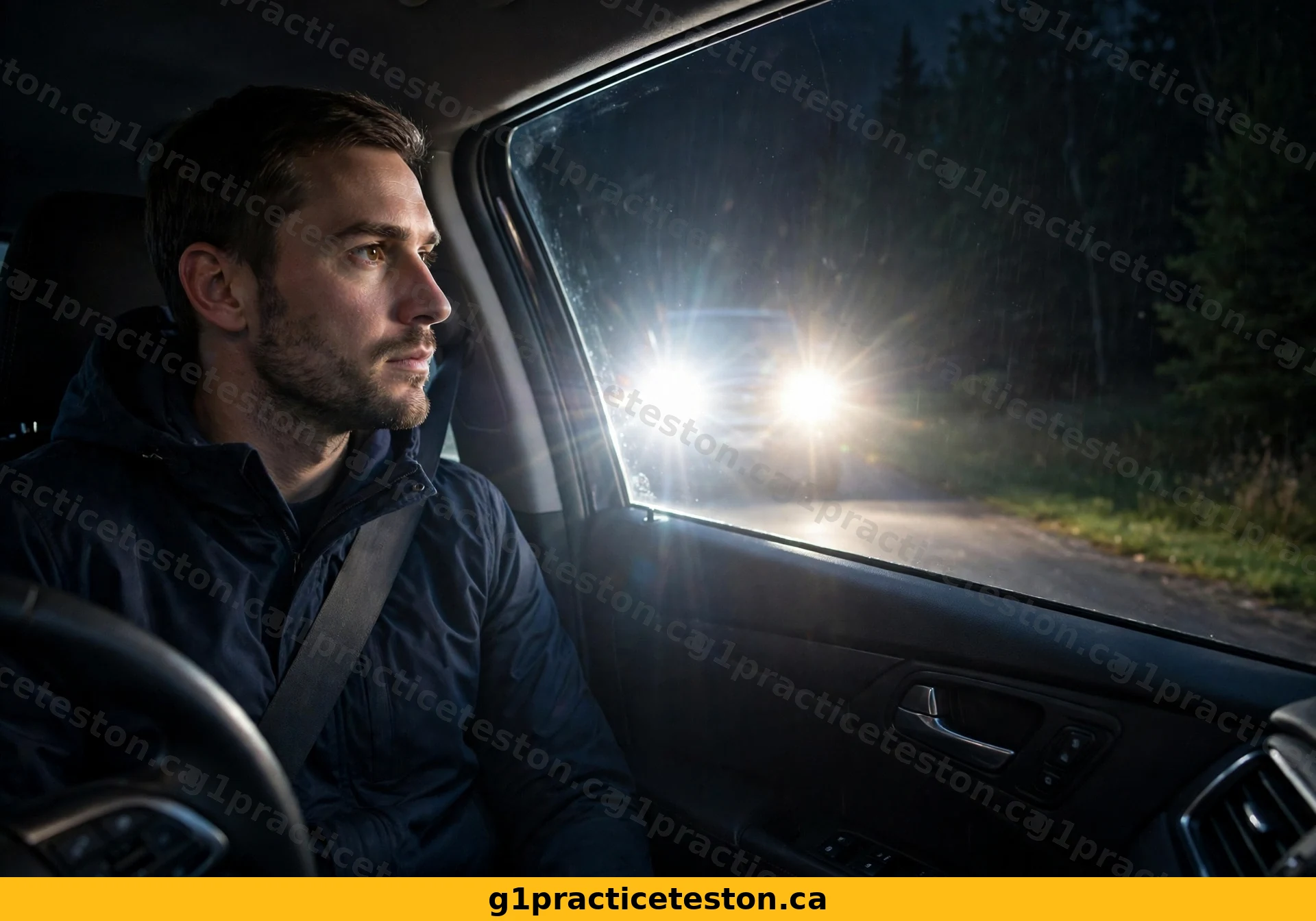
Q35. At night, an oncoming driver fails to dim their high beams and the glare is blinding you. The safest response is to:
g1practiceteston.ca -
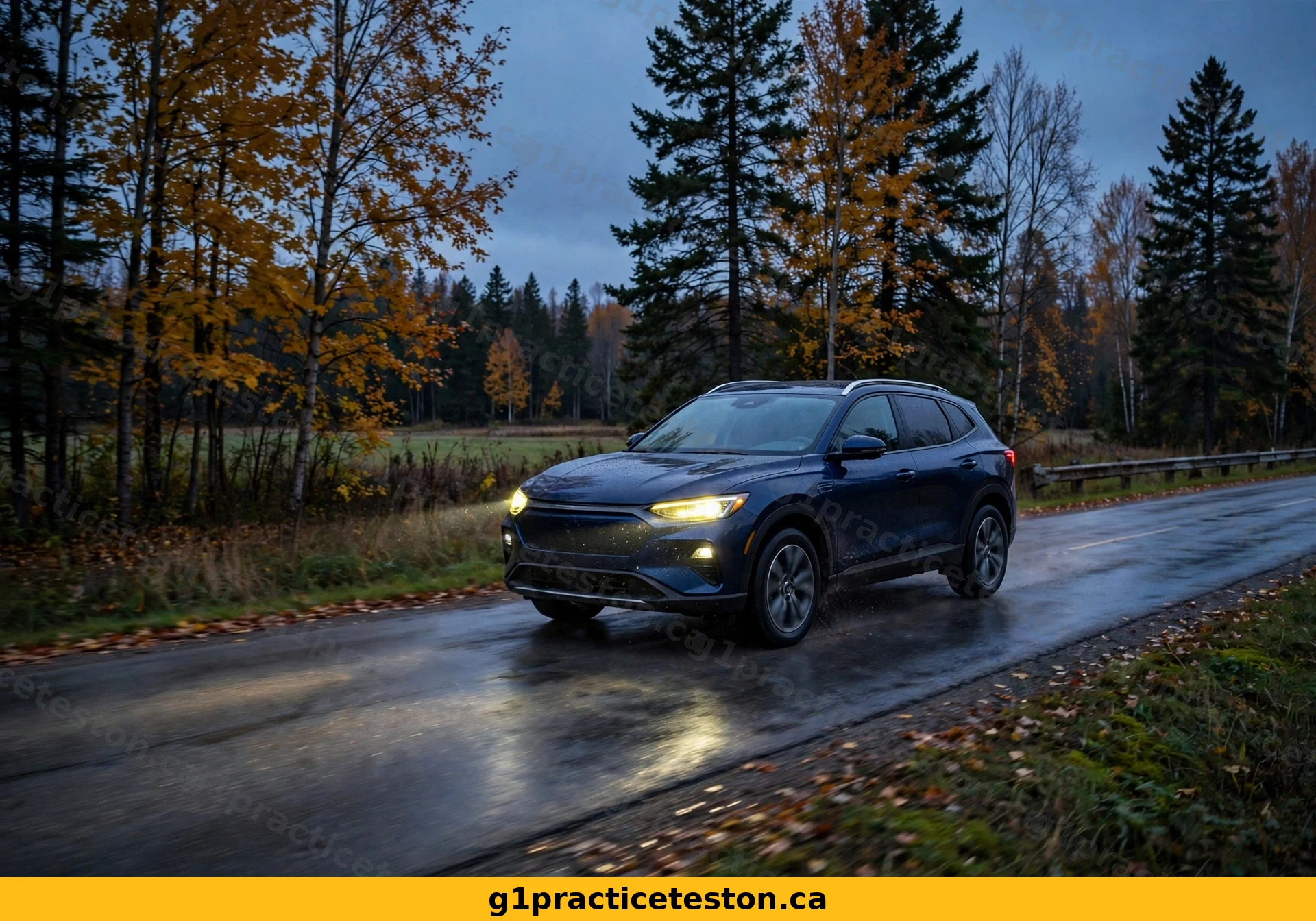
Q36. By law in Ontario, you must turn your headlights on:
g1practiceteston.ca -
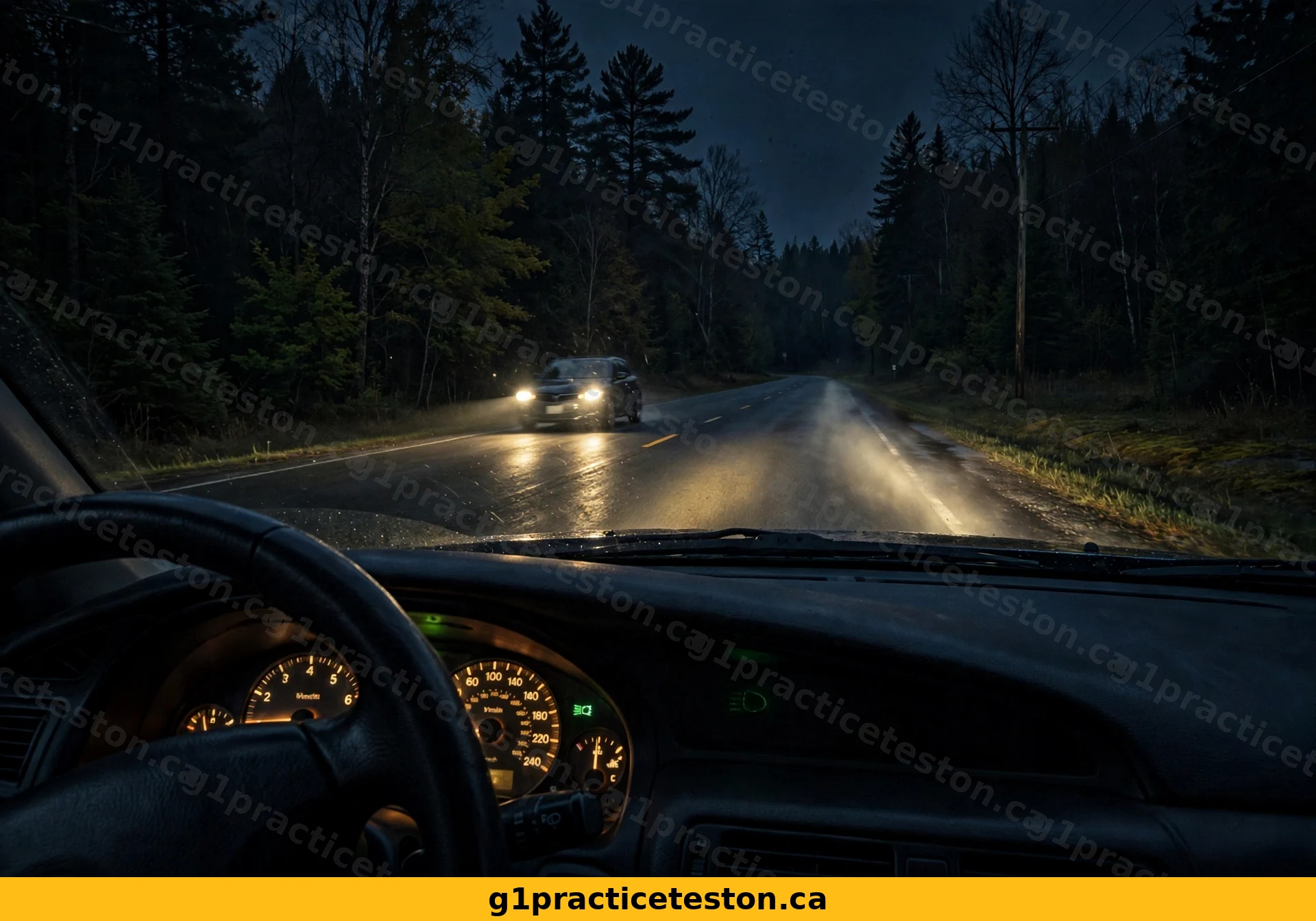
Q37. You must switch from high beam to low beam headlights when an oncoming vehicle is within:
g1practiceteston.ca -
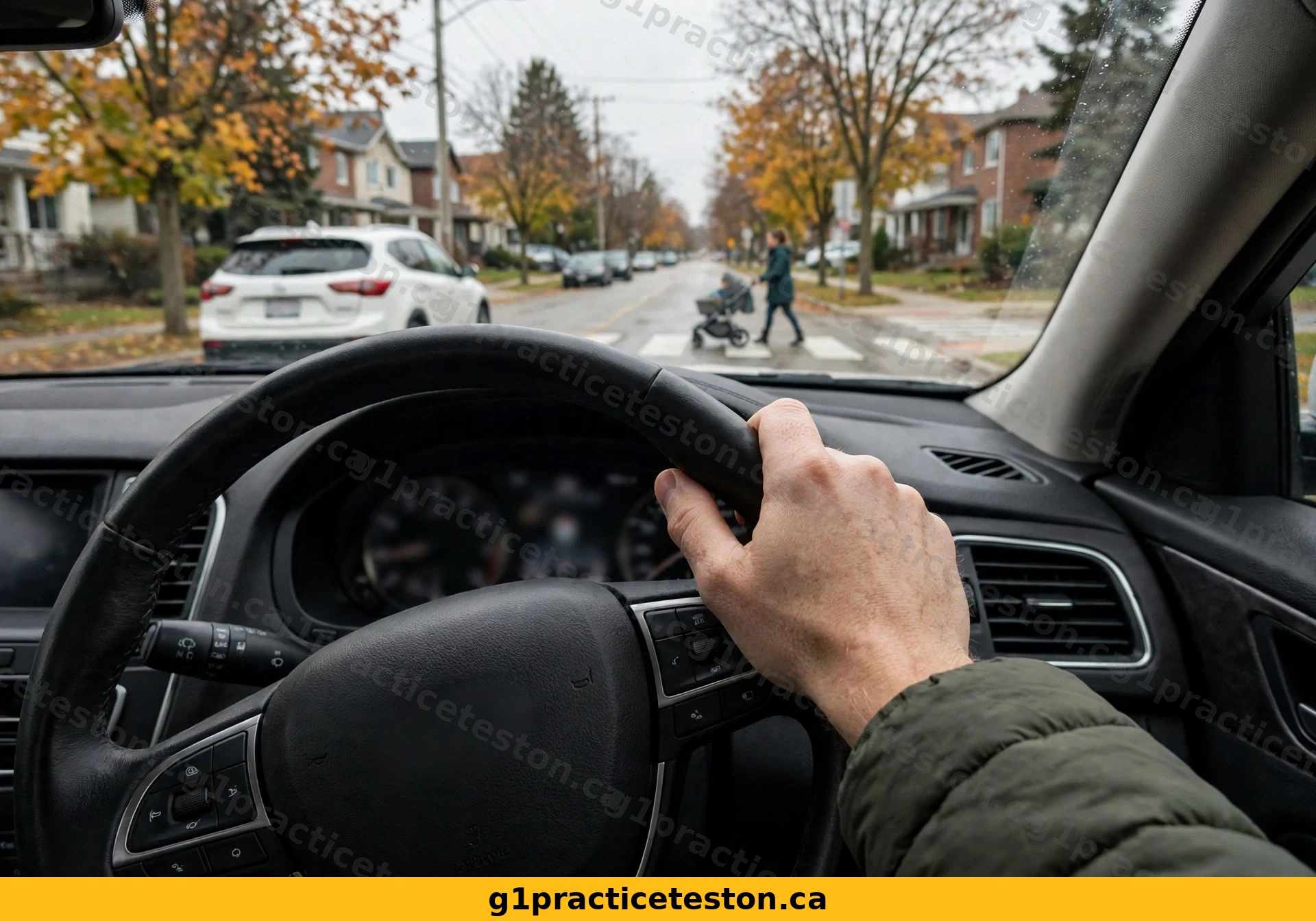
Q38. The horn on your vehicle should be used:
g1practiceteston.ca -
Q39. Behind a regular (non-commercial) car or truck in Ontario, how many trailers may you tow?

g1practiceteston.ca -
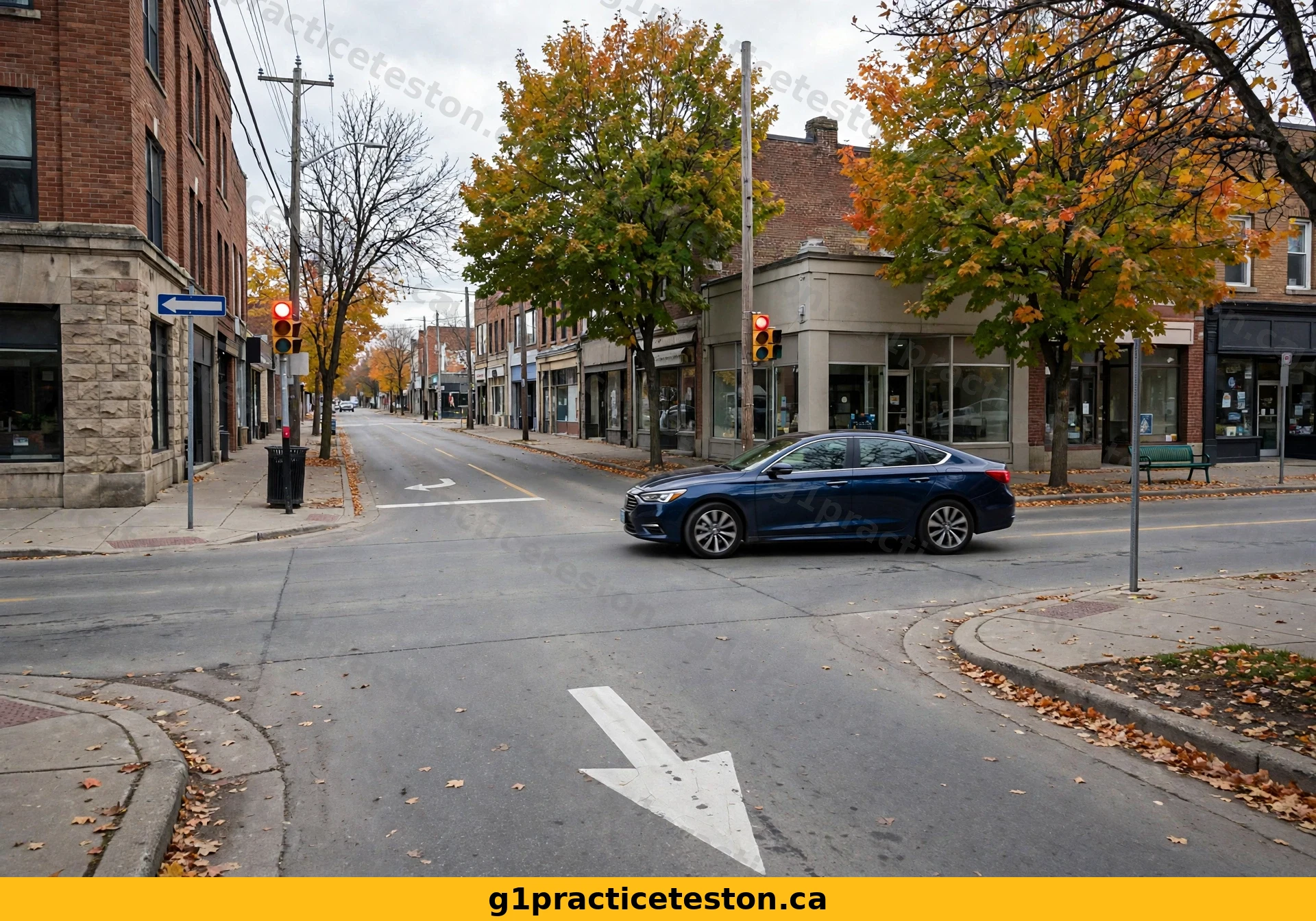
Q40. In Ontario, you may turn left on a red light:
g1practiceteston.ca -
Q41. You are approaching a roundabout. Traffic is already circulating inside it. What must you do?

g1practiceteston.ca -
Q42. In a two-lane roundabout, which lane should you be in to turn left or make a U-turn?

g1practiceteston.ca -
Q43. At an intersection you face a flashing green light. What does it mean in Ontario?
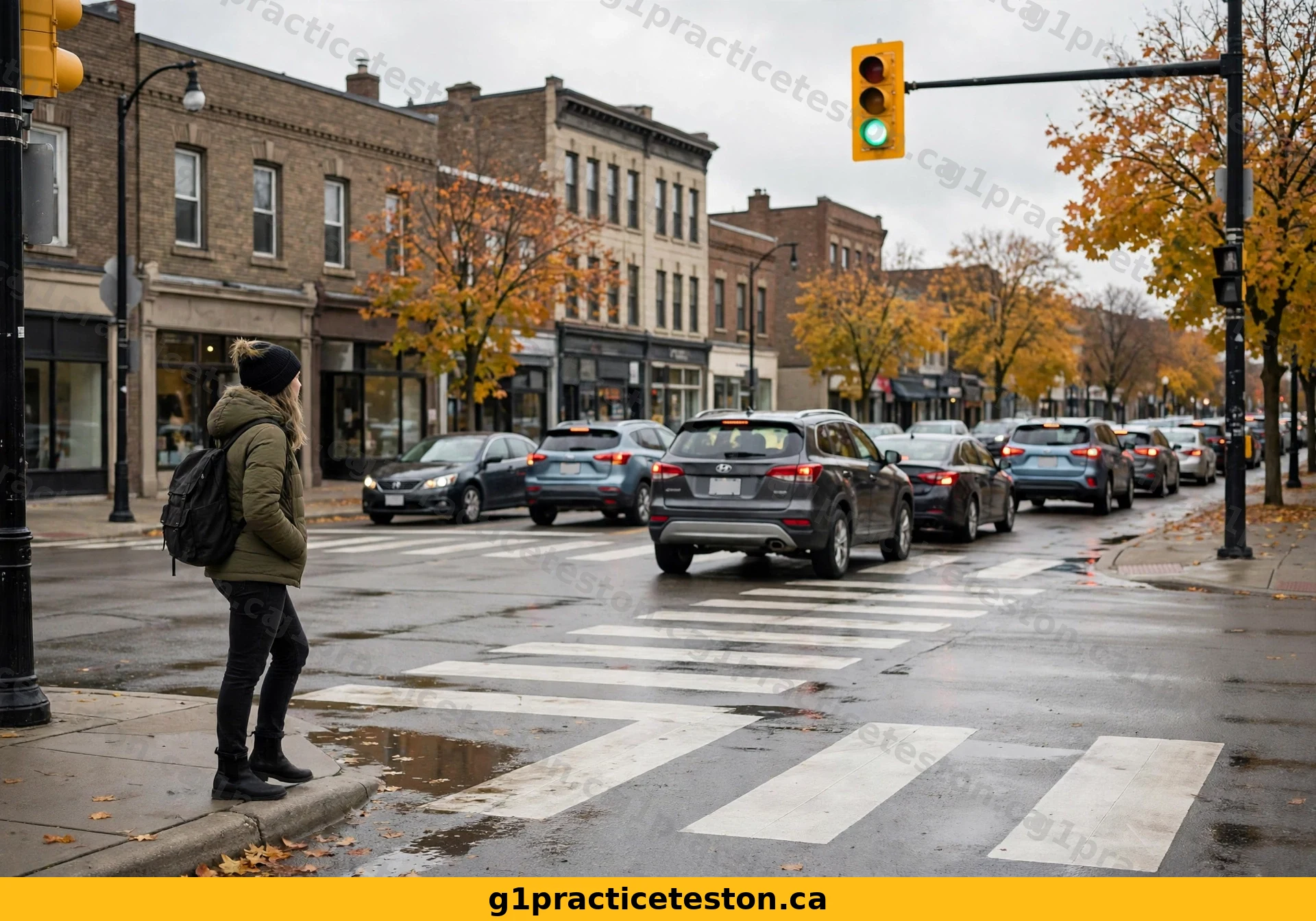
g1practiceteston.ca -
Q44. The signal shows a red light with a green arrow pointing left. What may you do?
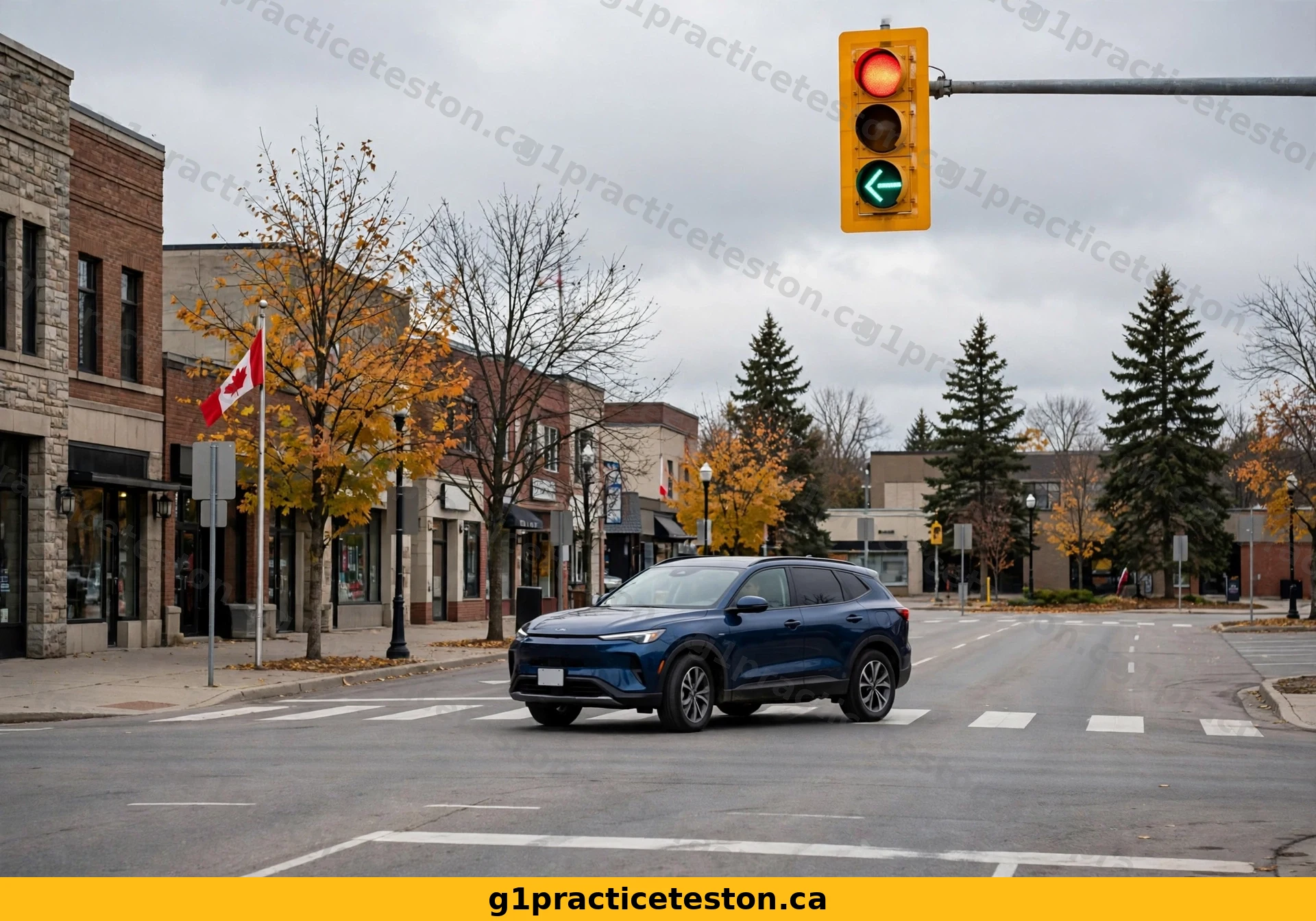
g1practiceteston.ca -
Q45. You are approaching an intersection and the light turns from green to steady amber (yellow). You have time and space to stop safely. What should you do?
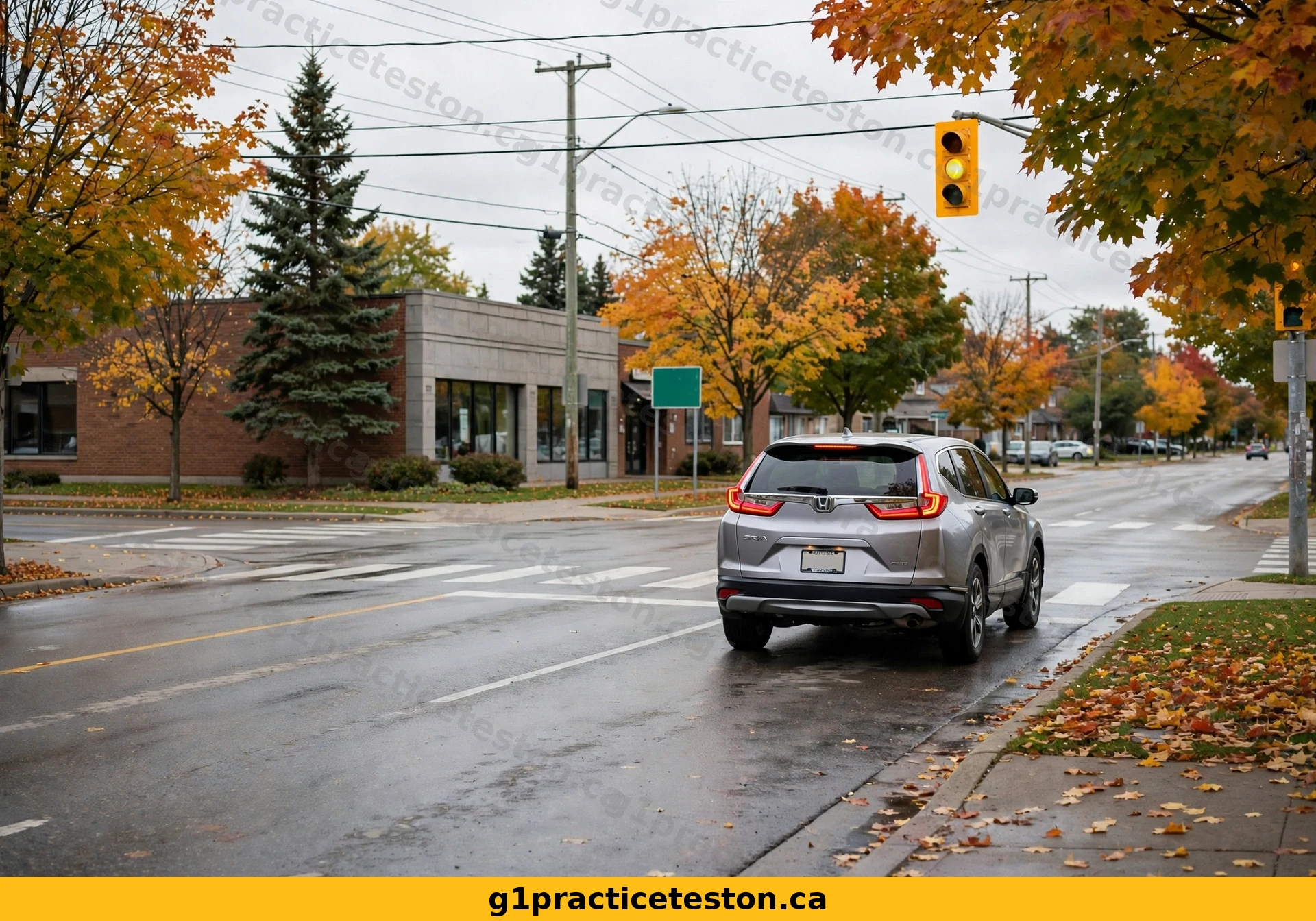
g1practiceteston.ca -
Q46. You must stop at a red light where there is a marked stop line, a crosswalk and a sidewalk. Where do you stop?
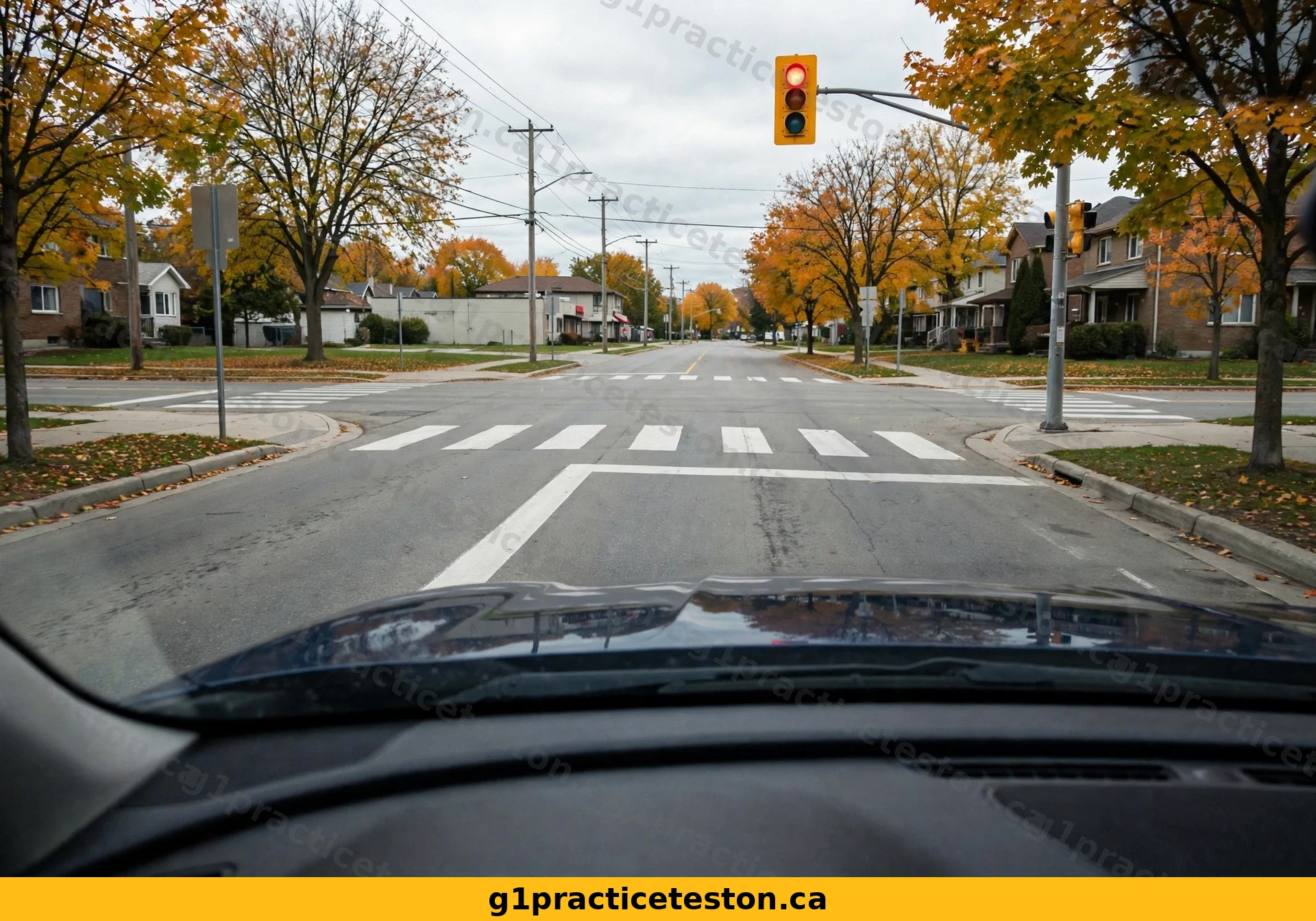
g1practiceteston.ca -
Q47. In Ontario, you may pass another vehicle on the right when:
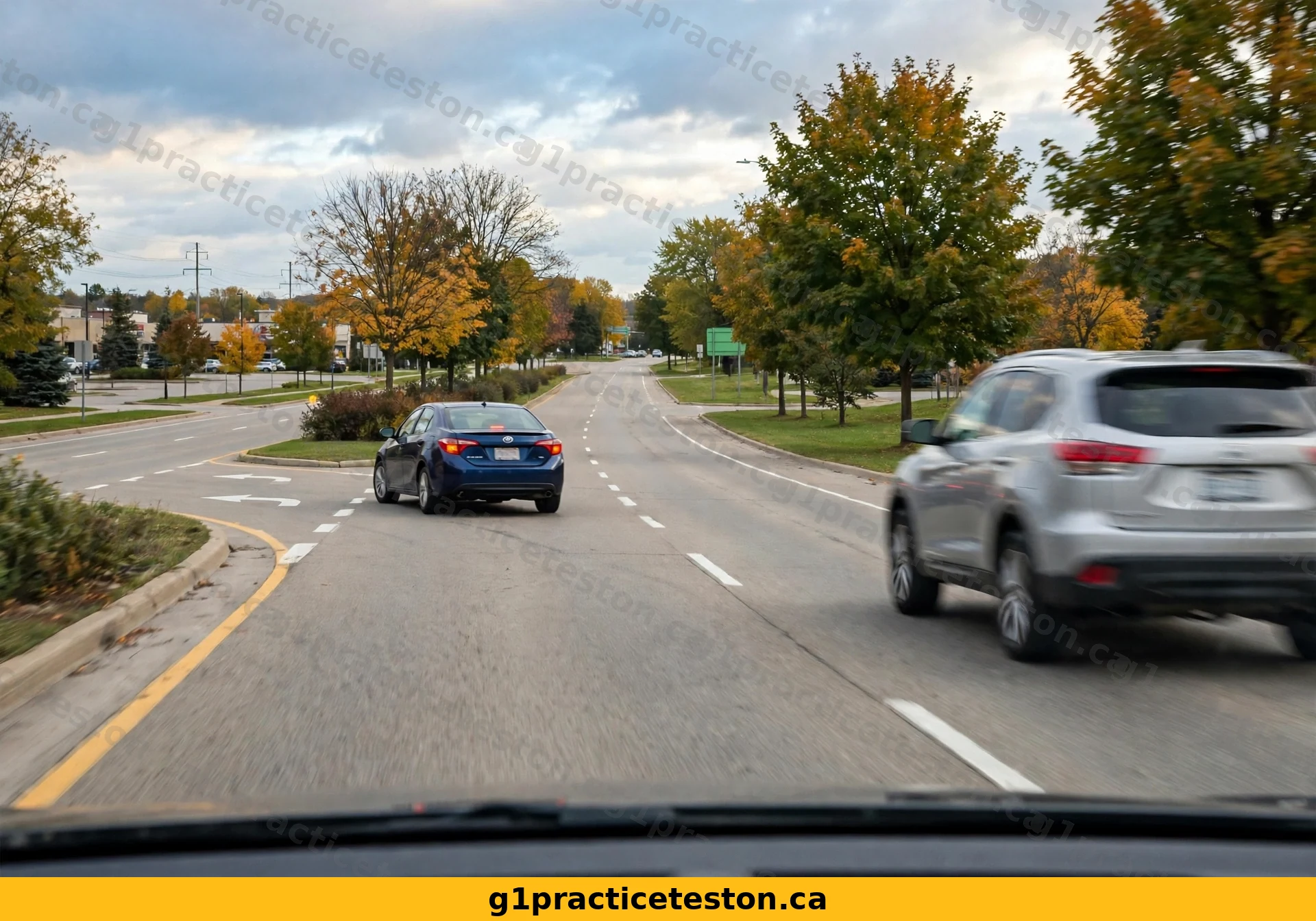
g1practiceteston.ca -
Q48. A streetcar has stopped to pick up passengers and there is no safety zone. You are driving behind it. What must you do?
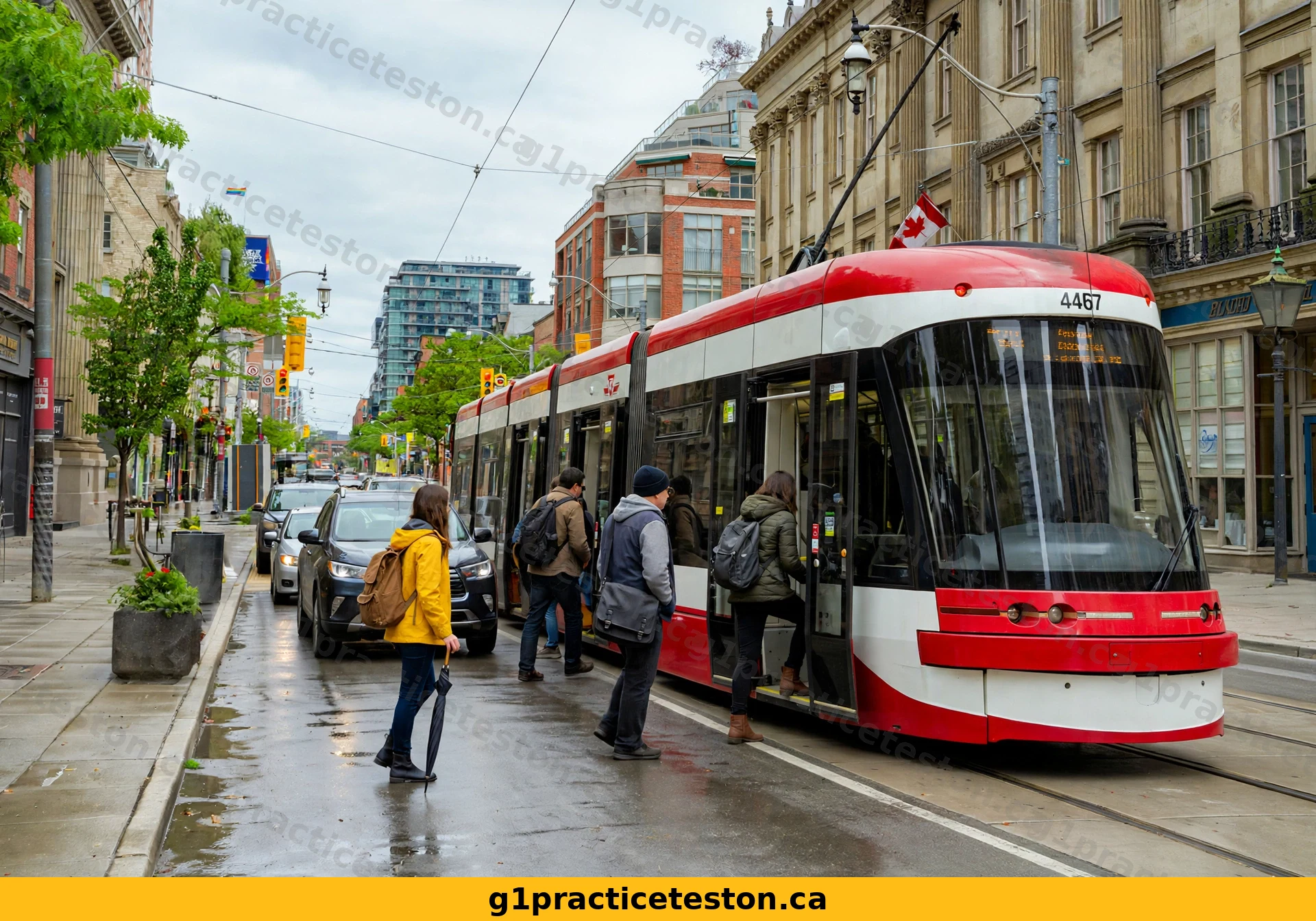
g1practiceteston.ca -
Q49. A school bus ahead of you has its amber (yellow) lights flashing. What does this mean?
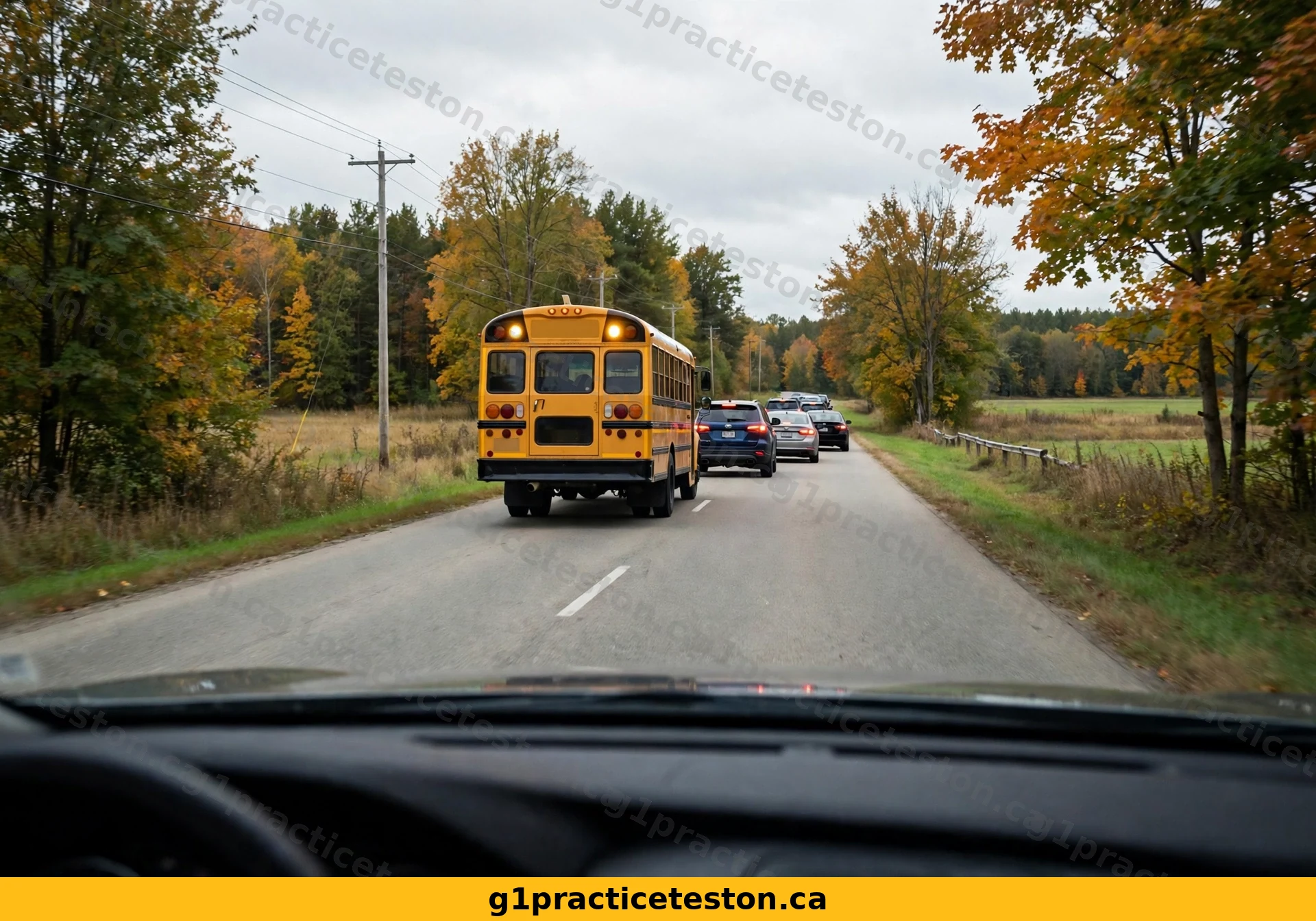
g1practiceteston.ca -
Q50. When you are required to stop for a school bus with its red lights flashing on an undivided road, how far from the bus must you stop?
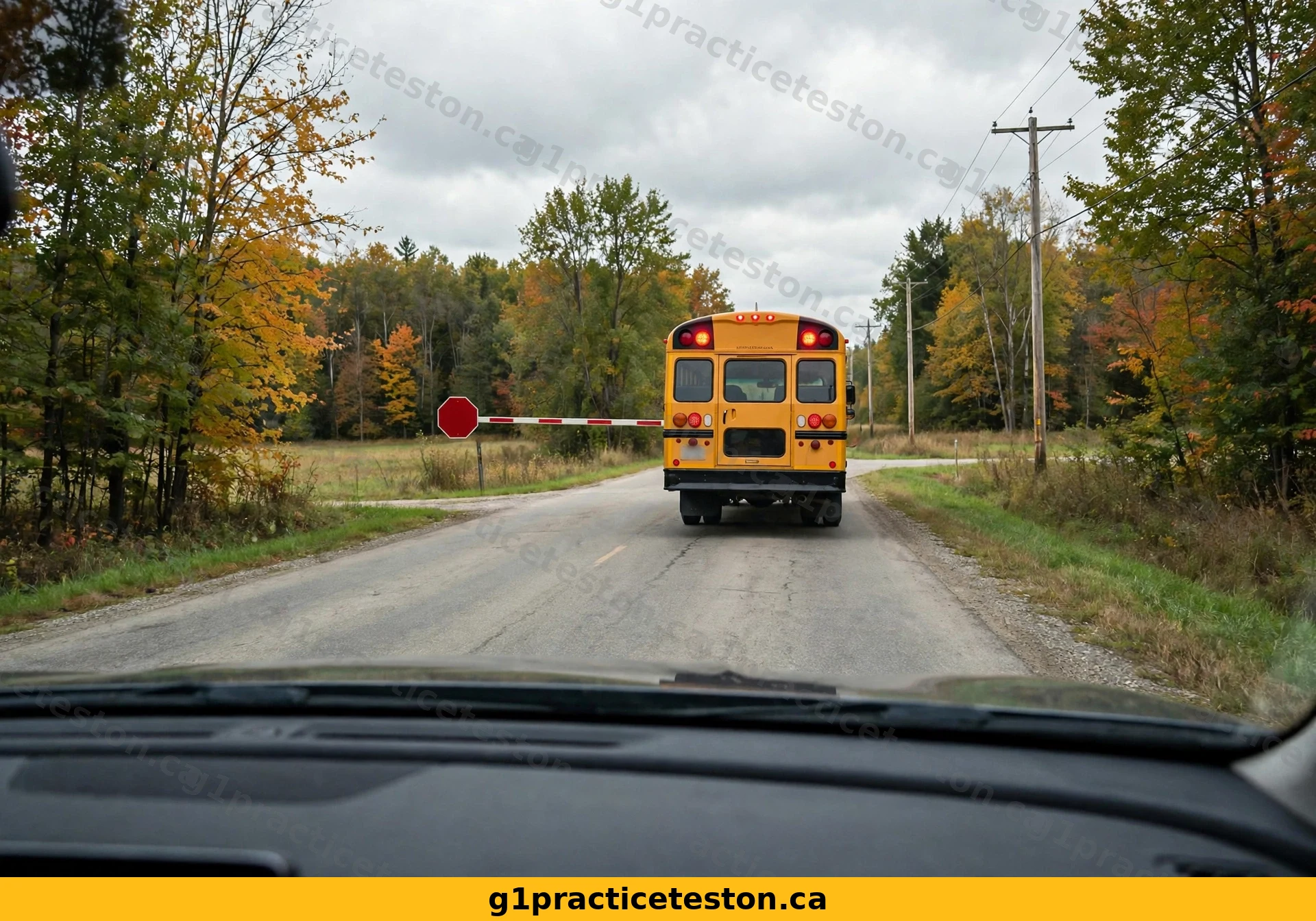
g1practiceteston.ca -
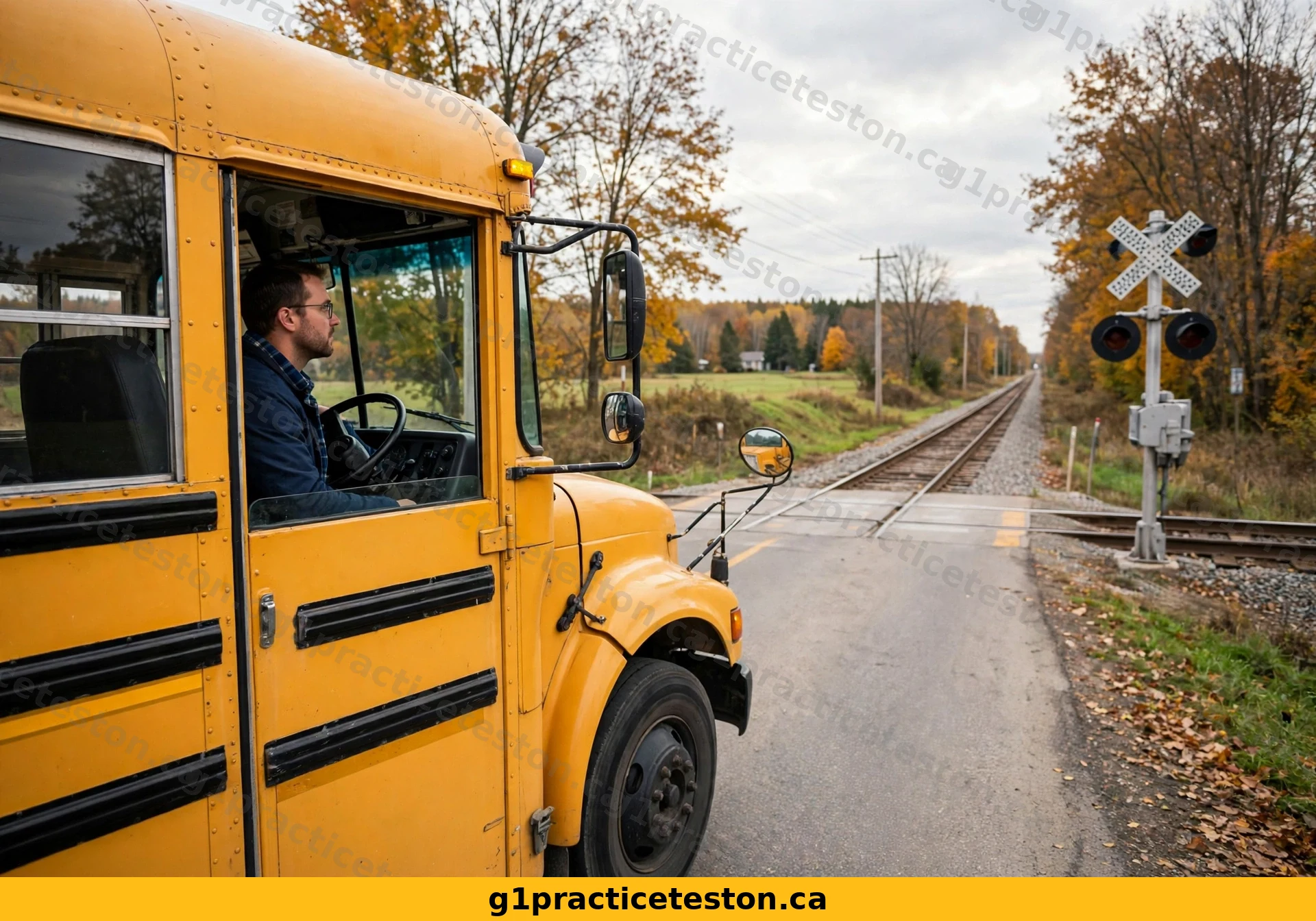
Q51. Which vehicles must stop at EVERY railway crossing in Ontario, even when no train is coming and no signal is flashing?
g1practiceteston.ca -
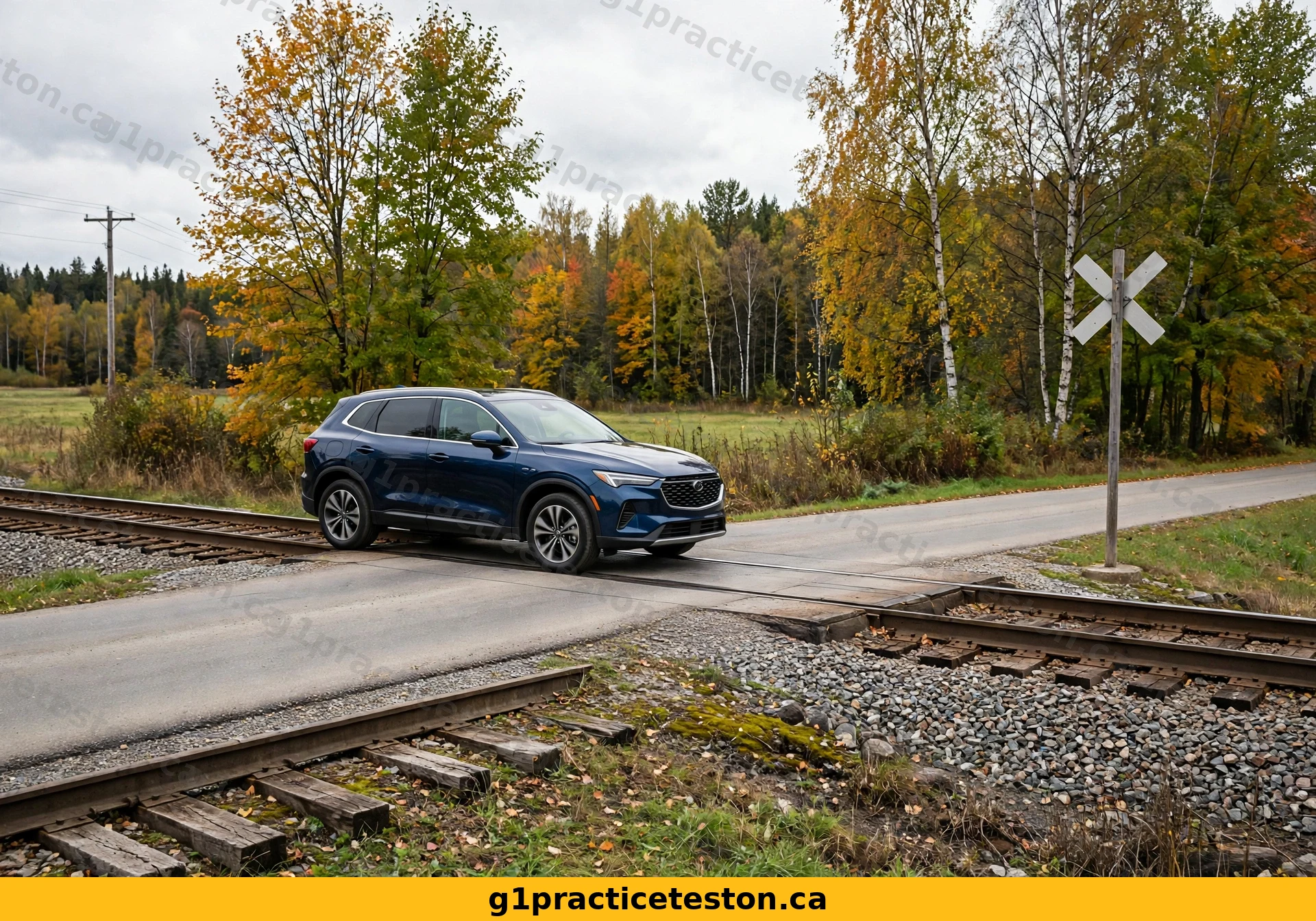
Q52. As you drive over a railway crossing, you should:
g1practiceteston.ca -
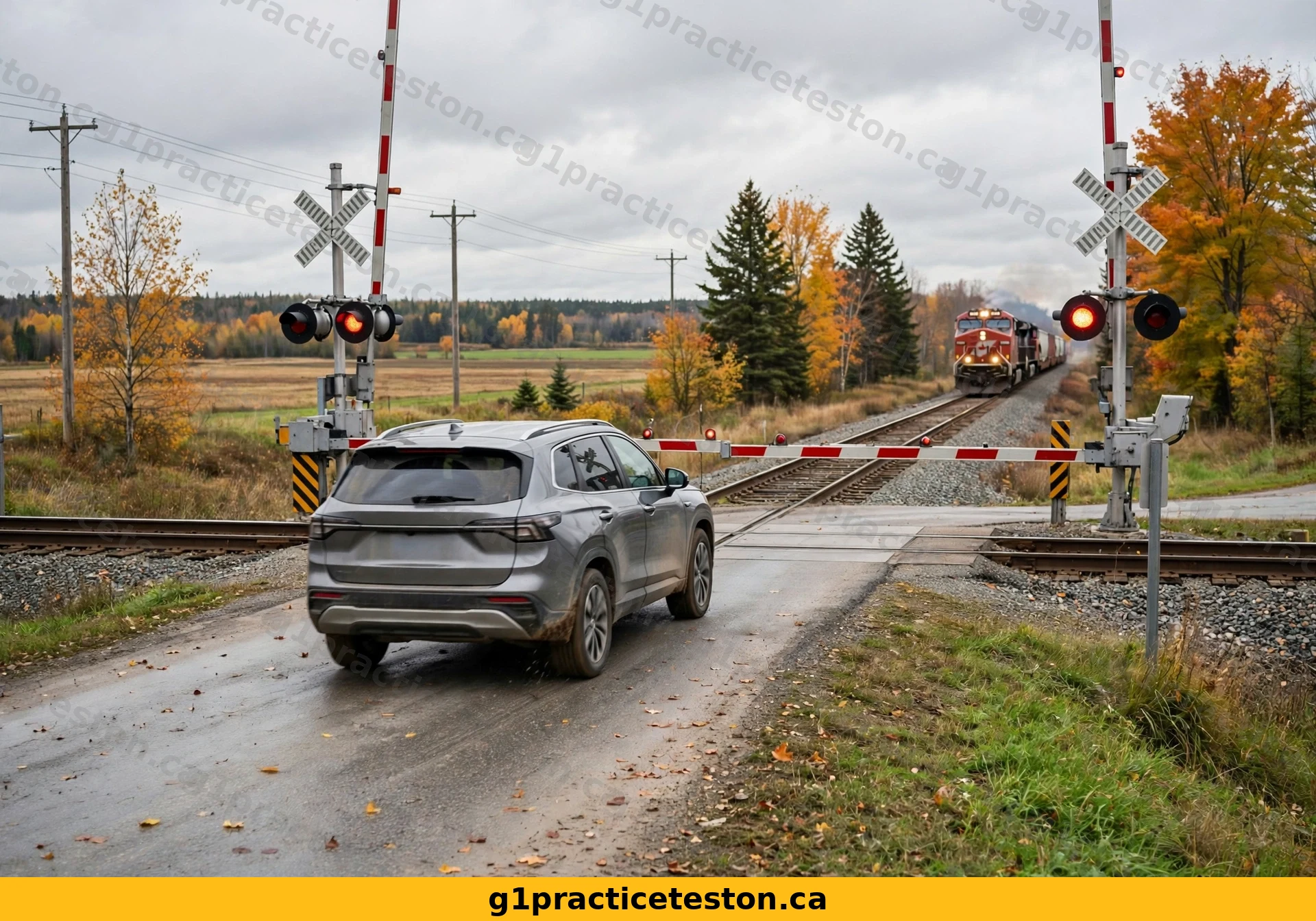
Q53. You are driving across railway tracks when the crossing gates begin to come down and you are still on the tracks. What should you do?
g1practiceteston.ca -
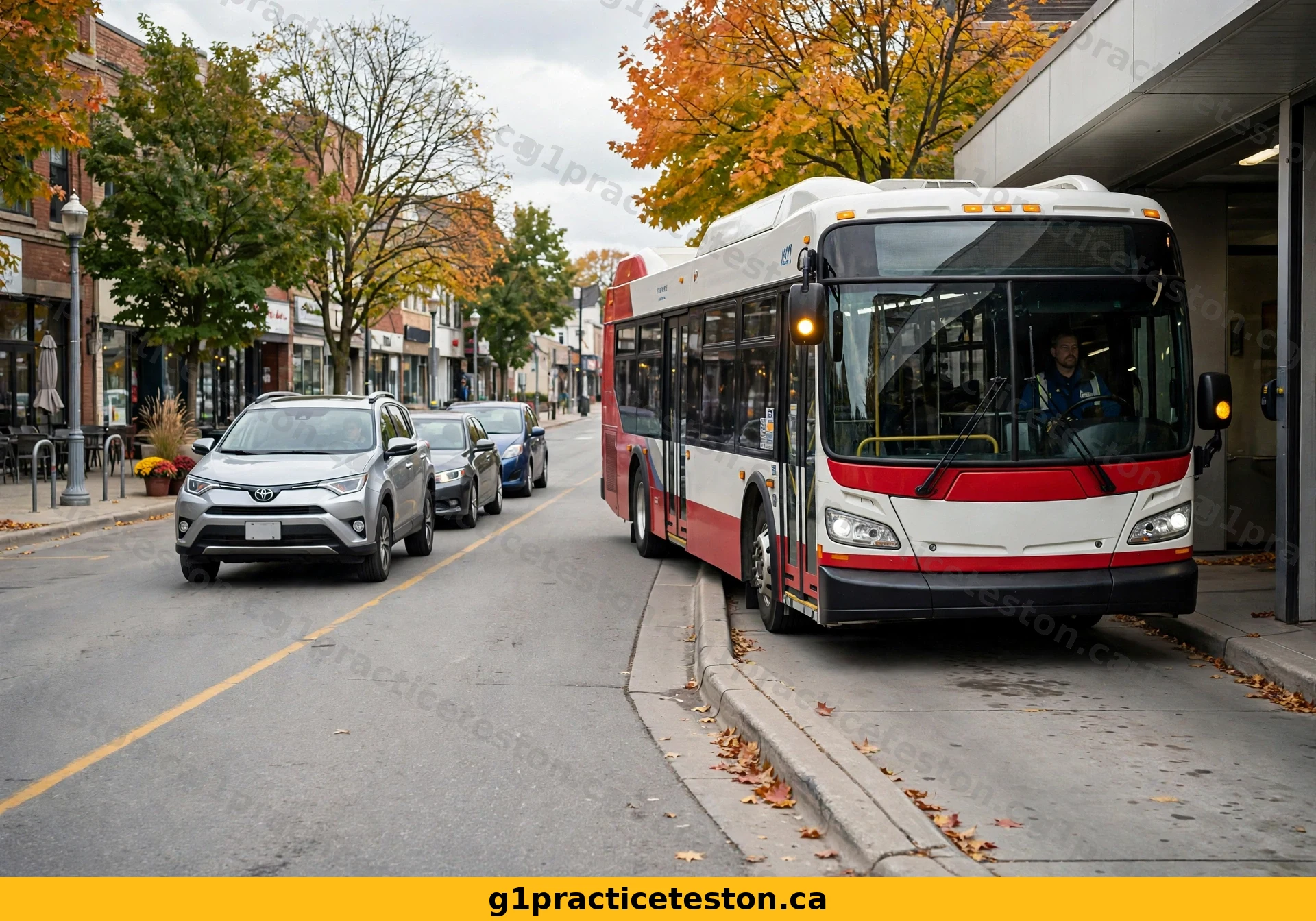
Q54. A city bus is signalling to pull out of a bus bay back into traffic. What must you do?
g1practiceteston.ca -
Q55. In Ontario, who may use a highway HOV (high-occupancy vehicle) lane marked with a diamond?
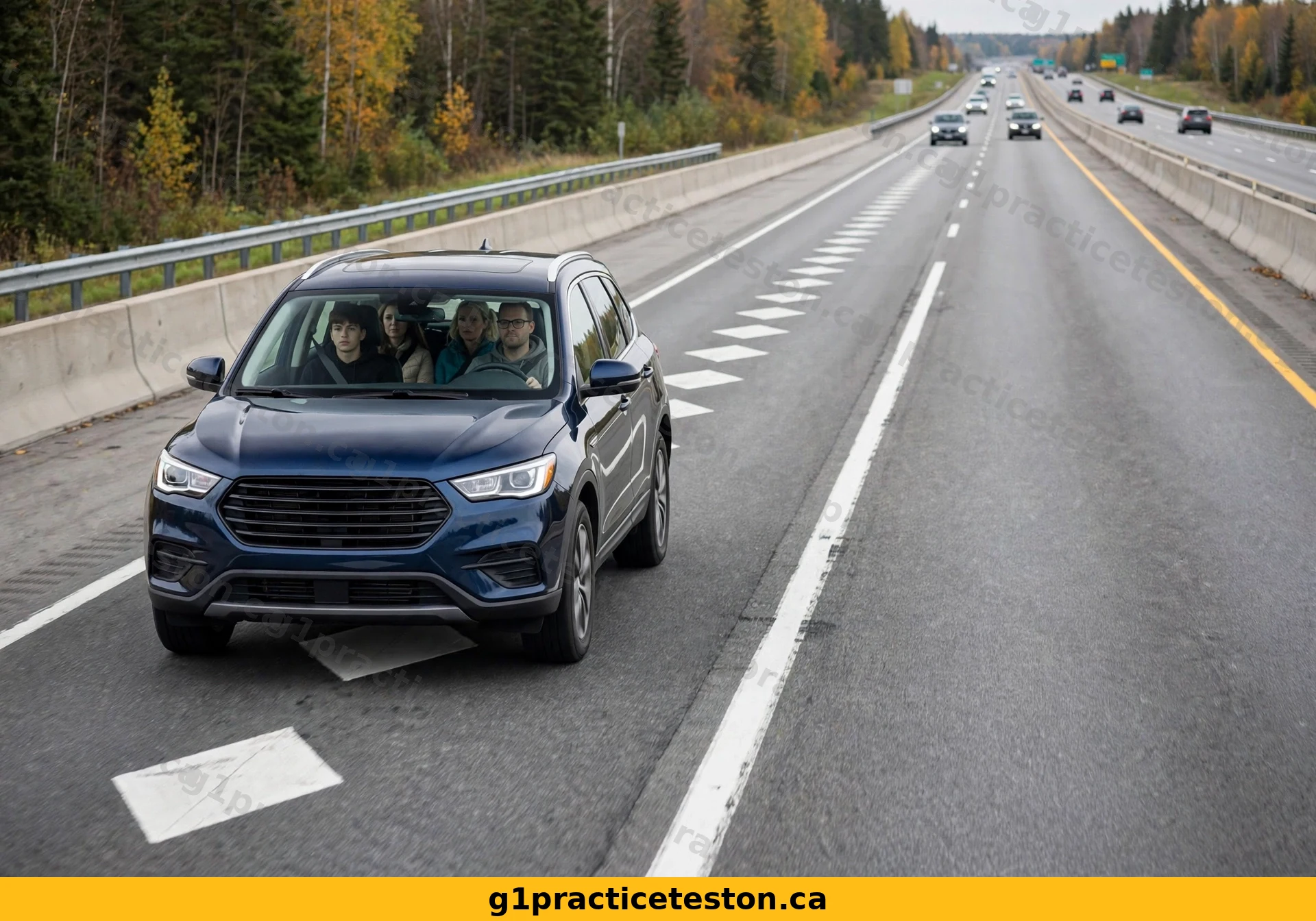
g1practiceteston.ca -
Q56. On a multi-lane highway in Ontario, which lane should you normally drive in?
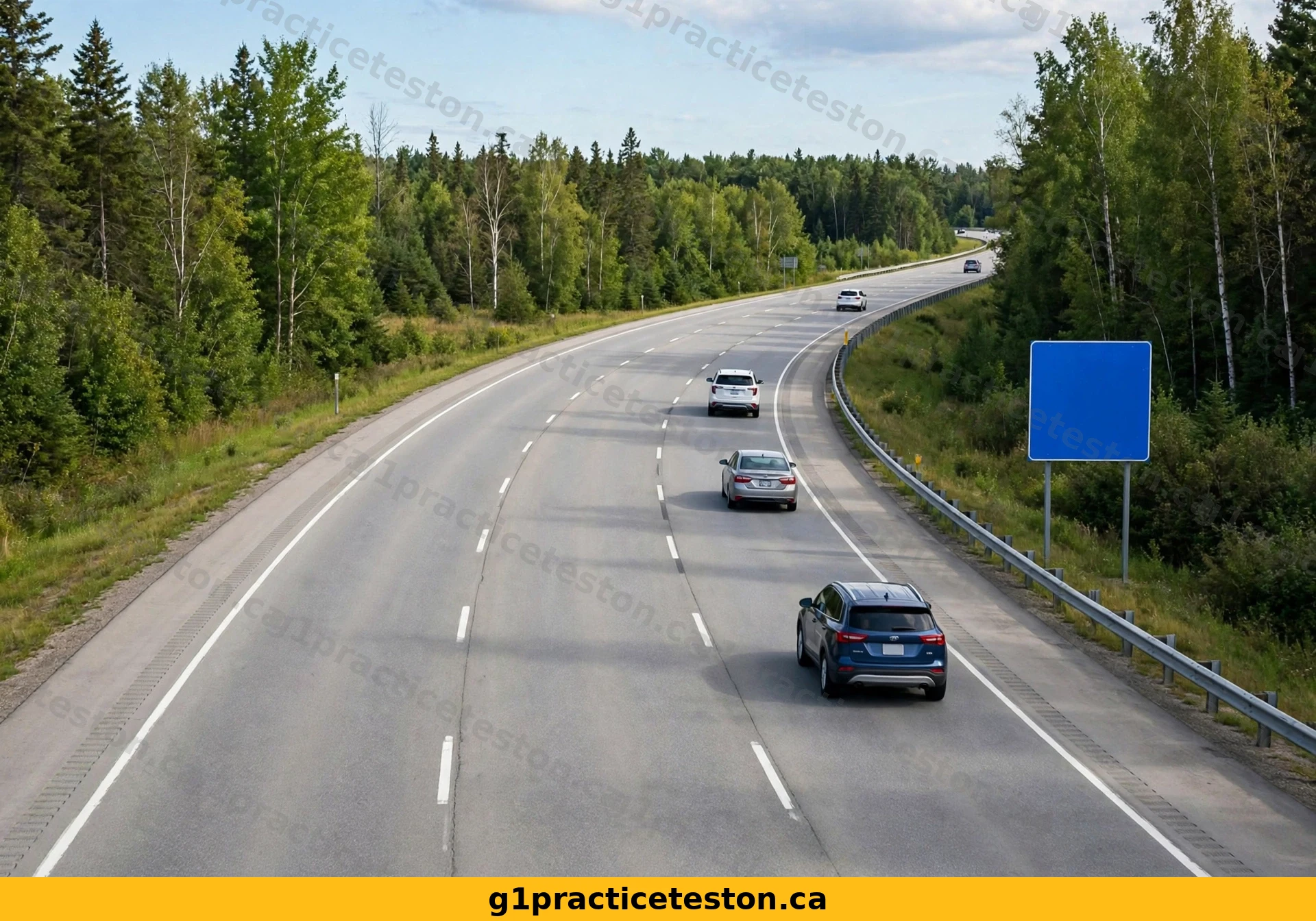
g1practiceteston.ca -
Q57. When leaving a freeway, when should you slow down to the exit ramp's speed?
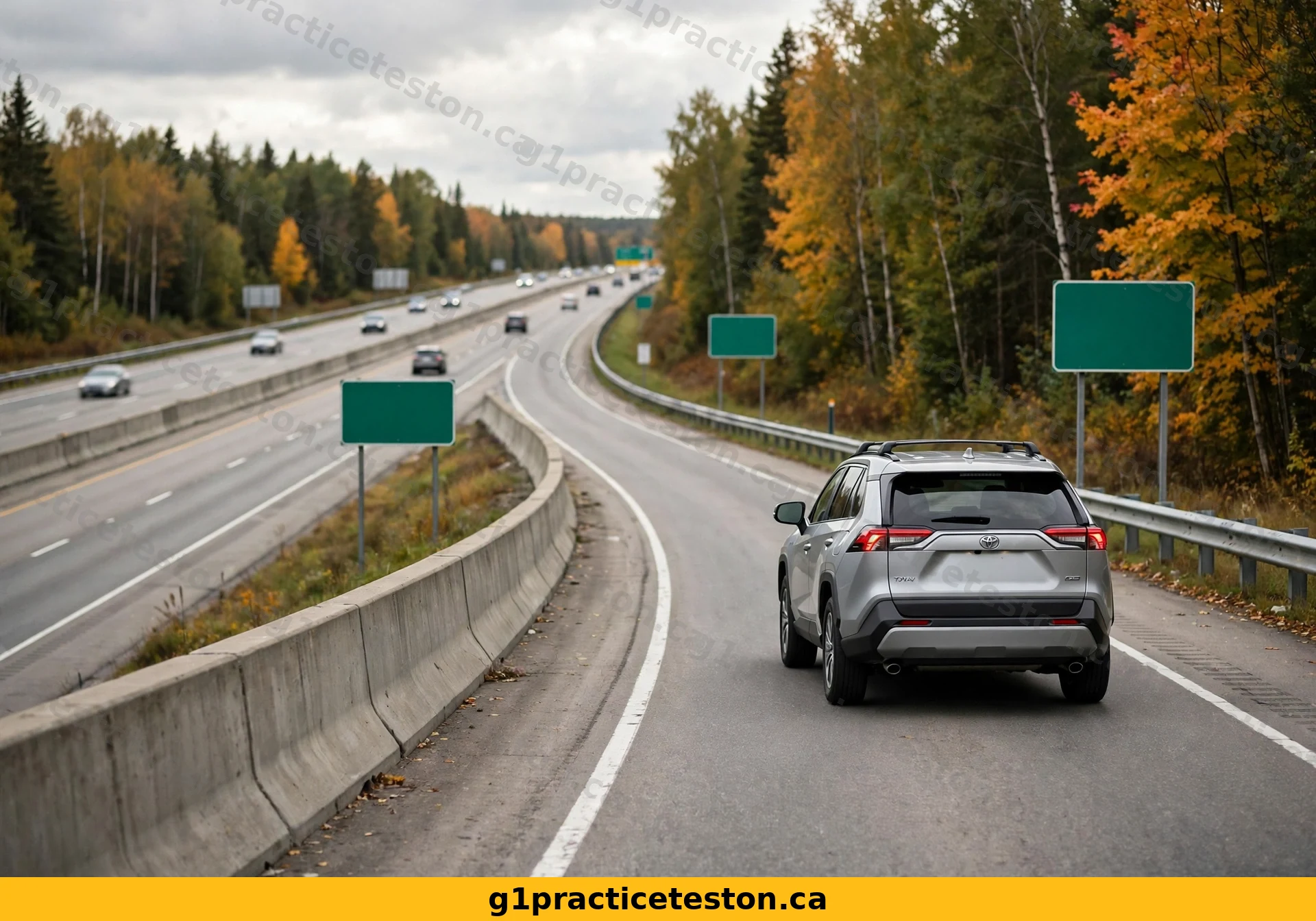
g1practiceteston.ca -
Q58. In a construction zone, one lane is closed ahead. What is the correct way to merge?
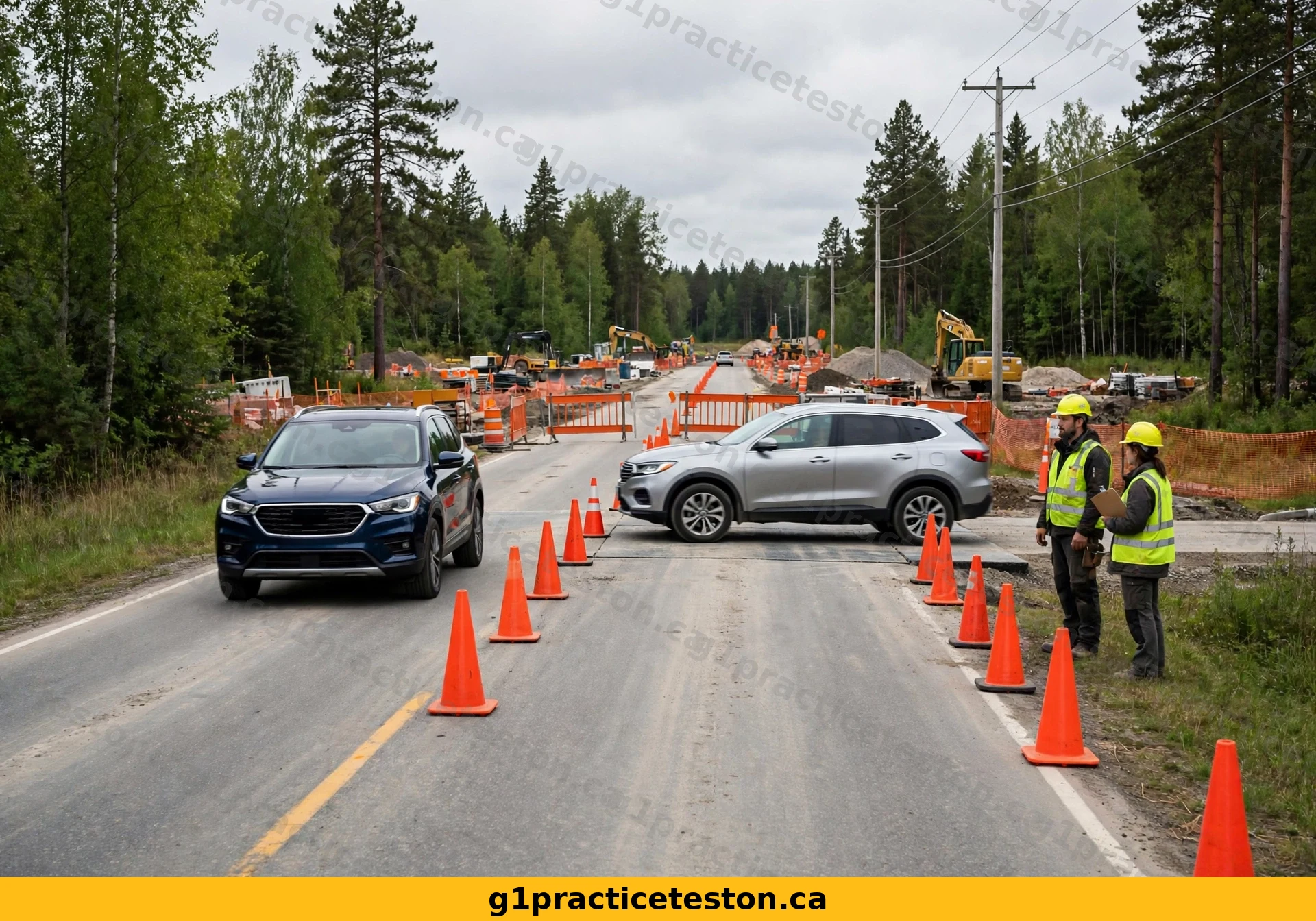
g1practiceteston.ca -
Q59. What happens to speeding fines in a construction zone in Ontario when workers are present?
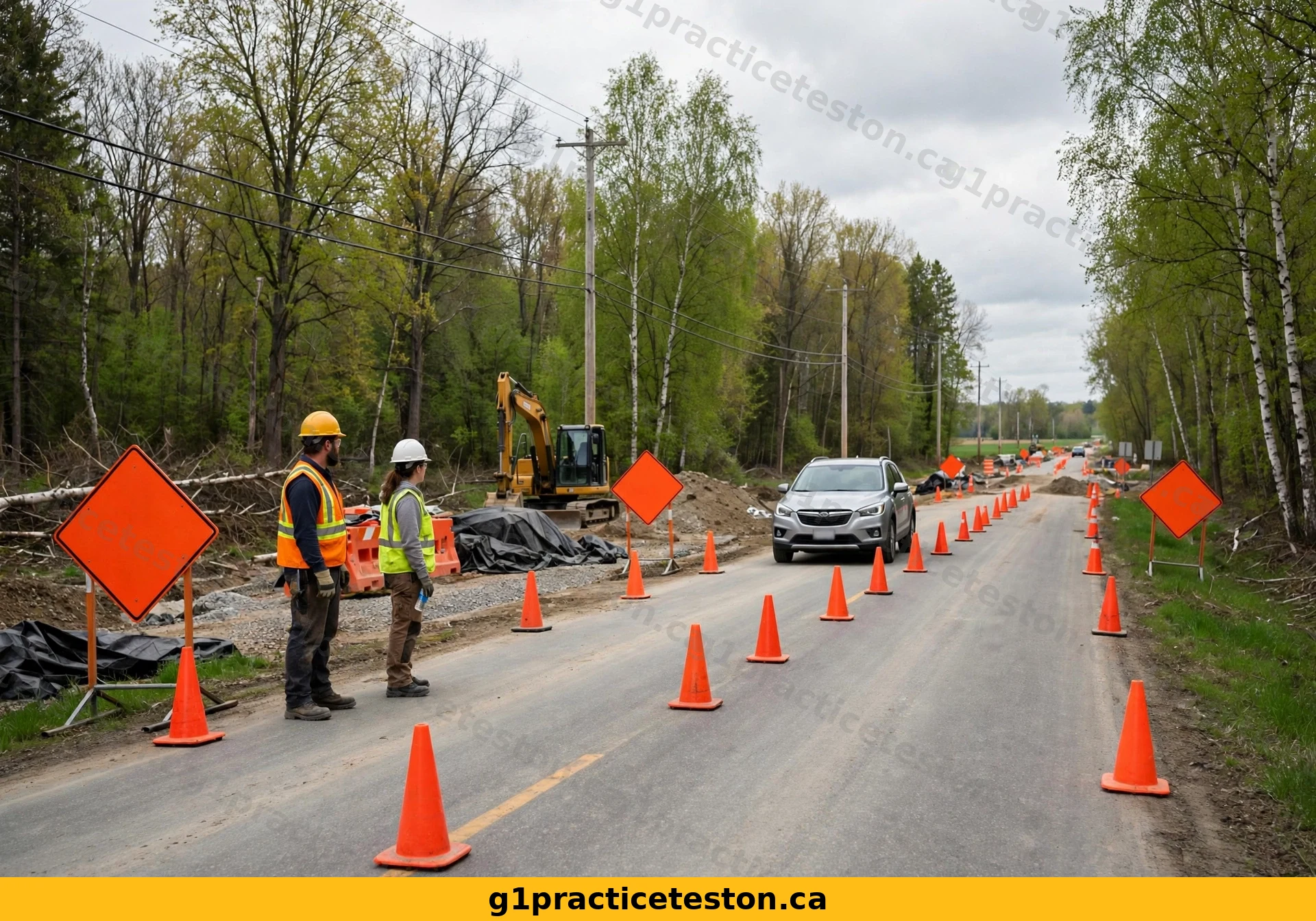
g1practiceteston.ca -
Q60. You see signs marking a "Community Safety Zone" (for example, near a school or playground). What is different about traffic fines there?

g1practiceteston.ca -
Q61. A 17-year-old G2 driver who has held the licence for three months is driving at 2 a.m. with three friends, all aged 17. Is this allowed?
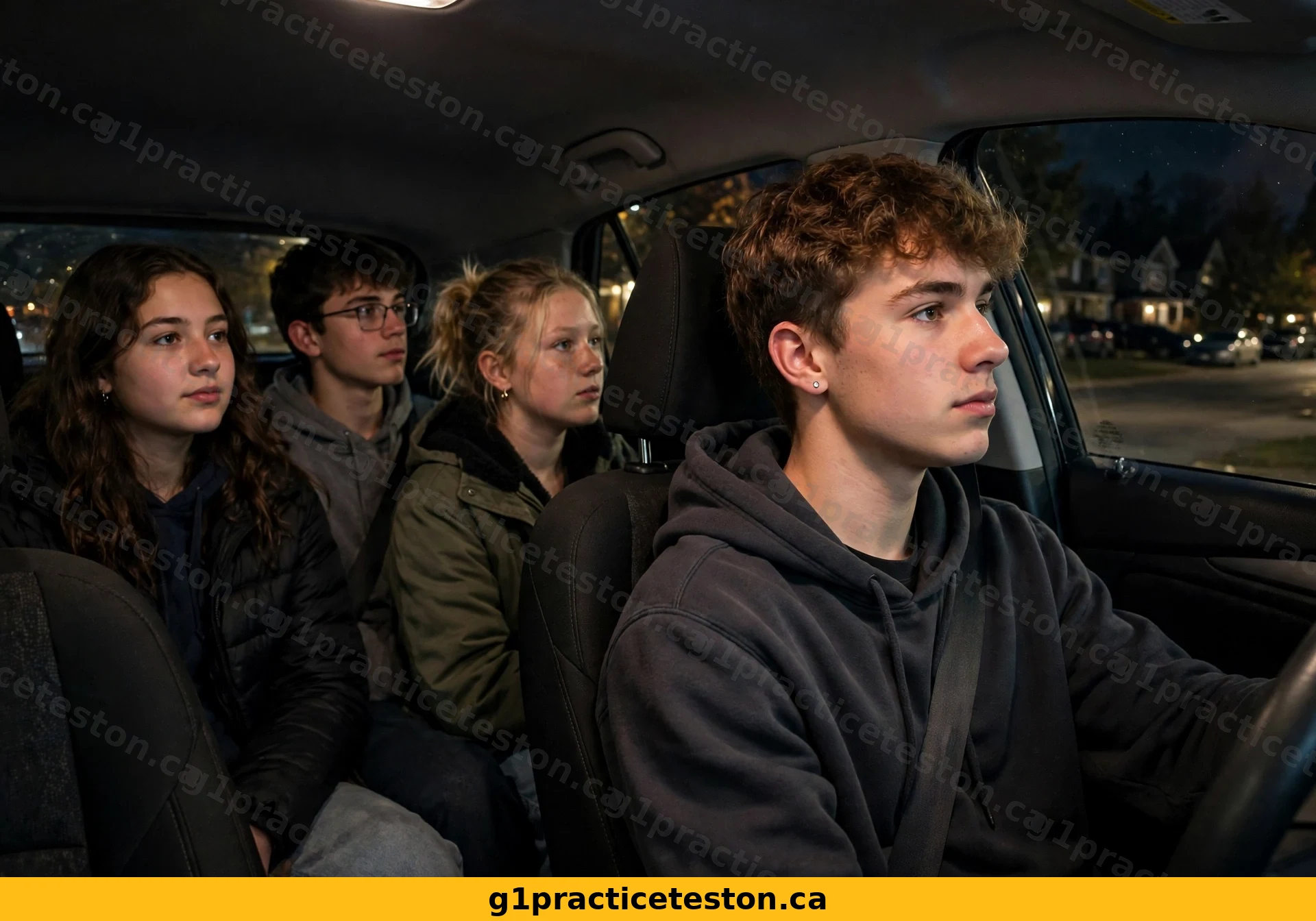
g1practiceteston.ca -
Q62. Which of these people qualifies as an accompanying driver for a G1 learner?
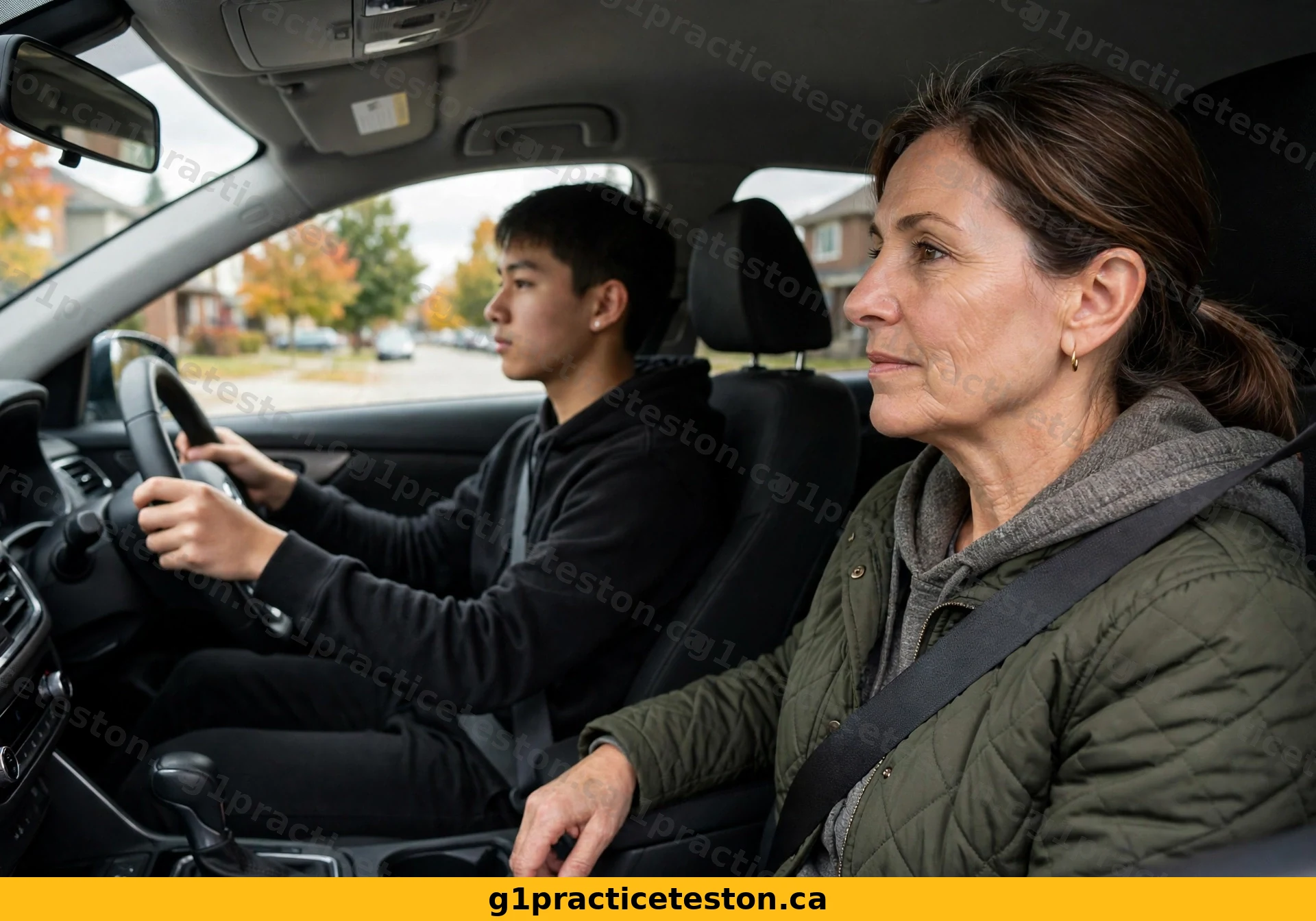
g1practiceteston.ca -
Q63. With a full Class G driver's licence in Ontario, you may drive:
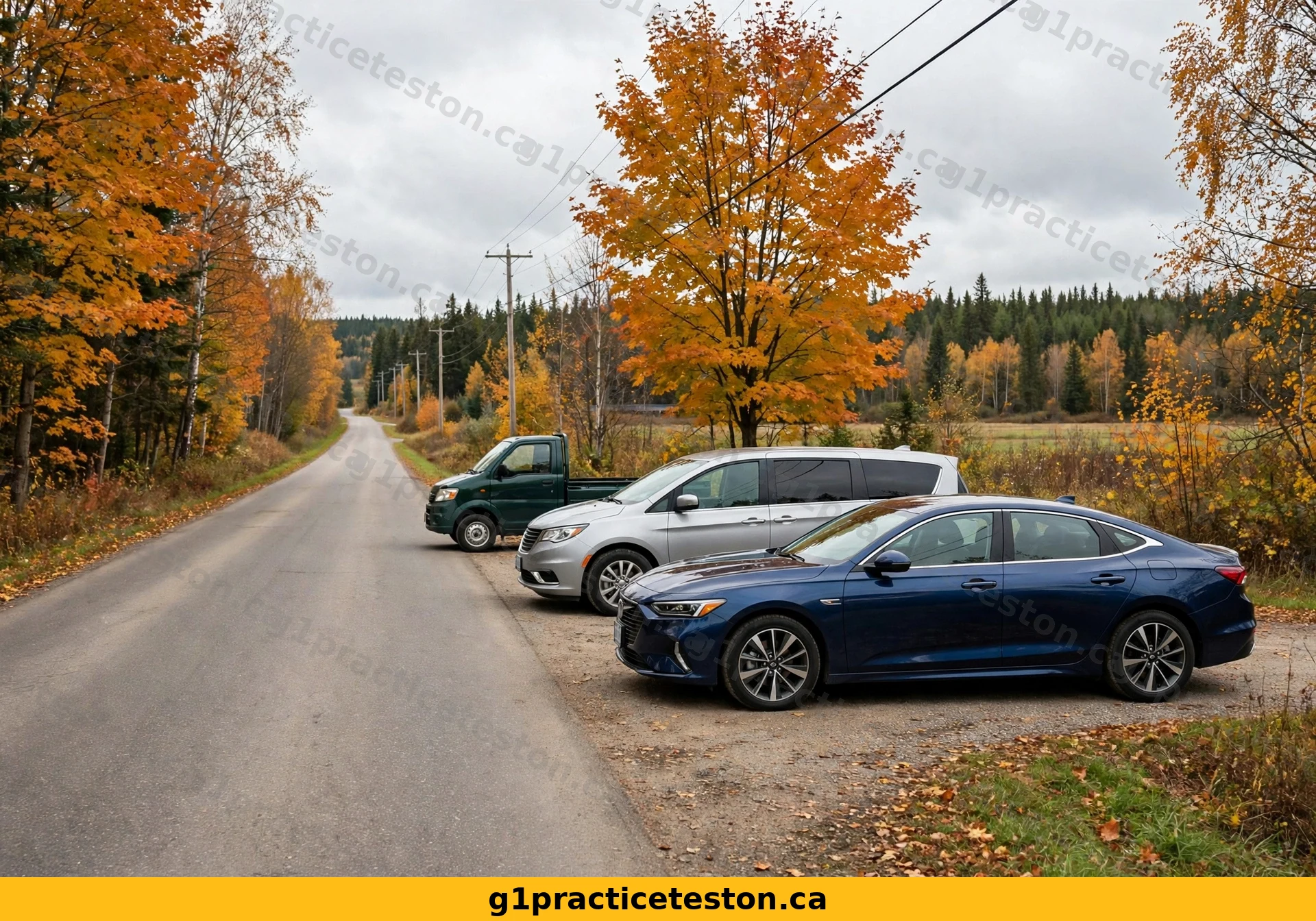
g1practiceteston.ca -
Q64. You park facing downhill on a street with a curb. Which way should you turn your front wheels?

g1practiceteston.ca -
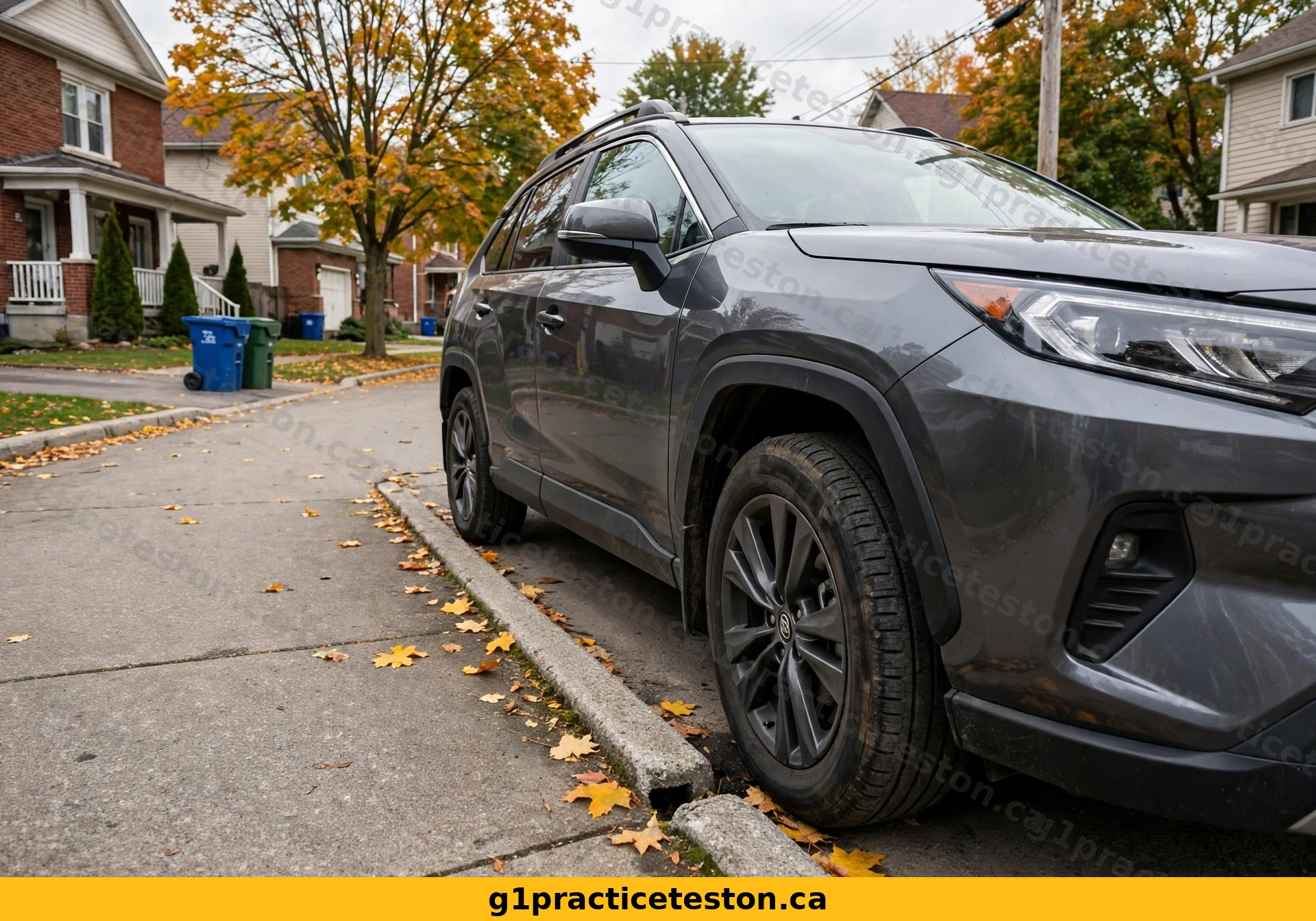
Q65. When parallel parking on a street in Ontario, how close to the curb should your vehicle be?
g1practiceteston.ca -
Q66. Which of these parking rules is correct for Ontario?

g1practiceteston.ca -
Q67. For angle parking spaces (marked at an angle to the curb), you should:

g1practiceteston.ca -
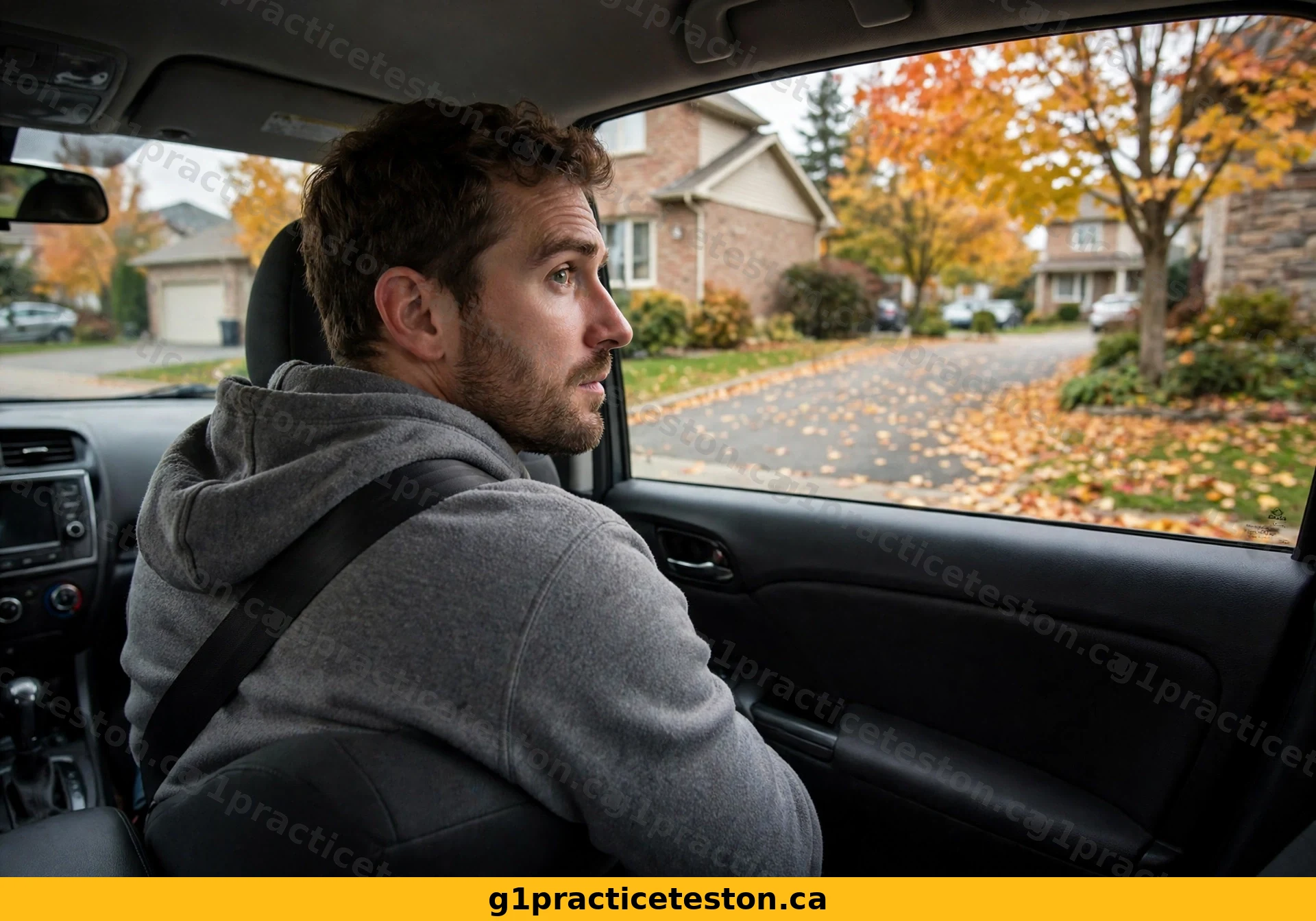
Q68. Which statement about backing up (reversing) is correct?
g1practiceteston.ca -
Q69. Before making a three-point turn on a road, you must make sure:

g1practiceteston.ca -
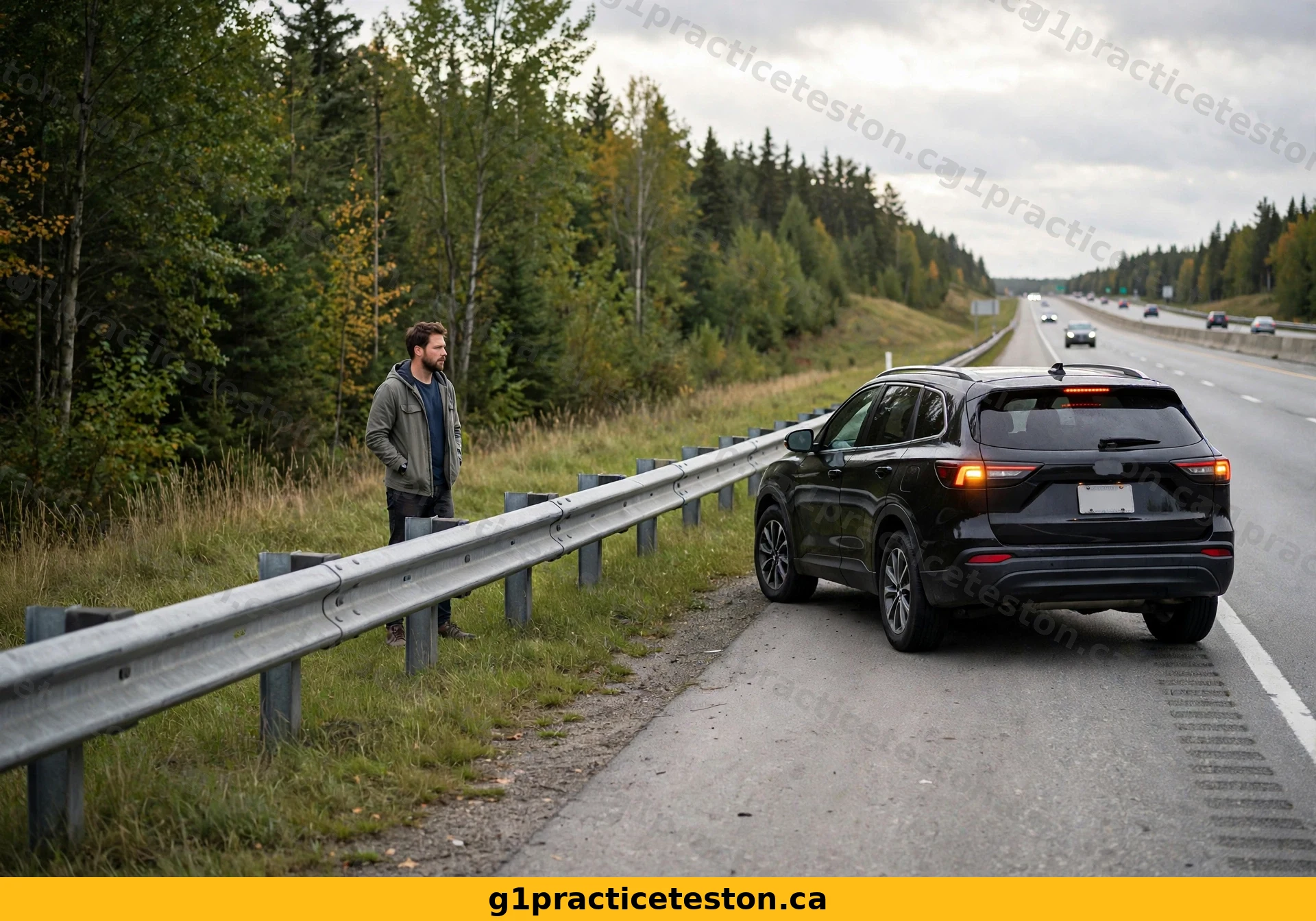
Q70. Your vehicle breaks down on a 400-series highway. What should you do?
g1practiceteston.ca -
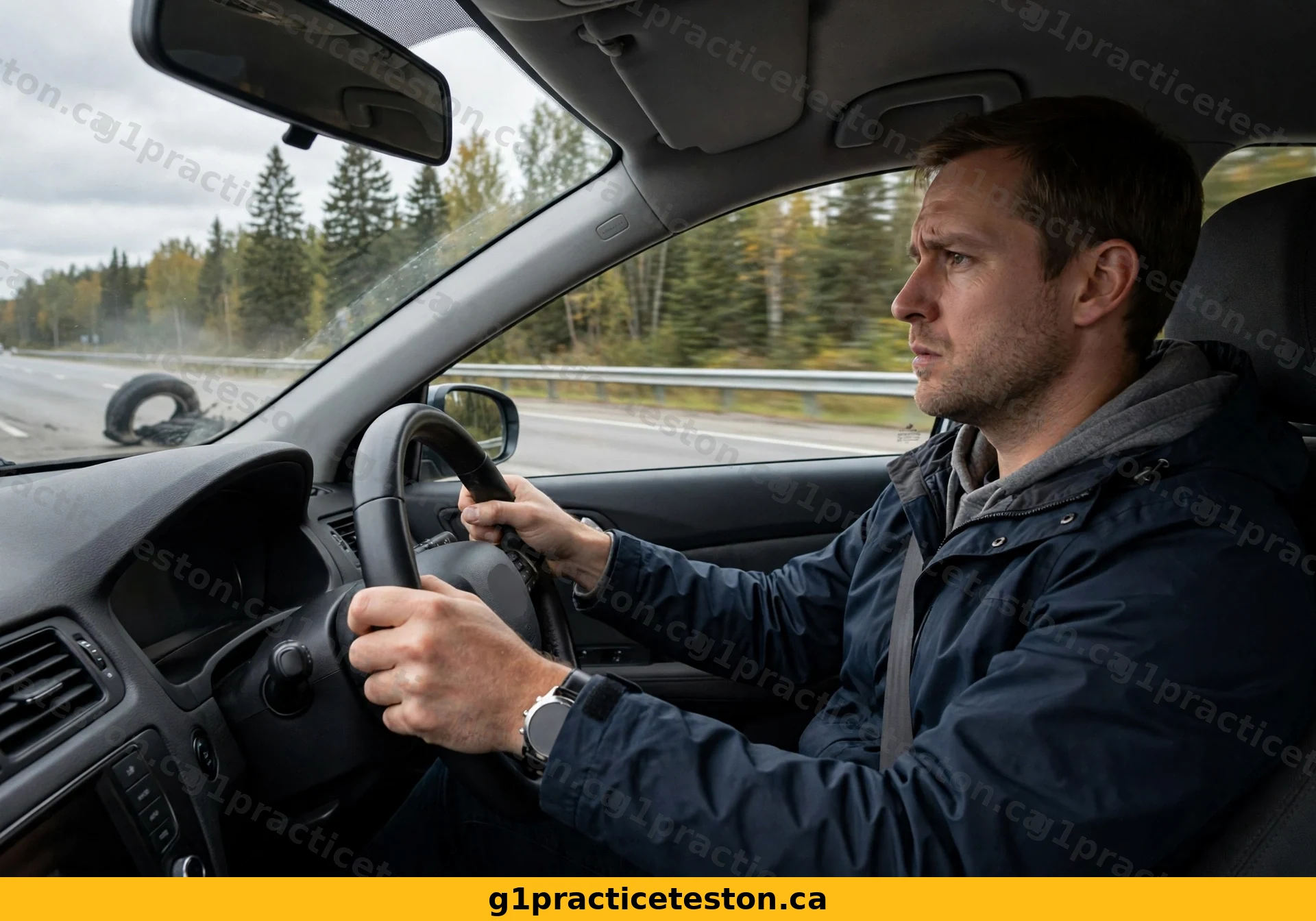
Q71. Your tire blows out suddenly at highway speed. What is the safest response?
g1practiceteston.ca -
Q72. Your vehicle starts to skid on ice. What should you do?

g1practiceteston.ca -
Q73. In heavy rain your tires lose contact with the road (hydroplaning). What should you do?

g1practiceteston.ca -
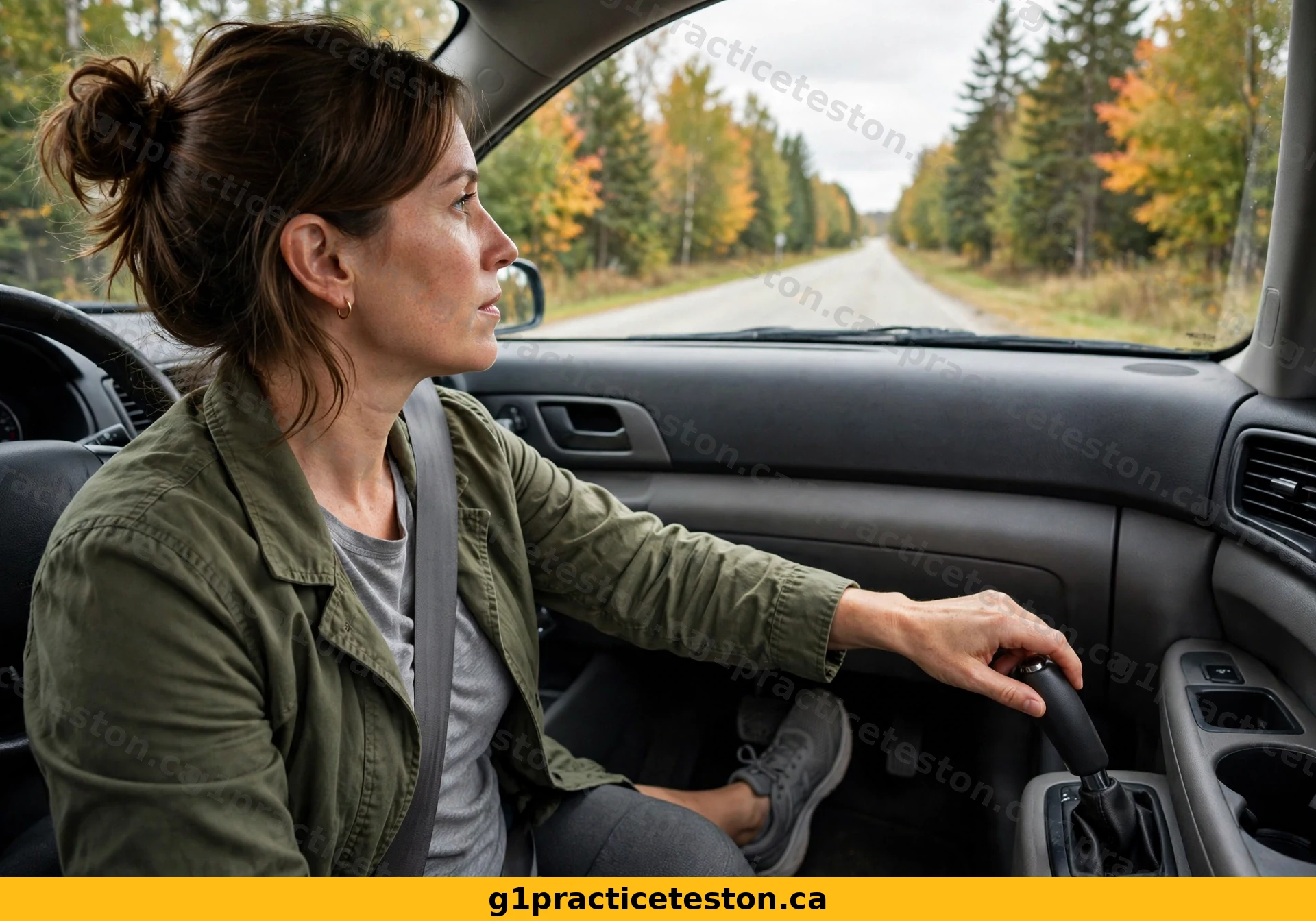
Q74. Your brakes fail while you are driving. What should you do?
g1practiceteston.ca -
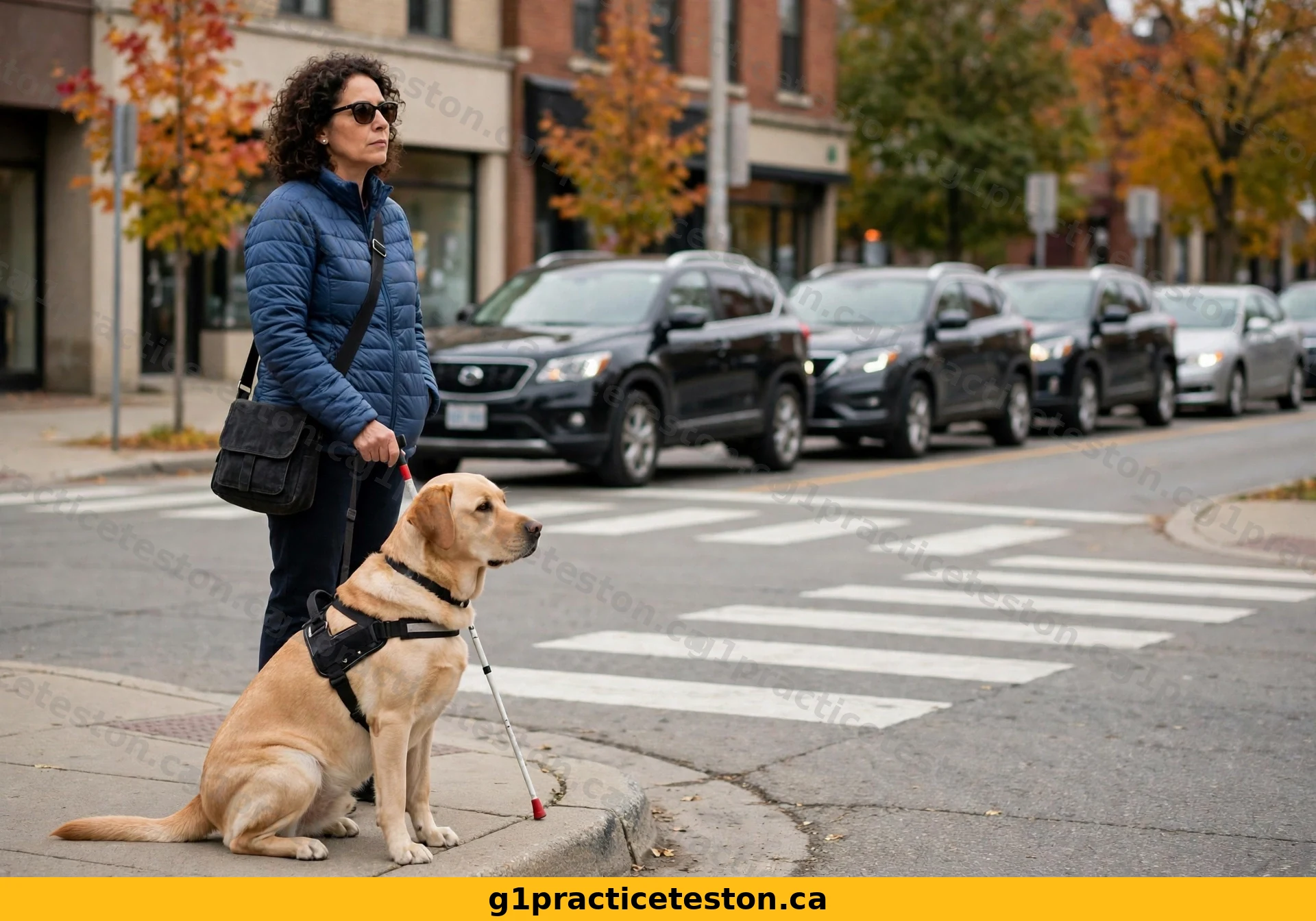
Q75. You see a pedestrian carrying a white cane (or walking with a guide dog) about to cross the road. What must you do?
g1practiceteston.ca -
Q76. You are about to step into a crosswalk when the pedestrian signal starts flashing a hand ("don't walk"). You have not started crossing yet. What should you do?

g1practiceteston.ca -
Q77. You are leaving a private driveway (or alley) to enter a road. Who has the right-of-way?

g1practiceteston.ca -
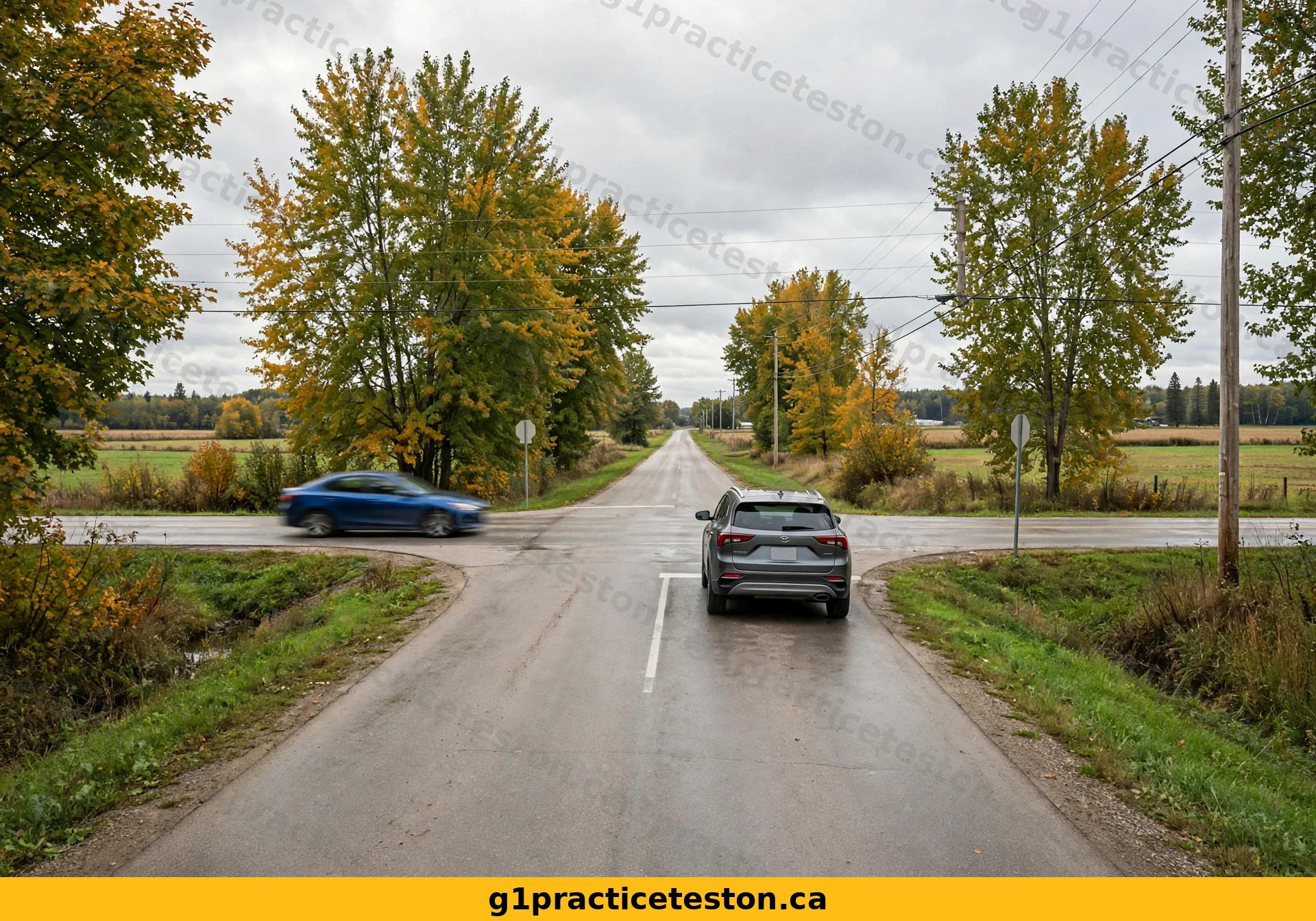
Q78. At an uncontrolled T-intersection, you are on the road that ends at the through road. Who has the right-of-way?
g1practiceteston.ca -
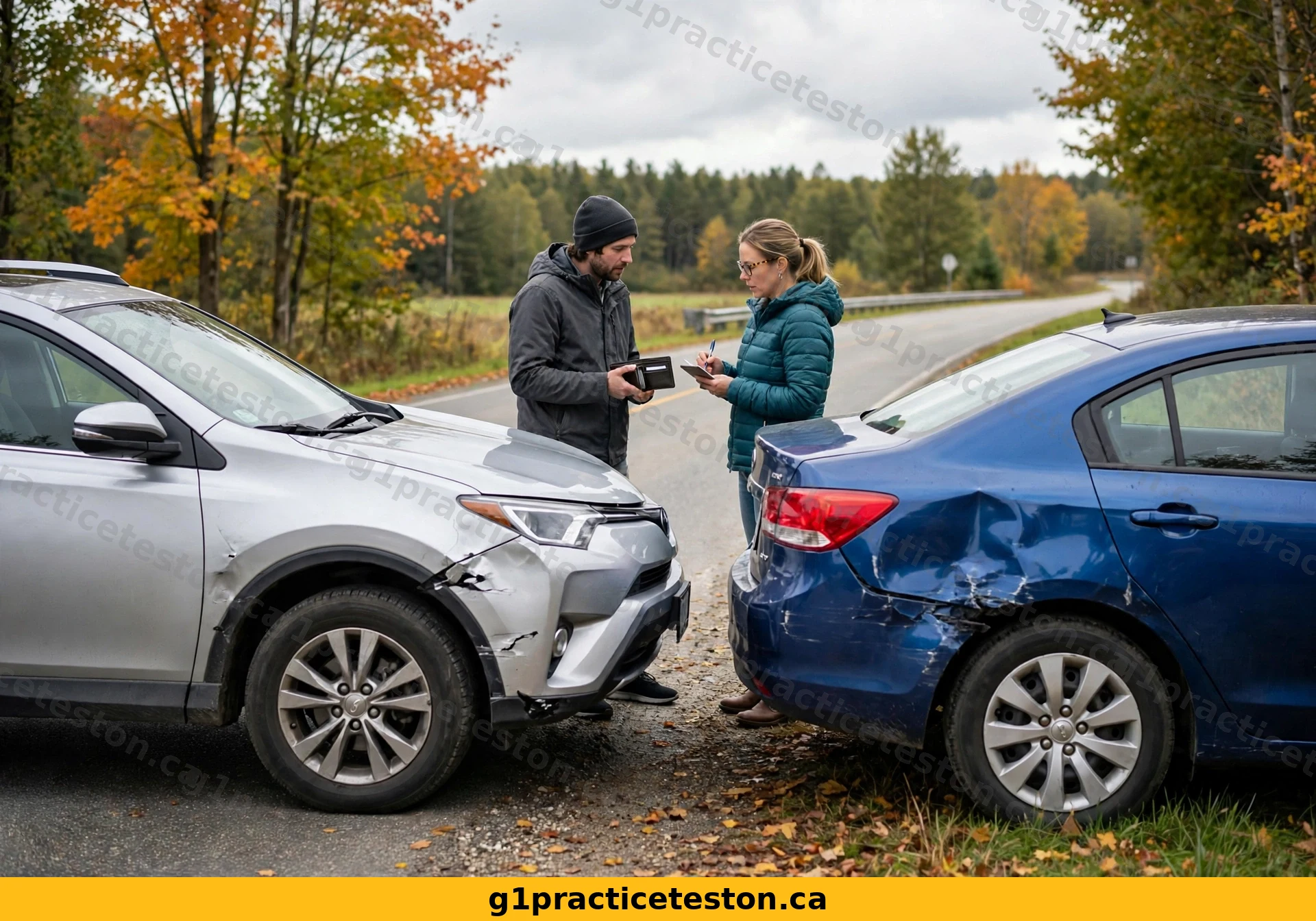
Q79. You are in a collision with no injuries, police do not attend, and the combined vehicle damage appears to be over $5,000. What does Ontario law require?
g1practiceteston.ca -
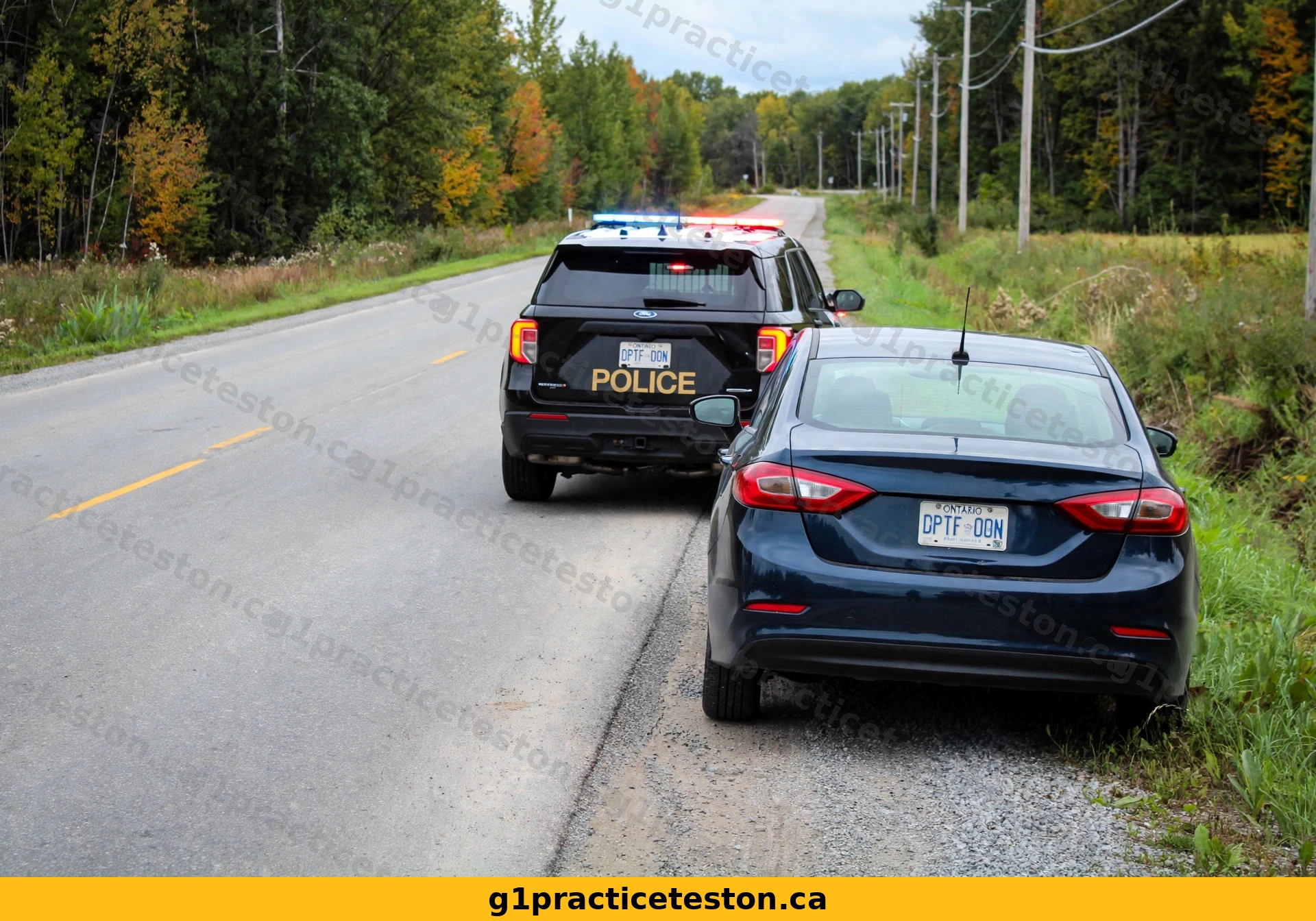
Q80. On a road with a posted limit of 60 km/h, at what speed does driving become stunt driving under Ontario law, and what happens immediately?
g1practiceteston.ca -
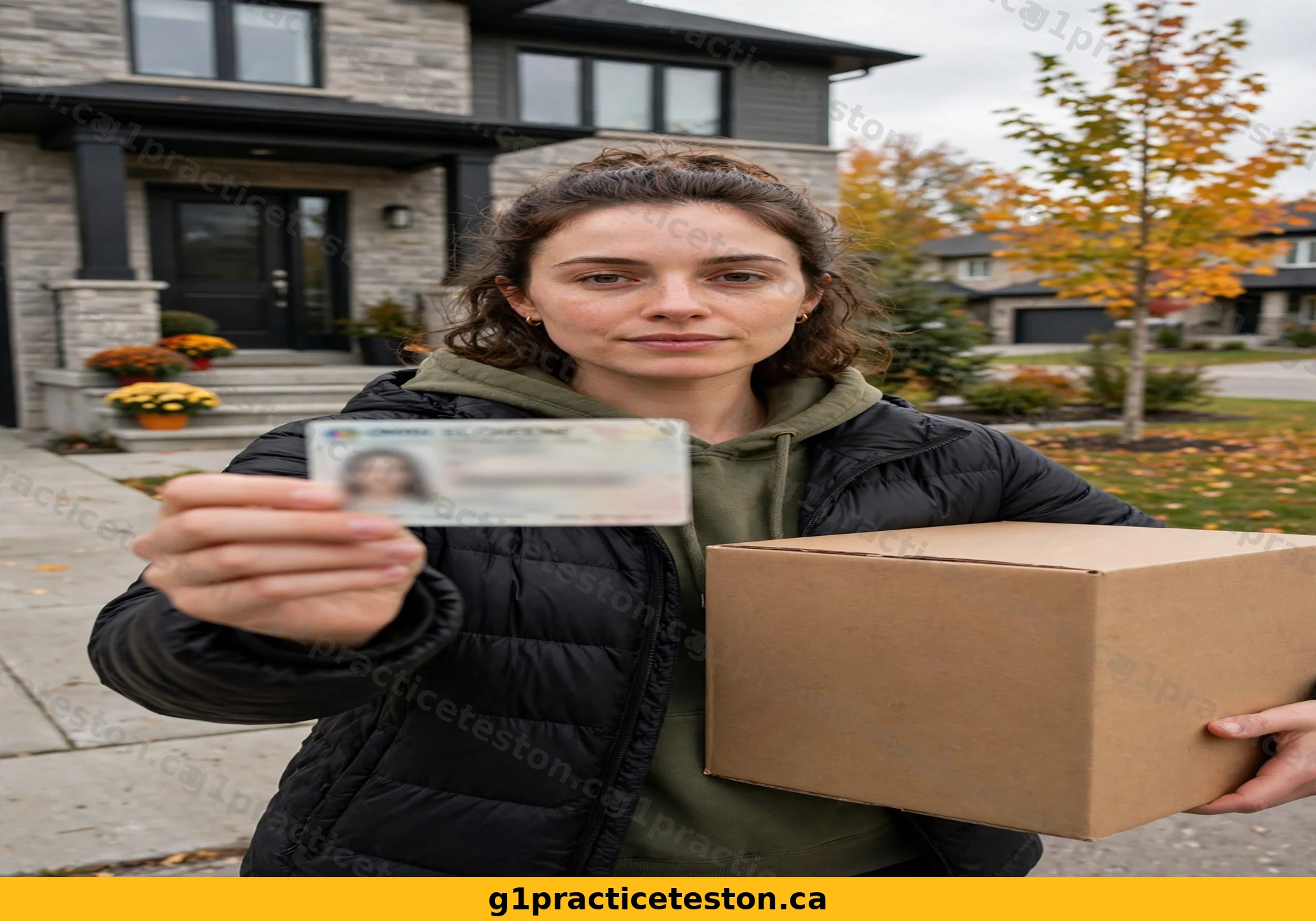
Q81. You move to a new home in Ontario (or legally change your name). Within how many days must you tell the Ministry of Transportation about the change?
g1practiceteston.ca -
Q82. Under Ontario's graduated licensing system, how long do you have to complete the whole process (G1 → G2 → full G) before your novice licence expires?
g1practiceteston.ca -
Q83. A fully licensed (full G) driver accumulates 9 to 14 demerit points. What will the Ministry of Transportation do?

g1practiceteston.ca -
Q84. At how many demerit points is a fully licensed (full G) driver's licence suspended, and for how long on the first occasion?
g1practiceteston.ca -
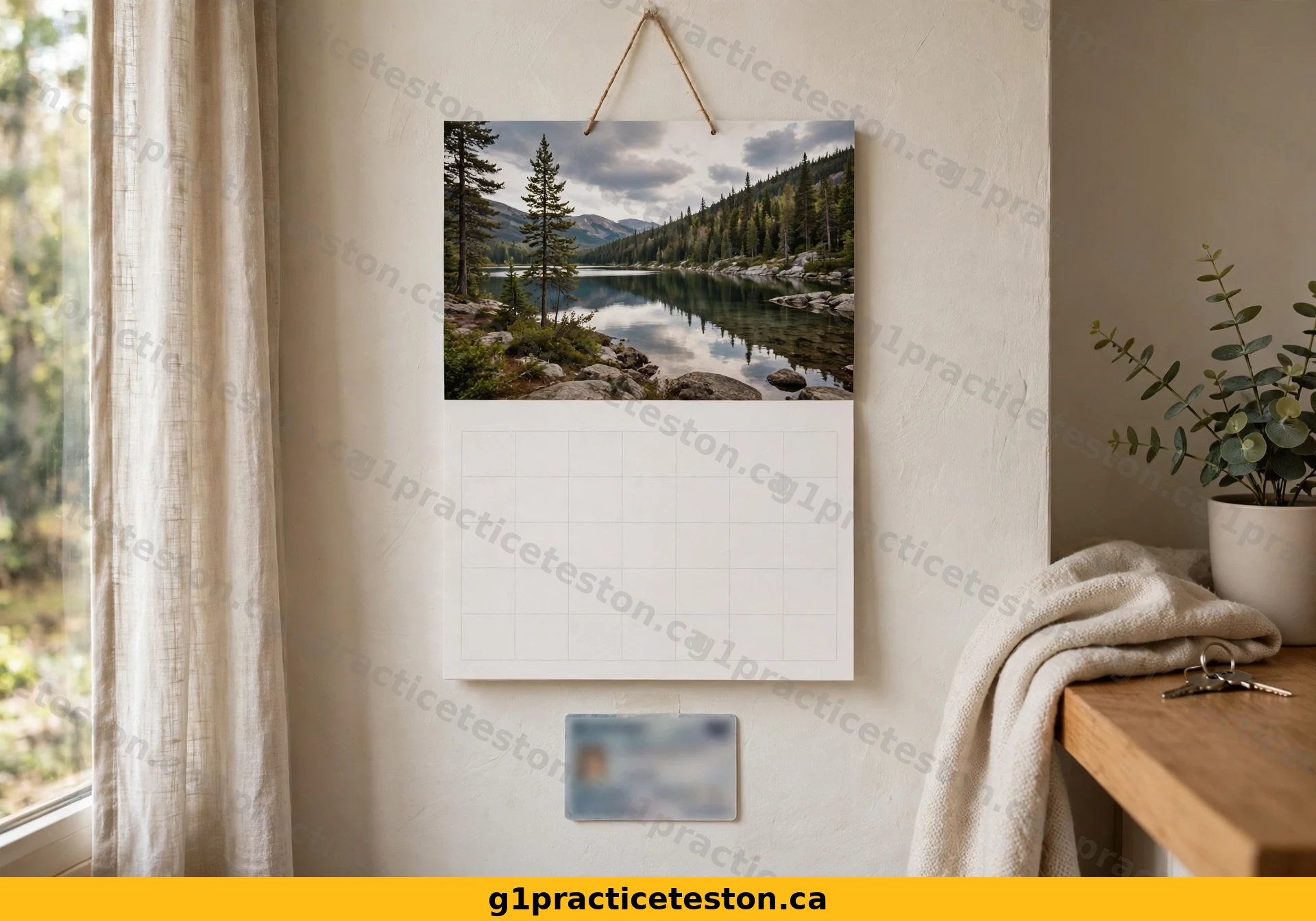
Q85. How long do demerit points stay on your Ontario driving record?
g1practiceteston.ca -
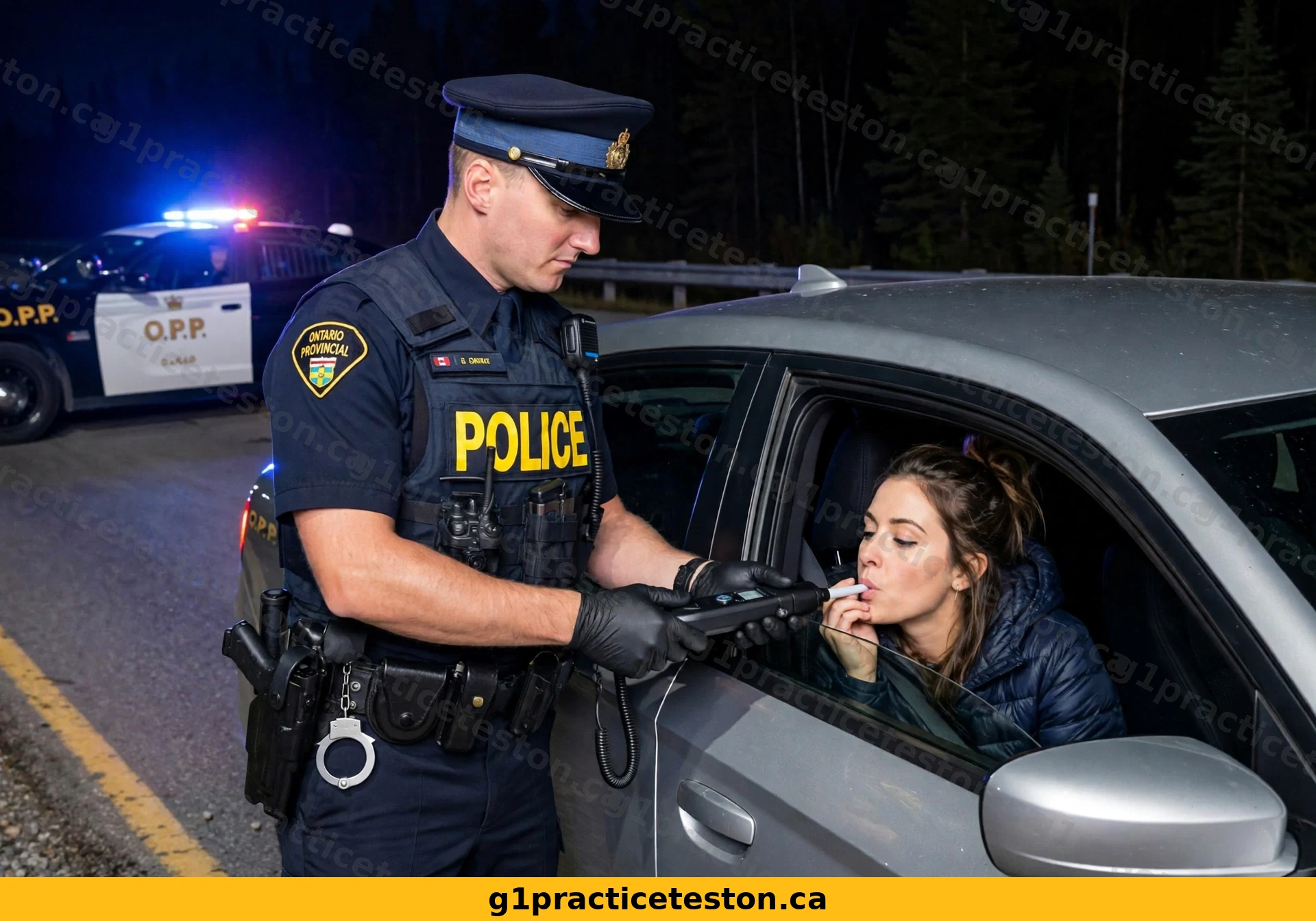
Q86. A fully licensed driver is stopped and registers a blood alcohol concentration of 0.06, inside Ontario's "warn range" (0.05–0.079). What happens immediately on a first offence?
g1practiceteston.ca -
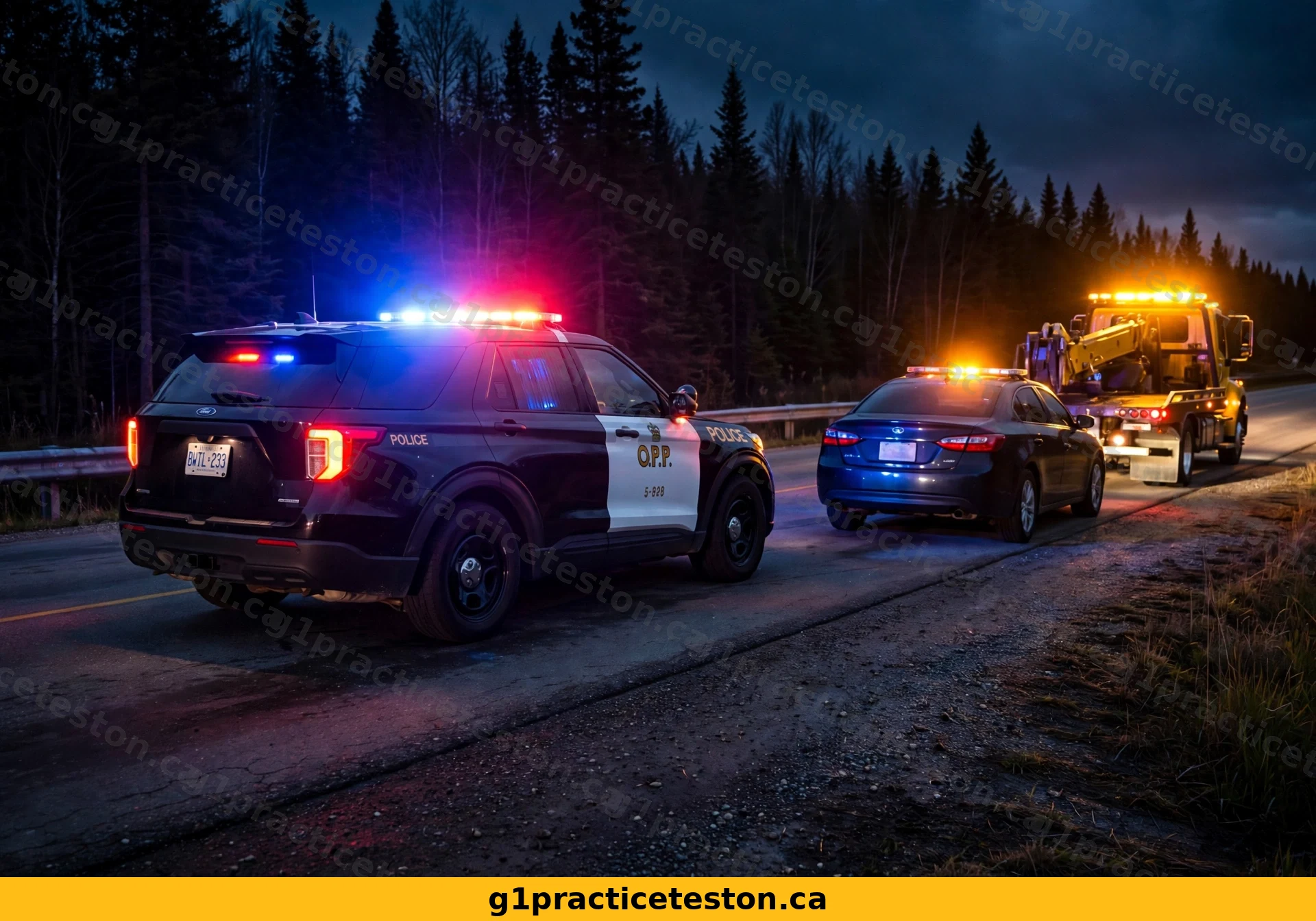
Q87. A driver registers a BAC over 0.08, refuses to provide a breath sample, or is found impaired after a drug-recognition evaluation. What are the immediate roadside consequences in Ontario?
g1practiceteston.ca -
Q88. In Ontario, which health professionals are REQUIRED by law to report a patient whose medical condition may make it dangerous for them to drive?

g1practiceteston.ca -
Q89. You are driving with cannabis in your car in Ontario. How must it be carried to stay legal?

g1practiceteston.ca -
Q90. How may alcohol legally be transported in a vehicle in Ontario?

g1practiceteston.ca -
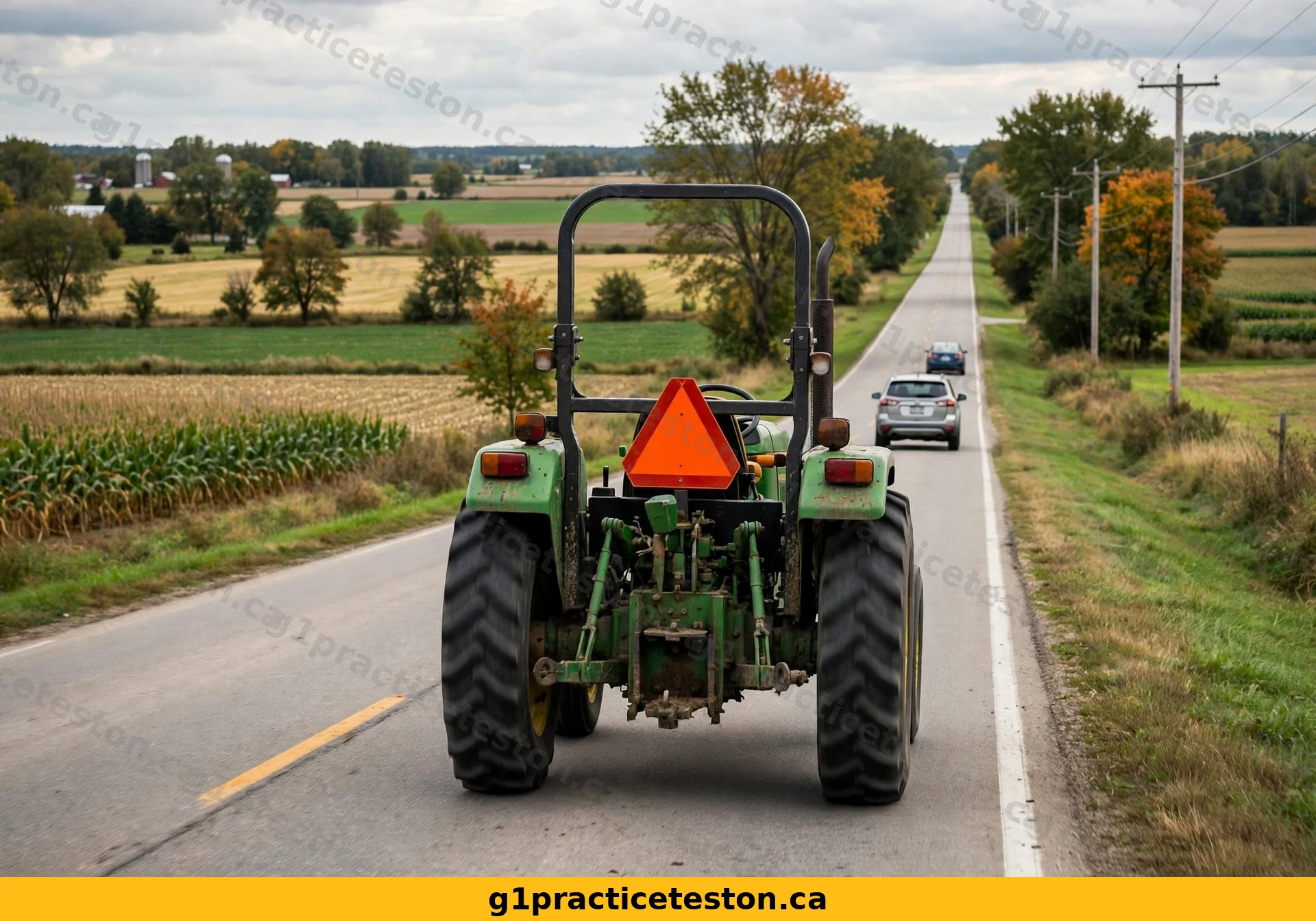
Q91. The vehicle ahead of you displays an orange triangle sign with a red border on its rear — a slow-moving vehicle sign, as farm tractors and horse-drawn buggies must. What is it telling you?
g1practiceteston.ca -
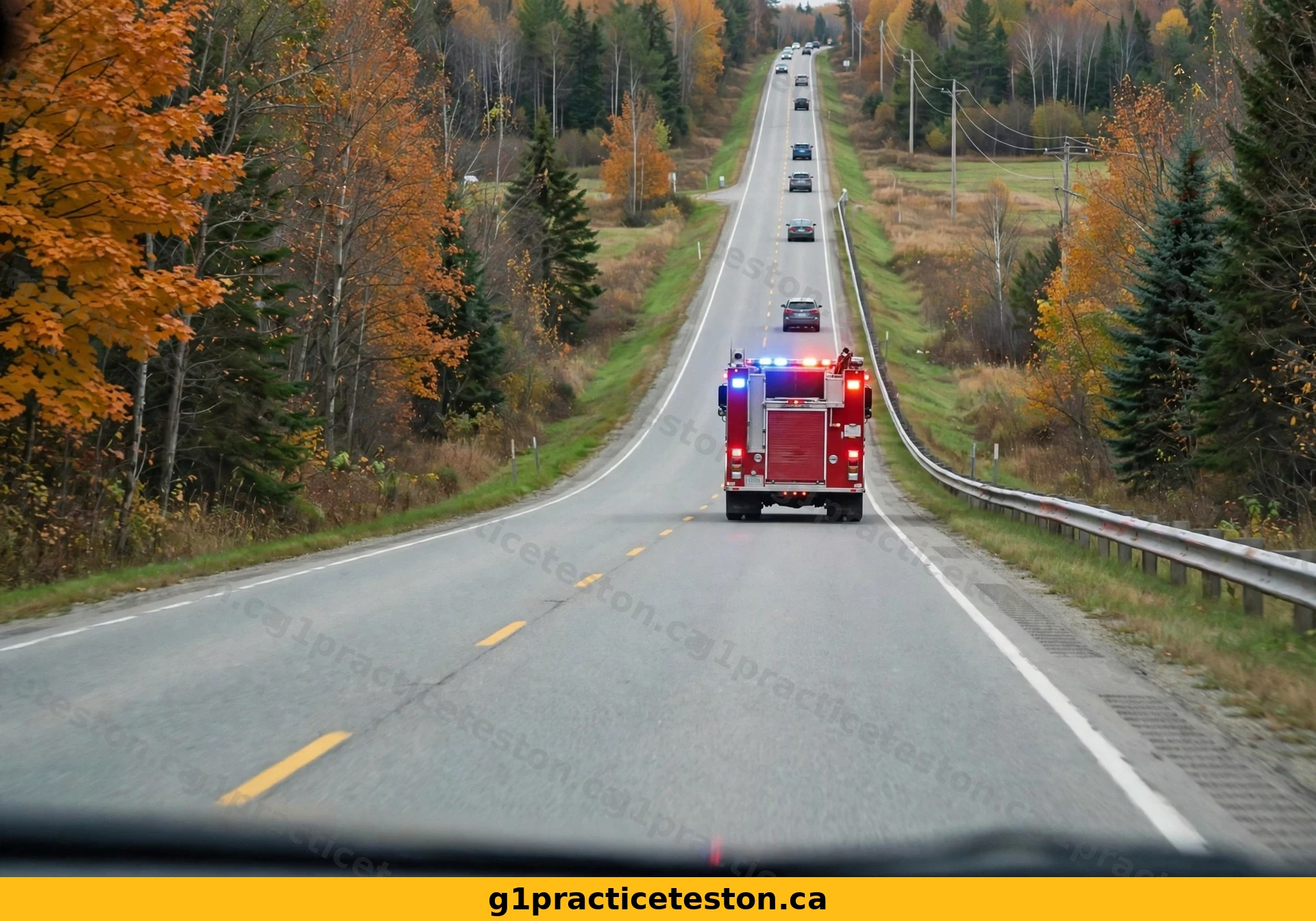
Q92. A fire truck is racing to a call ahead of you, travelling in the same direction. What does Ontario law say about following it?
g1practiceteston.ca -
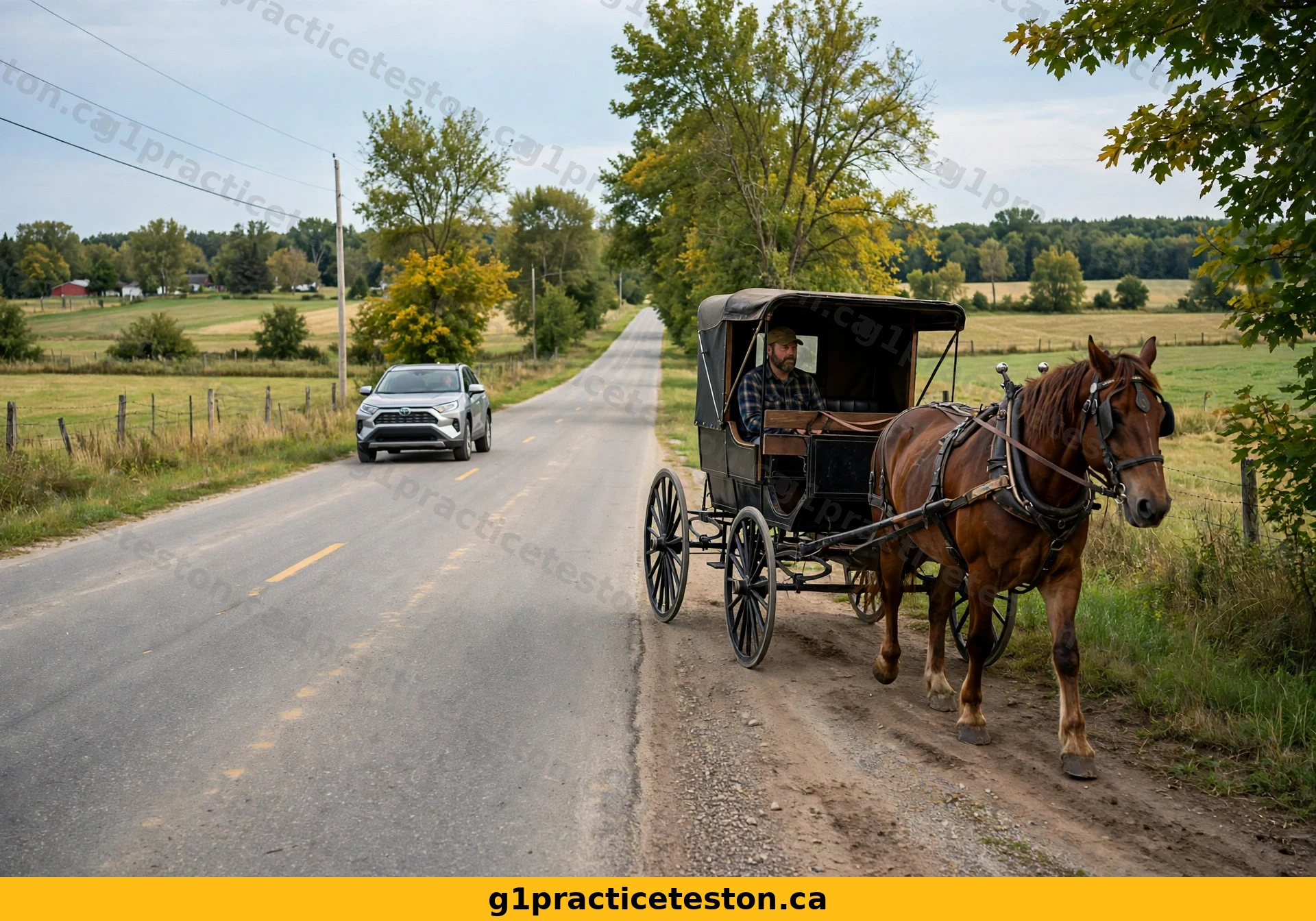
Q93. You approach a horse-drawn buggy on a rural Ontario road. How should you pass it?
g1practiceteston.ca -
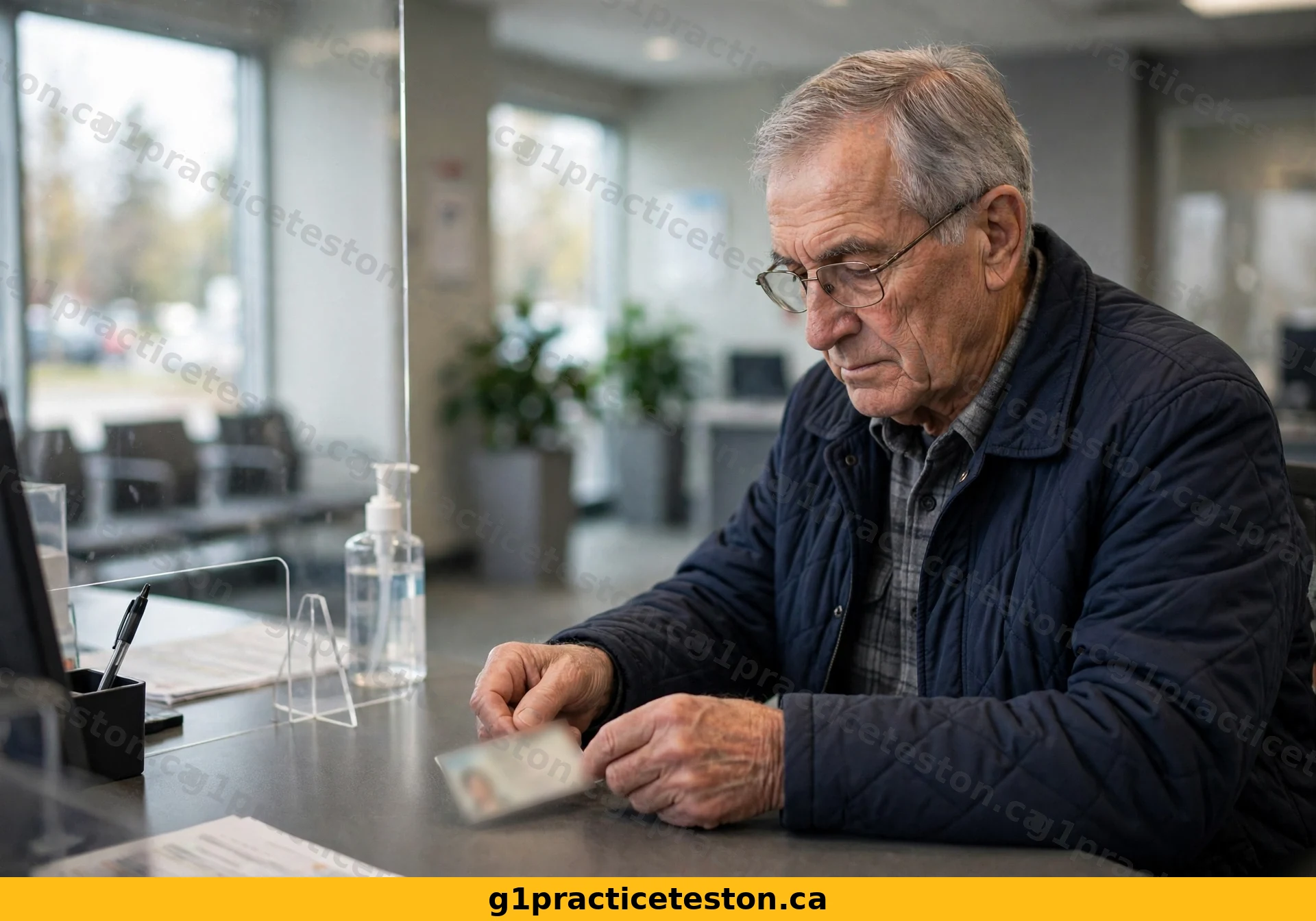
Q94. In Ontario, how often must drivers aged 80 and over renew their driver's licence, and what does the renewal involve?
g1practiceteston.ca -
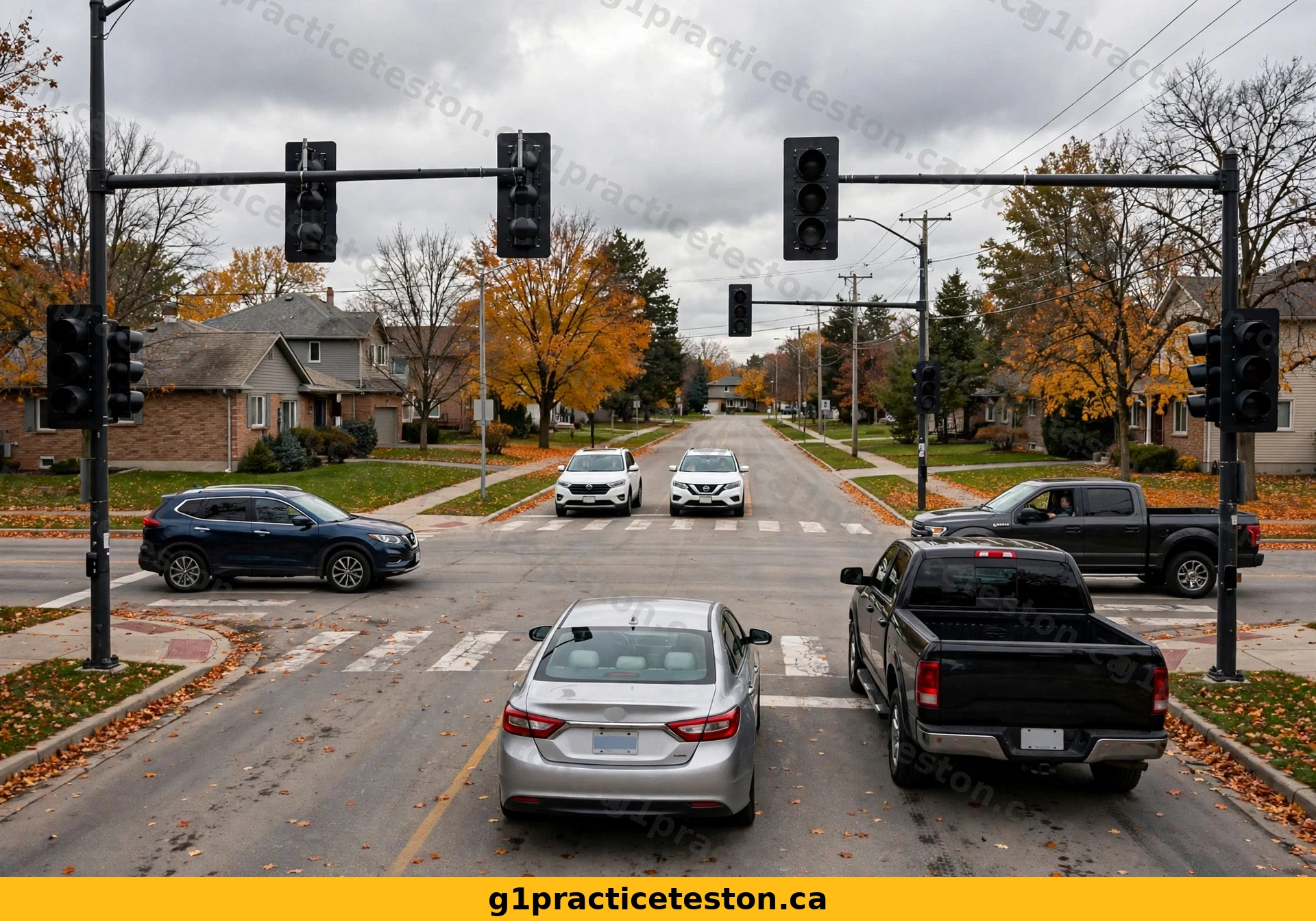
Q95. You reach an intersection where the traffic lights are completely out, for example during a power failure, and no police officer is directing traffic. What must you do?
g1practiceteston.ca -
Q96. A police officer directing traffic waves you through an intersection even though the traffic light facing you is red. What should you do?

g1practiceteston.ca -
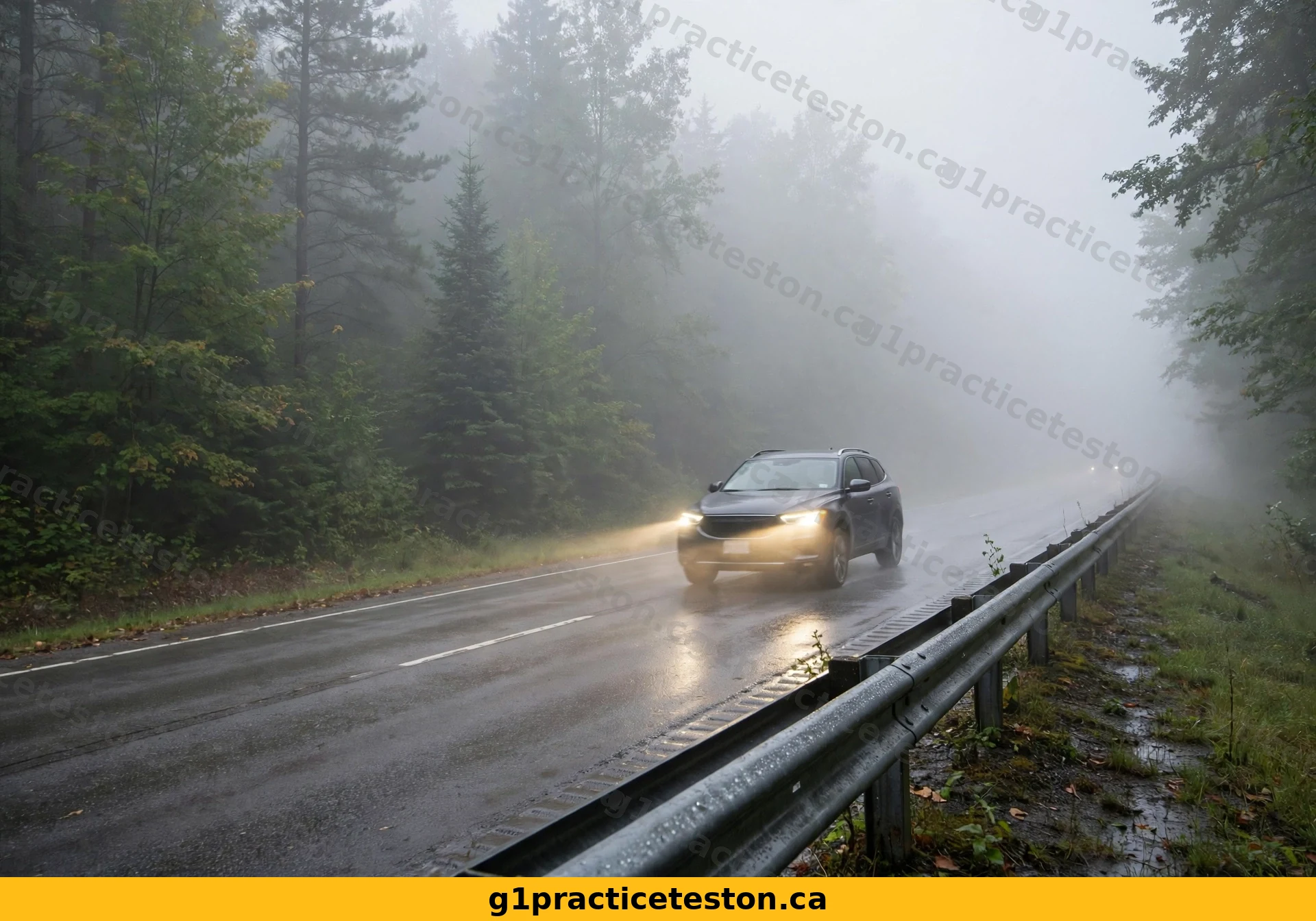
Q97. You are driving in dense fog on a highway. Apart from choosing the right lights, what is the safest technique?
g1practiceteston.ca -
Q98. What is "black ice," and how should you respond to it?

g1practiceteston.ca -
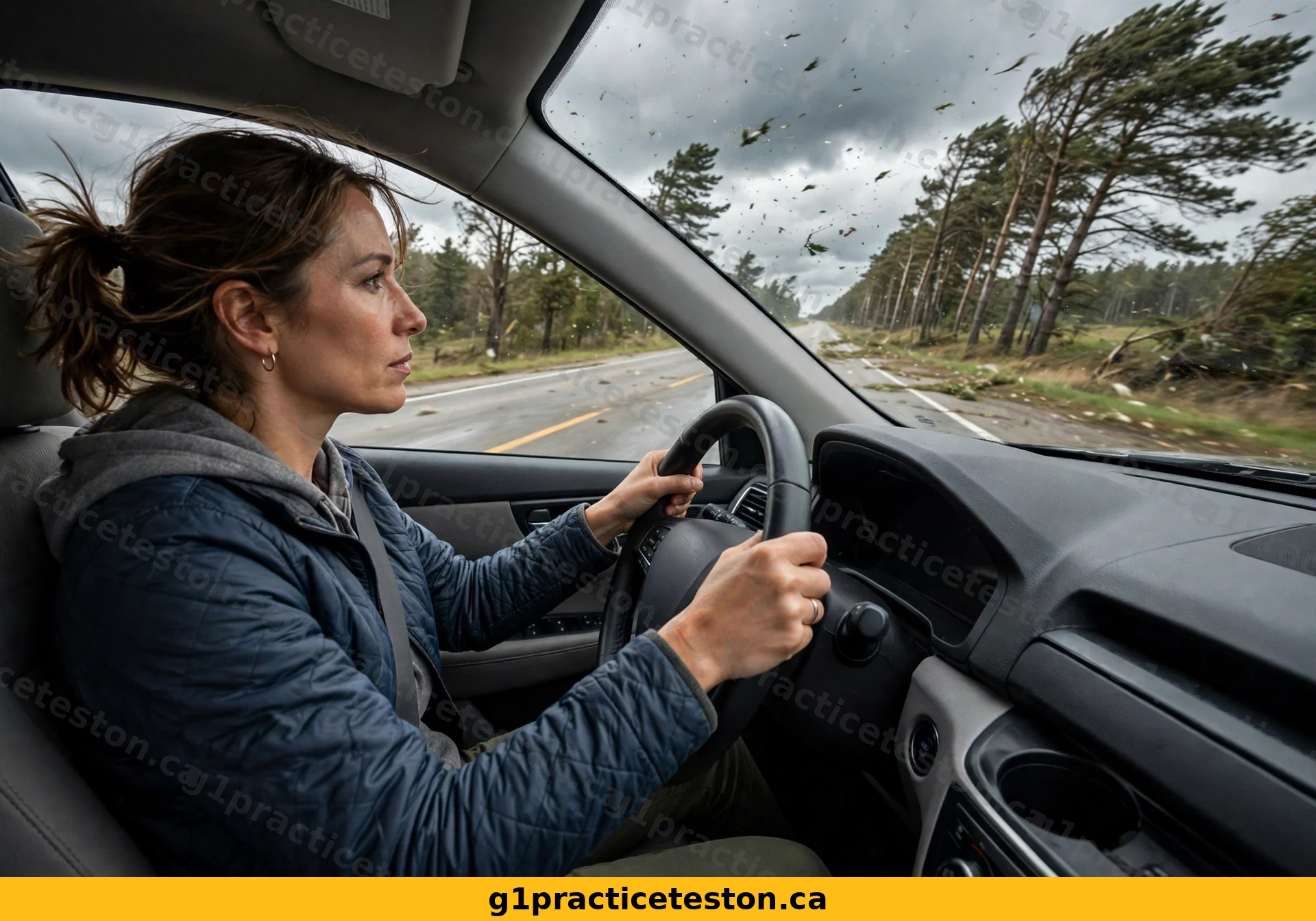
Q99. You are driving on an open highway in strong, gusty crosswinds. What should you do?
g1practiceteston.ca -
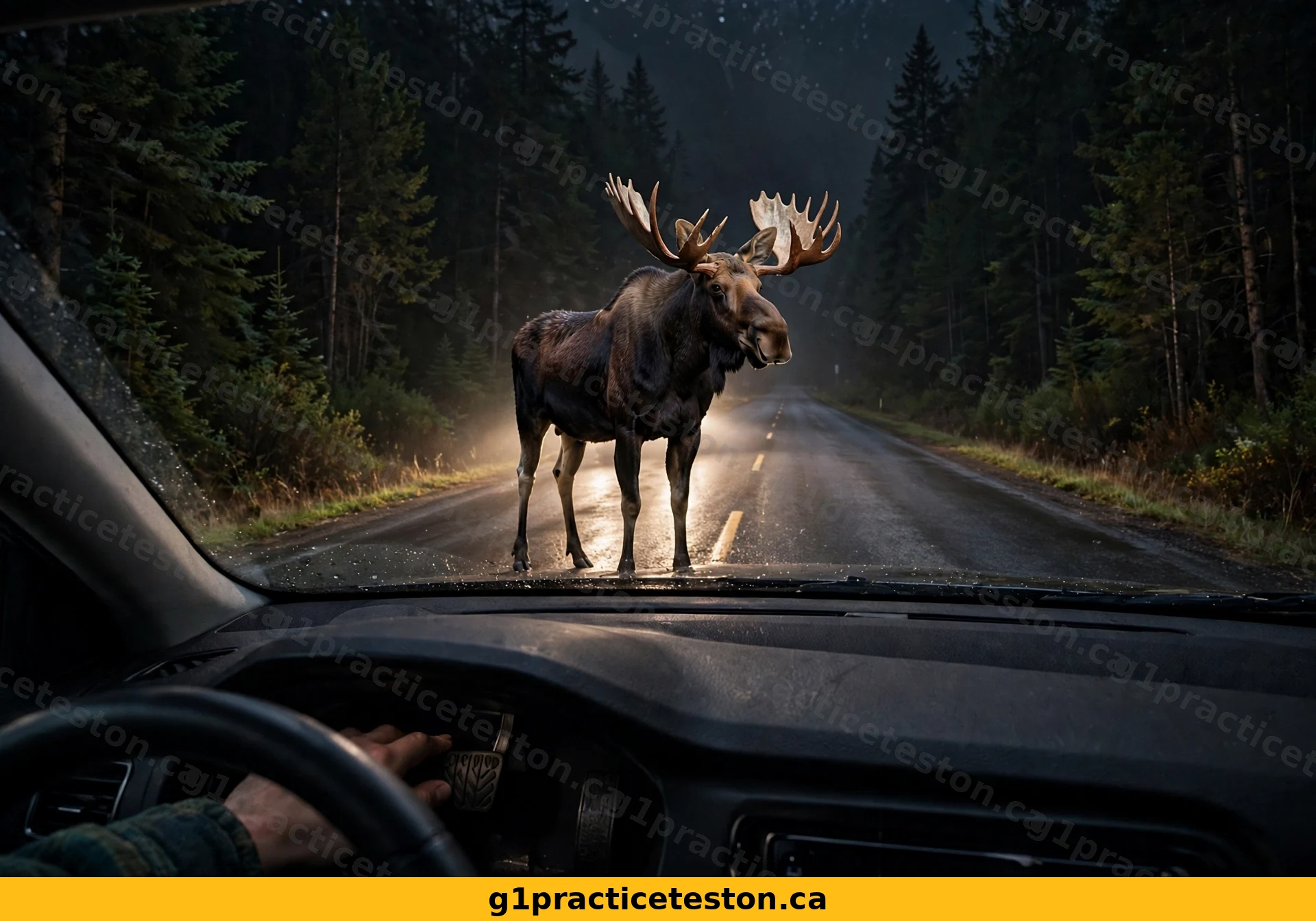
Q100. At night on a rural highway, a large moose steps onto the road ahead of you. What is usually the safest response?
g1practiceteston.ca -
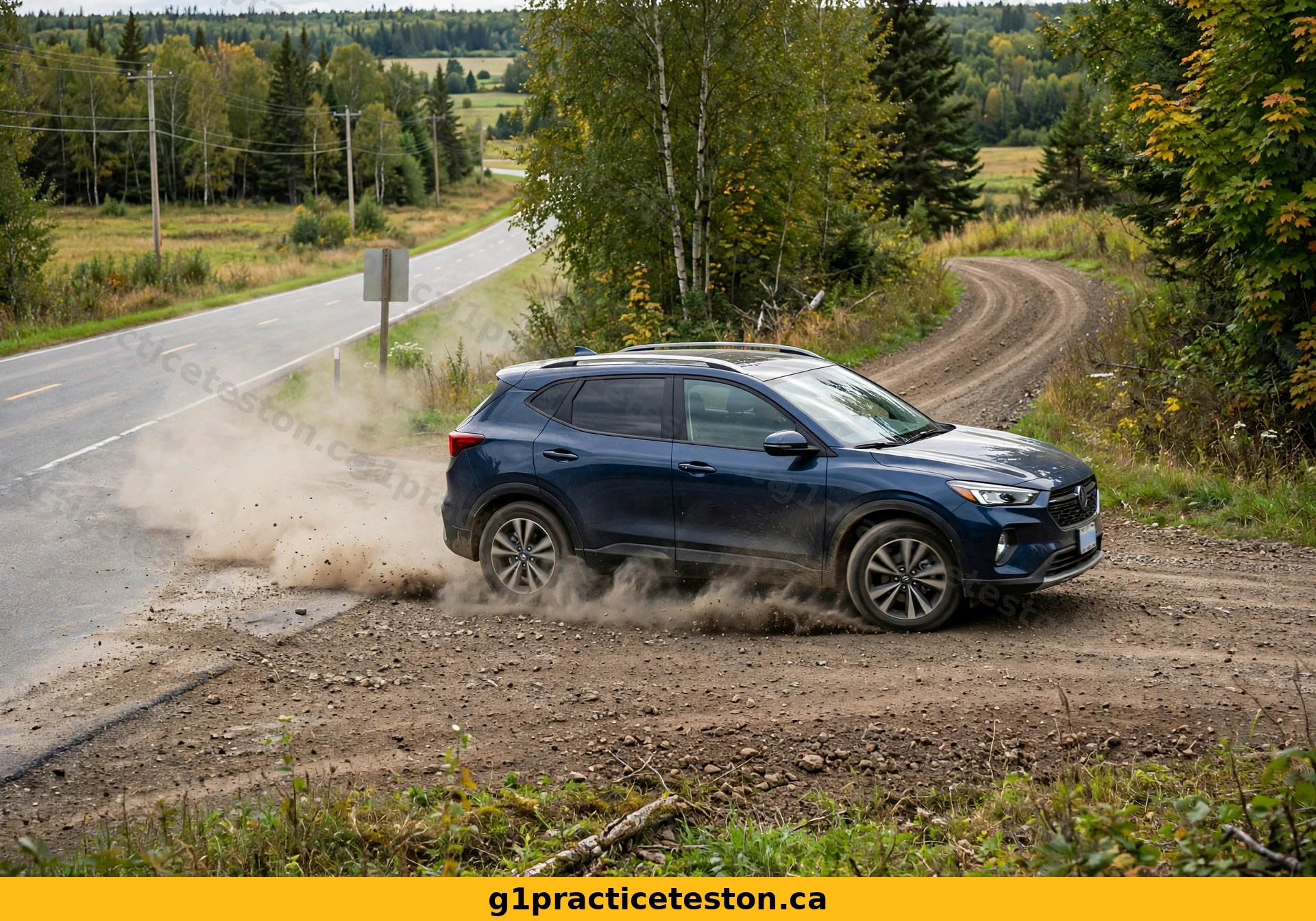
Q101. You turn from a paved highway onto a loose gravel road. How should your driving change?
g1practiceteston.ca -
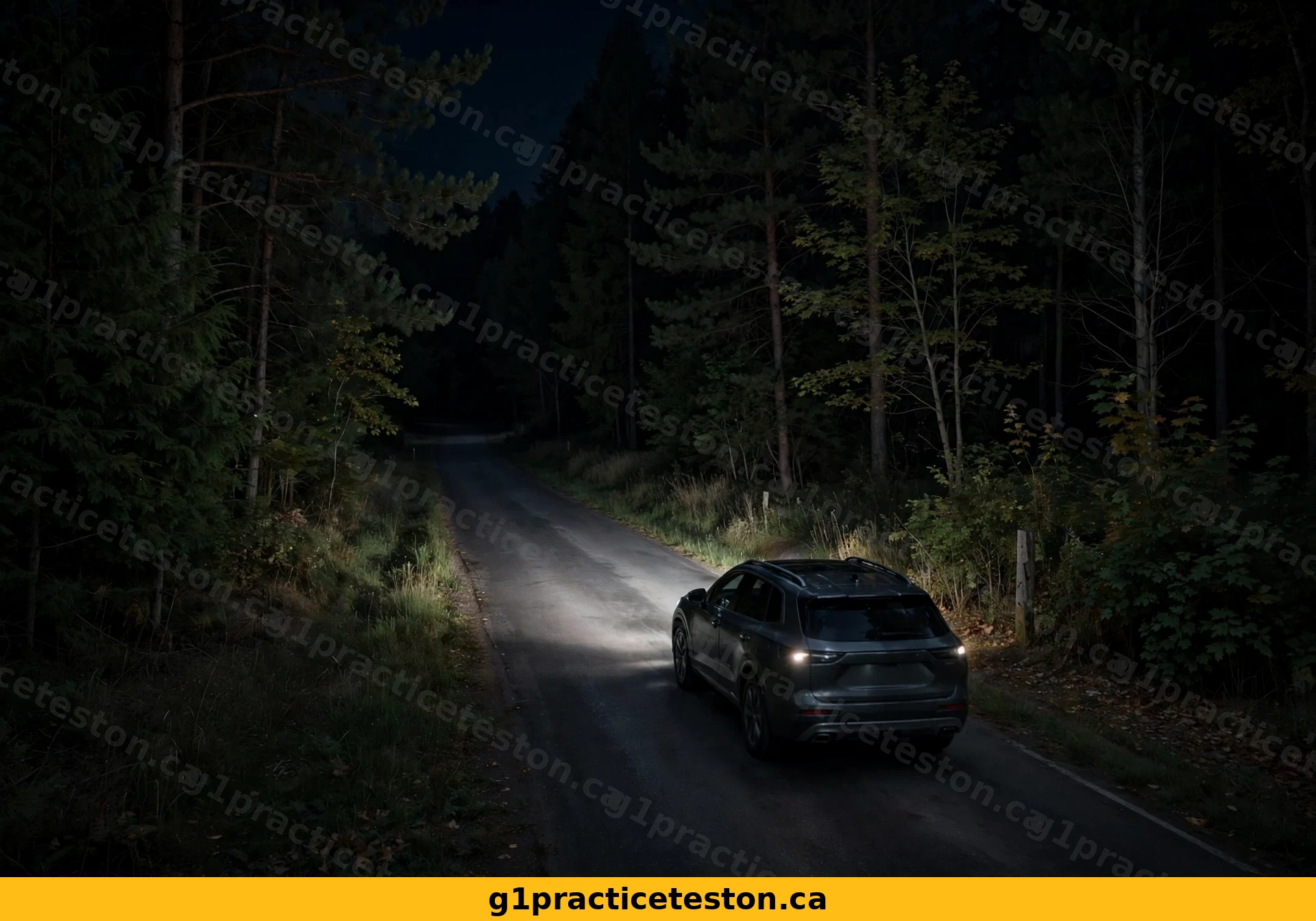
Q102. What does it mean to "overdrive your headlights" at night, and how do you avoid it?
g1practiceteston.ca -
Q103. Why are daytime running lights (DRLs) not enough for driving at dusk, in rain or through tunnels?

g1practiceteston.ca -
Q104. When should you avoid using cruise control?
g1practiceteston.ca -
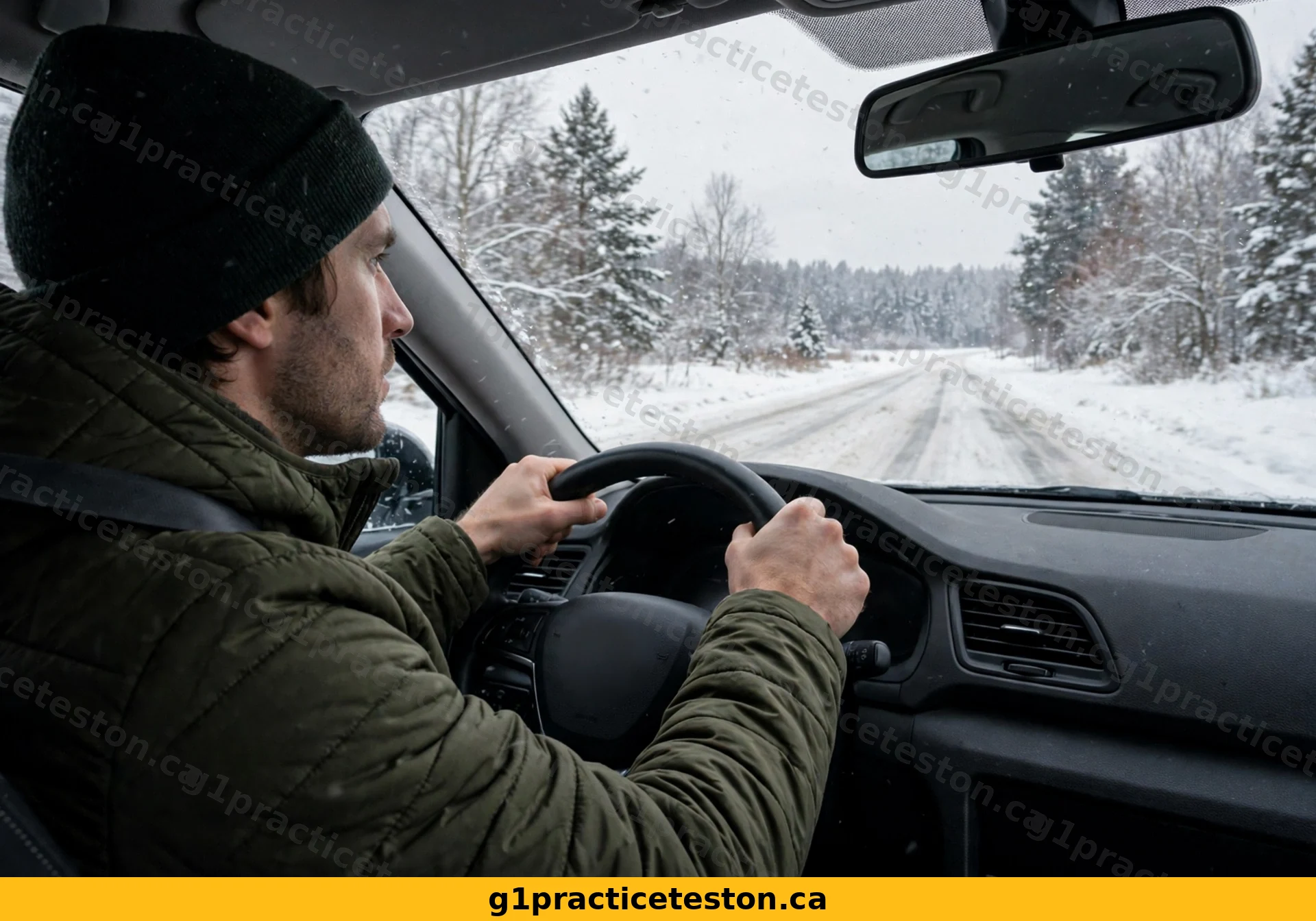
Q105. After an overnight snowfall, what must you do before driving away?

g1practiceteston.ca -
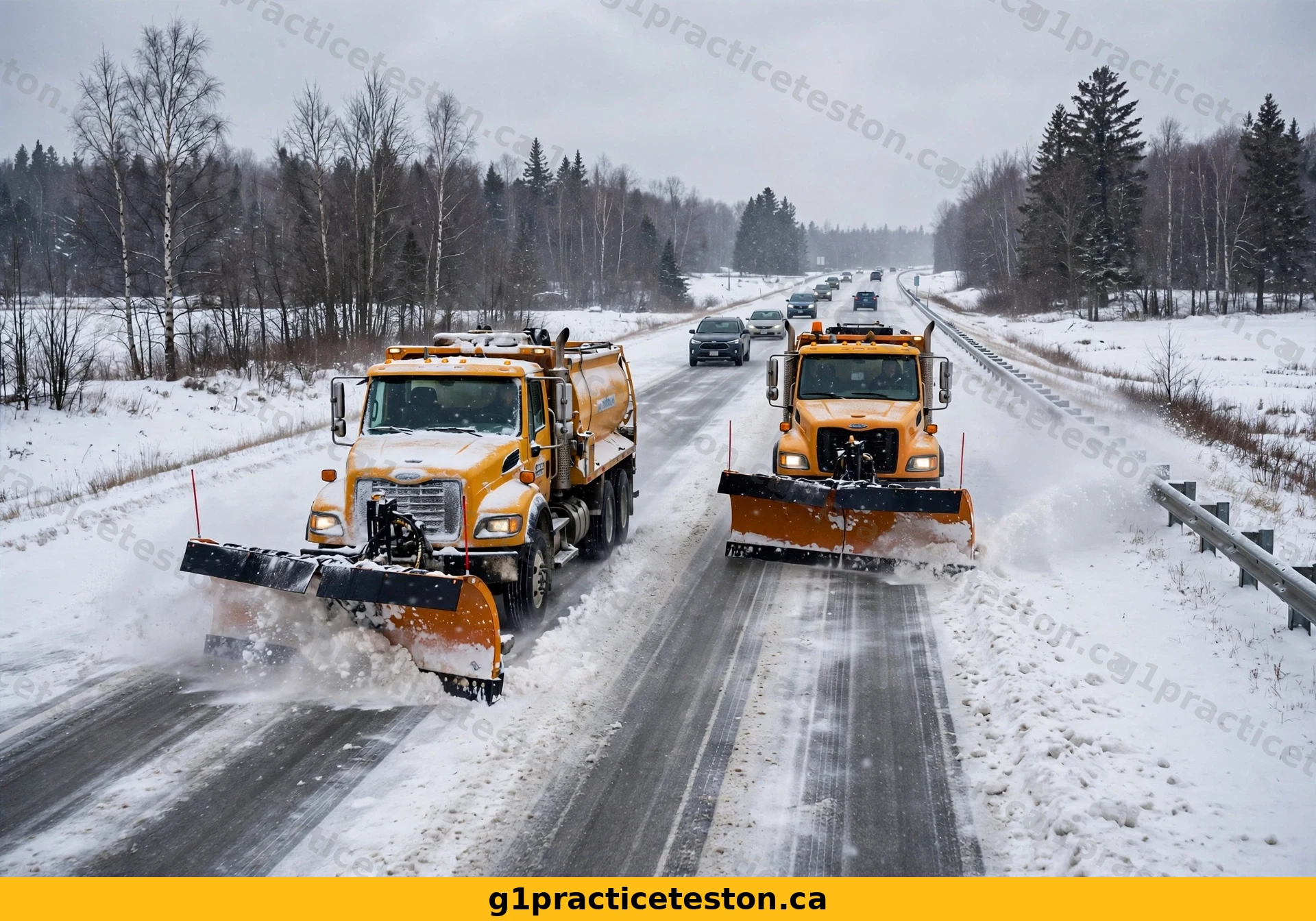
Q106. You catch up to snowplows working on a highway, including plows driving side-by-side in an "echelon" formation. What should you do?
g1practiceteston.ca -
Q107. What is the purpose of a quick "circle check" — walking once around your vehicle — before you drive?

g1practiceteston.ca -
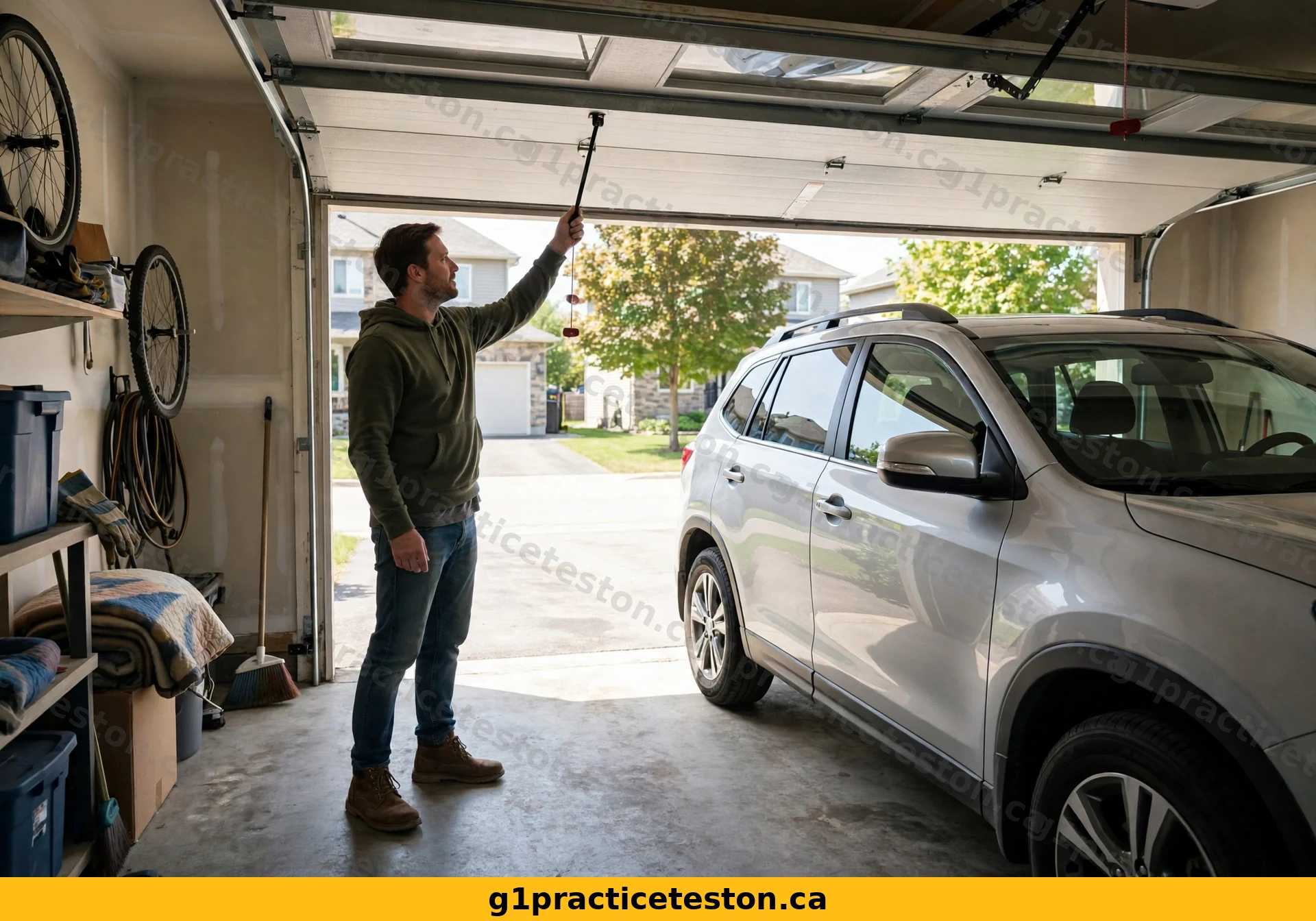
Q108. Carbon monoxide gas in vehicle exhaust is especially dangerous because:
g1practiceteston.ca -
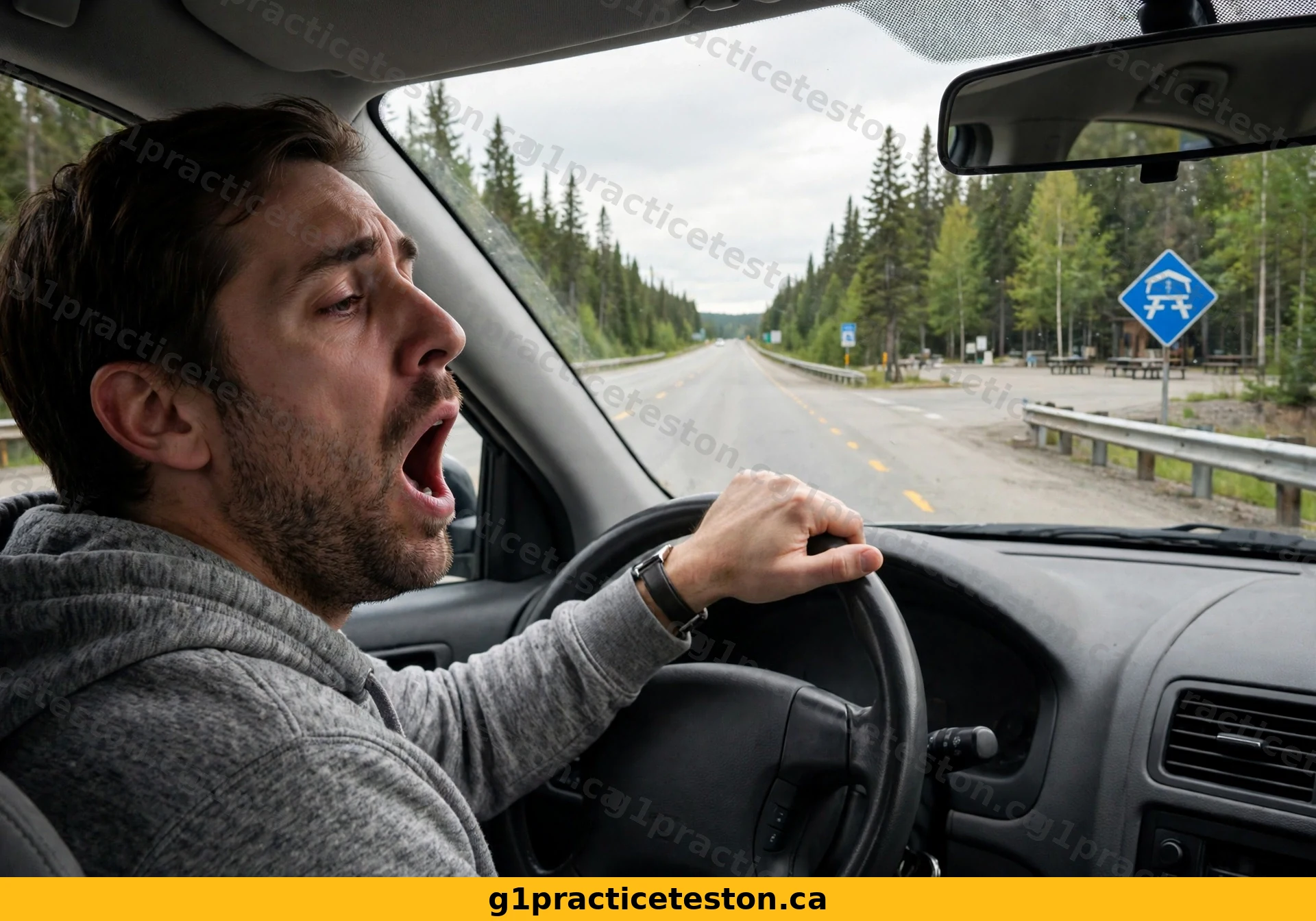
Q109. On a long drive you begin to feel drowsy: your attention drifts, you yawn repeatedly, and you almost miss your exit. What is the only truly effective response?
g1practiceteston.ca -
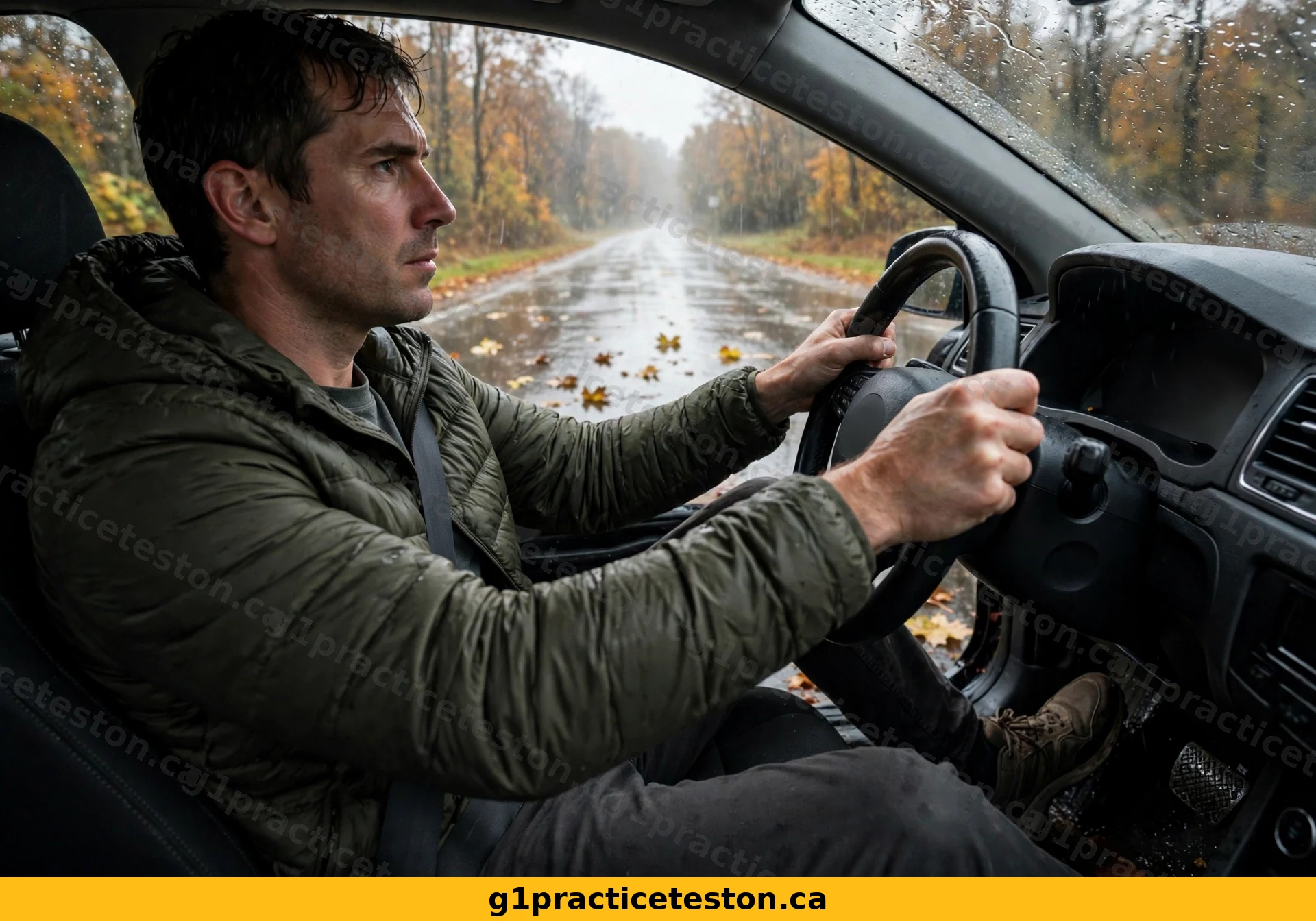
Q110. Your car has anti-lock brakes (ABS). In an emergency stop on a slippery road, how do you use them correctly — and what do they let you do that locked-wheel braking does not?
g1practiceteston.ca -
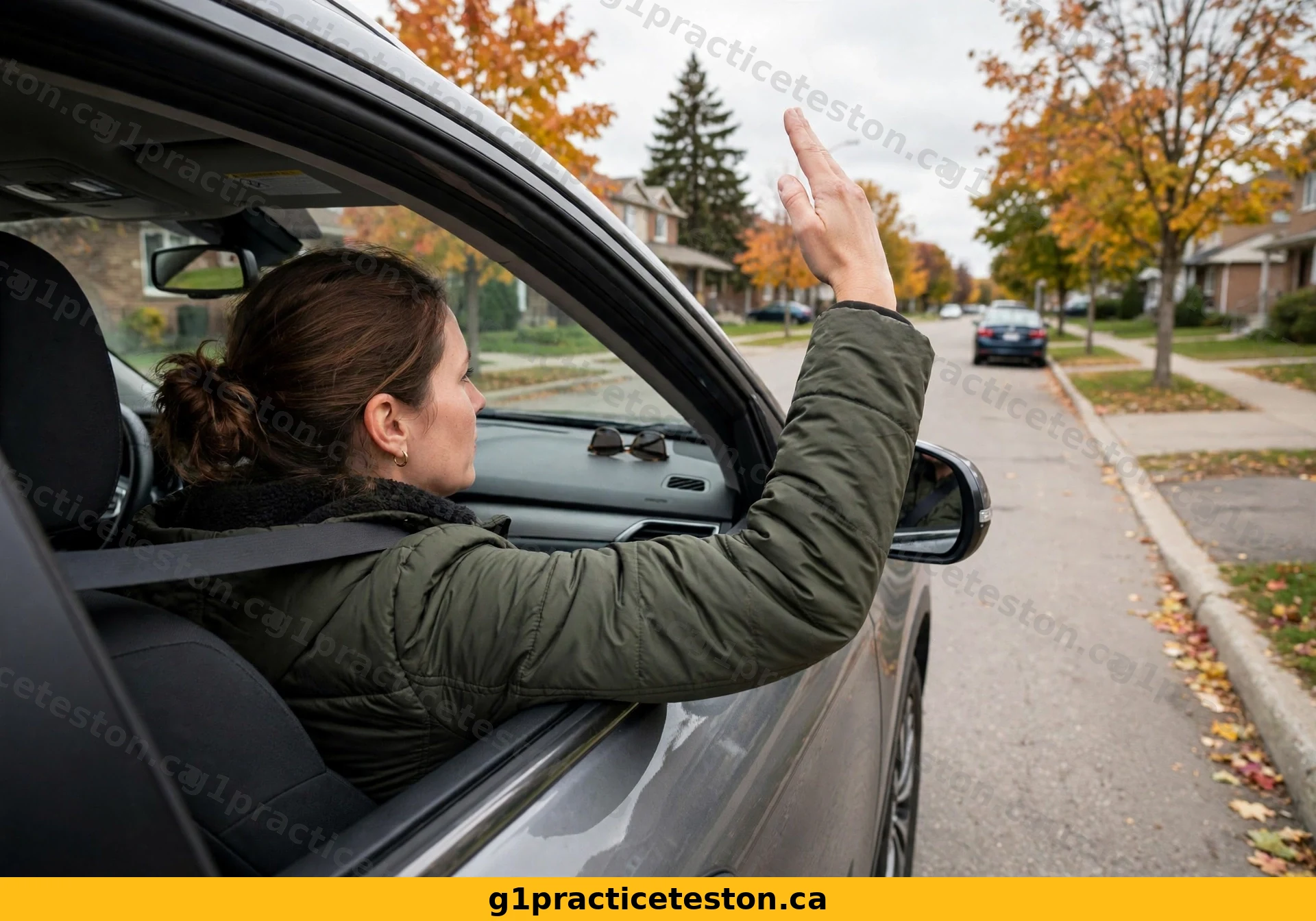
Q111. Your turn signals have stopped working, so you signal with your left arm out of the driver's window. How do you signal a RIGHT turn?
g1practiceteston.ca -
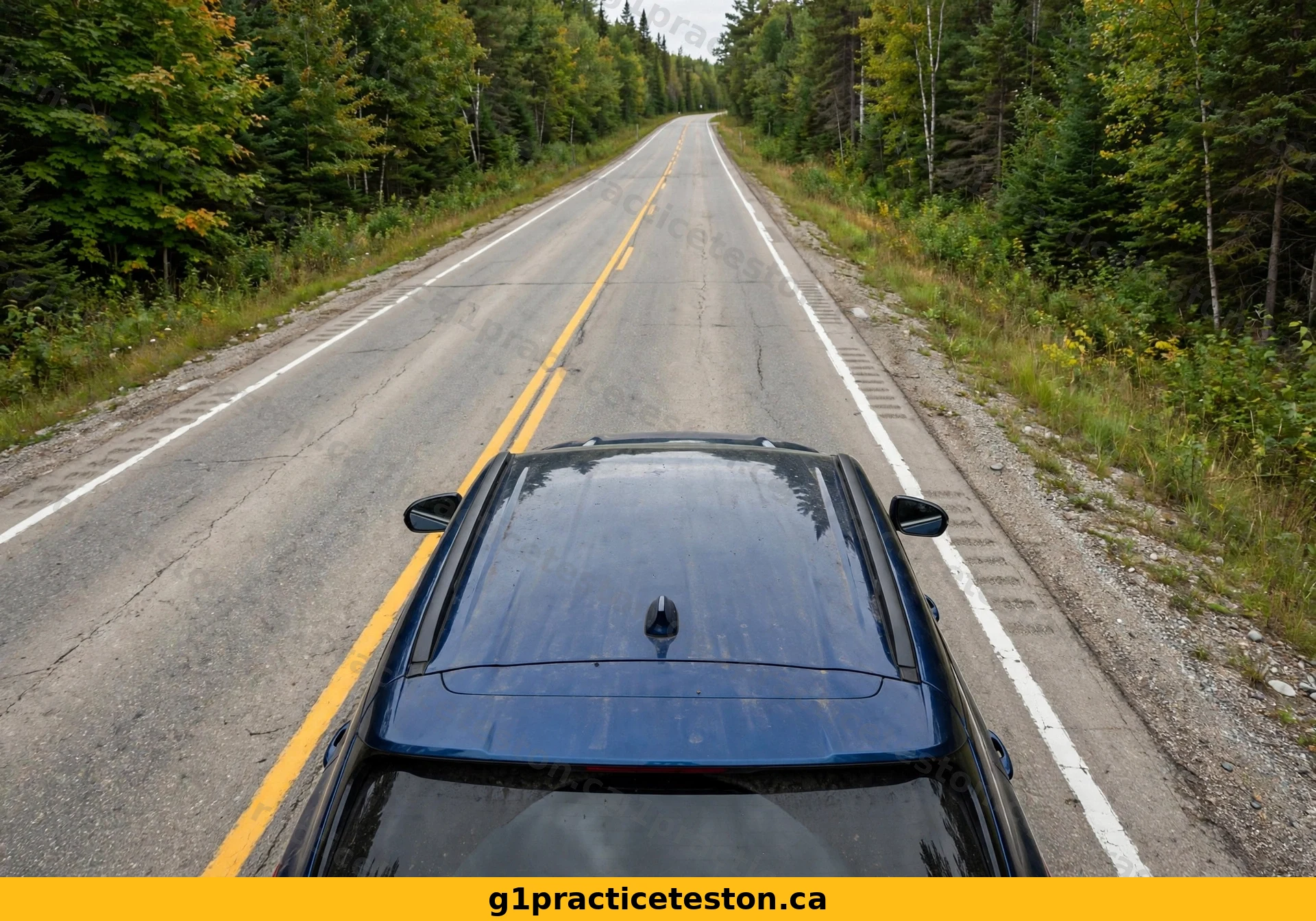
Q112. On Ontario roads, what is the basic meaning of yellow pavement lines versus white pavement lines?
g1practiceteston.ca -
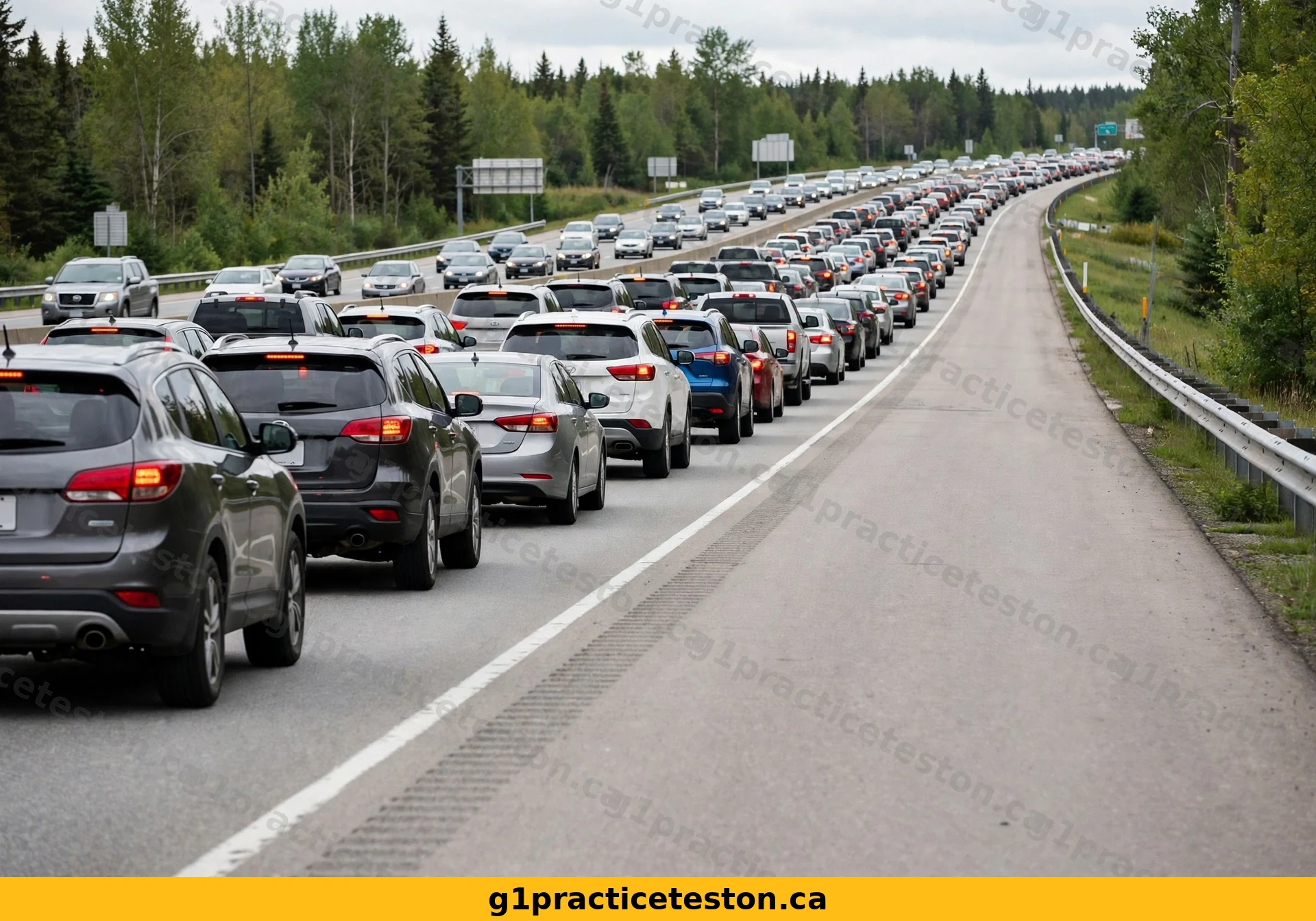
Q113. Traffic is crawling and the paved shoulder beside you is completely empty. May you drive along the shoulder to get ahead of the queue?
g1practiceteston.ca -
Q114. A painted bicycle lane runs along your side of the street. What are the rules for you as a driver?

g1practiceteston.ca -
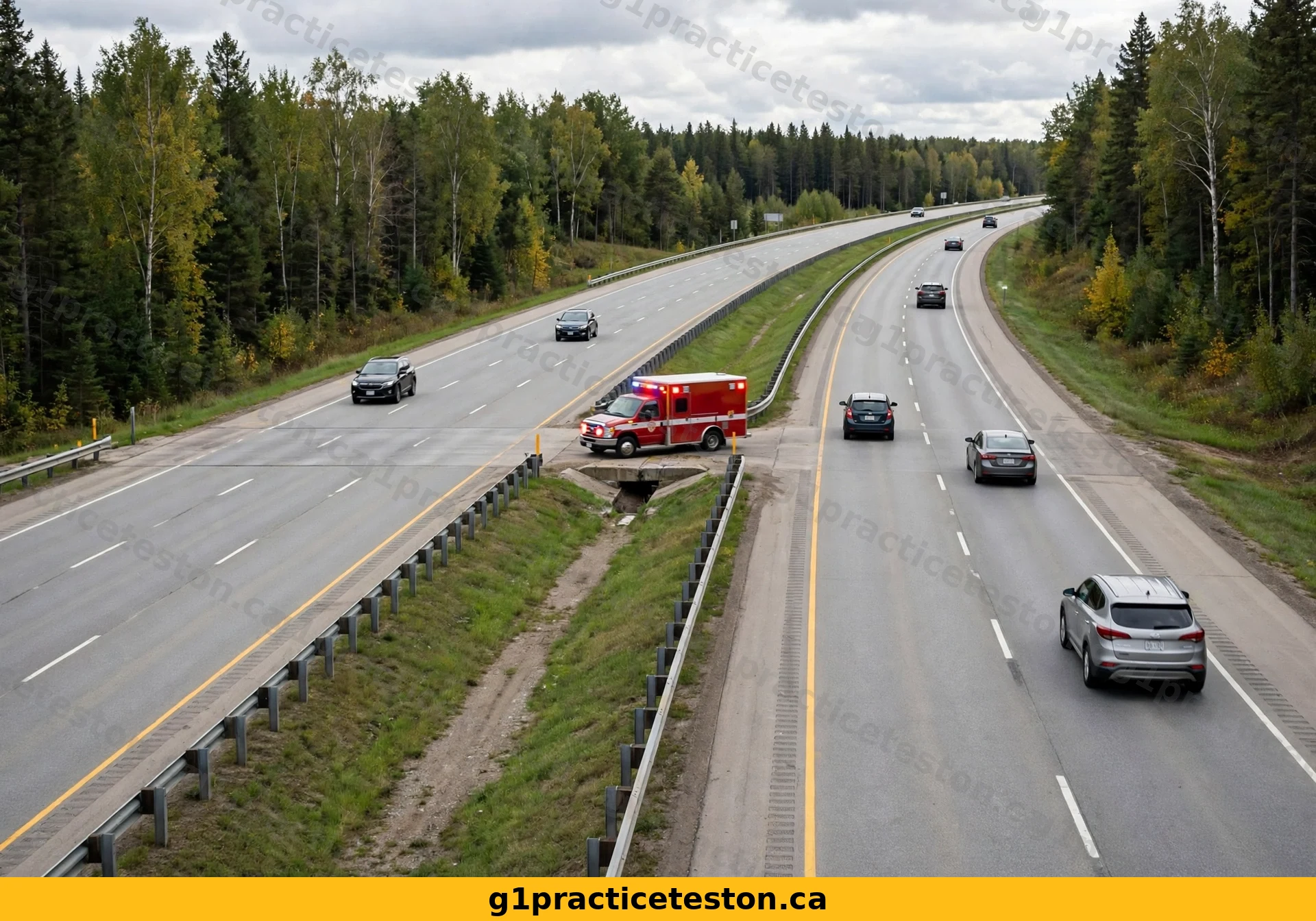
Q115. Divided highways have openings in the centre median that let vehicles cross to the other direction. Who may use these emergency crossovers?
g1practiceteston.ca -
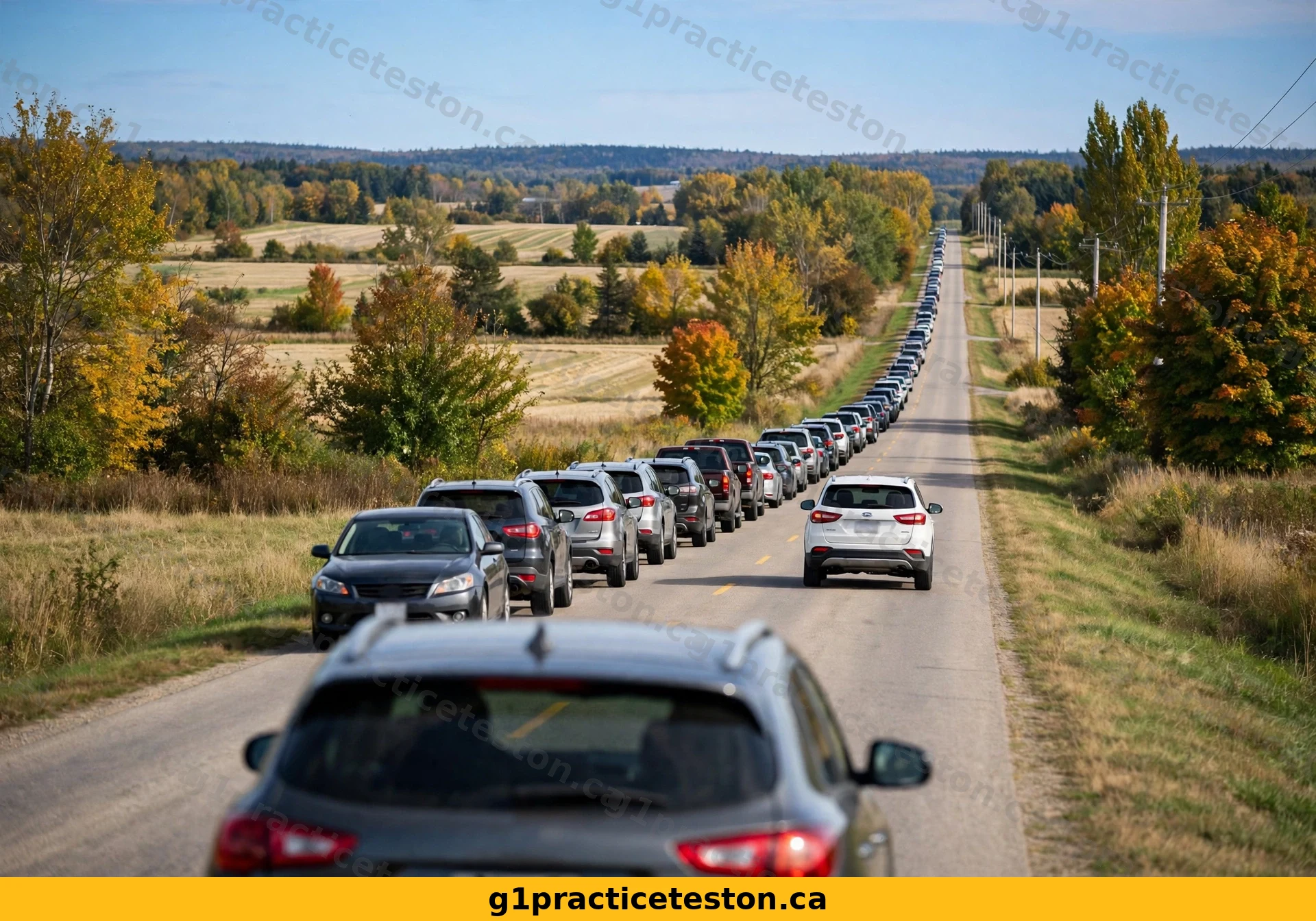
Q116. A driver cruises at 40 km/h in an 80 km/h zone on a clear, dry road, for no reason, holding up a long line of traffic. What does Ontario law say about this?
g1practiceteston.ca -
Q117. A pedestrian is walking along a road that has no sidewalk. Which side should the pedestrian use — and what does that mean for you as a driver?

g1practiceteston.ca -
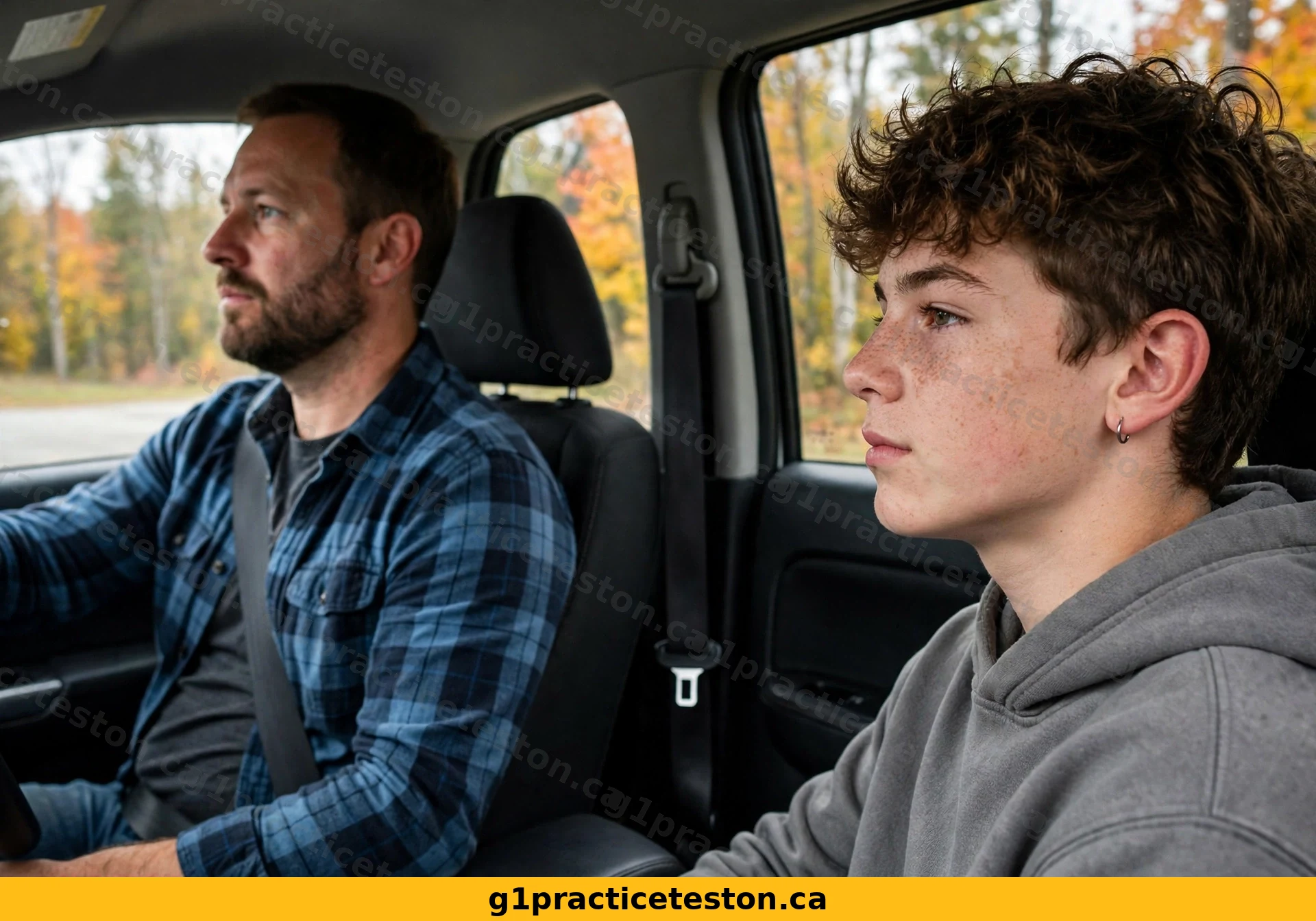
Q118. You are driving with your 13-year-old cousin in the front passenger seat, not wearing a seatbelt. Police stop you. Who is legally responsible for that missing seatbelt?
g1practiceteston.ca -
Q119. You are involved in a collision. Apart from any later reporting, what are your duties right at the scene?

g1practiceteston.ca -
Q120. You are stopped at a railway crossing that has two sets of tracks while a train passes on the nearest track. The moment it clears your view, what should you do?

g1practiceteston.ca -
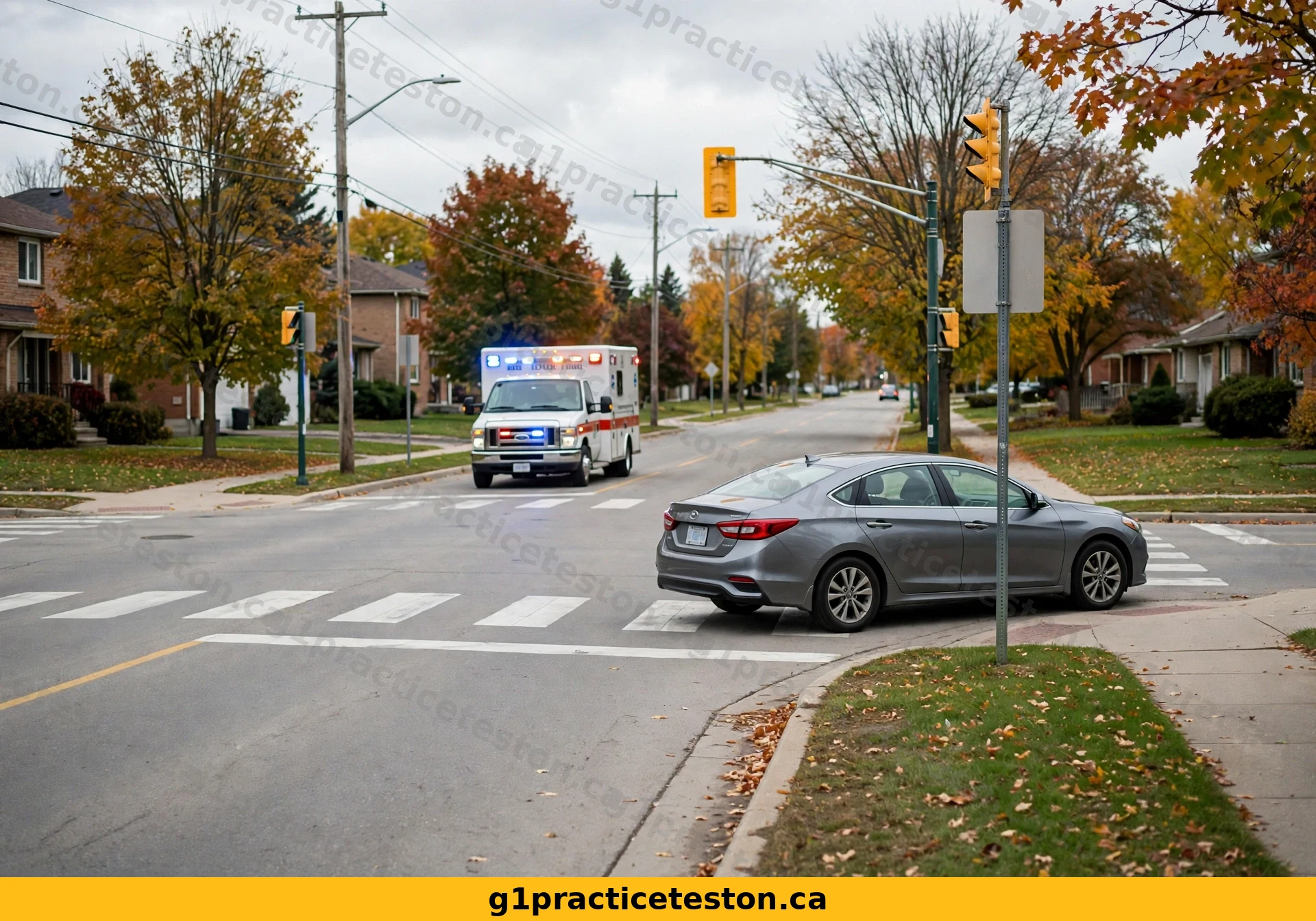
Q121. You are already in the middle of an intersection when you hear a siren and see an emergency vehicle approaching the intersection with its lights flashing. What should you do?
g1practiceteston.ca -
Q122. A driver's licence is suspended because the driver never paid their traffic fines. How can the driver legally get back on the road?

g1practiceteston.ca -
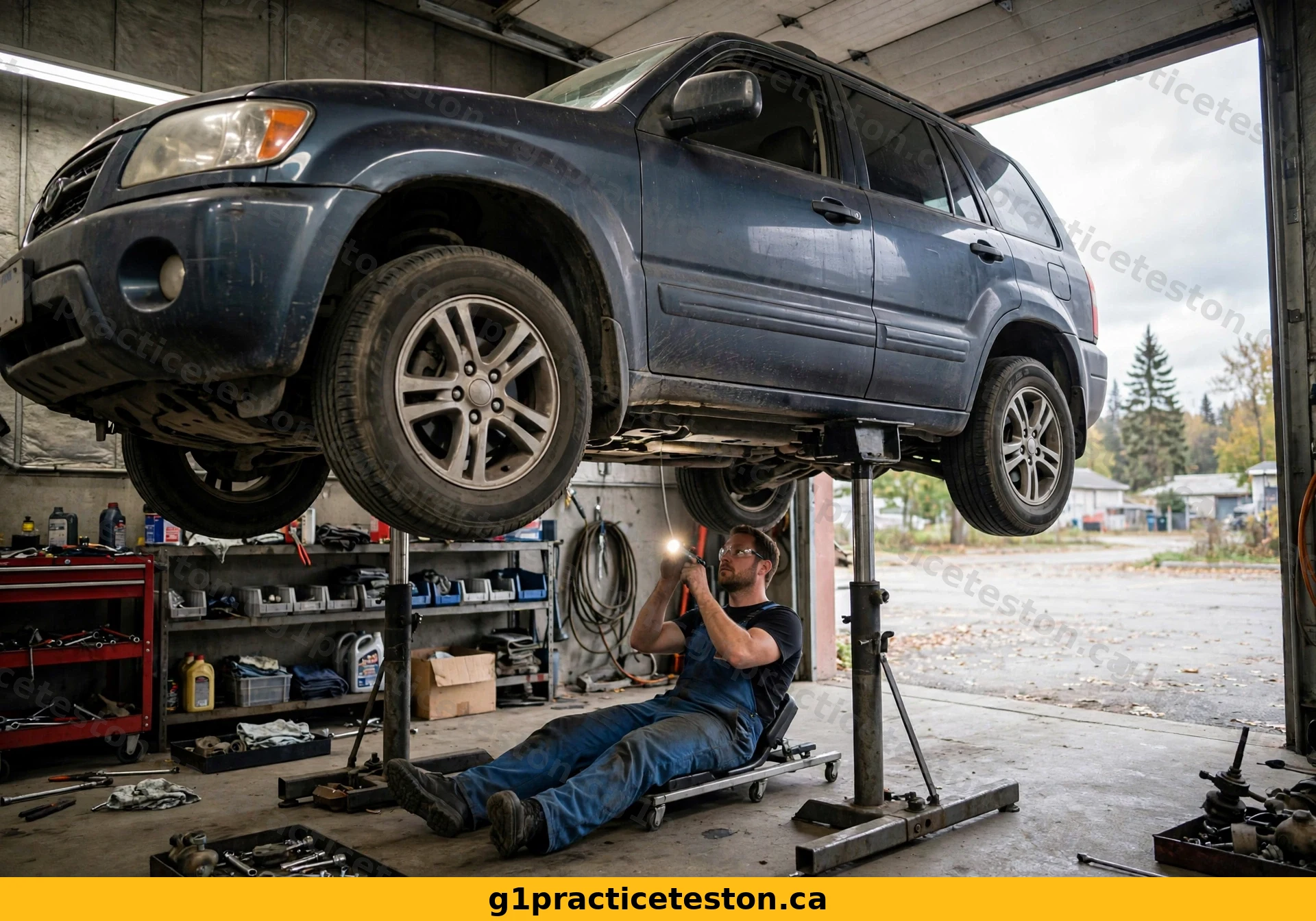
Q123. You buy a used car in Ontario from another owner. Before you can register it in your name and put licence plates on it, what must the vehicle have?
g1practiceteston.ca -
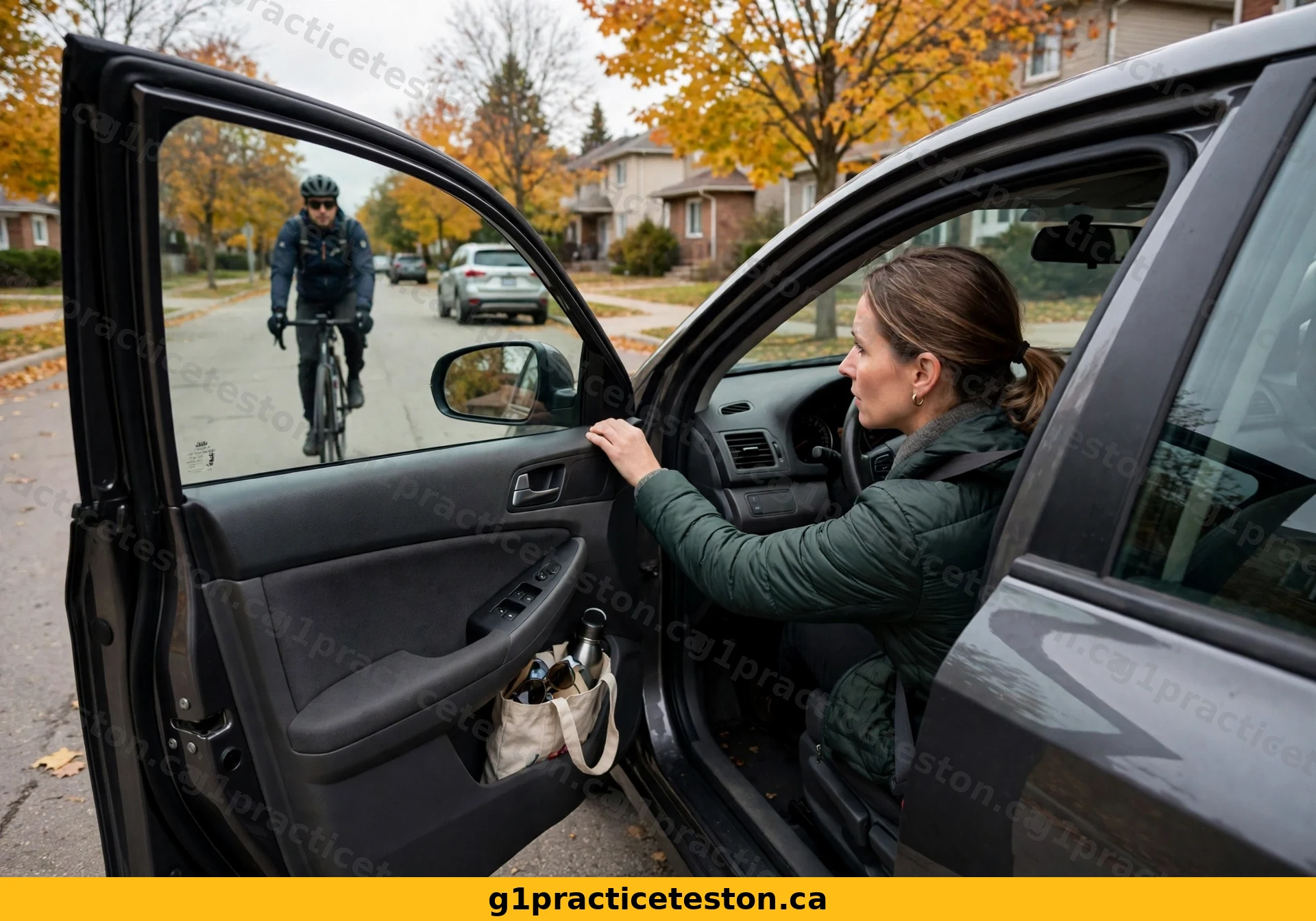
Q124. You are getting out of a parked car and open your door just as a cyclist rides into it — "dooring." What are the consequences under Ontario law?
g1practiceteston.ca -
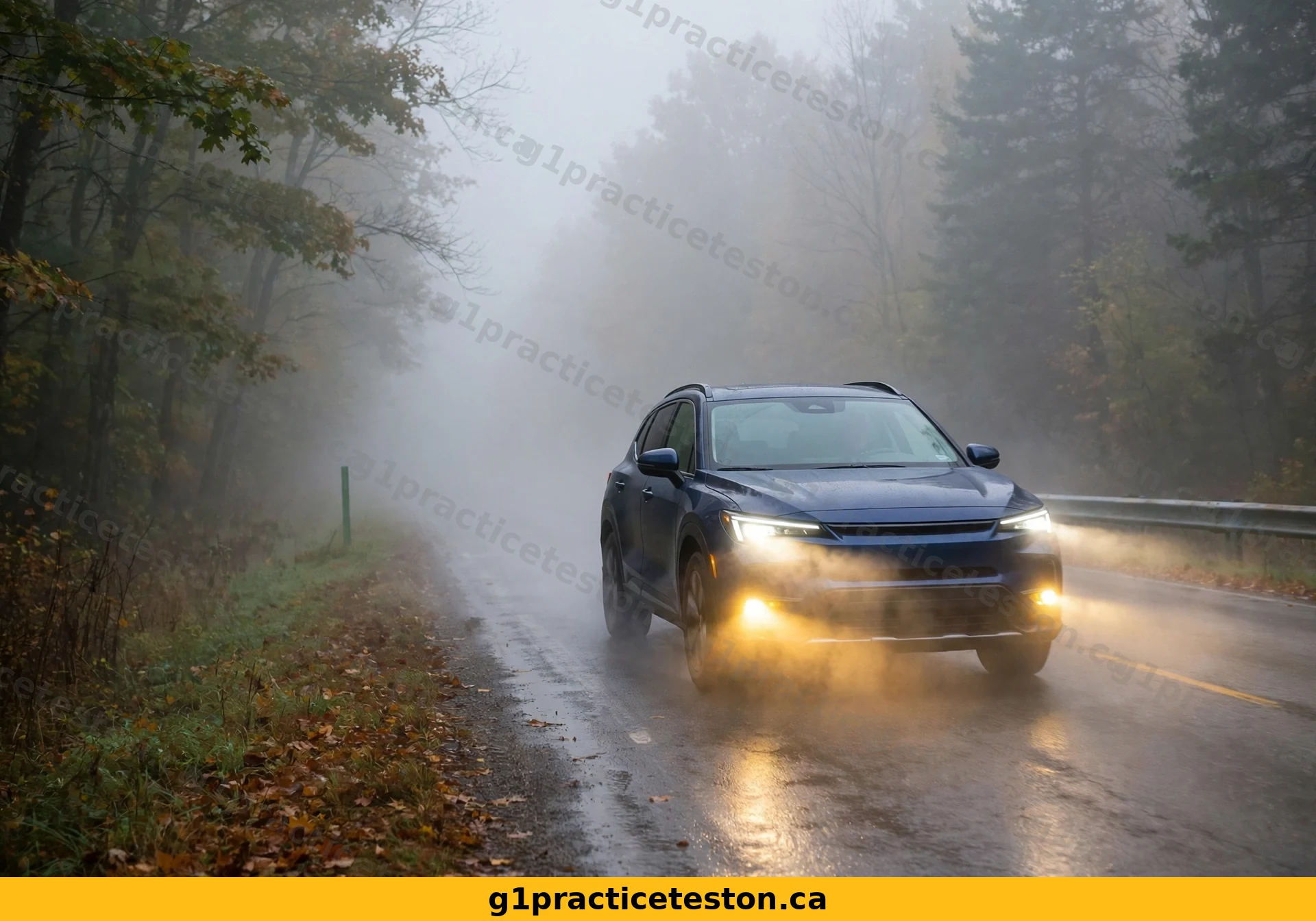
Q125. Your vehicle is equipped with fog lights. In fog (or blowing snow), how does the MTO Driver's Handbook say to use them?
g1practiceteston.ca -
Q126. You approach a railway crossing that has a crossbuck sign but NO flashing lights, gates or stop sign. What is the correct procedure?

g1practiceteston.ca -
Q127. Which statement about children, car seats and airbags is correct?
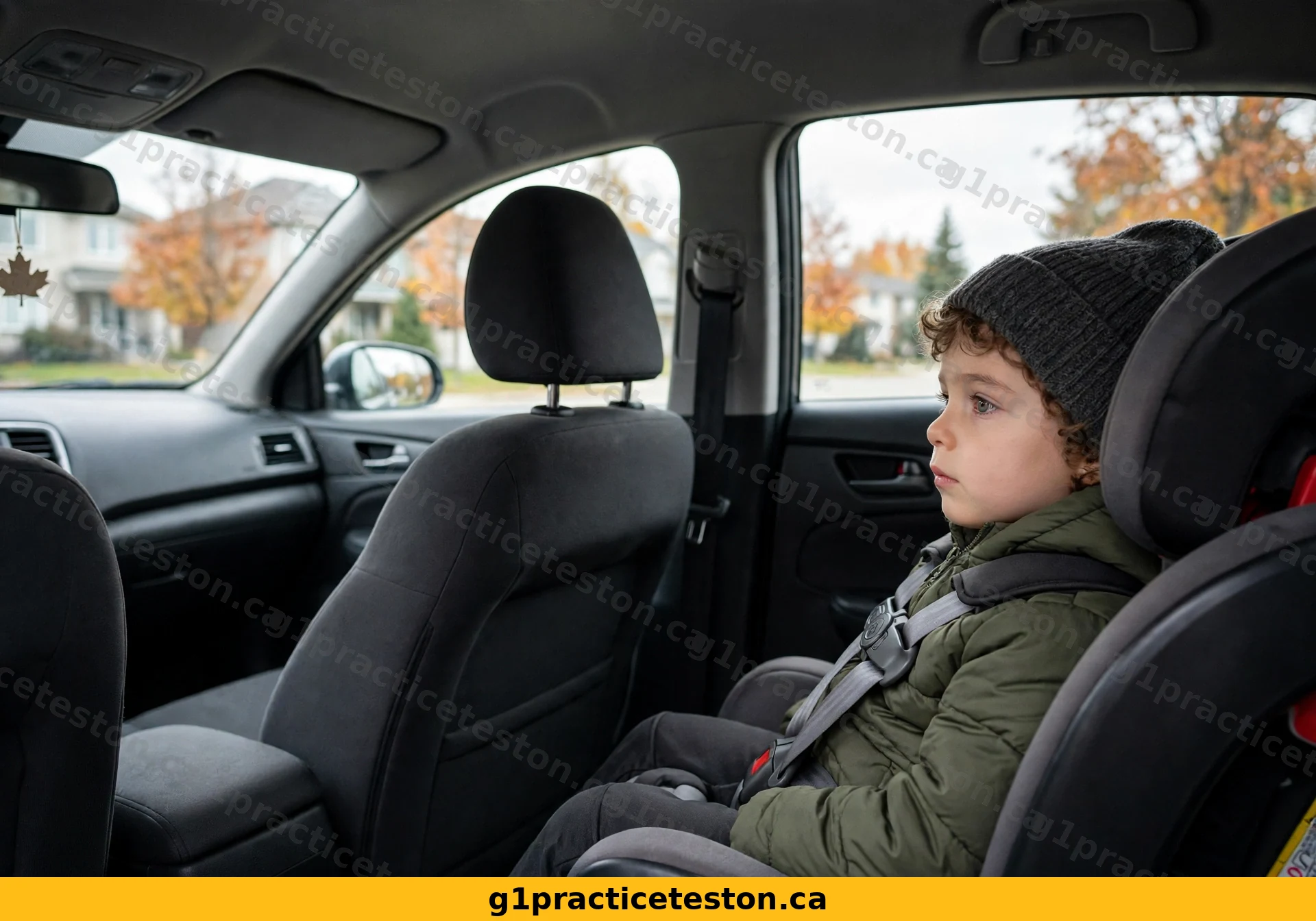
g1practiceteston.ca -
Q128. You are towing a trailer loaded with building supplies. At what gross weight (trailer plus its load) must the trailer have its own brakes in Ontario, and what else must connect it to your vehicle?

g1practiceteston.ca -
Q129. As you approach an intersection, what scanning pattern does defensive driving call for before you enter it?

g1practiceteston.ca -
Q130. You stop in traffic behind another vehicle at a red light. How much space should you leave in front of you?

g1practiceteston.ca -
Q131. At night on a two-lane road, you realize an oncoming vehicle is travelling in YOUR lane, heading straight at you. What is the safest response?

g1practiceteston.ca -
Q132. Your licence plate is partly covered by a tinted plate cover and winter dirt. What does Ontario law require?
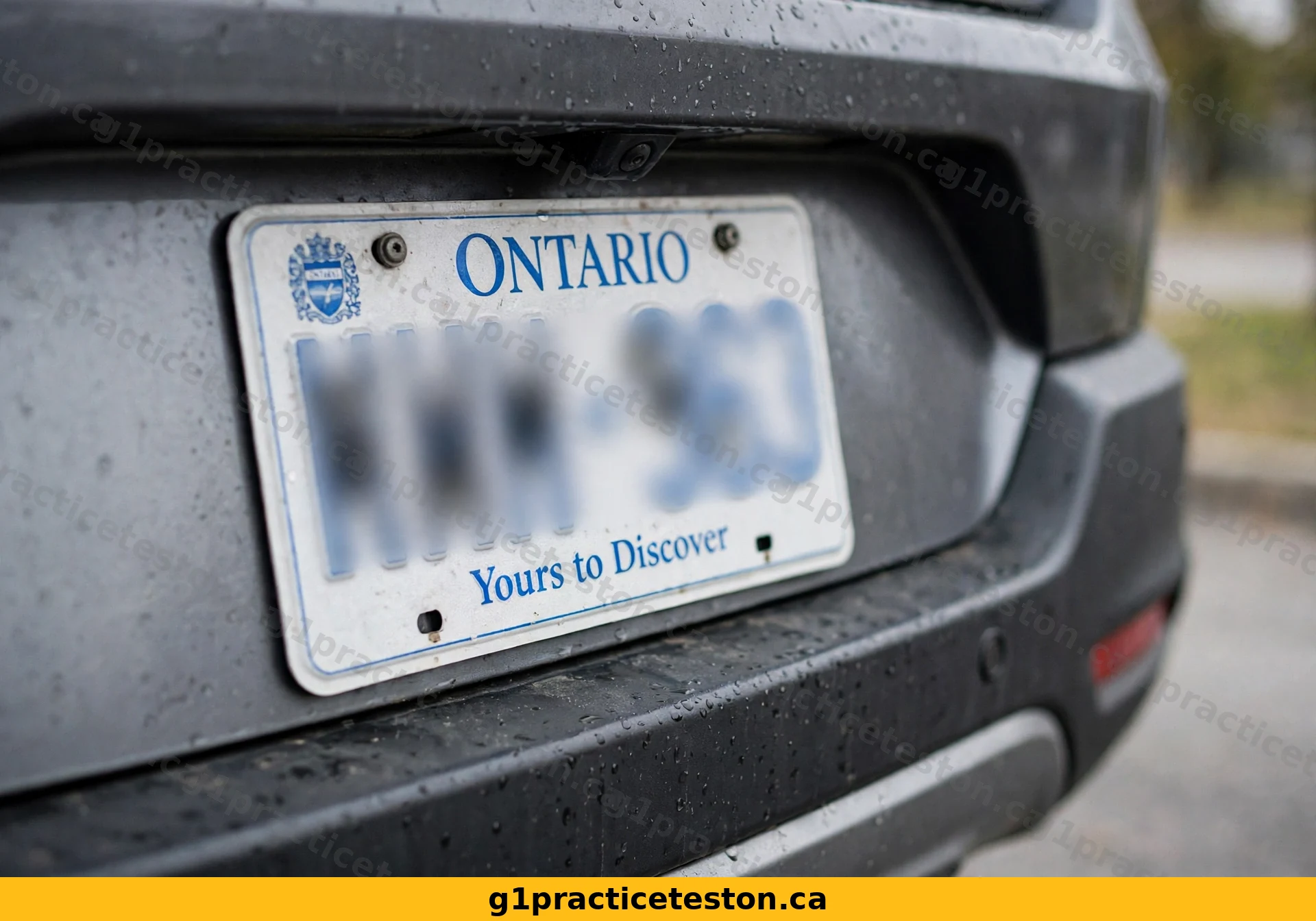
g1practiceteston.ca -
Q133. When must a tire on your vehicle be replaced under Ontario standards?

g1practiceteston.ca -
Q134. A friend from Quebec tells you winter tires are legally required. What is the rule in Ontario?
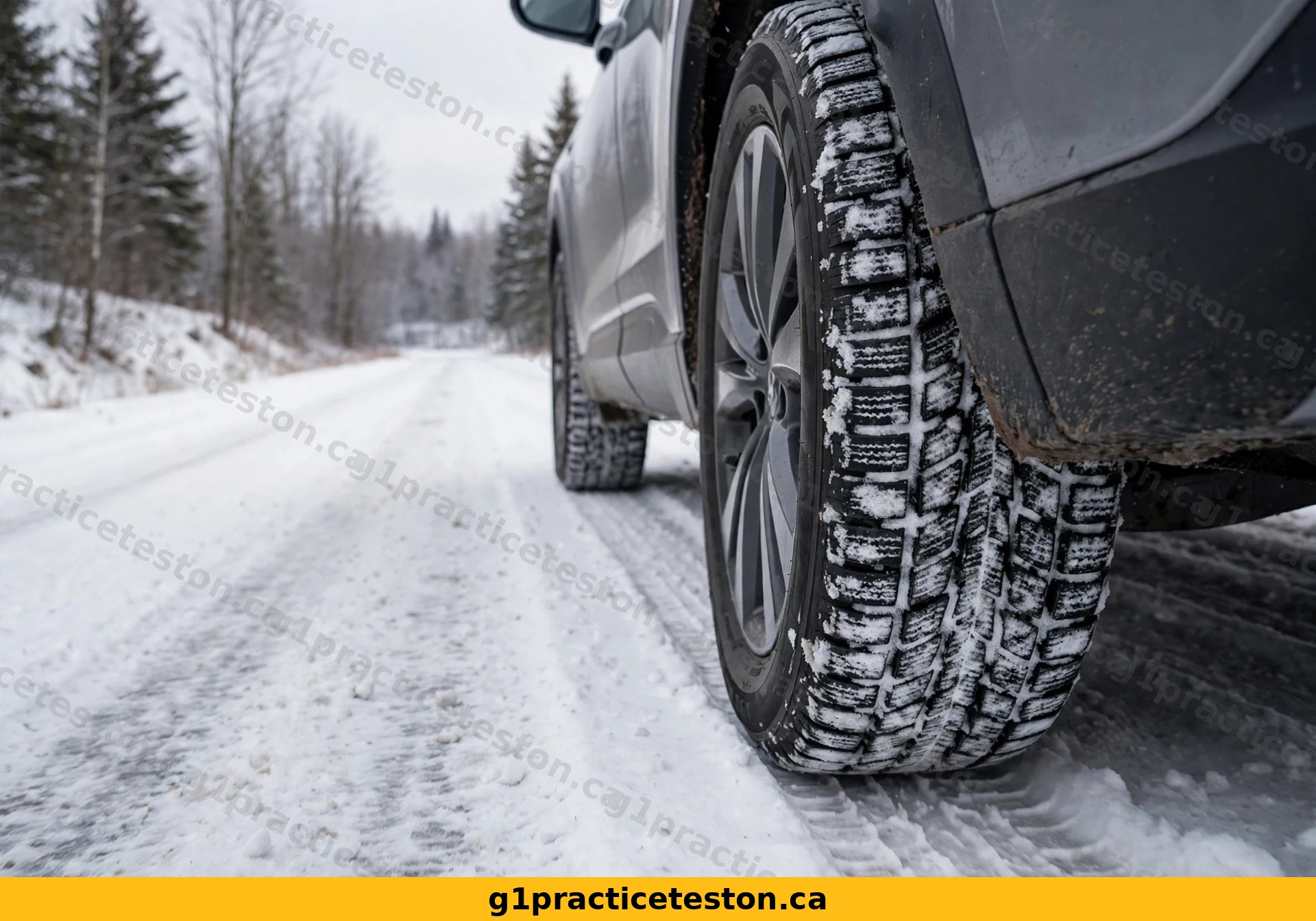
g1practiceteston.ca -
Q135. A police officer signals for you to pull over and stop, and you keep driving and try to get away. Beyond the original reason for the stop, what have you done?

g1practiceteston.ca -
Q136. An officer asks for your proof of insurance. You only have it on your phone. What does Ontario law allow?
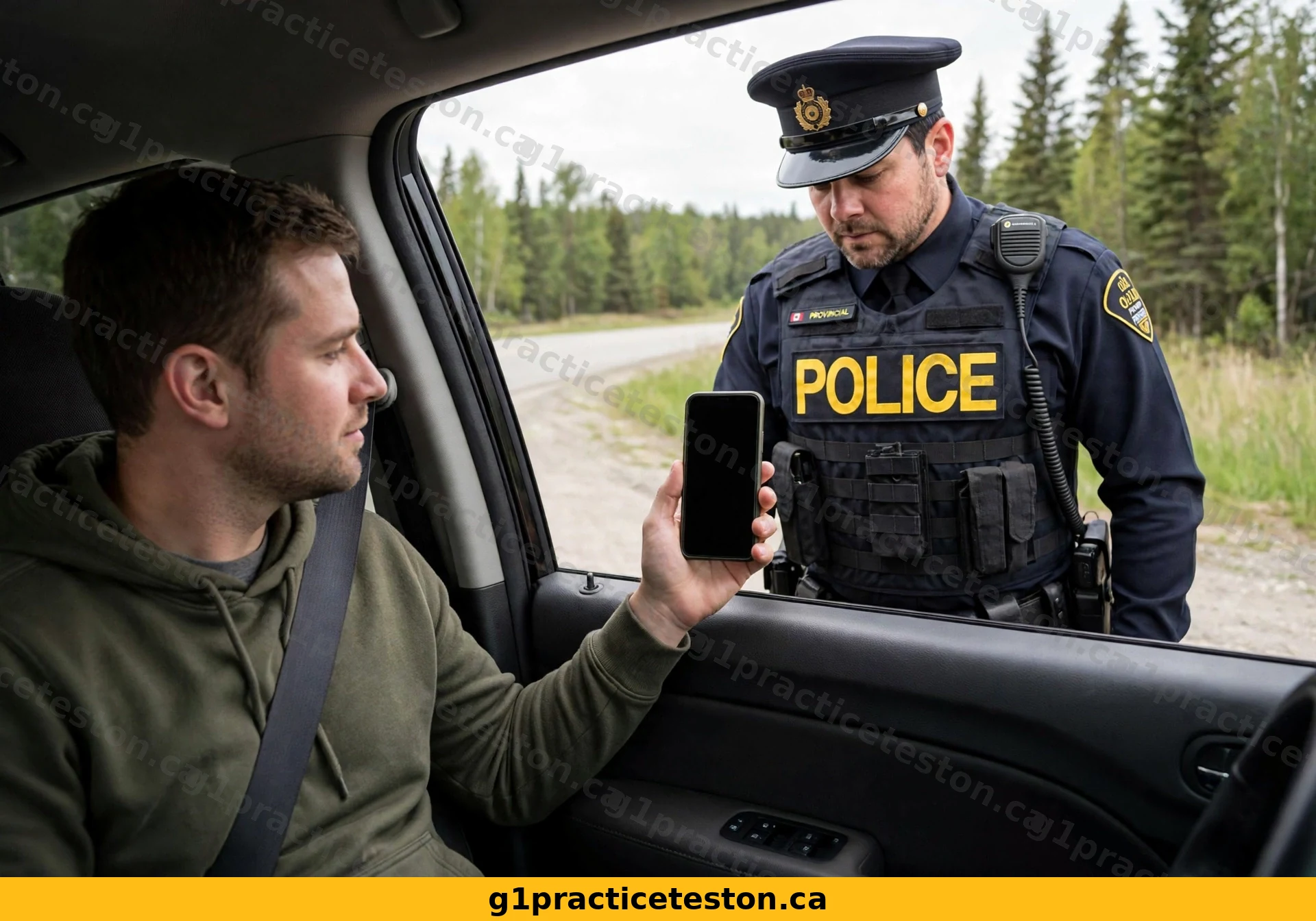
g1practiceteston.ca -
Q137. You are following a large transport truck on a highway. Why should you leave a LARGER gap behind it than the usual two-second minimum?

g1practiceteston.ca -
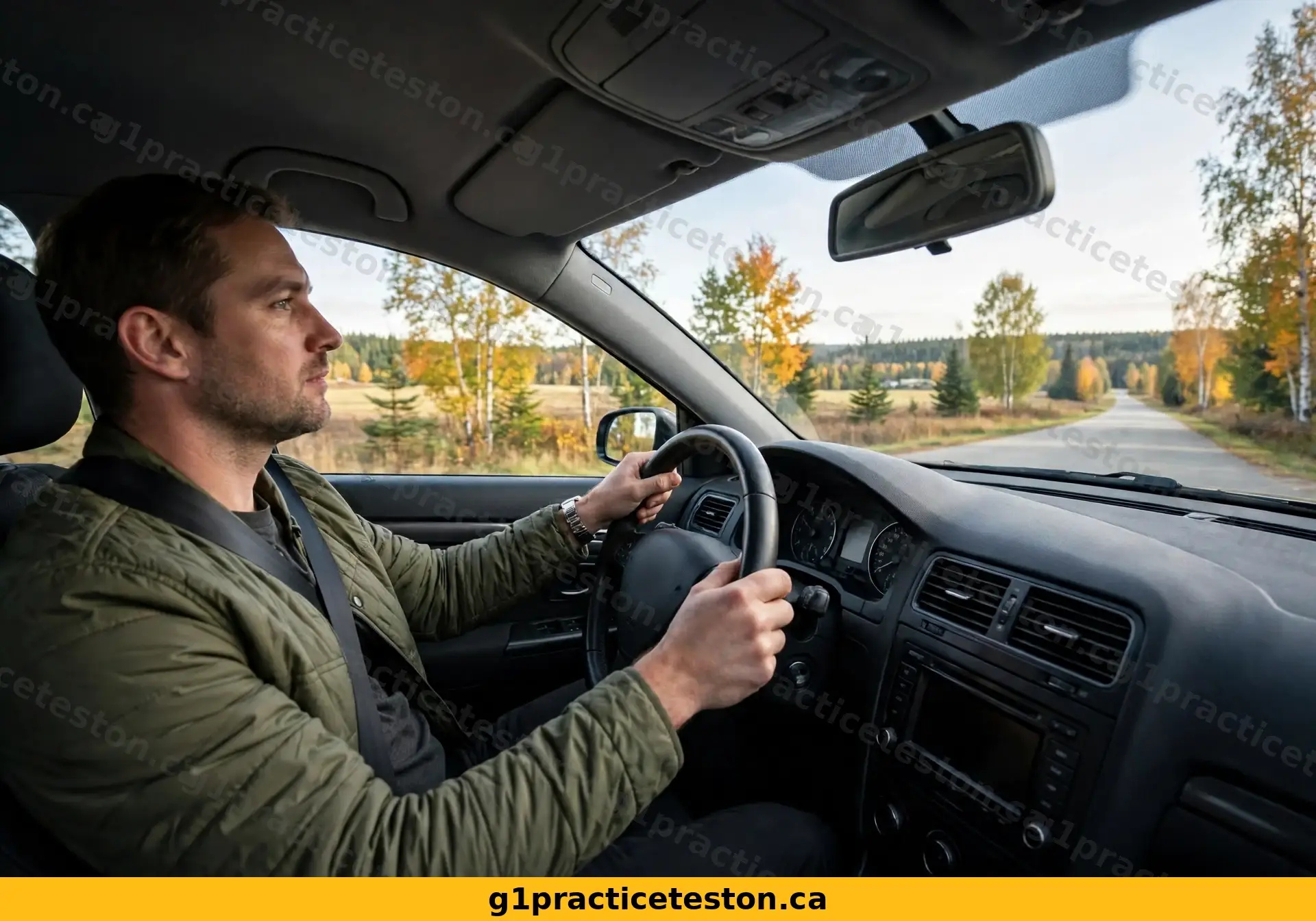
Q138. In Ontario, there is a seat belt law
g1practiceteston.ca -
Q139. If someone is tailgating you, what should you do?

g1practiceteston.ca -
Q140. Failing to stop for a school bus that is unloading passengers will

g1practiceteston.ca -
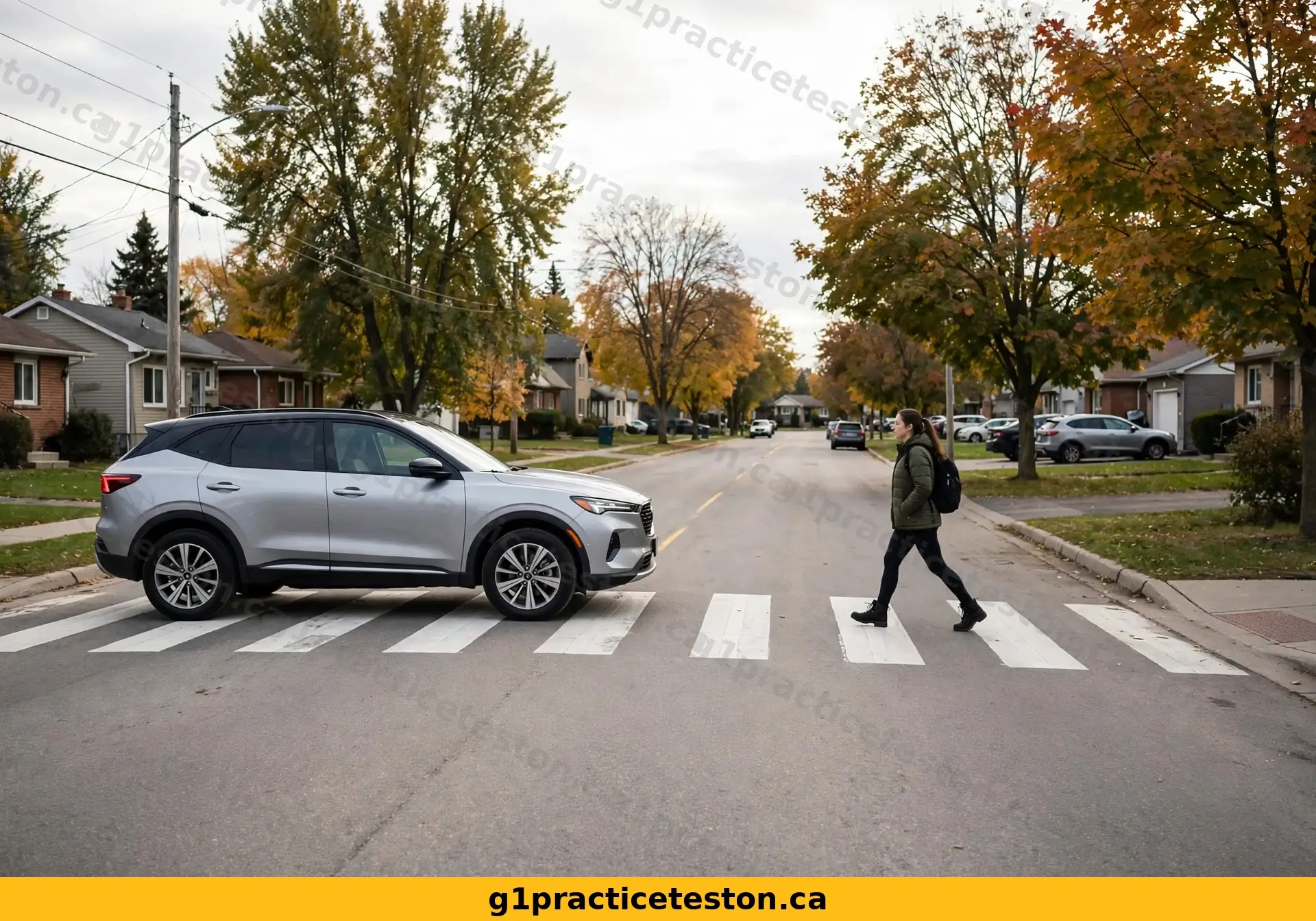
Q141. When a car is stopped to allow a pedestrian to cross the street at a marked crosswalk, you should
g1practiceteston.ca -
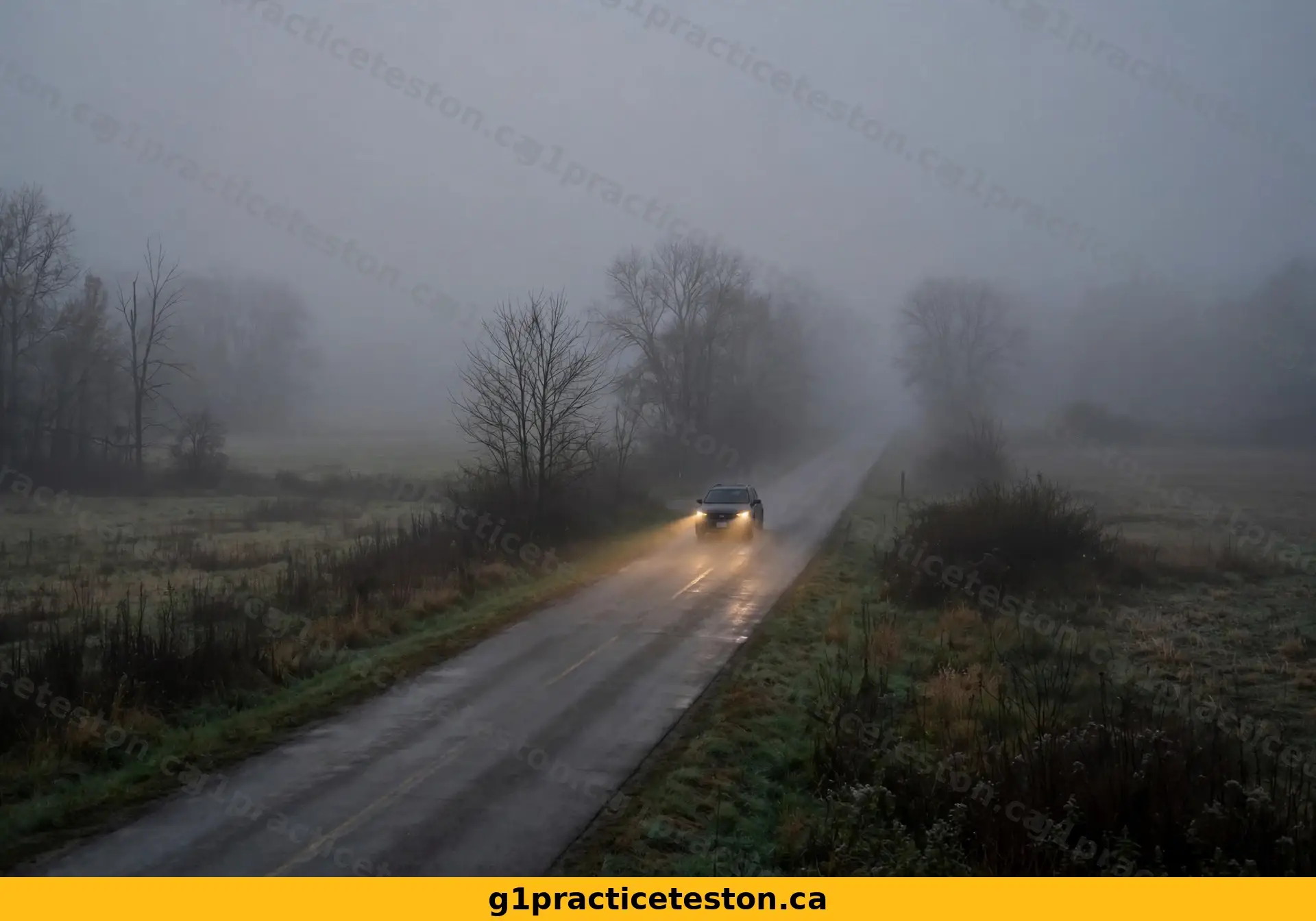
Q142. When driving in heavy fog, you should use
g1practiceteston.ca -
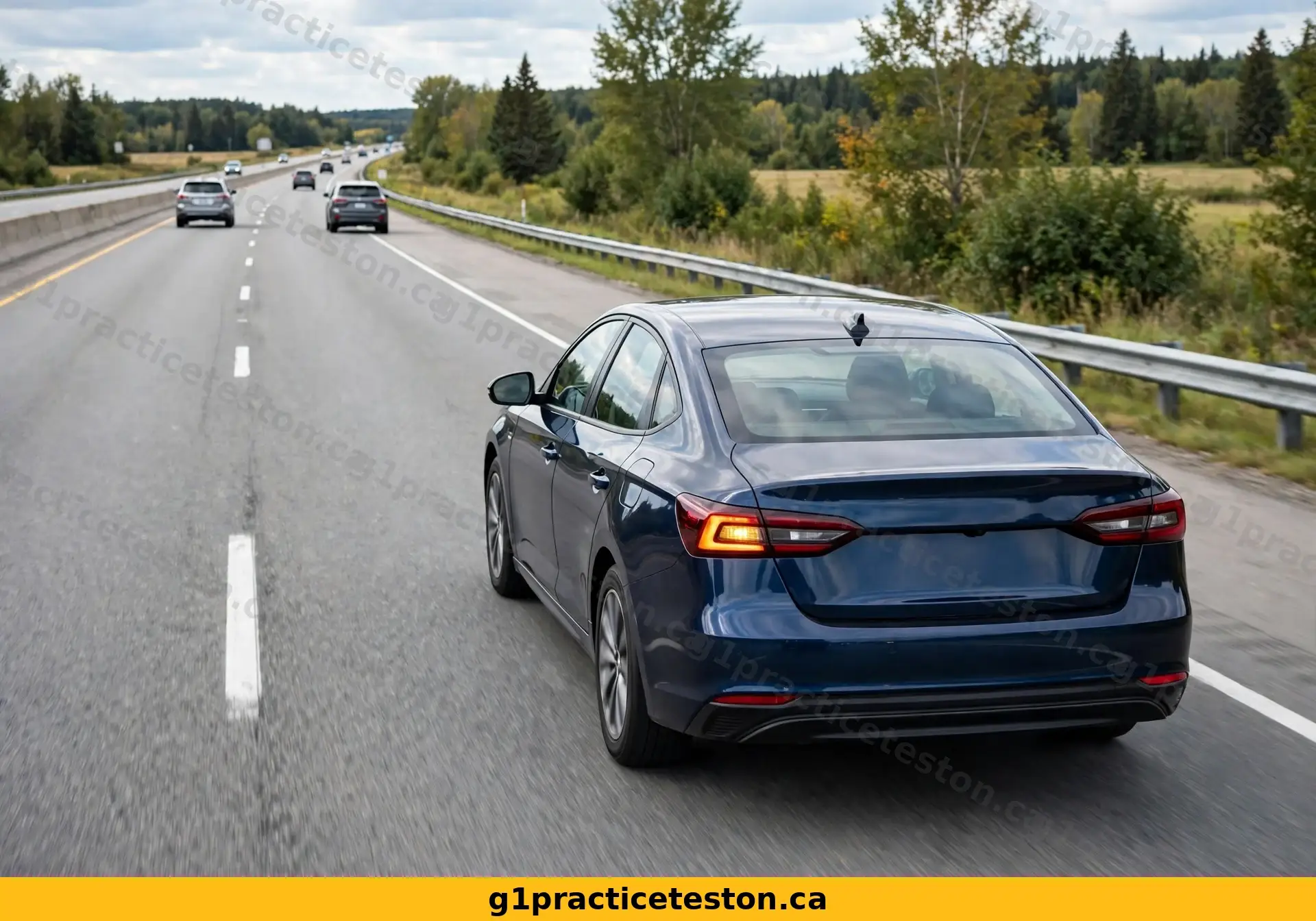
Q143. Never change lanes in traffic without
g1practiceteston.ca -
Q144. What documents may a police officer require a motor vehicle owner to produce?
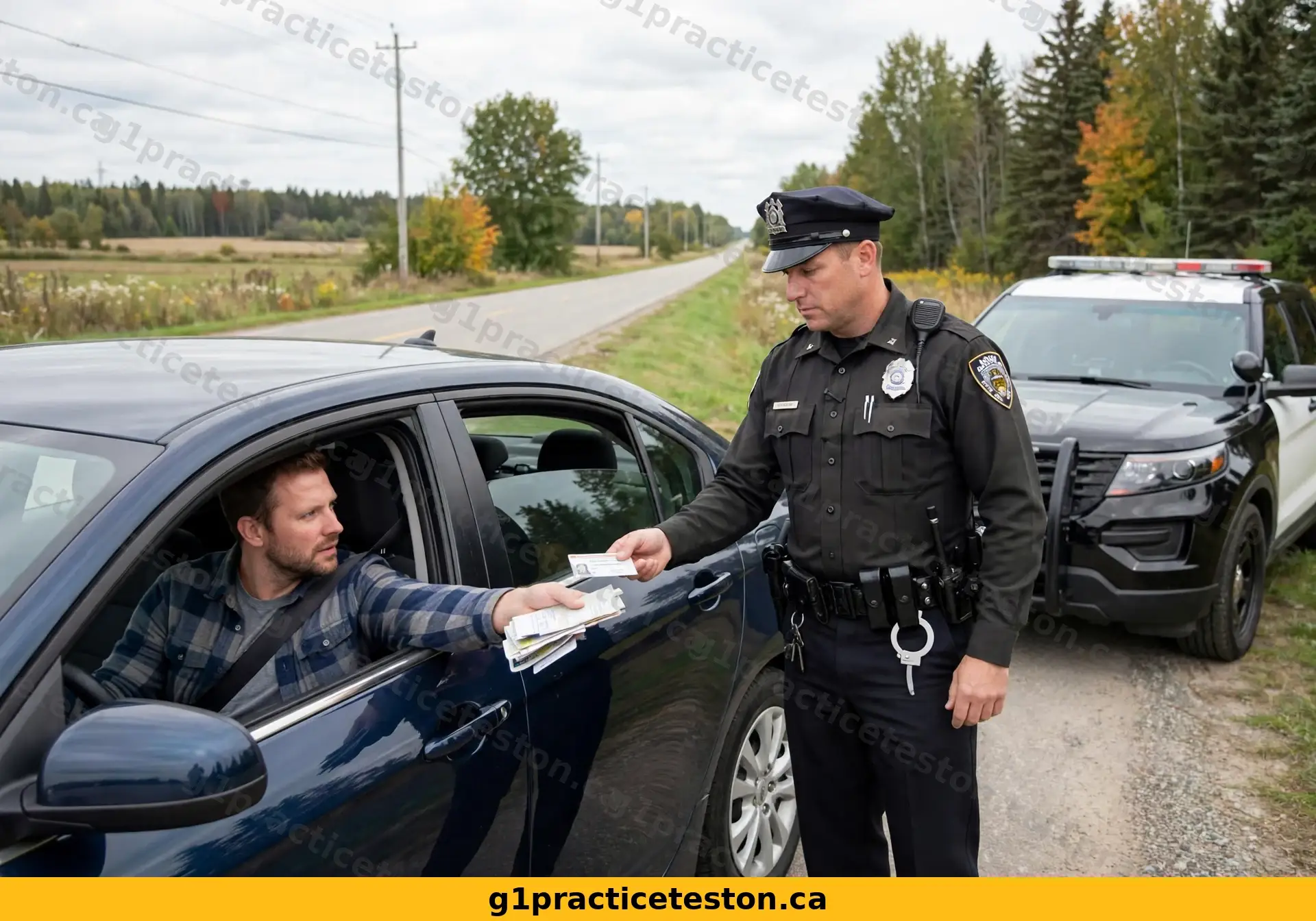
g1practiceteston.ca -
Q145. Every accident must be reported to the police where there is personal injury or when the damage exceeds
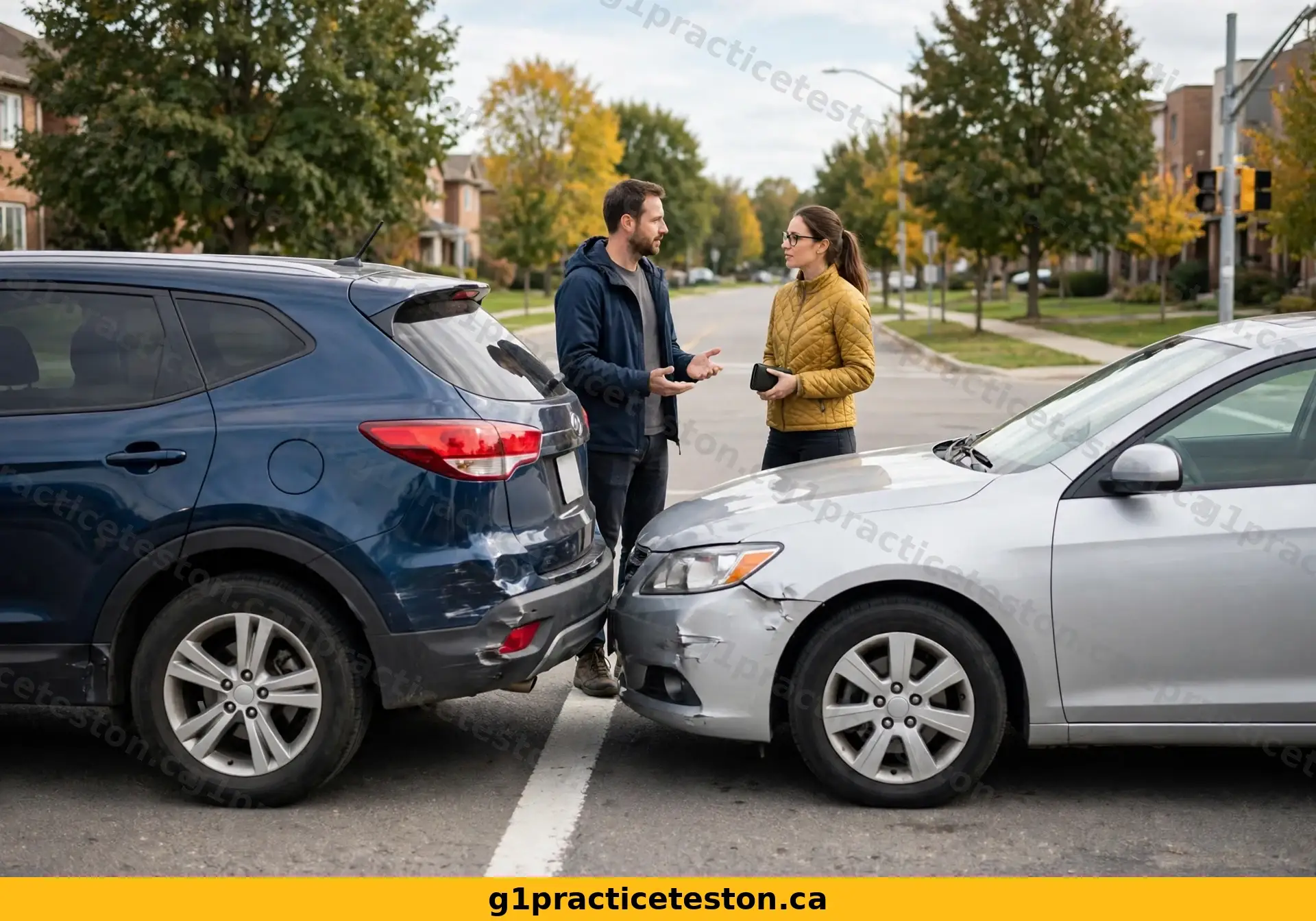
g1practiceteston.ca -
Q146. When lights are required, drivers must use lower beam headlights when following another vehicle
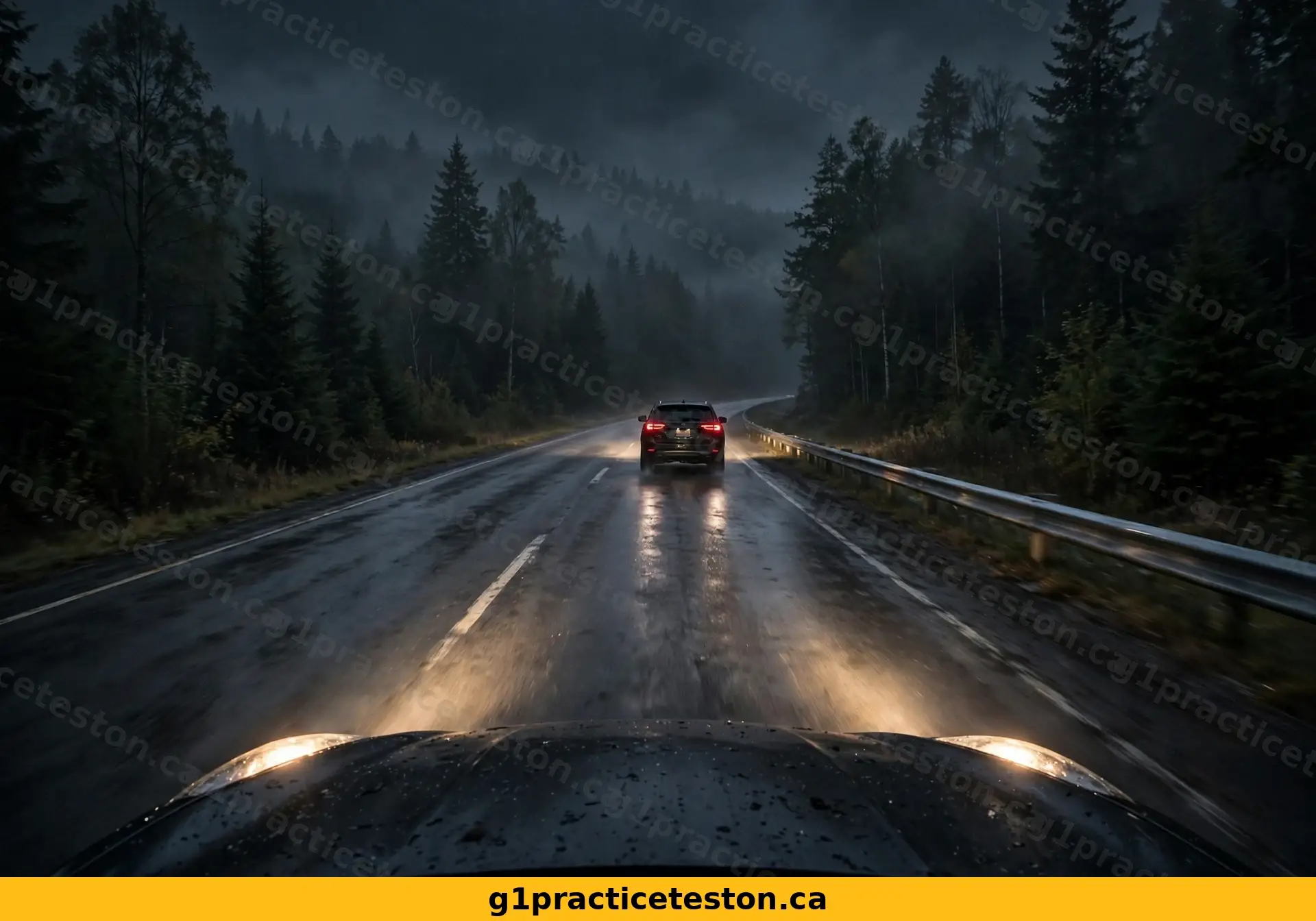
g1practiceteston.ca -
Q147. While travelling on a highway, the driver of a motor vehicle is not permitted to carry, in a house or boat trailer
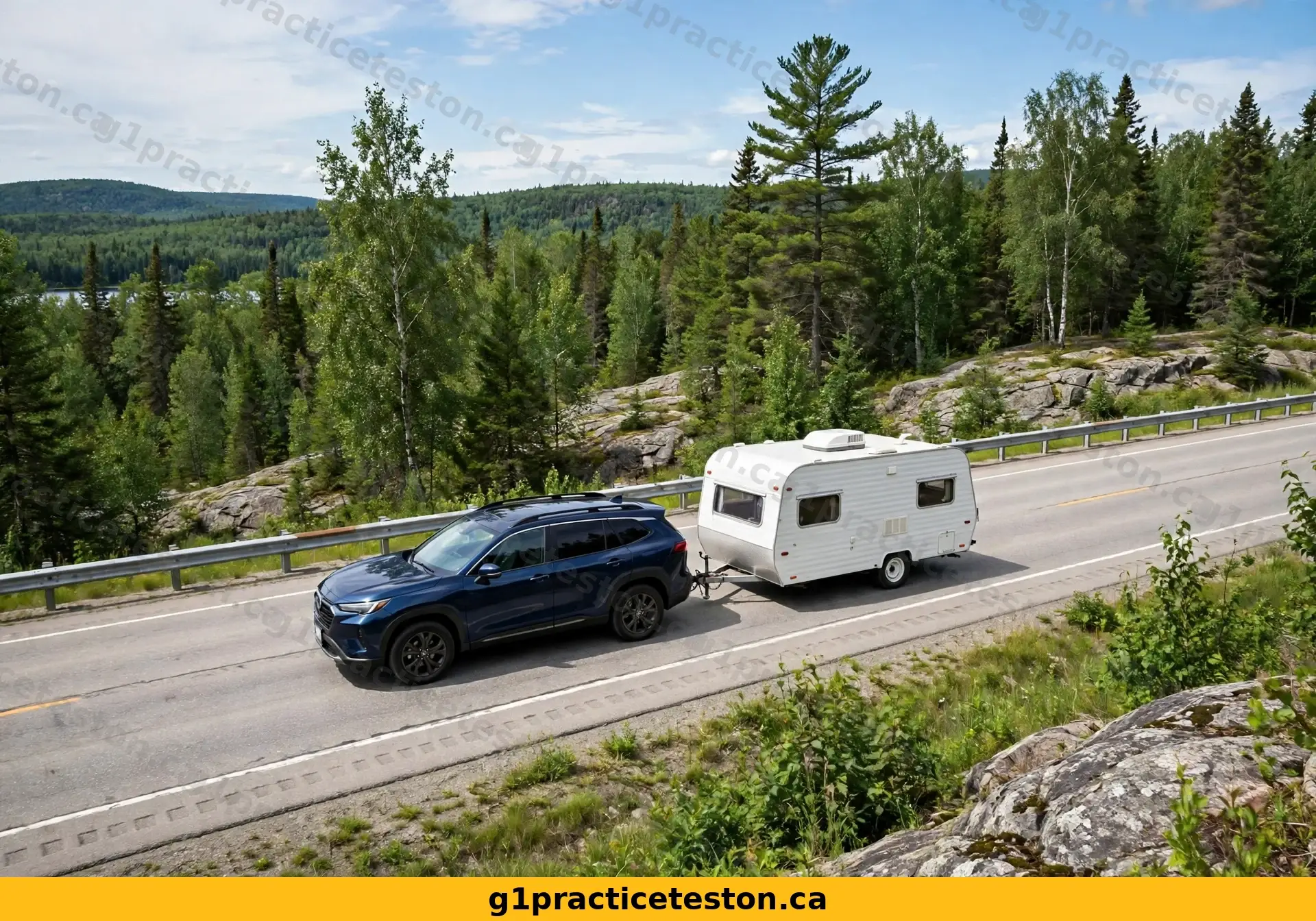
g1practiceteston.ca -
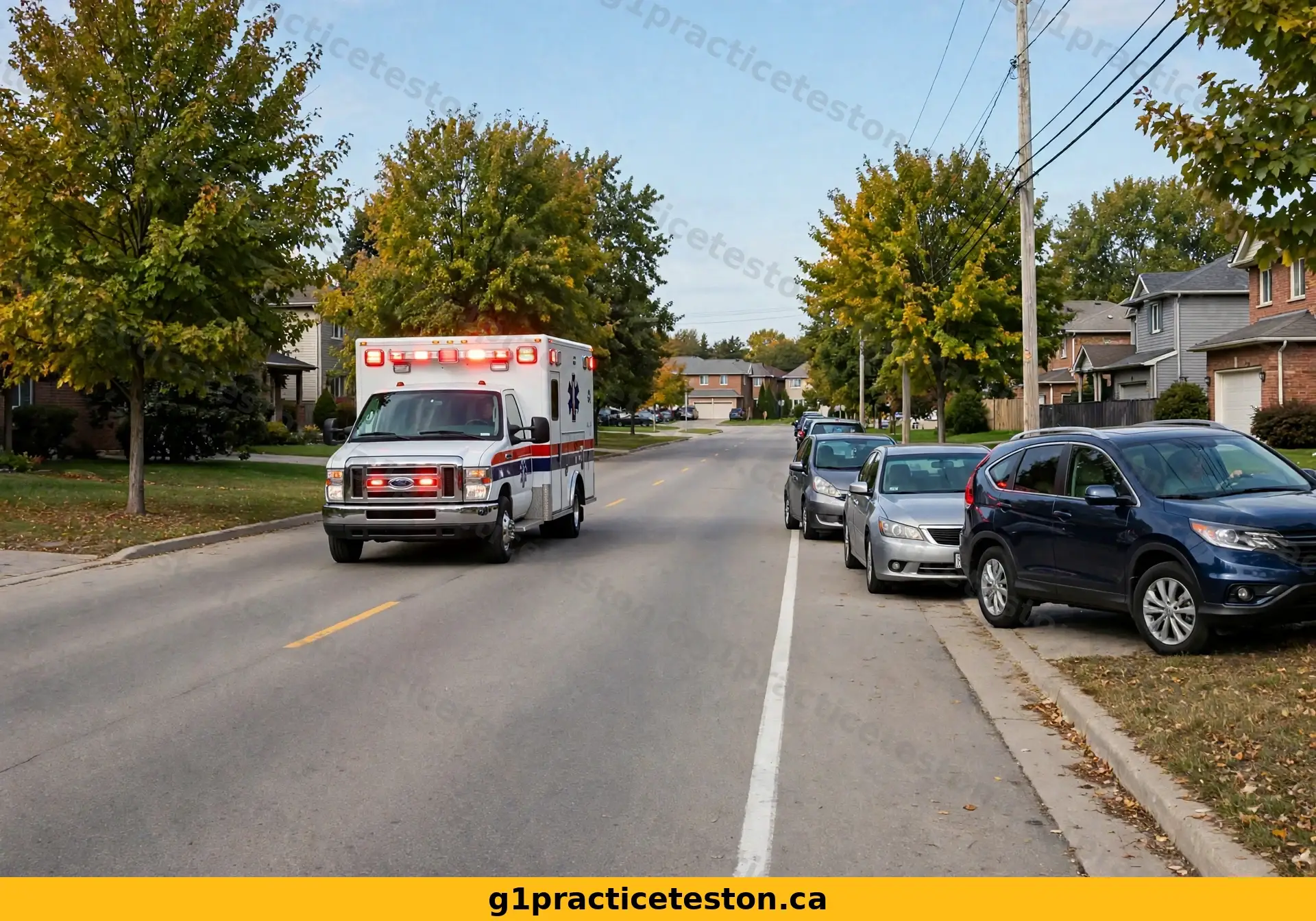
Q148. When on streets designed for two-way traffic, you hear the siren of an emergency vehicle, what does the law require you to do?
g1practiceteston.ca -
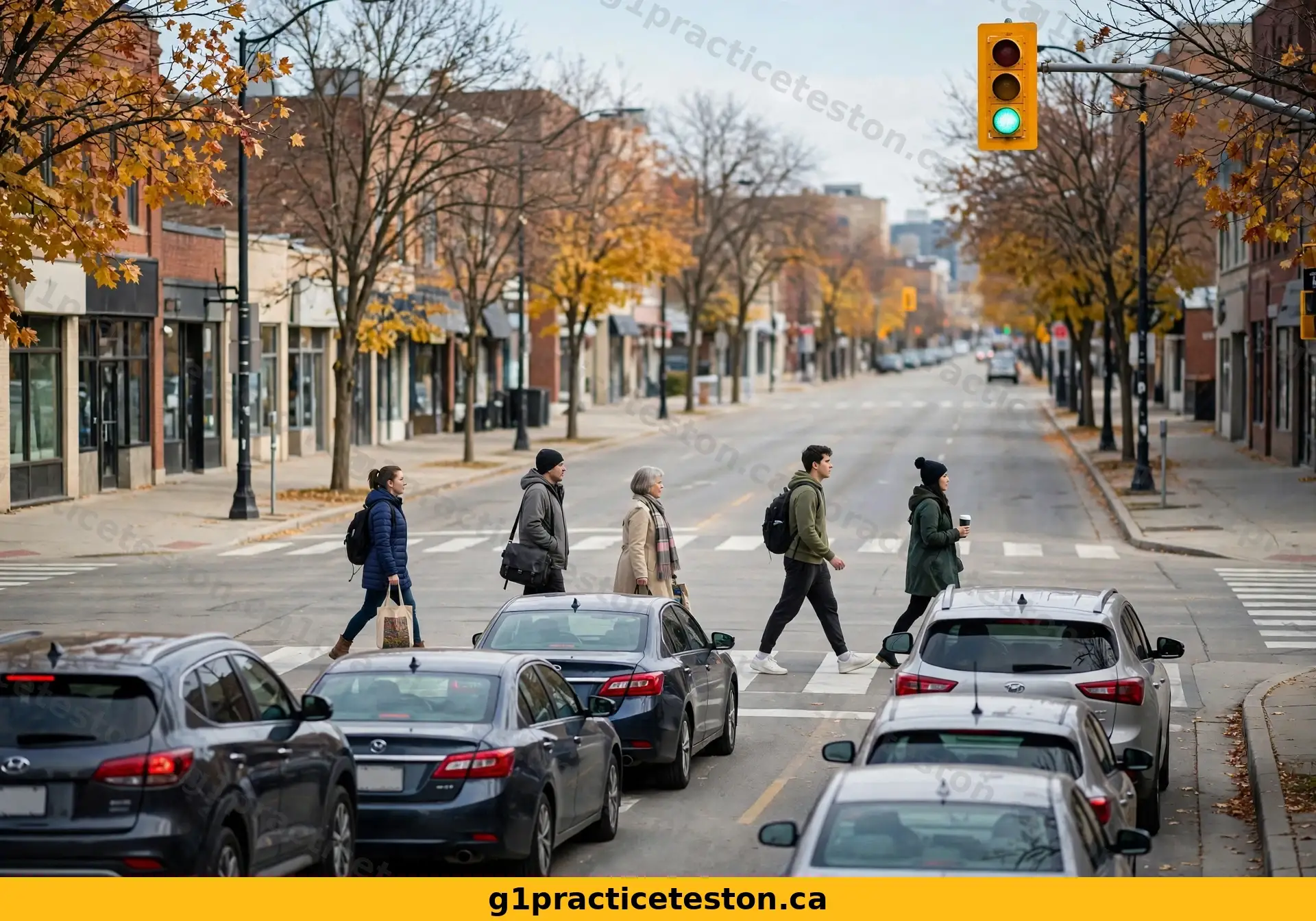
Q149. Which of the following has the right-of-way over all others at an intersection when the signal light is green?
g1practiceteston.ca -
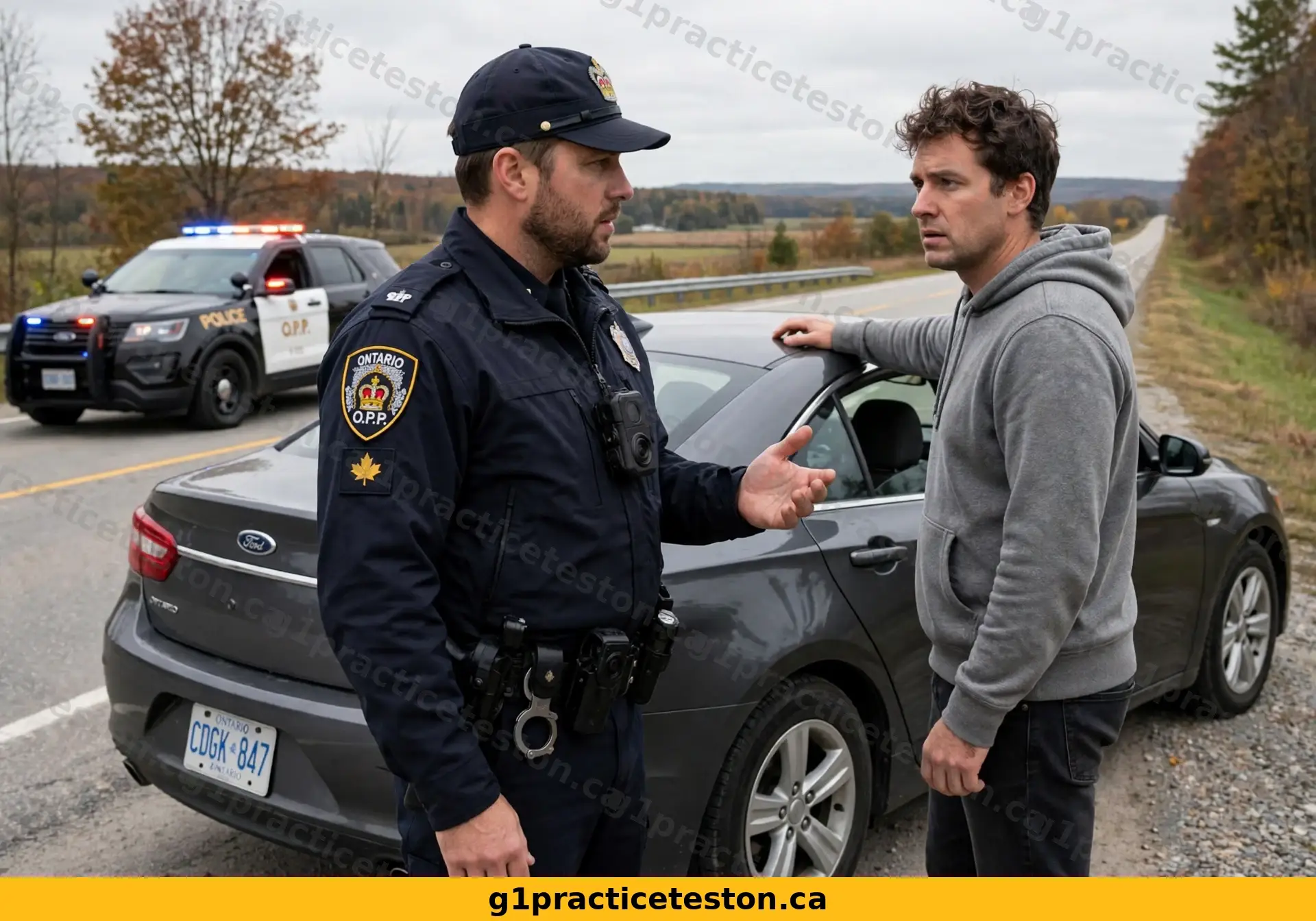
Q150. To what penalties is a driver liable who is convicted of driving while disqualified?
g1practiceteston.ca -
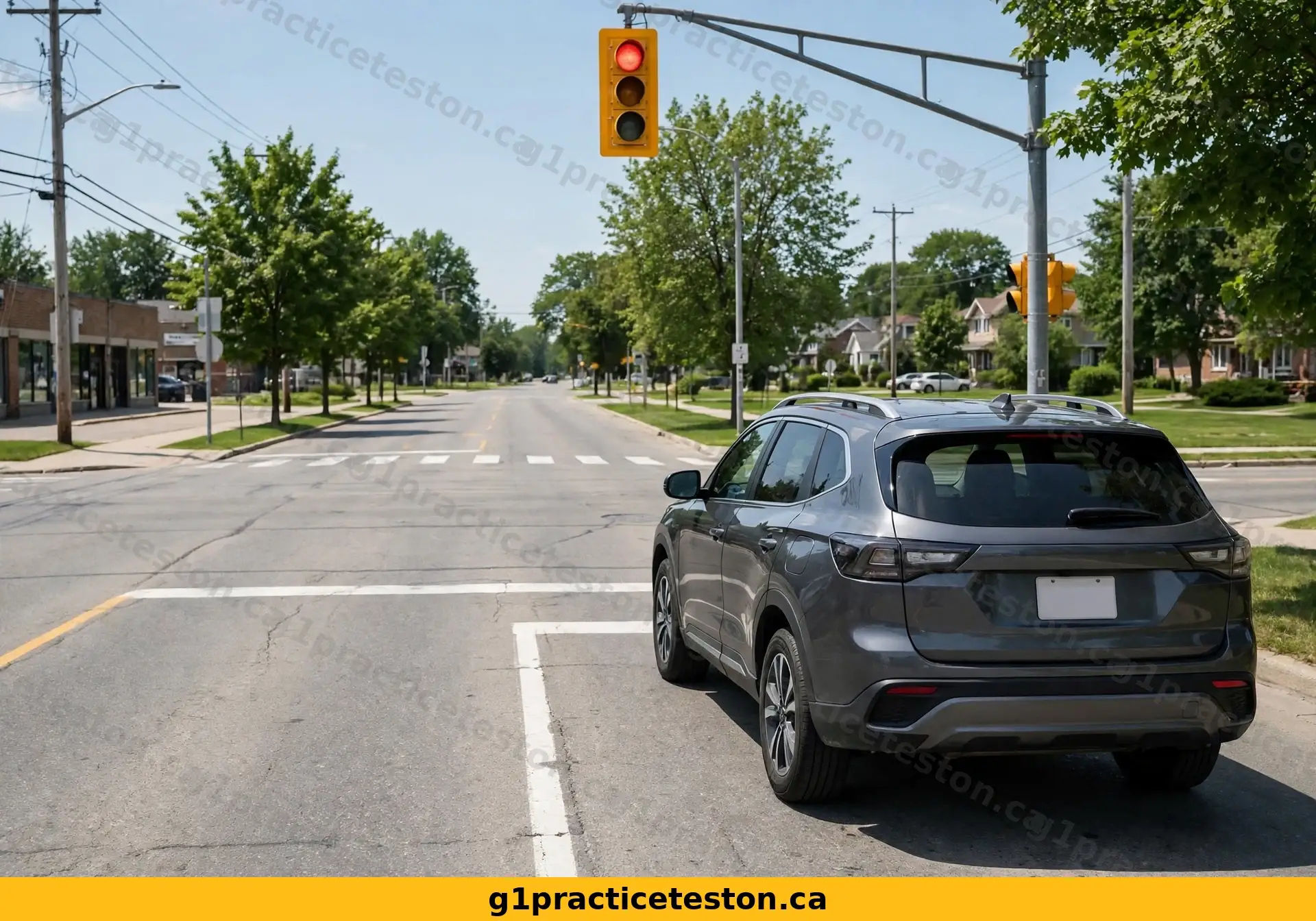
Q151. When the traffic signal-light facing you is red and you intend to go straight through the intersection, what must you do?
g1practiceteston.ca
Your score
Review — which answers were right and which were wrong
Tap any question below to jump to it and see the correct answer and explanation.
Rules of the Road — Frequently Asked Questions
What topics are covered in the rules of the road section of the G1 test?
It covers how traffic behaves and what the law requires: right-of-way at intersections, speed limits, traffic signals, lane use and turns, sharing the road with pedestrians, cyclists, school buses and emergency vehicles, parking, and safe driving practices. It also includes the conditions of a G1 licence itself, such as who must be in the front seat with you. This quiz’s 151 questions practise all of these areas.
How many rules questions are on the real G1 test, and what score do I need?
The real test has 20 rules questions and 20 road sign questions. You need at least 16 out of 20 — 80% — in the rules section, and the same in the signs section; the two scores are not combined. That means you can miss no more than four questions in either section.
What happens if I pass the signs section but fail the rules section?
Your passing result stays valid for one year. If you rewrite within that year, you only redo the section that did not pass, and each extra knowledge test attempt costs $16.00. It is still better to prepare both sections fully before your first visit, because the licence cannot be issued until both sections are passed.
Are these the exact questions from the real G1 test?
No — the real test questions are not published. These practice questions are written from the Official MTO Driver’s Handbook, the same source the test is based on, and they cover the same topics in the same multiple-choice style. This website is an independent study aid and is not affiliated with the Ministry of Transportation or DriveTest.
I keep getting the same rules questions wrong. What should I do?
Read the explanation under each missed question, then find that topic in the handbook and read the full section — the question usually tests one detail you have not met yet. Then retake this quiz and check whether those topics now come out right. If licence conditions are your weak spot, our guide to G1 licence restrictions in Ontario explains them in plain language.