Out of all three sign categories on the G1 test, warning road signs are the ones I always tell new drivers to slow down and actually read carefully. They’re not asking you to follow a legal rule the way regulatory signs do; they’re telling you something is coming up that you need to be careful.
Miss one, and it’s not just a test question you get wrong. It’s the difference between anticipating a sharp curve and being caught off guard by one.
This guide covers every major category of warning sign you’ll encounter in Ontario, based on the official MTO Driver’s Handbook, organized the way they actually appear on the G1 exam.
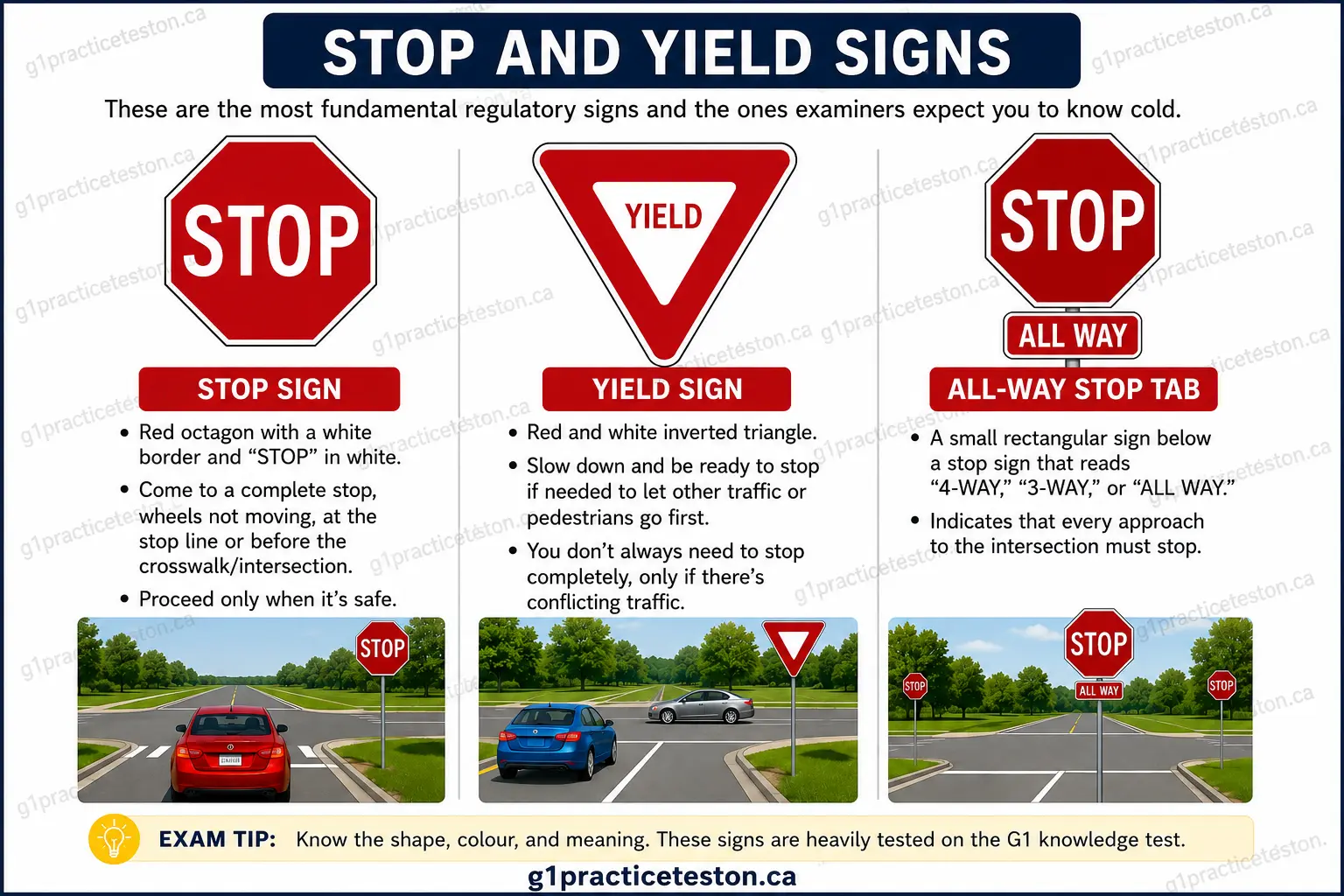
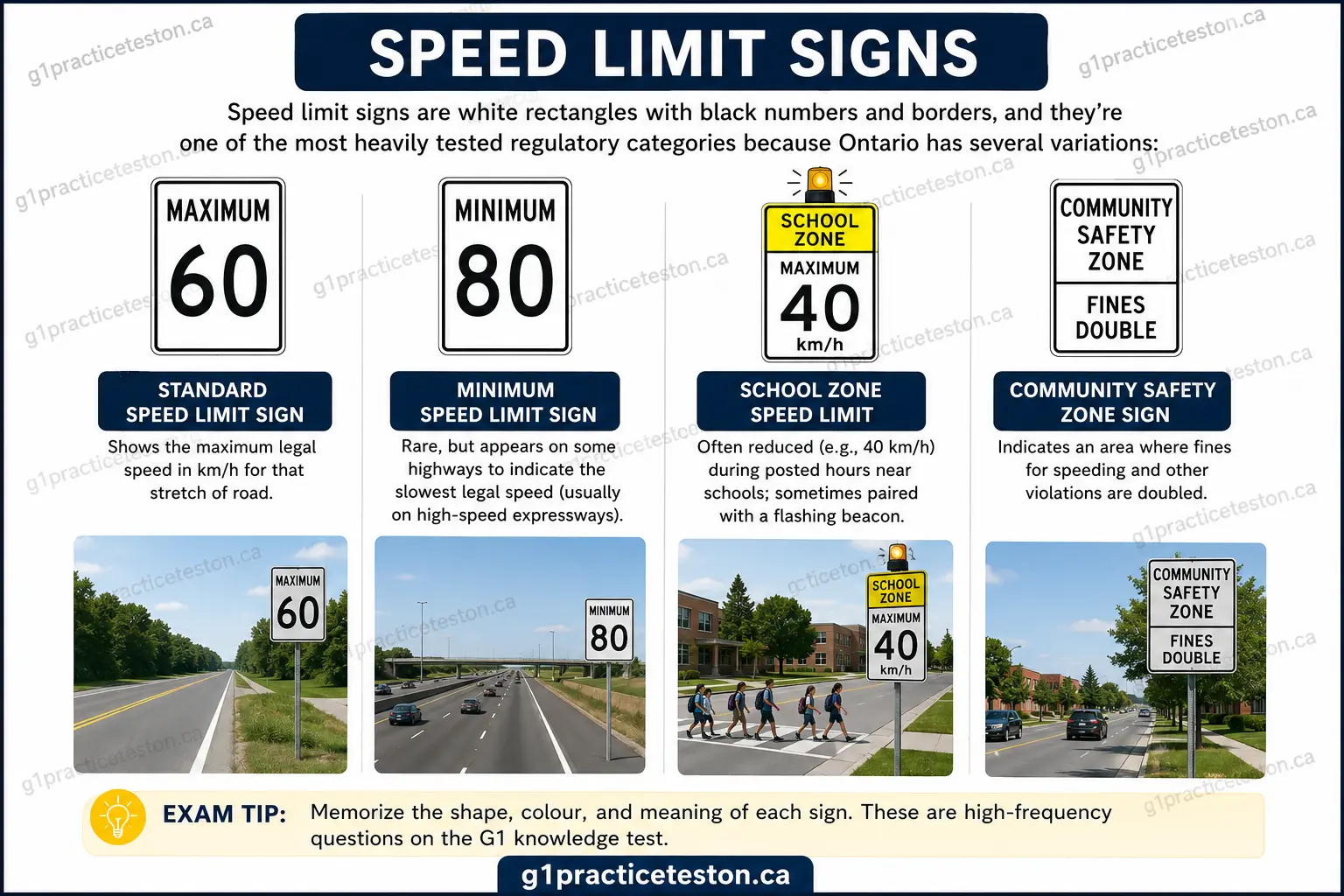
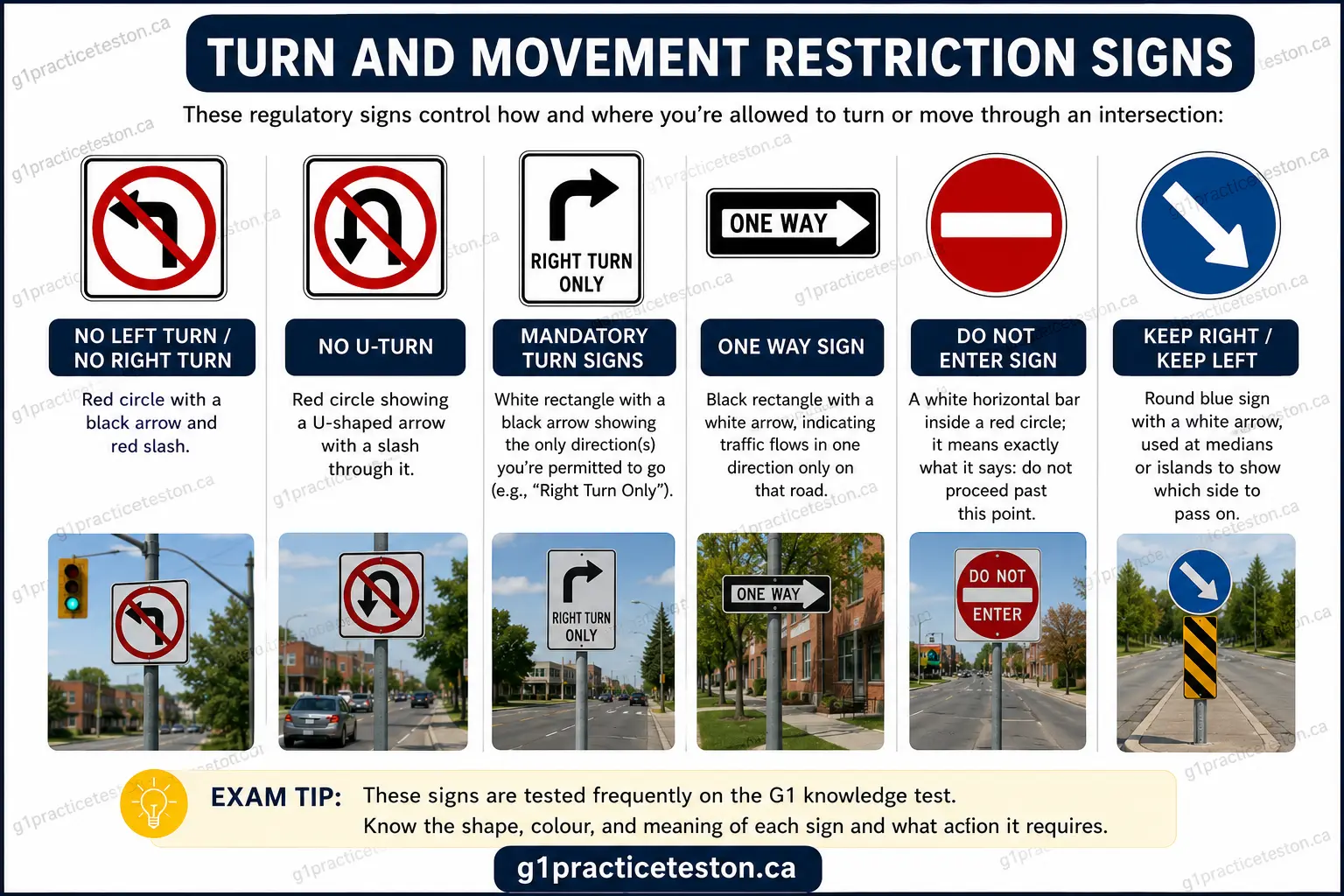
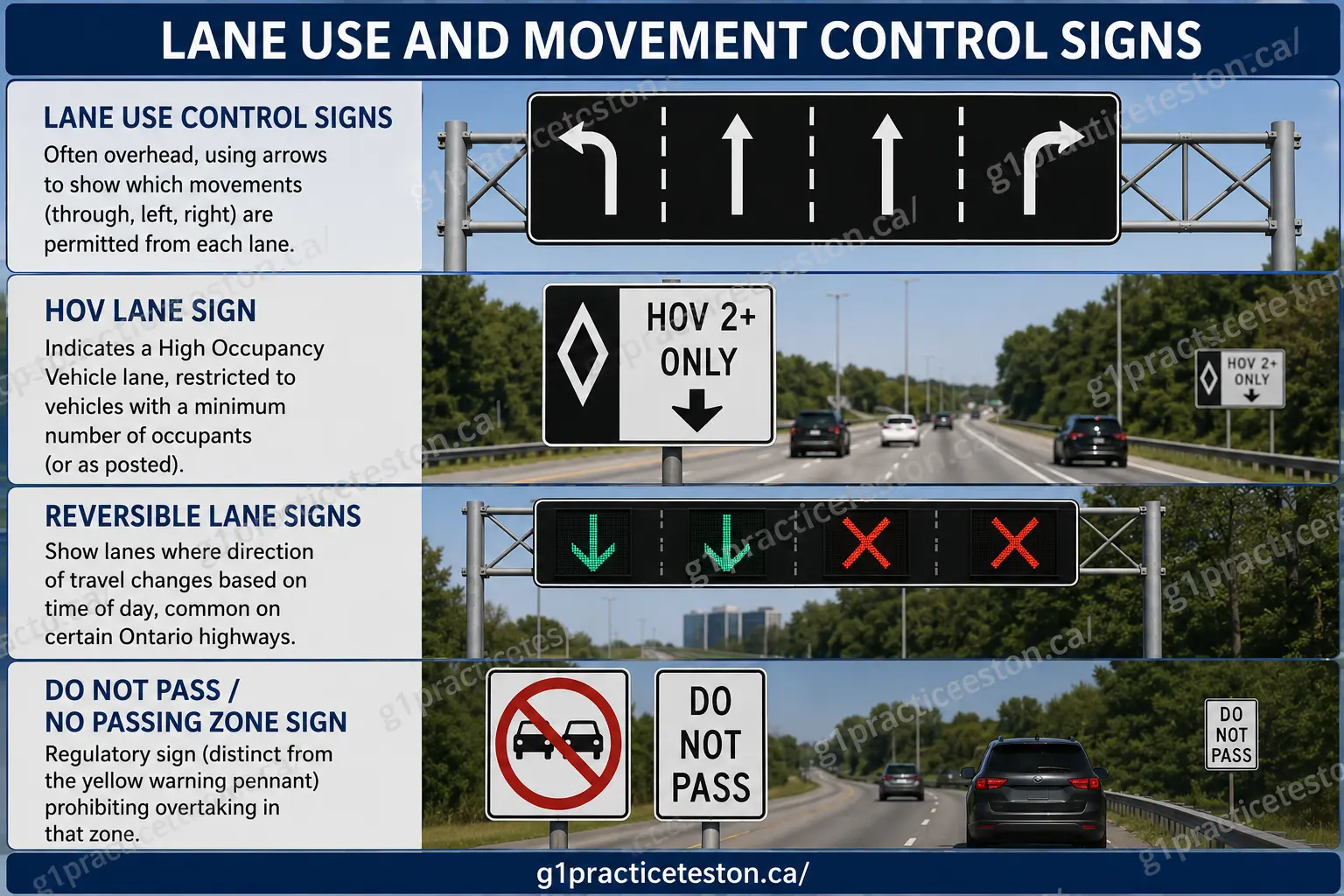
If you haven’t already gone through them, pair this with our Ontario Road Signs — Complete Guide and our Regulatory Road Signs in Ontario guide to cover all three sign categories tested on the G1.
What Makes a Sign a “Warning” Sign?
Warning road signs alert you to hazards, changing road conditions, or situations ahead that require caution, but unlike regulatory signs, they aren’t a legal command in themselves. You won’t get a ticket for “disobeying” a curve warning sign, but ignoring it can absolutely lead to a collision, which is exactly why the G1 test weighs this category heavily.
In Ontario, warning road signs are almost always:
- Yellow diamond-shaped, with black symbols or text.
- Occasionally paired with a supplementary tab underneath (like an advisory speed plate).
- Sometimes fluorescent yellow-green for signs involving pedestrians, cyclists, or school zones, a newer MTO standard meant to increase visibility
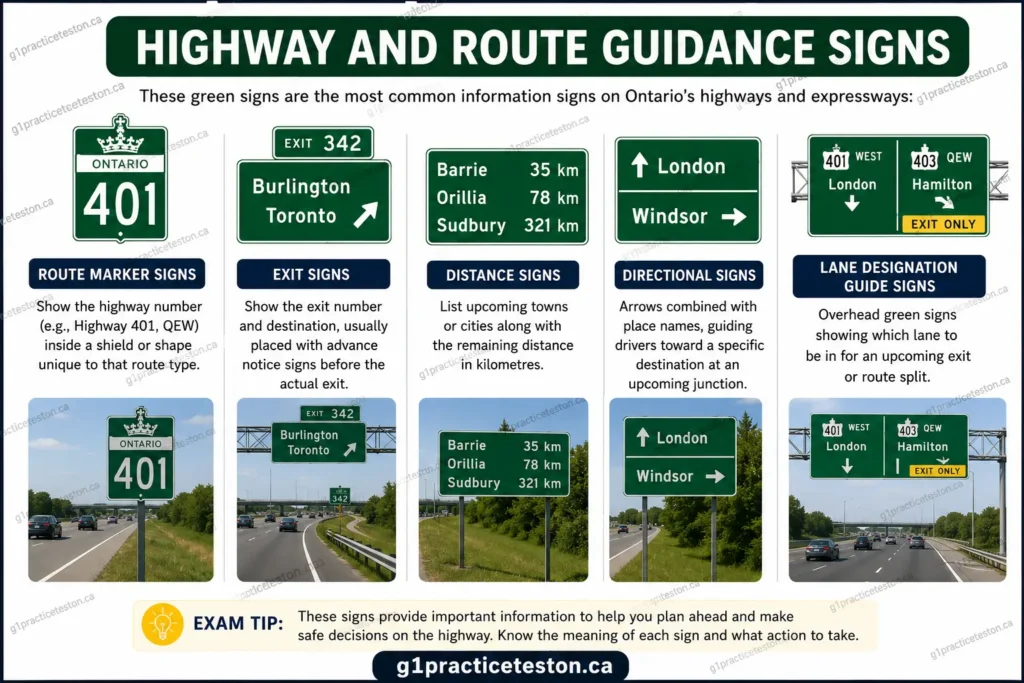
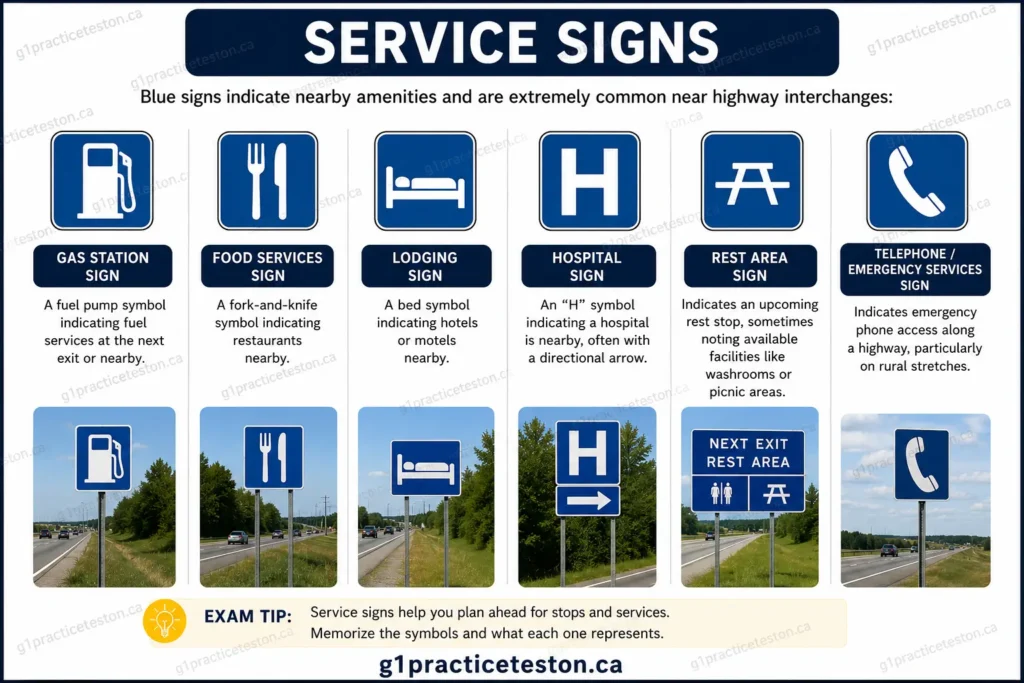
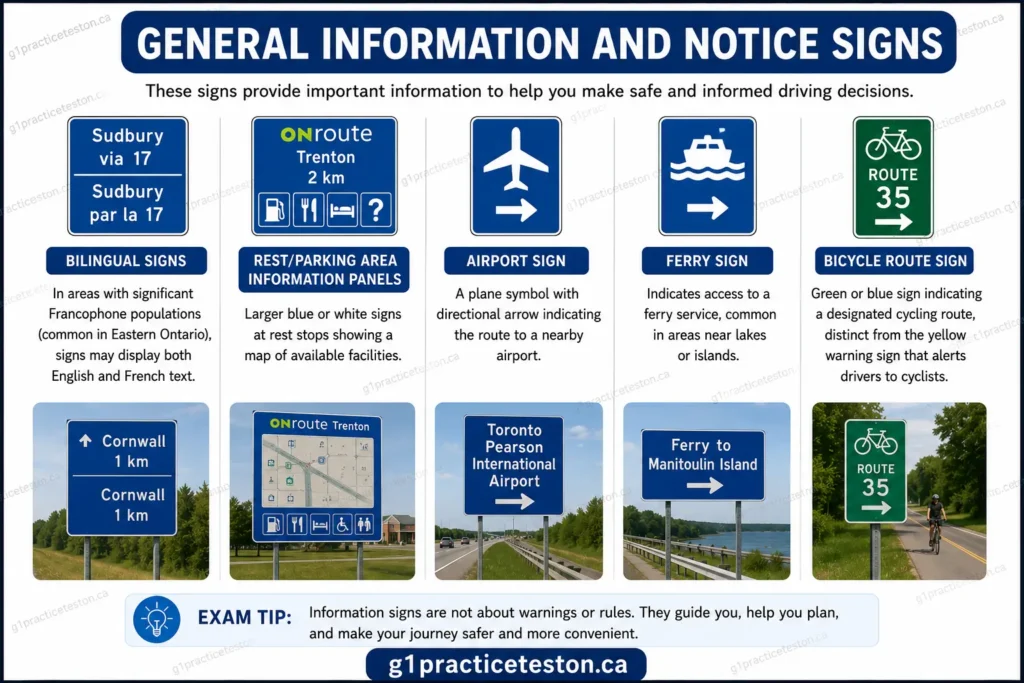
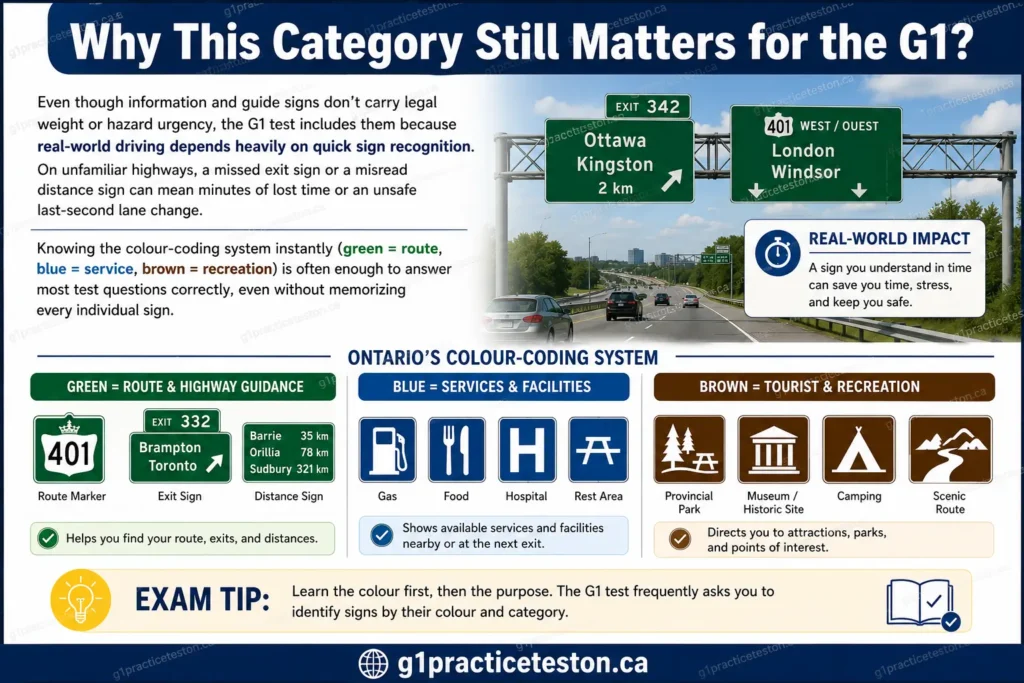
This is different from regulatory signs (red/white or black/white, legally binding) and information/guide signs (green or blue, giving directions or services).
Road Condition and Alignment Warning Signs
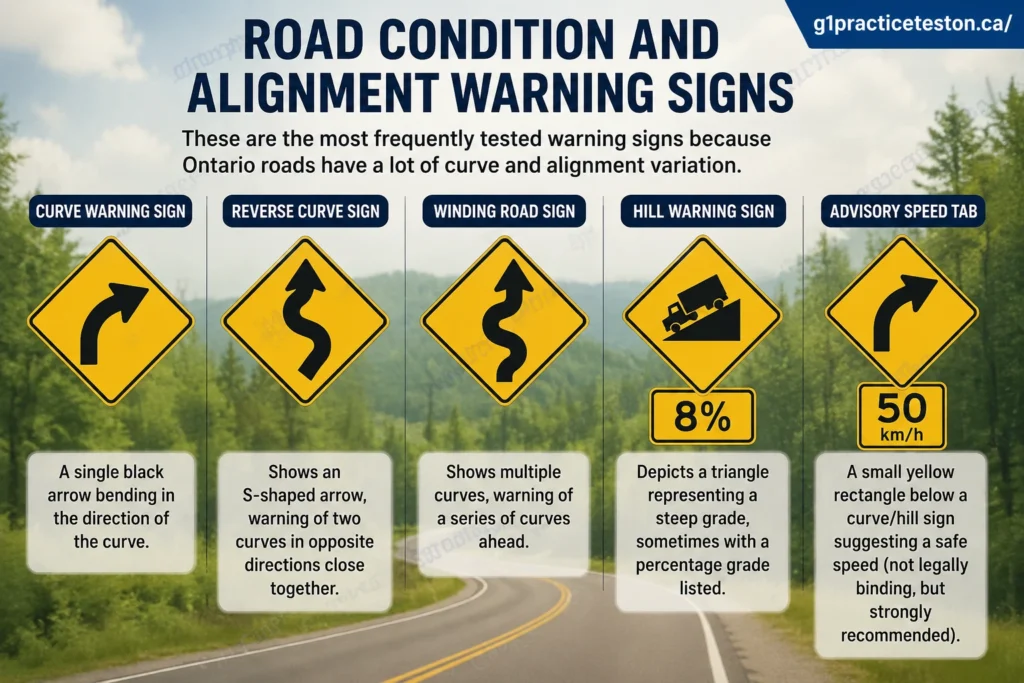
These are the most frequently tested warning road signs because Ontario roads have a lot of curves and alignment variation:
- Curve Warning Sign — A single black arrow bending in the direction of the curve.
- Reverse Curve Sign — Shows an S-shaped arrow, warning of two curves in opposite directions close together.
- Winding Road Sign — Shows multiple curves, warning of a series of curves ahead.
- Hill Warning Sign — Depicts a triangle representing a steep grade, sometimes with a percentage grade listed.
- Advisory Speed Tab — A small yellow rectangle below a curve/hill sign suggesting a safe speed (not legally binding, but strongly recommended).
Intersection and Merge Warning Signs
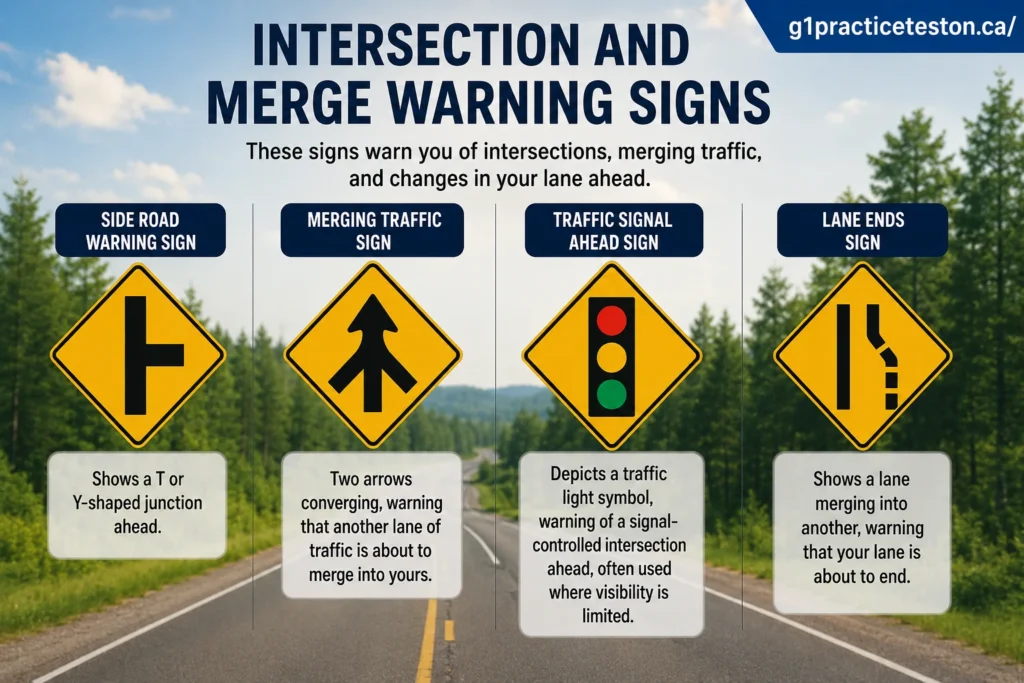
- Side Road Warning Sign — Shows a T or Y-shaped junction ahead.
- Merging Traffic Sign — Two arrows converging, warning that another lane of traffic is about to merge into yours.
- Traffic Signal Ahead Sign — Depicts a traffic light symbol, warning of a signal-controlled intersection ahead, often used where visibility is limited.
- Lane Ends Sign — Shows a lane merging into another, warning that your lane is about to end.
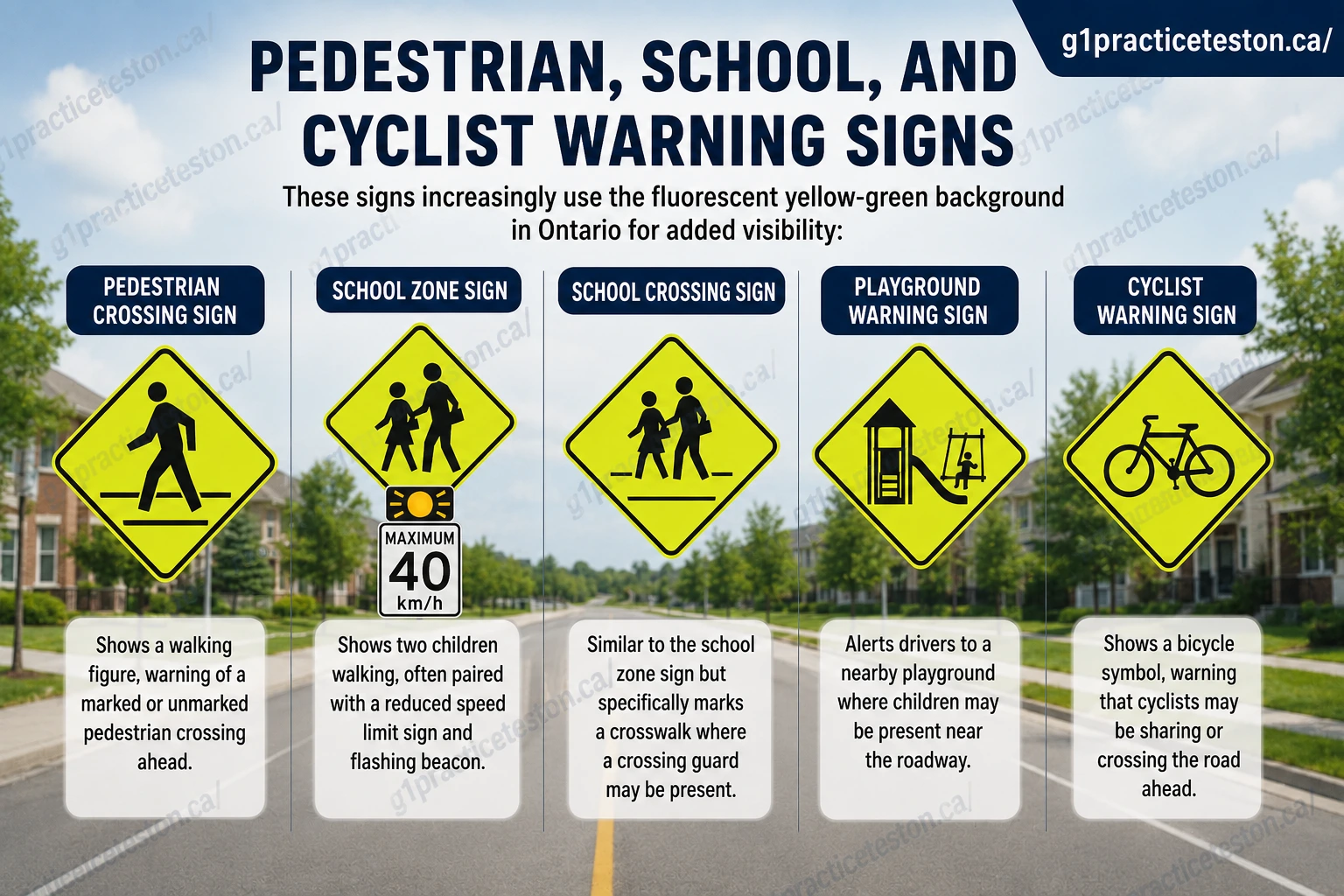
Pedestrian, School, and Cyclist Warning Signs
These signs increasingly use the fluorescent yellow-green background in Ontario for added visibility:
- Pedestrian Crossing Sign — Shows a walking figure, warning of a marked or unmarked pedestrian crossing ahead.
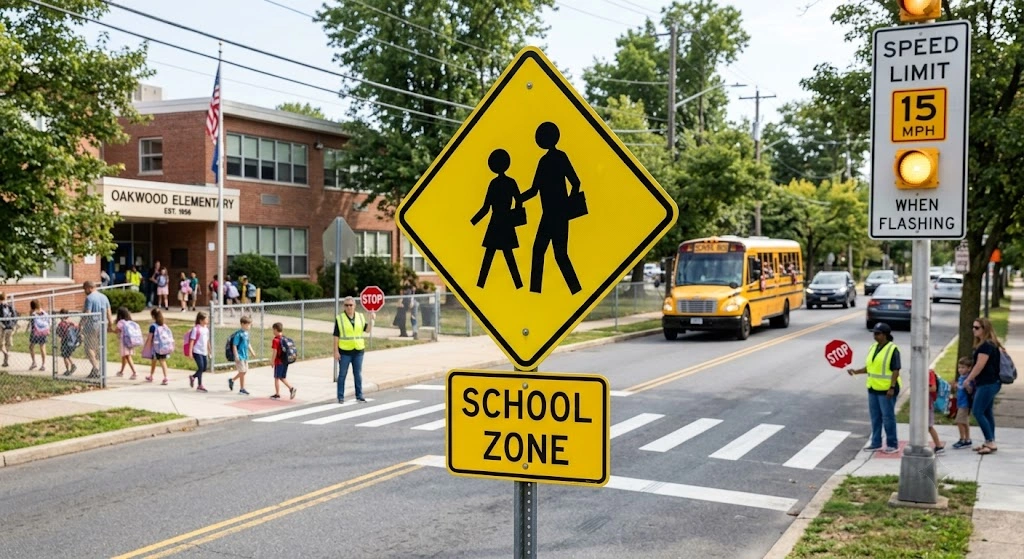
- School Zone Sign — Shows two children walking, often paired with a reduced-speed-limit sign and a flashing beacon.
- School Crossing Sign — Similar to the school zone sign, but specifically marks a crosswalk where a crossing guard may be present.
- Playground Warning Sign — Alerts drivers to a nearby playground where children may be present near the roadway.
- Cyclist Warning Road Sign — Shows a bicycle symbol, warning that cyclists may be sharing or crossing the road ahead.

G1 tip
The test frequently asks you to distinguish a School Zone sign (general area) from a School Crossing sign (a specific crosswalk point), both use children symbols, but signal different things.
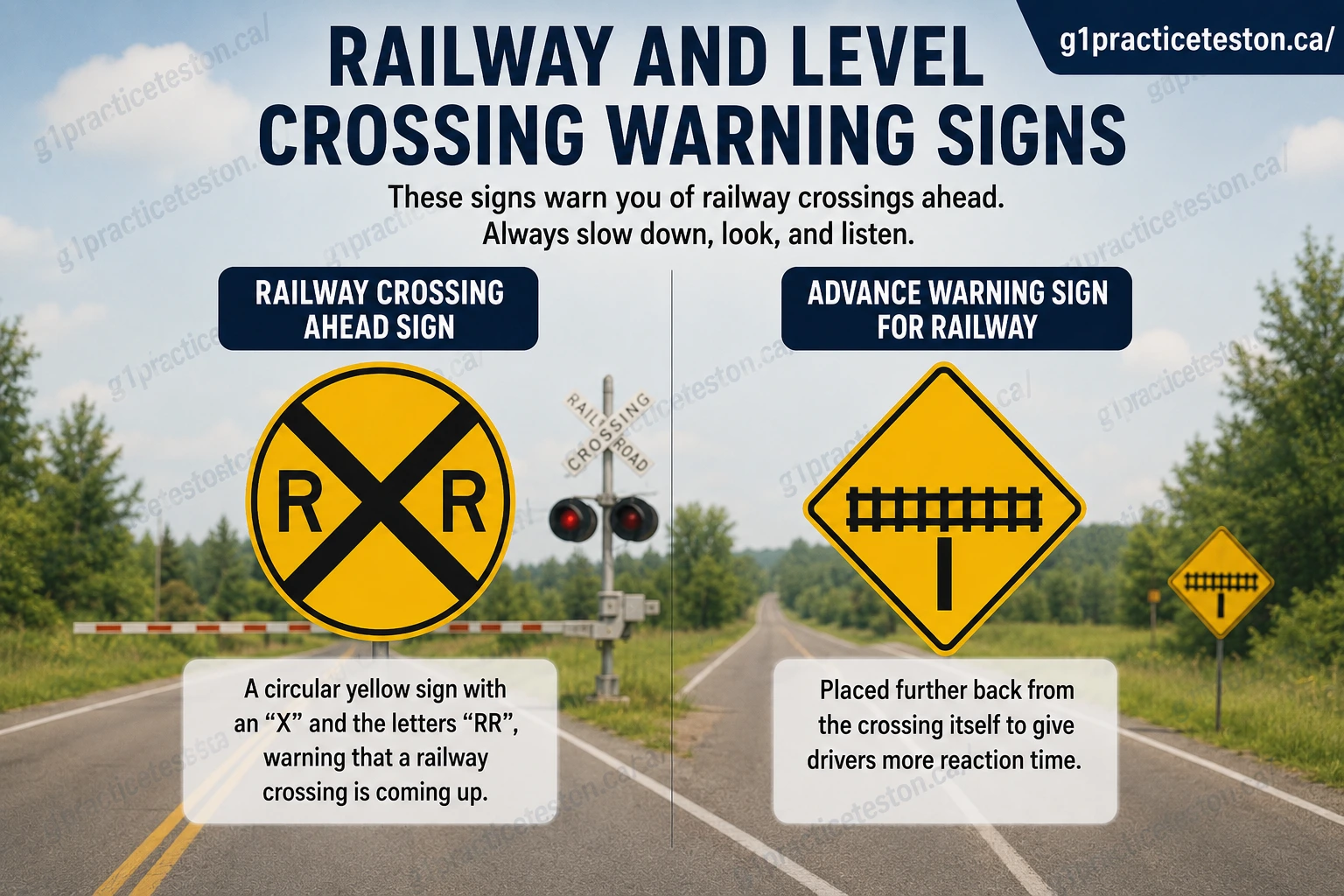
Railway and Level Crossing Warning Signs
- Railway Crossing Ahead Sign — A circular yellow sign with an “X” and the letters “RR,” warning that a railway crossing is coming up.
- Advance Warning Sign for Railway — Placed further back from the crossing itself to give drivers more reaction time.
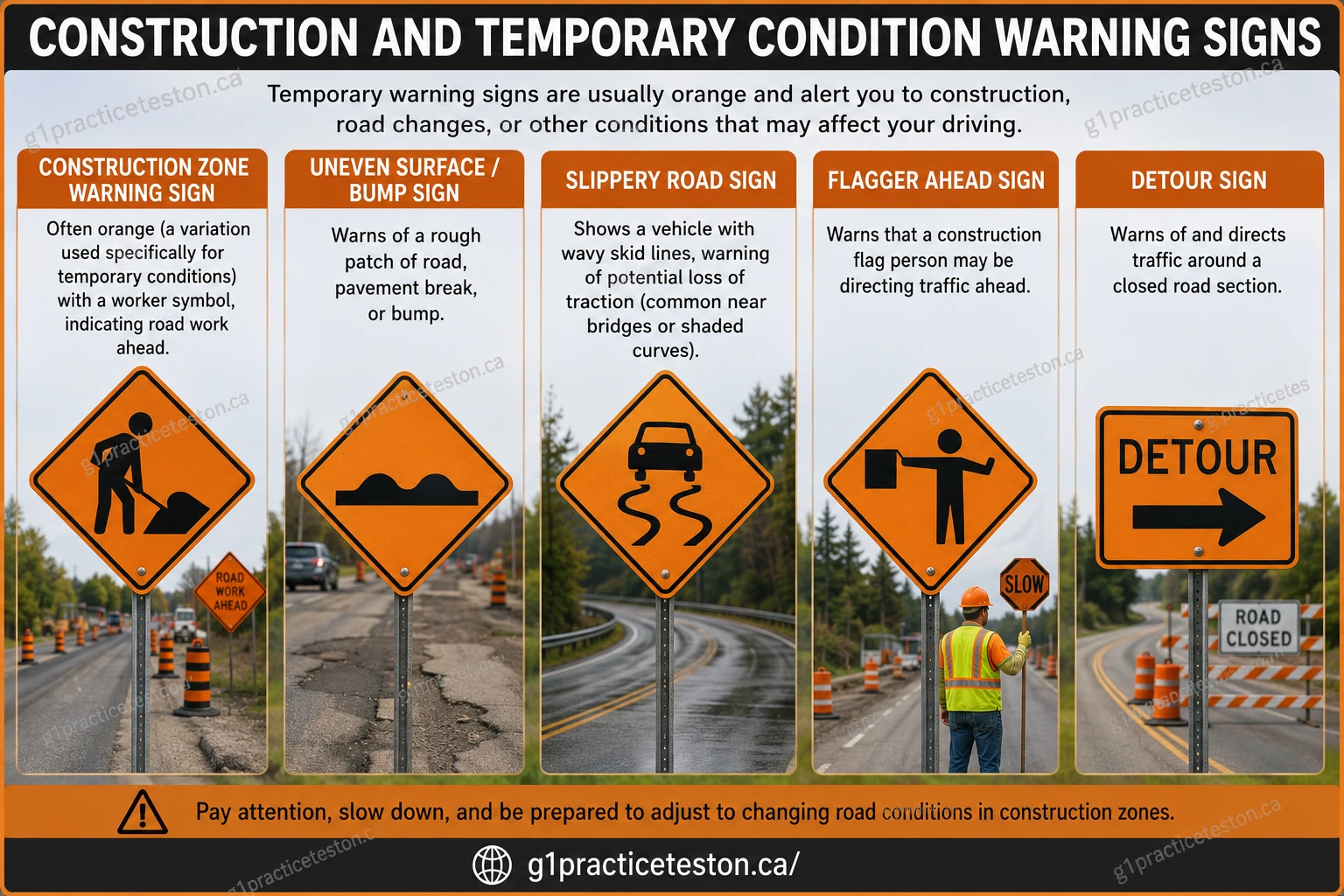
Construction and Temporary Condition Warning Signs
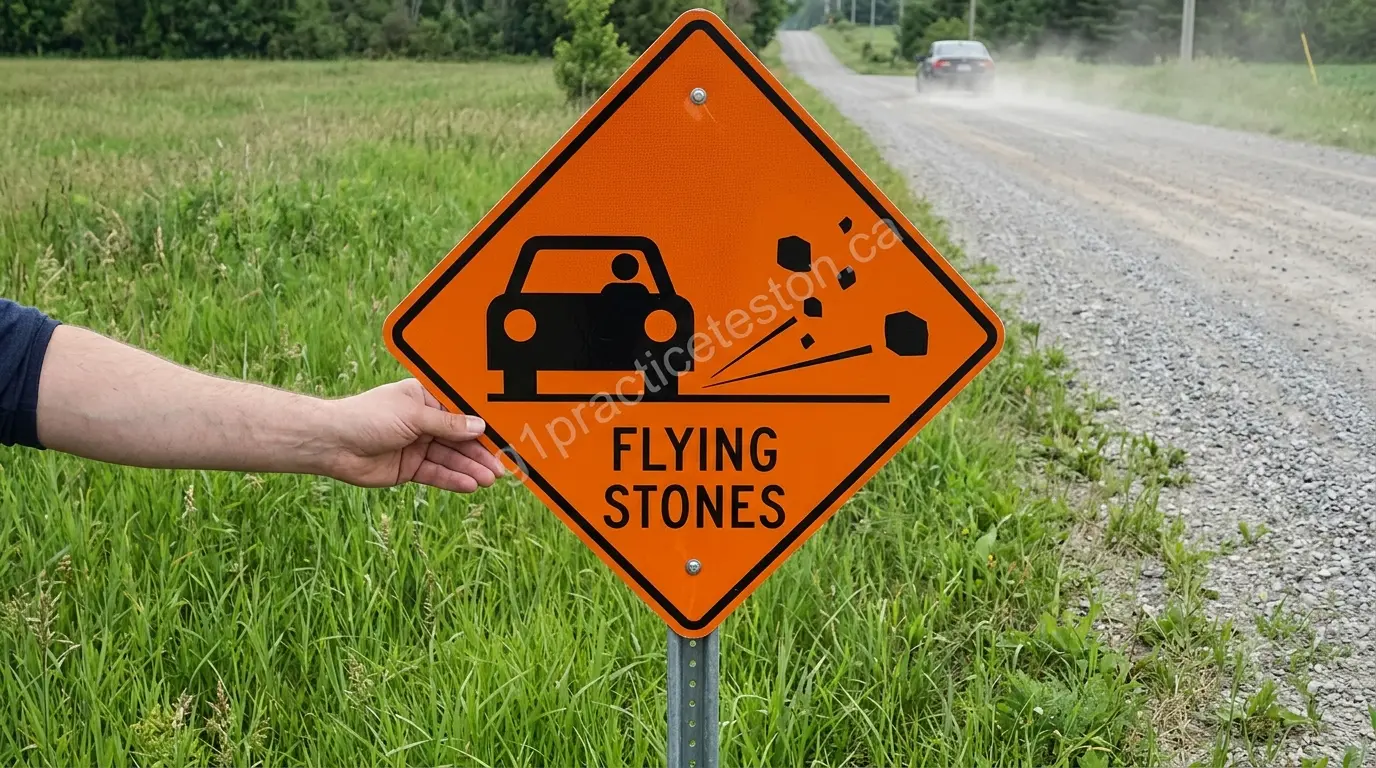
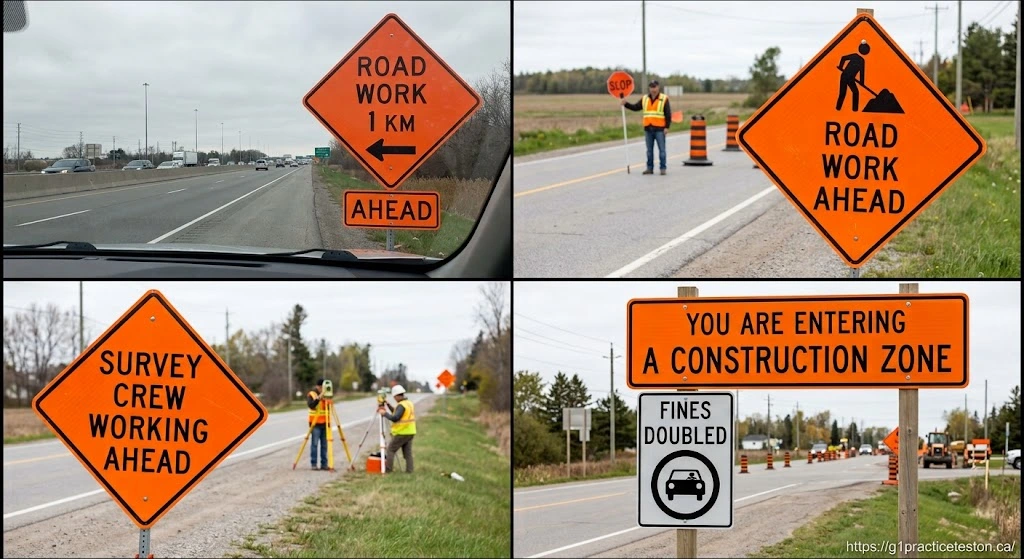
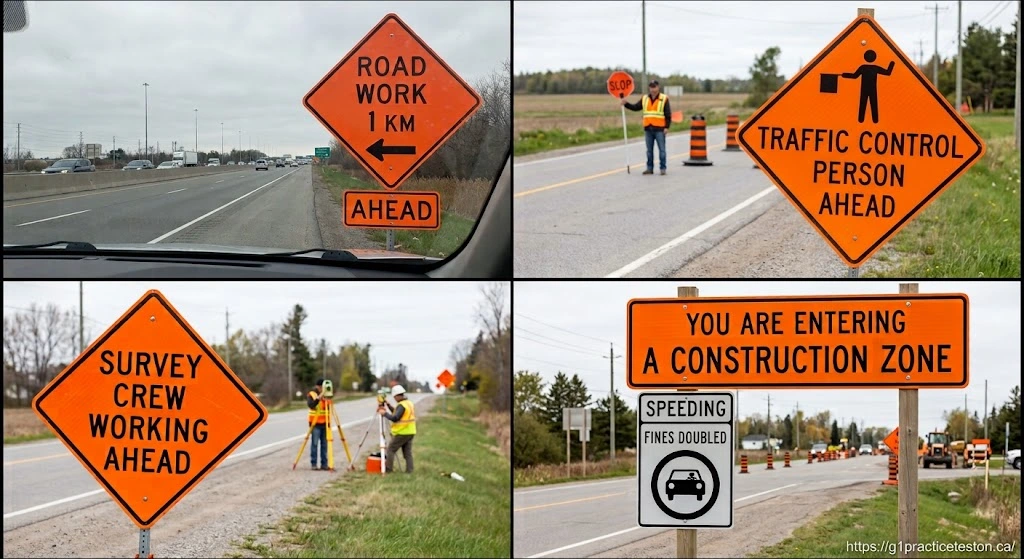
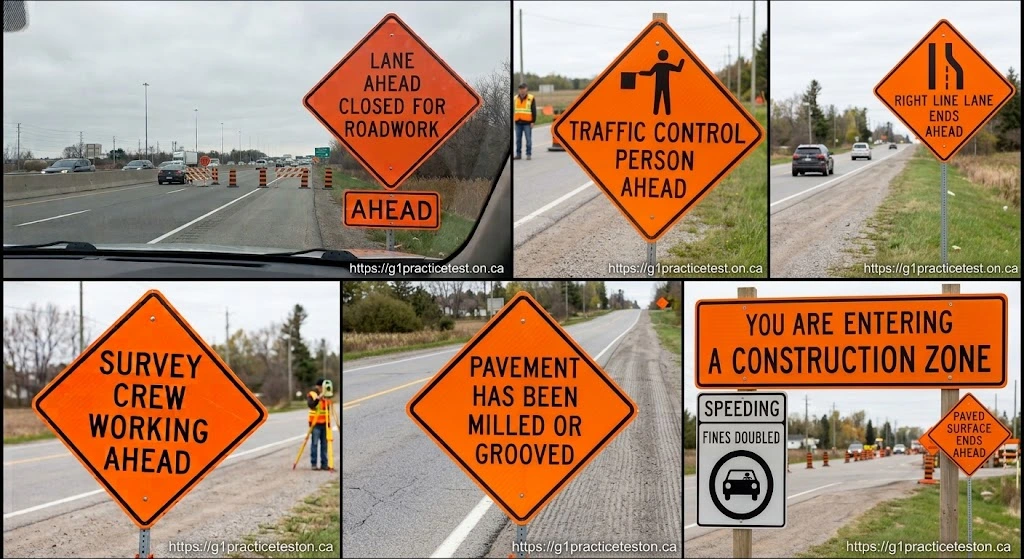
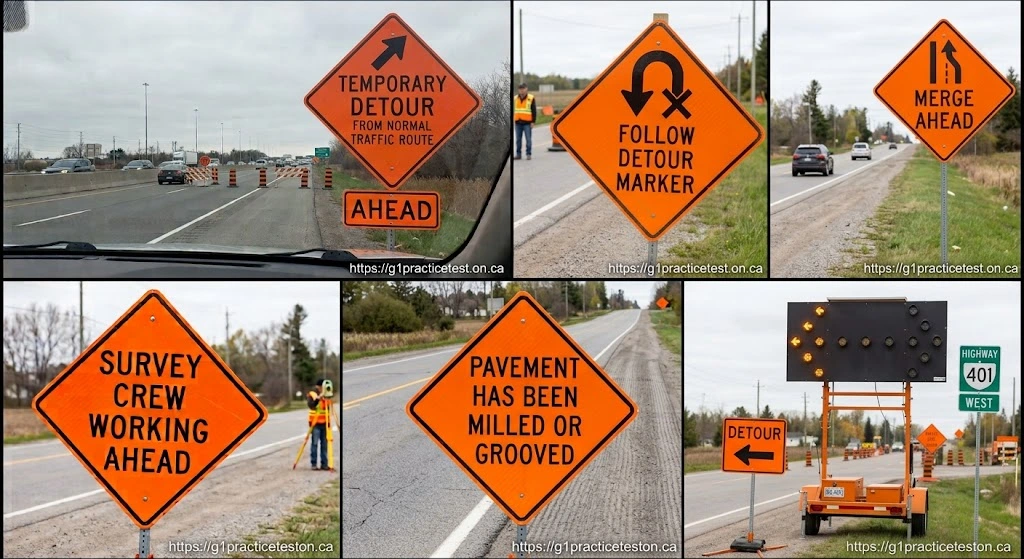
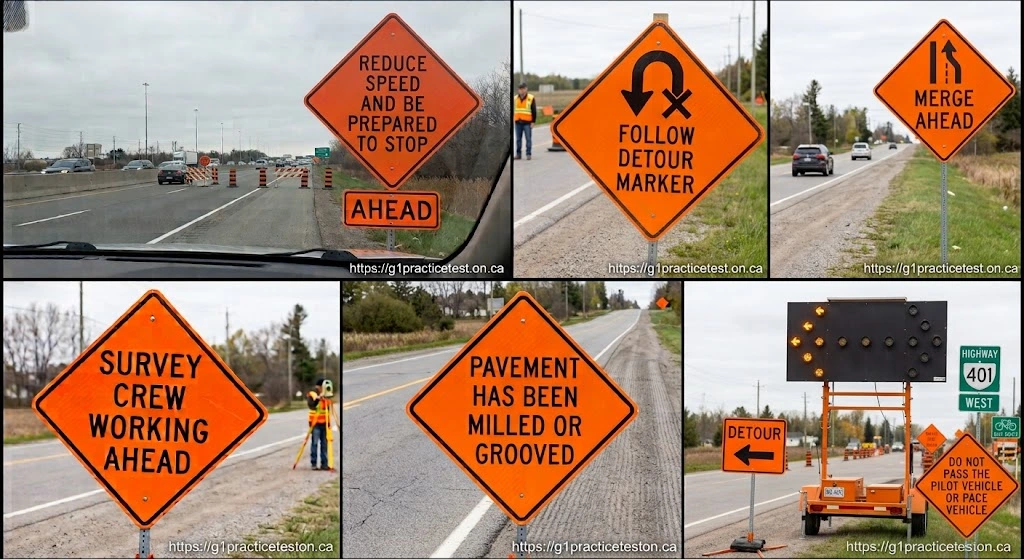
- Construction Zone Warning Sign — Often orange (a variation used specifically for temporary conditions) with a worker symbol, indicating road work ahead.
- Uneven Surface / Bump Sign — Warns of a rough patch of road, pavement break, or bump.
- Slippery Road Sign — Shows a vehicle with wavy skid lines, warning of potential loss of traction (common near bridges or shaded curves).
- Flagger Ahead Sign — Warns that a construction flag person may be directing traffic ahead.
- Detour Sign — Warns of and directs traffic around a closed road section.
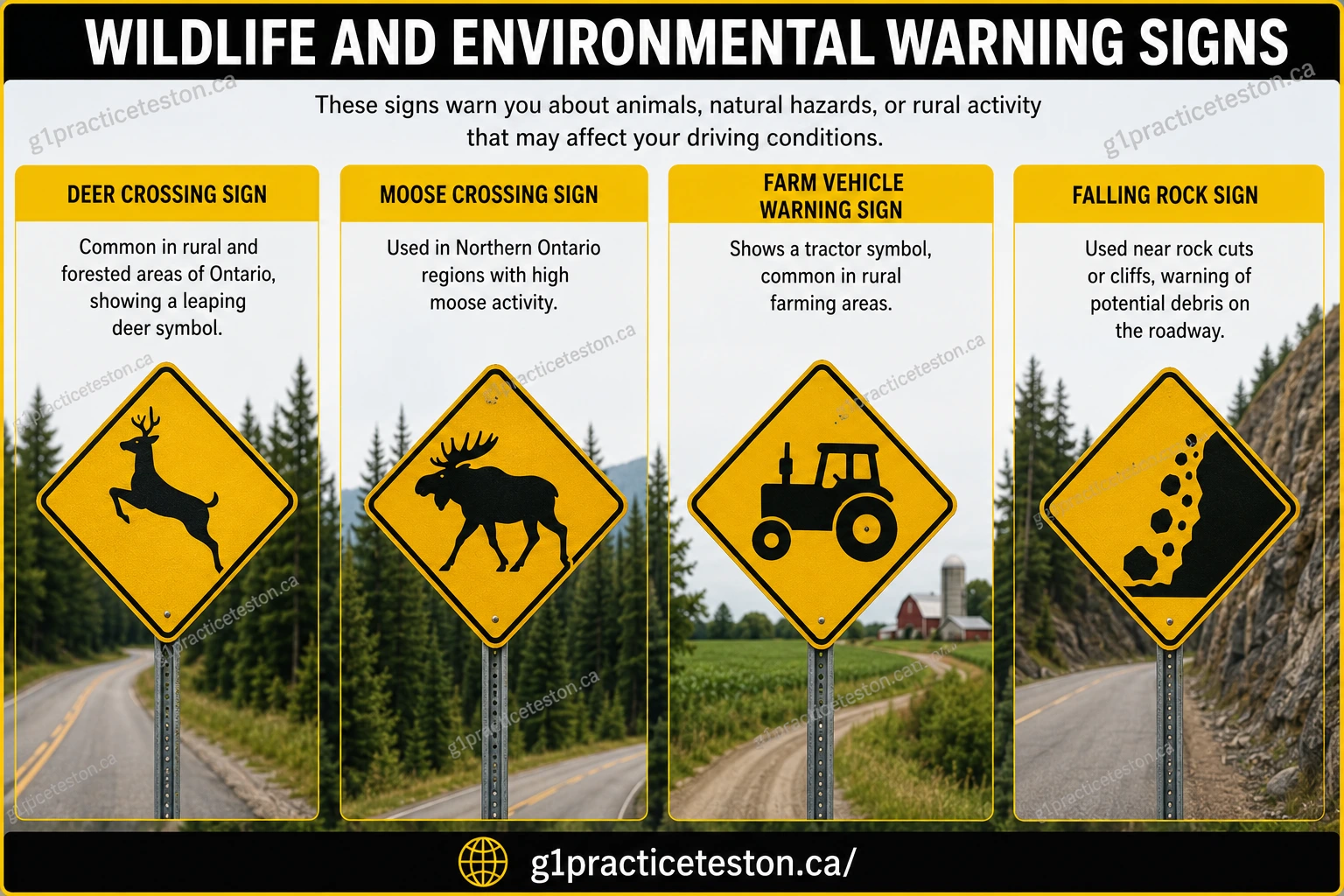
Wildlife and Environmental Warning Signs
- Deer Crossing Sign — Common in rural and forested areas of Ontario, showing a leaping deer symbol.
- Moose Crossing Sign — Used in Northern Ontario regions with high moose activity.
- Farm Vehicle Warning Sign — Shows a tractor symbol, common in rural farming areas.
- Falling Rock Sign — Used near rock cuts or cliffs, warning of potential debris on the roadway.
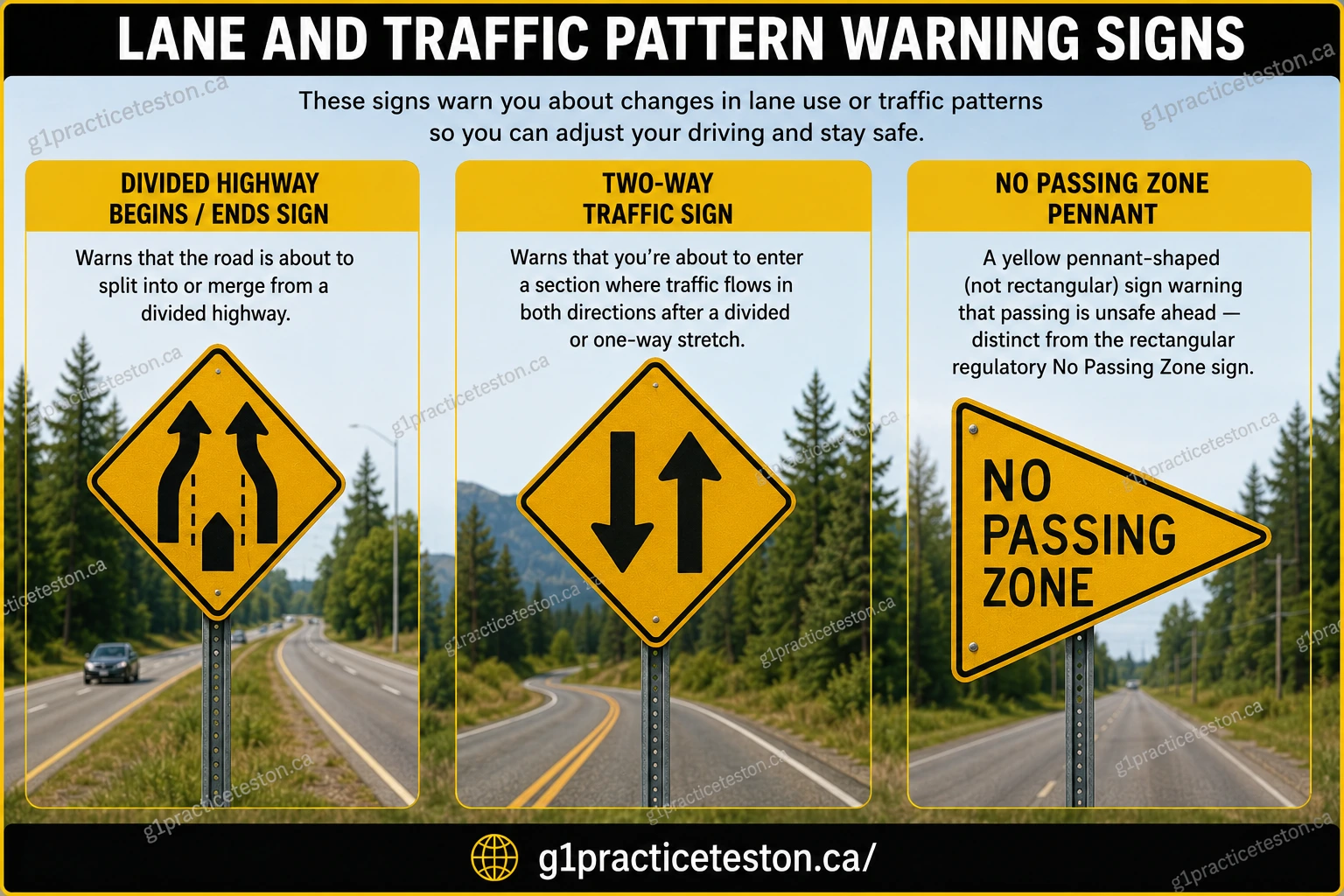
Lane and Traffic Pattern Warning Signs
- Divided Highway Begins/Ends Sign — Warns that the road is about to split into or merge from a divided highway.
- Two-Way Traffic Sign — Warns that you’re about to enter a section where traffic flows in both directions after a divided or one-way stretch.
- No Passing Zone Pennant — A yellow pennant-shaped (not rectangular) sign warning that passing is unsafe ahead — distinct from the rectangular regulatory No Passing Zone sign.
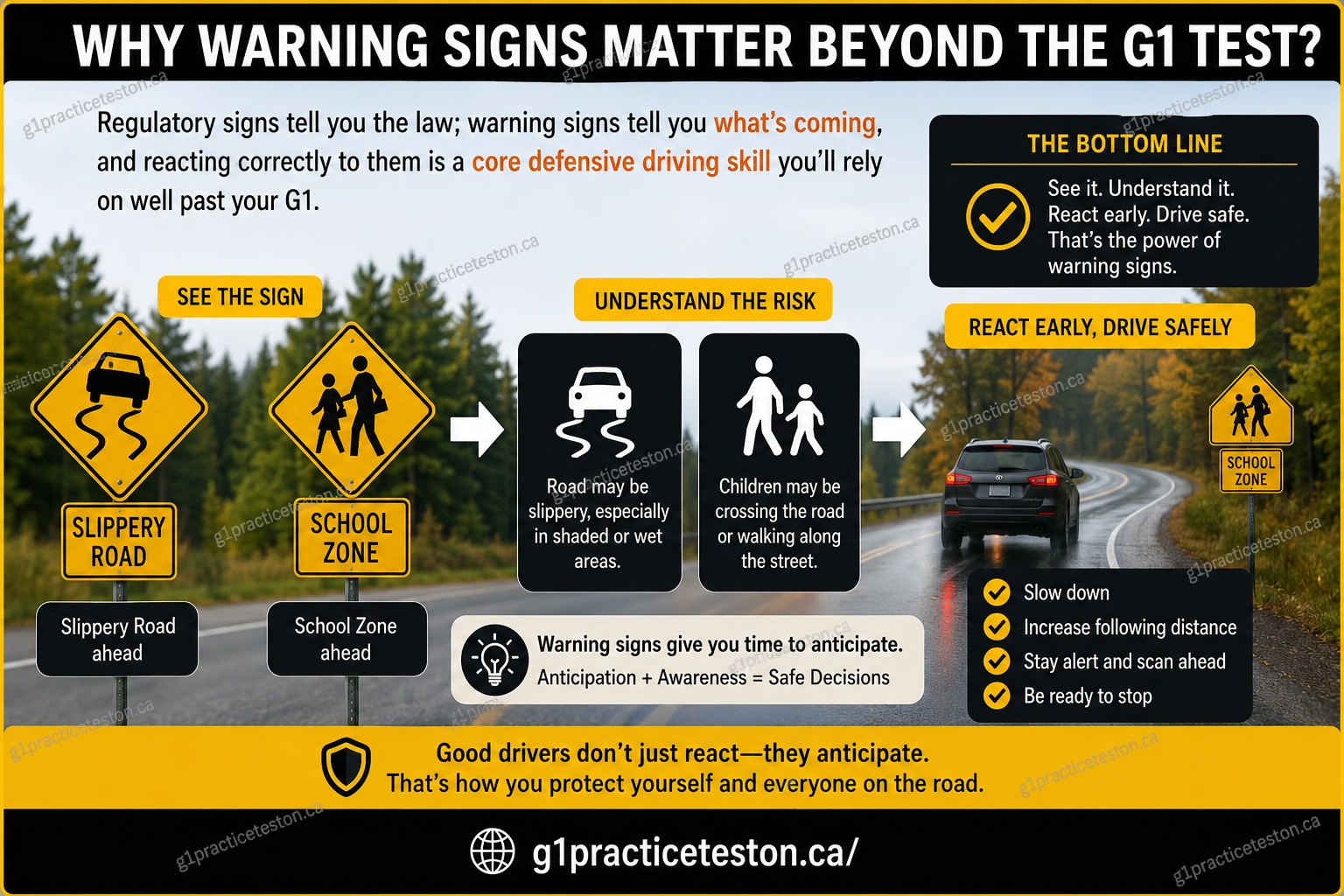
Why Warning Signs Matter Beyond the G1 Test?
Regulatory signs tell you the law; warning road signs tell you what’s coming, and reacting correctly to them is a core defensive driving skill you’ll rely on well past your G1. Recognizing a Slippery Road sign before a shaded curve, or a School Zone sign before a stretch with kids nearby, is exactly the kind of anticipation examiners are testing for, both on paper and later during your road test.
Frequently Asked Questions
Conclusion
Warning road signs are your early alert system on Ontario roads; they don’t carry the legal weight of regulatory signs, but ignoring them is often what leads to the situations that regulatory signs and traffic laws are meant to prevent in the first place. Learning to recognize them by shape, colour, and symbol rather than memorizing each one individually will make both your G1 test and your actual driving noticeably safer.
Related Posts:
- Ontario Road Signs — Complete Guide
- Regulatory Road Signs in Ontario — Full List & Meanings
- Information and Guide Signs in Ontario Explained
- G1 Practice Test: Road Signs Edition (coming soon)

One Comment