
You are driving along, the road surface looks fine, and then a yellow diamond shows a car with small stones flying up behind its wheels. That is the flying stones sign, and it is warning you about something you cannot see yet: the road ahead is covered with loose gravel or stones. This page explains what the sign means, what to do when you see it, and how it appears on the G1 test.
Last updated: November 20, 2026
Test yourself: try this sign in the free Traffic Signs Practice Test.
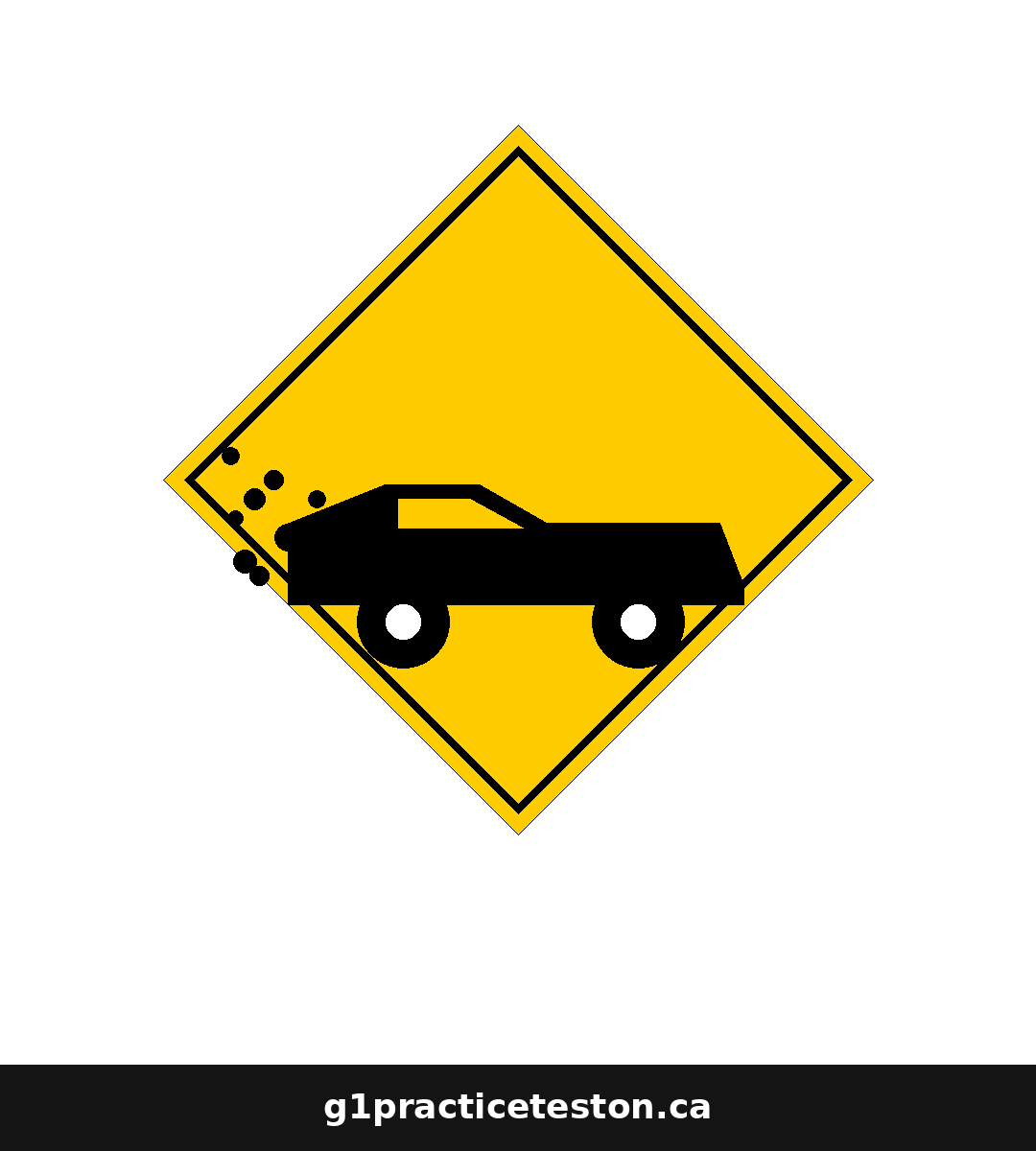
What this sign means
The flying stones sign means loose gravel or stones on the road ahead. It is a warning sign, not a regulatory sign: it does not set a speed limit or give an order. It tells you the surface ahead has loose material, often after resurfacing or chip-seal work, and that passing vehicles can throw stones up from their tyres.
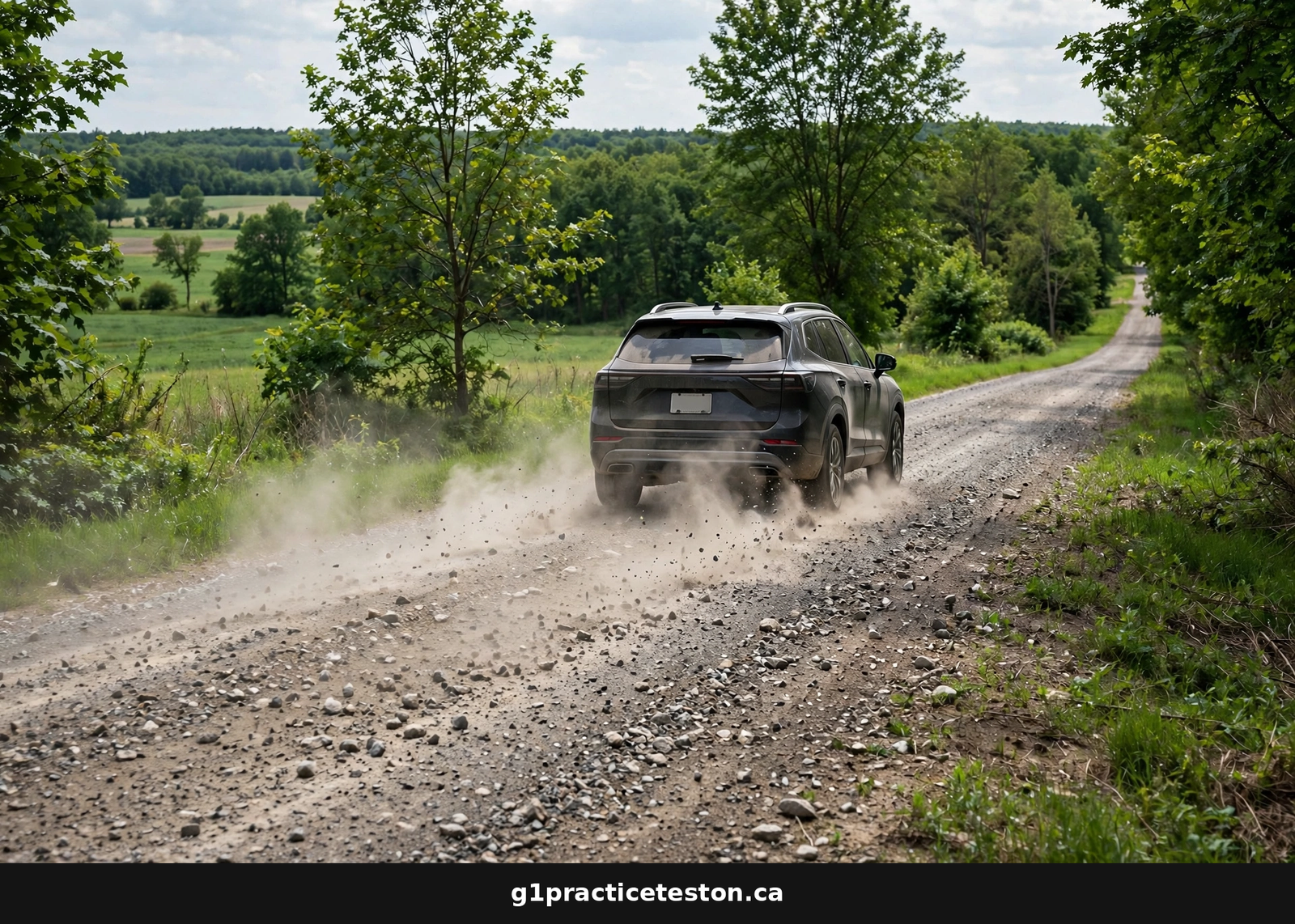
Why it matters: loose gravel reduces grip, so braking and turning behave differently than on clean pavement. And the stones themselves are a hazard — thrown up by your own tyres or by oncoming traffic, they can chip windscreens and damage other vehicles.
What you must do
- Slow down BEFORE you reach the loose section, while you are still on good pavement, so you arrive at a safe speed rather than braking hard on gravel.
- Leave extra space ahead of the vehicle in front of you — both for the longer stopping distance on loose material and for stones thrown up by its tyres.
- Do not brake suddenly and do not make sharp turns on the loose surface. Both can cause a skid on gravel.
- Keep a steady, gentle line through the section and stay alert for stones coming from oncoming vehicles as well as your own.
- Once you are back on a clean, paved surface, resume normal driving.
How it appears on the G1 test
Sign-recognition questions ask what this sign means. The site’s own question bank tests it exactly this way: the correct answer is “loose gravel on the road ahead.” The usual trap is confusing it with a surface or weather warning (see below) — if the picture shows stones flying behind a car’s wheels, the answer is loose gravel, not wet pavement and not falling rocks.
On the G1 test, this sign is described by its picture — a diamond-shaped sign showing a car with stones flying up from behind its wheels. The correct answer is flying stones (loose gravel) — not wet roads, not slippery when wet, and not falling rocks.
Signs people confuse with this one
- Slippery when wet — a skidding car. That sign means a wet or icy surface, not loose material.
- Paved surface ends ahead — the paved road itself is ending, a different surface change.
- Construction zone begins — an orange diamond for temporary conditions; loose gravel can appear inside a construction zone, but the orange sign marks the zone, not the gravel.
- Falling rocks — rocks falling from a cliff or hillside beside the road, not stones thrown up by tyres.
See our warning guide for more Ontario warning signs.
Where You Will See This Sign
You will see this sign wherever loose material can end up on the road. The most common places are stretches that have just been resurfaced with chip seal, where a thin layer of loose stone sits on top of the new surface until traffic beds it down. You will also see it where an unpaved side road or a gravel driveway joins a paved road, because vehicles turning in carry stones onto the pavement with them. Rural roads with gravel shoulders are another common spot, especially after rain or grading work has scattered material across the driving lane. Roadwork areas can have it too: the orange construction signs mark the work zone, while this yellow sign warns you about the loose surface itself.
Common Mistakes to Avoid
The biggest mistake is braking hard once you are already on the gravel. Braking belongs on the good pavement before the loose section, because hard braking on stones can lock a wheel and start a skid. A second mistake is tailgating through the section: the car ahead is throwing stones back at you, and your stopping distance is longer on gravel, so the gap needs to be bigger, not smaller. A third mistake is swerving sharply around stones you spot late — a sudden swerve on a loose surface is more dangerous than driving over a few small stones in a straight, steady line. And do not confuse this sign with falling rocks: this one is about stones thrown up by tyres, not rocks falling from a hillside, so the answer on the G1 test is loose gravel, not a cliff hazard.
What does the flying stones sign mean?
It warns that the road ahead is covered with loose gravel or stones, often after resurfacing or chip-seal work. Passing vehicles can throw the stones up from their tyres.
What should I do when I see the flying stones sign?
Slow down before you reach the loose section, leave extra space ahead, and avoid sudden braking or sharp turns on the gravel — both can cause a skid. Resume normal driving once the surface is clean and paved again.
Is the flying stones sign a regulatory sign with a speed limit?
No. It is a yellow diamond warning sign. It does not set a speed limit; it warns you about the loose surface so you can slow down to a safe speed yourself.
What is the difference between the flying stones sign and the slippery when wet sign?
Different hazards, different pictures. Flying stones shows a car with stones flying behind its wheels and means loose gravel. Slippery when wet shows a skidding car and means a wet or icy surface.
Does the flying stones sign appear on the G1 test?
Yes — sign-recognition questions test it. The correct meaning is “loose gravel on the road ahead.” If the picture shows stones behind a car’s wheels, that is the answer.
Jessica
Jessica took the Ontario G1 knowledge test in 2024 and passed it on the first attempt, scoring 90%. Jessica writes and checks every question and guide on this site.