
Practise Ontario Regulatory Signs for the Ontario G1 Test
Regulatory signs are the signs that state the law — and this quiz is a deep dive into them. The 49 questions here cover every major regulatory sign family: stop and yield, speed limits and school zones, one-way and do-not-enter signs, prohibited turns and U-turns, lane-use and HOV signs, and the parking, standing and stopping rules that trip up so many G1 candidates. Every question is built around an actual Ontario sign, so you are learning to recognise the sign itself — not just memorizing a rule in the abstract.
These signs appear inside the 20-question signs section of the real G1 test, mixed in with warning, temporary and information signs. They matter beyond the test, too: a regulatory sign is a legal instruction, and disobeying one while driving can mean a fine and demerit points. Learning to read them quickly — white and black for everyday rules, red for a prohibition, a green circle for something that is permitted — makes both the test and real driving easier.
How to Use This Practice Test
This quiz is untimed, so take the time to think each question through. Read every explanation, even when you get a question right — most wrong answers on the G1 come from reading a sign too quickly, not from never having seen it. Forty-nine questions is a focused set — enough to cover the whole family without burning through your study session. Work through them in one sitting if you can, and use the explanations as your study notes.
What to Study Next
This quiz goes deep on one sign family; the Traffic Signs practice test covers all four families across 102 questions, and our Ontario road signs guide is a handy reference to keep open while you study. The laws behind these signs also show up as questions in the Rules of the Road practice test, so the two quizzes work well together. When you are ready to rehearse the whole test in one sitting, finish with the full G1 test simulator.
-
Q1. You are turning onto a road and see a red sign with white letters that reads "WRONG WAY". What must you do?

g1practiceteston.ca -
Q2. A white square sign shows a black arrow turning right, inside a red circle with a red diagonal line through it. What does this sign mean?

g1practiceteston.ca -
Q3. A white square sign shows a single black arrow curving to the right (no red circle, no slash). What does this sign tell you?

g1practiceteston.ca -
Q4. A white rectangular sign shows a black arrow pointing diagonally down and to the right. What does this sign mean?

g1practiceteston.ca -
Q5. A sign shows two black cars side by side inside a red circle, with a red diagonal line across them. What does this sign mean?

g1practiceteston.ca -
Q6. A white rectangular sign reads "SLOWER TRAFFIC KEEP RIGHT". Who must obey it?

g1practiceteston.ca -
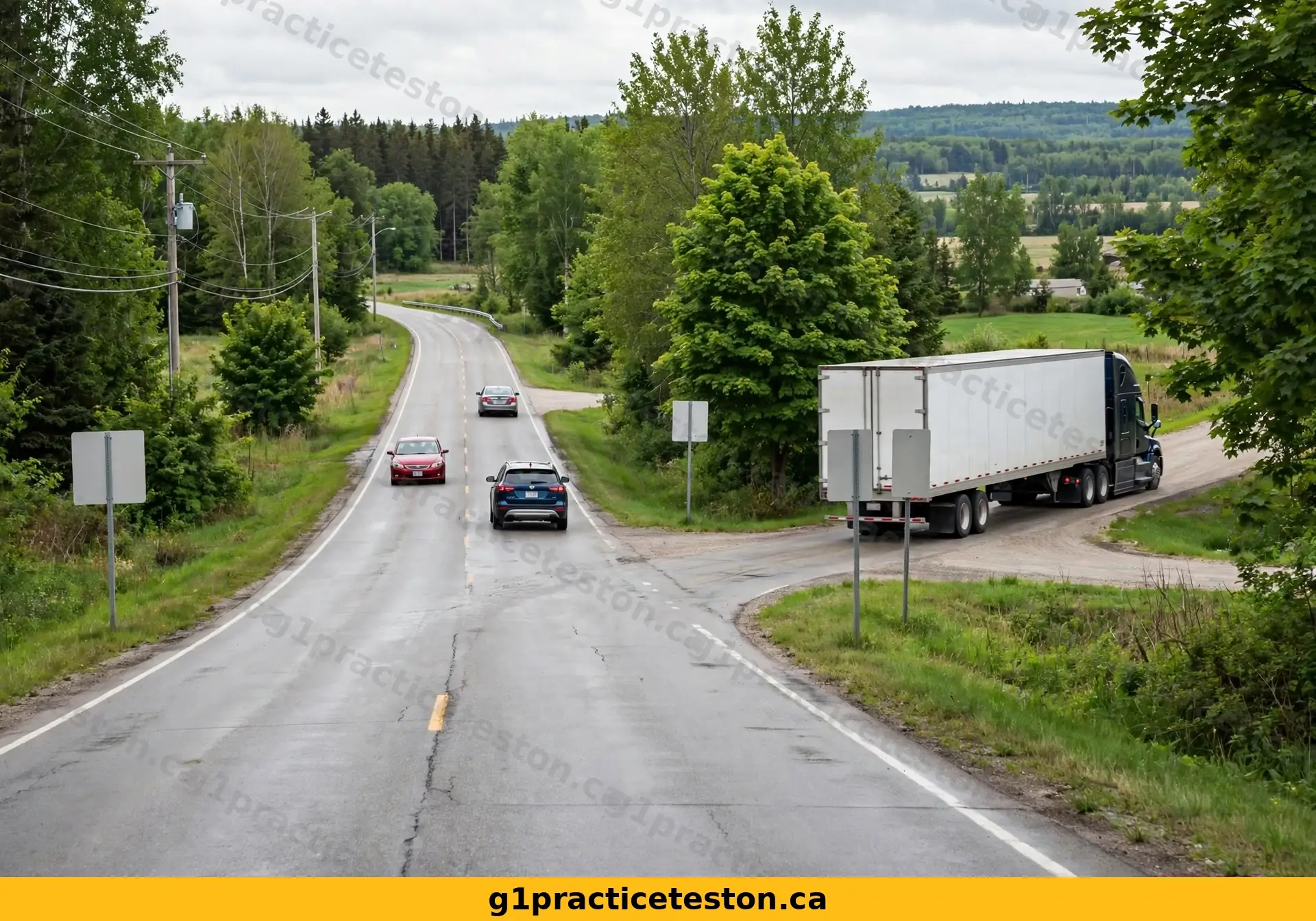
Q7. A sign shows a black truck silhouette inside a red circle, with a red diagonal line through it. What does this sign mean?
g1practiceteston.ca -
Q8. You see a pennant-shaped (sideways triangle) sign on the left side of the road. What does it mean?

g1practiceteston.ca -
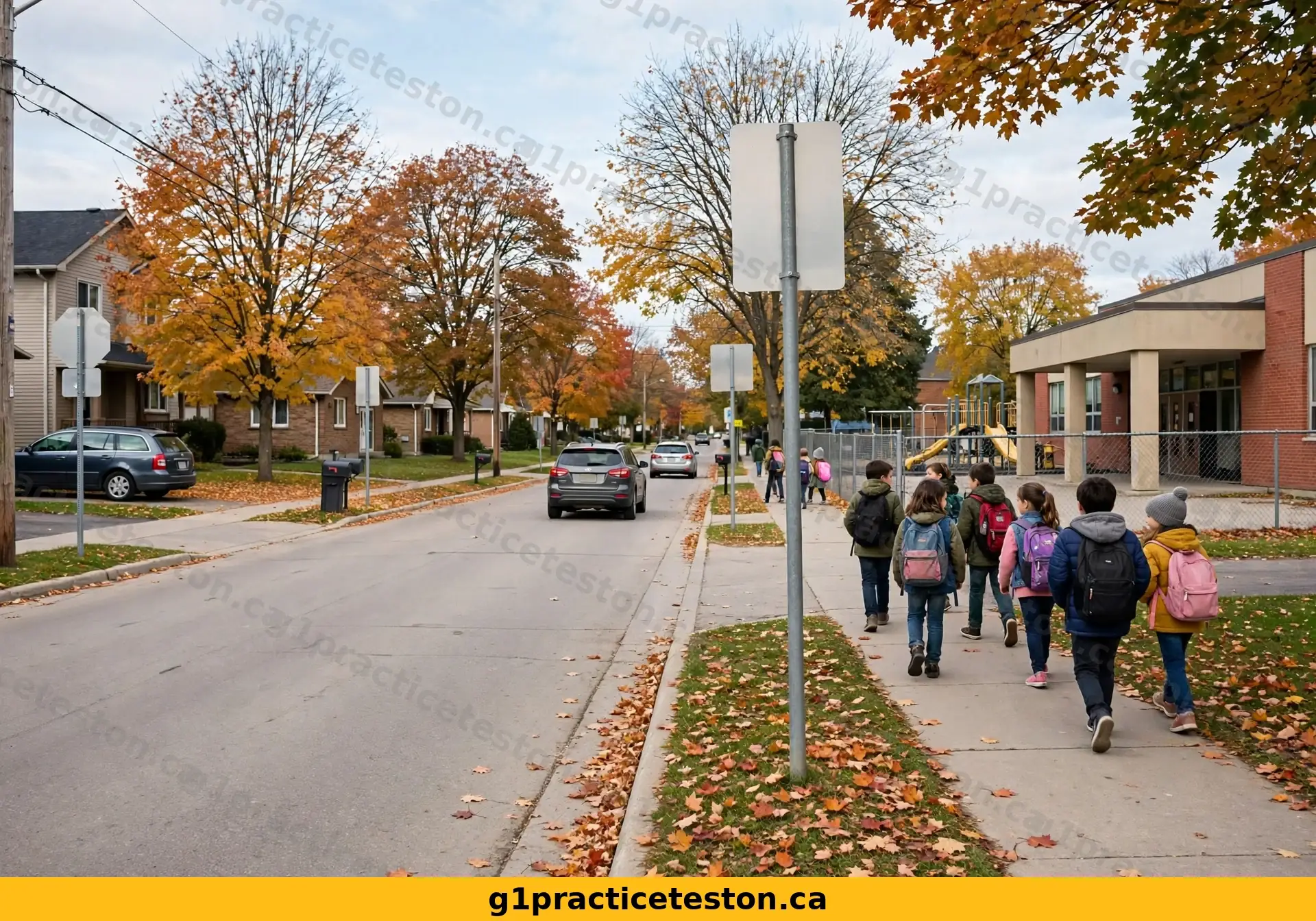
Q9. A sign reads "SCHOOL ZONE", "MAXIMUM 60 km/h", and "WHEN FLASHING", with amber lights above it. When the lights are flashing, what is the speed limit?

g1practiceteston.ca -
Q10. A white sign with a black border reads "COMMUNITY SAFETY ZONE" with a tab below saying "FINES DOUBLED". What does this mean for you as a driver?
g1practiceteston.ca -
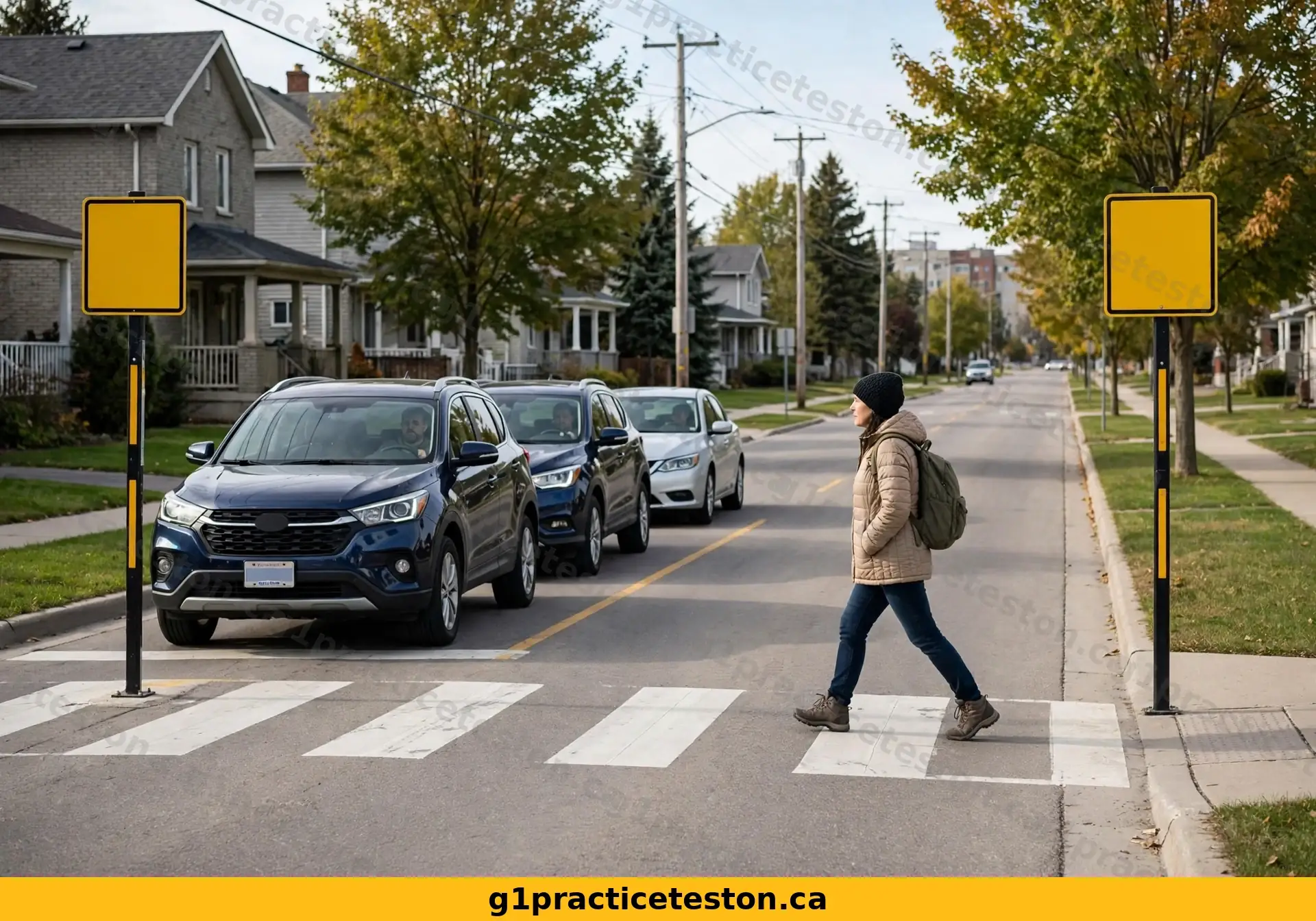
Q11. At an intersection with no traffic lights, you see bright yellow-green square signs showing a black walking-person symbol with a downward arrow, mounted back to back on the poles. What are these?
g1practiceteston.ca -
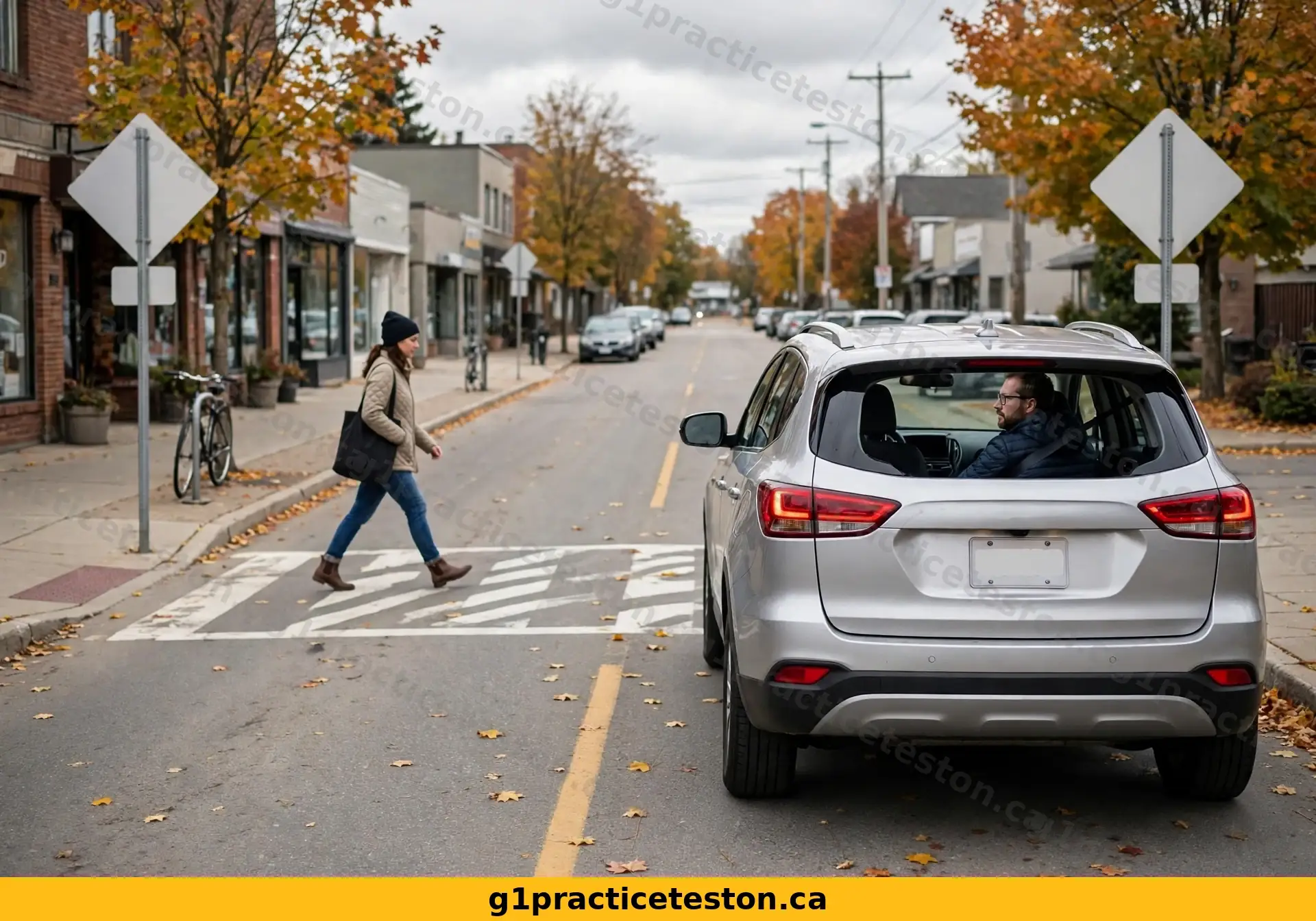
Q12. A pedestrian is waiting at the curb of a marked pedestrian crossover, intending to cross. What must you do?
g1practiceteston.ca -
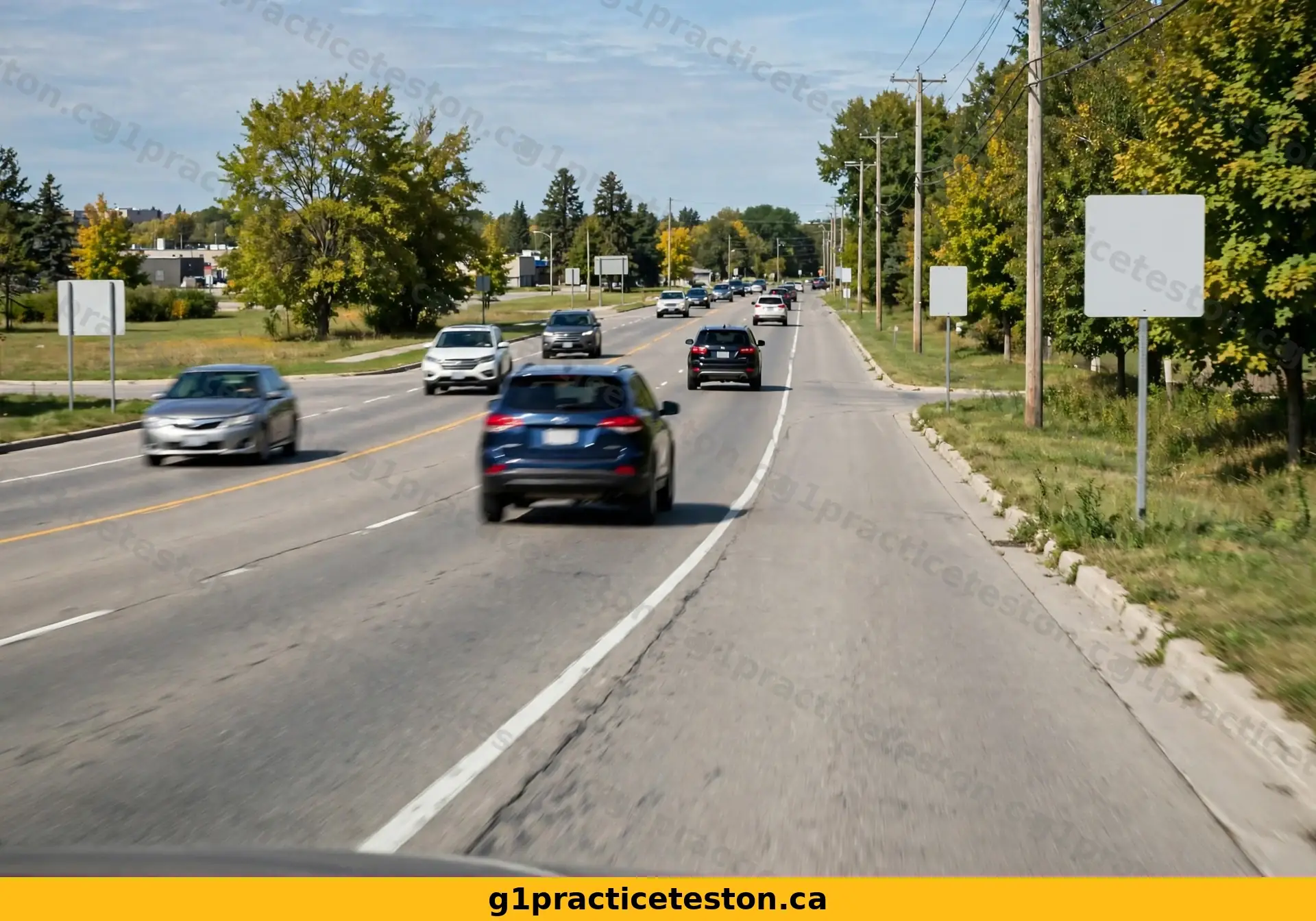
Q13. A sign shows a red circle with a red X inside it, on a blue background. What does this sign mean?
g1practiceteston.ca -
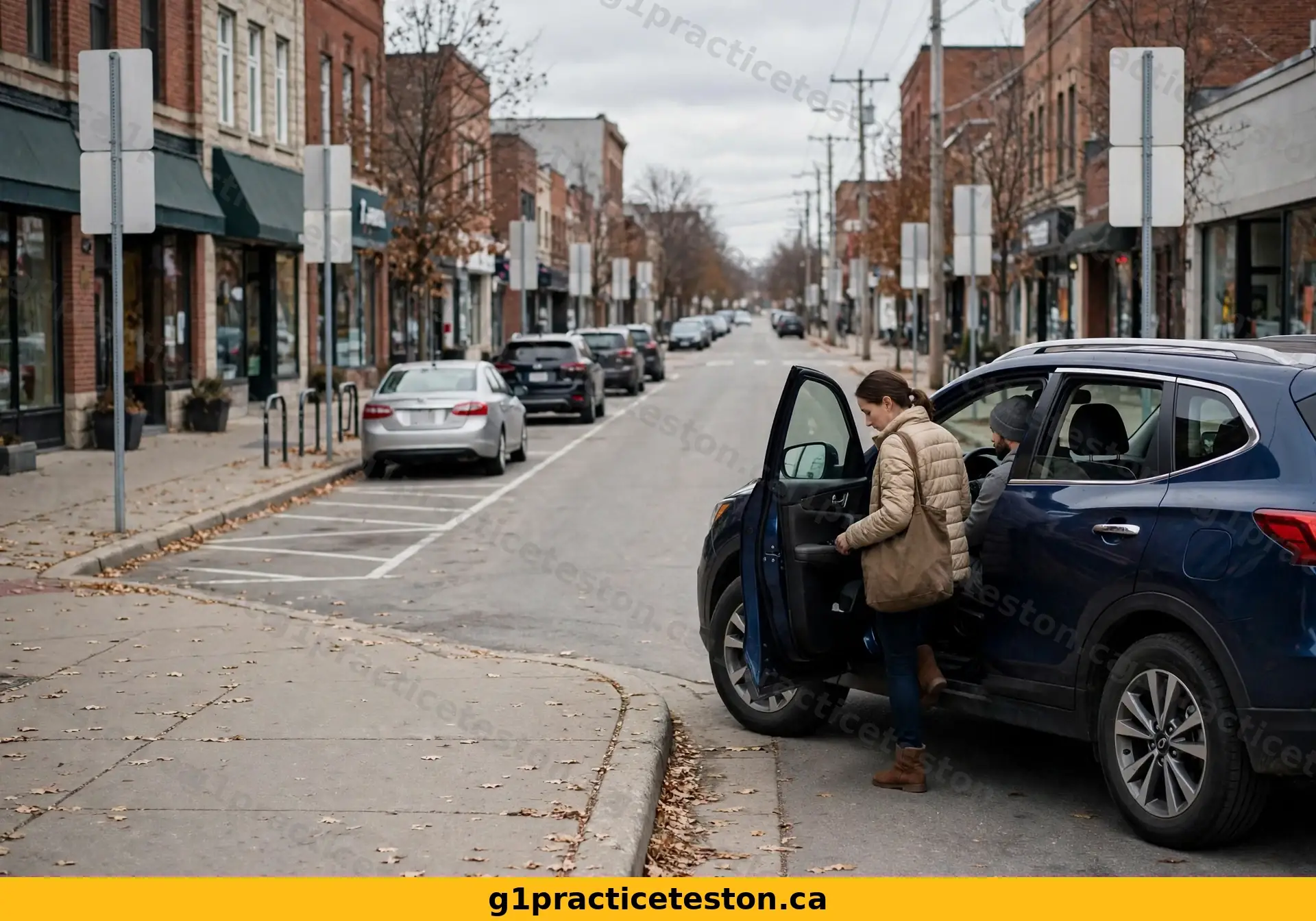
Q14. What is the difference between a "No Parking" zone and a "No Standing" zone?
g1practiceteston.ca -
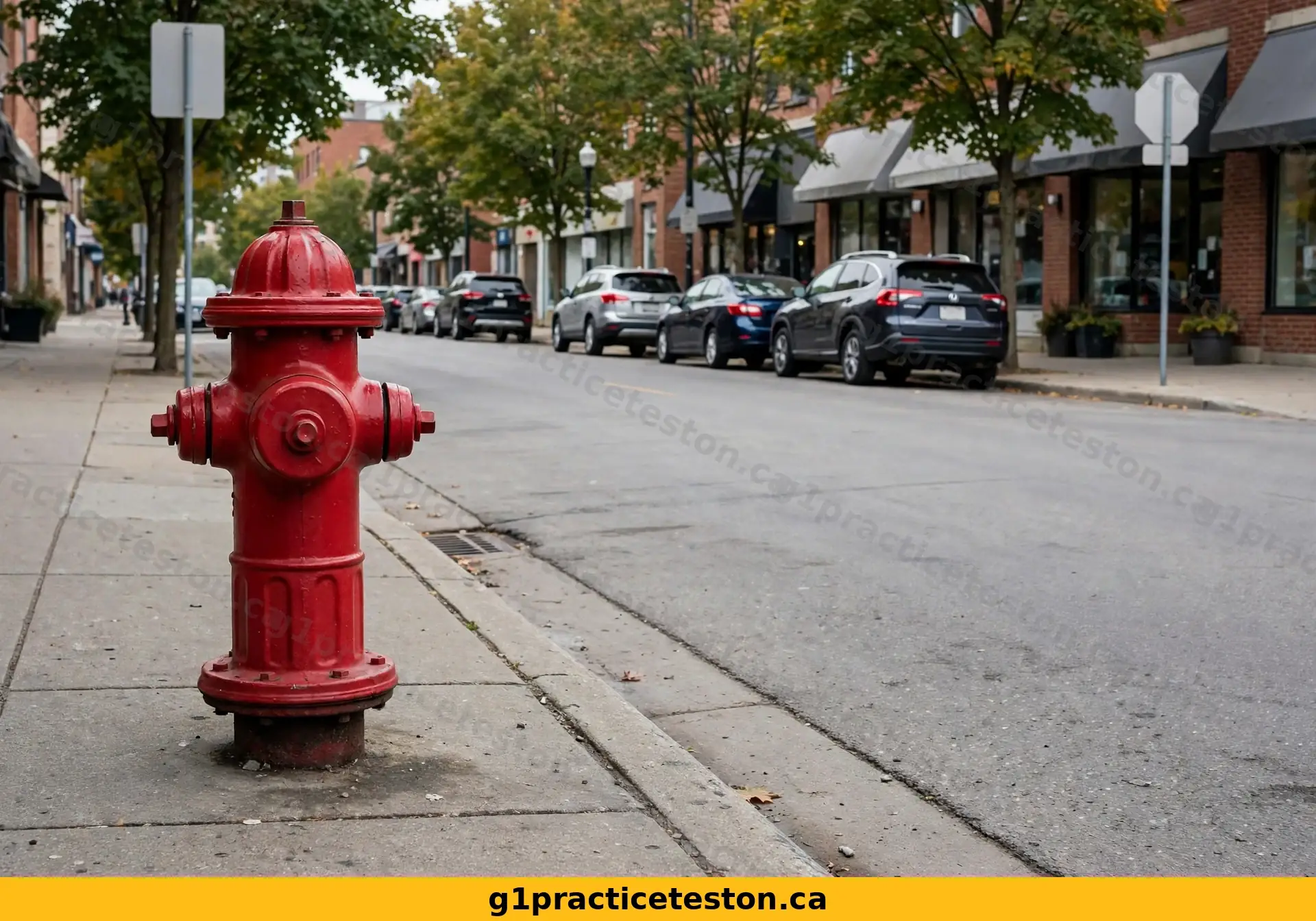
Q15. How close may you legally park to a fire hydrant in Ontario?
g1practiceteston.ca -
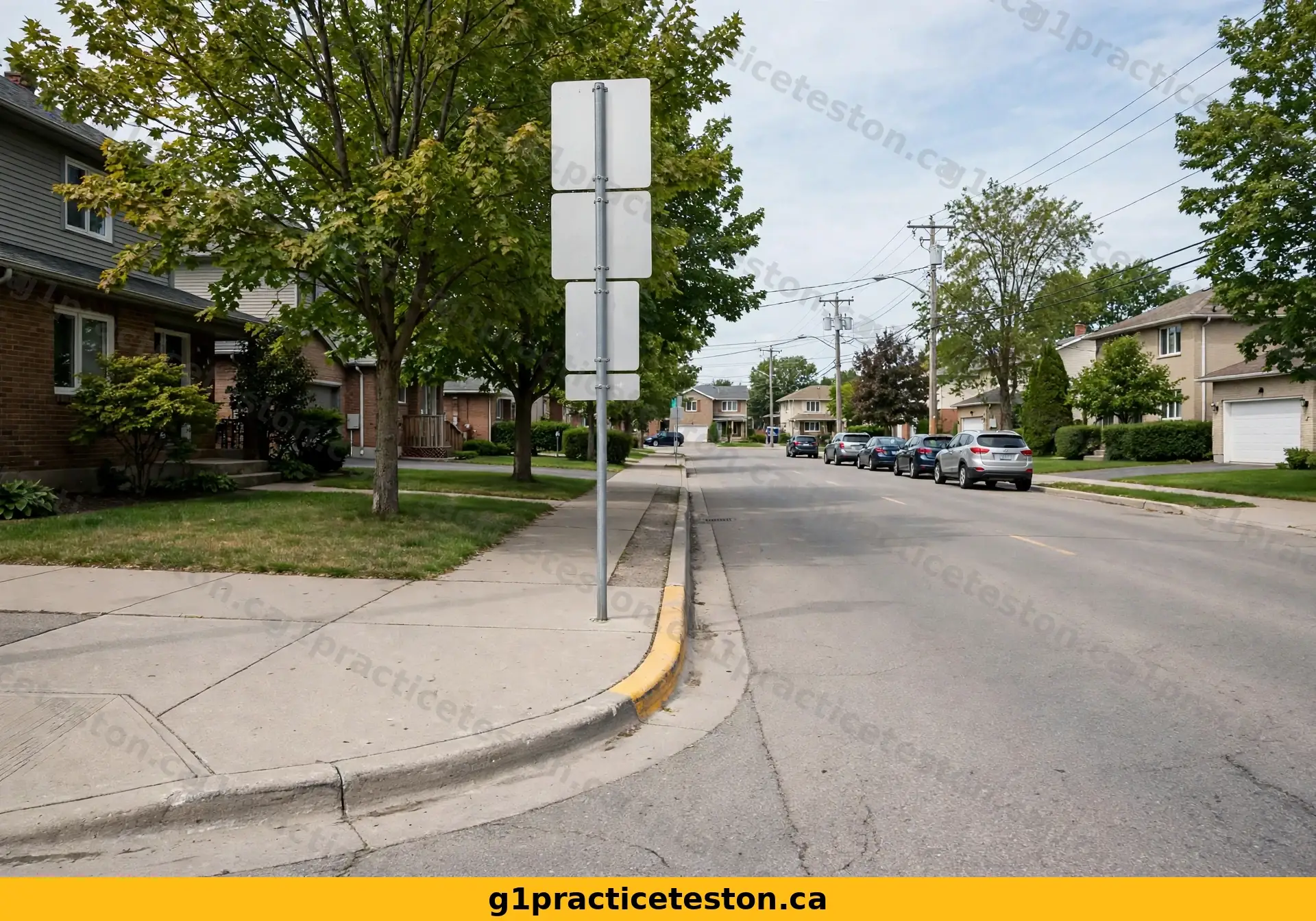
Q16. How close to an intersection may you park in Ontario?
g1practiceteston.ca -
Q17. What is the minimum distance you must keep when parking near a level railway crossing?
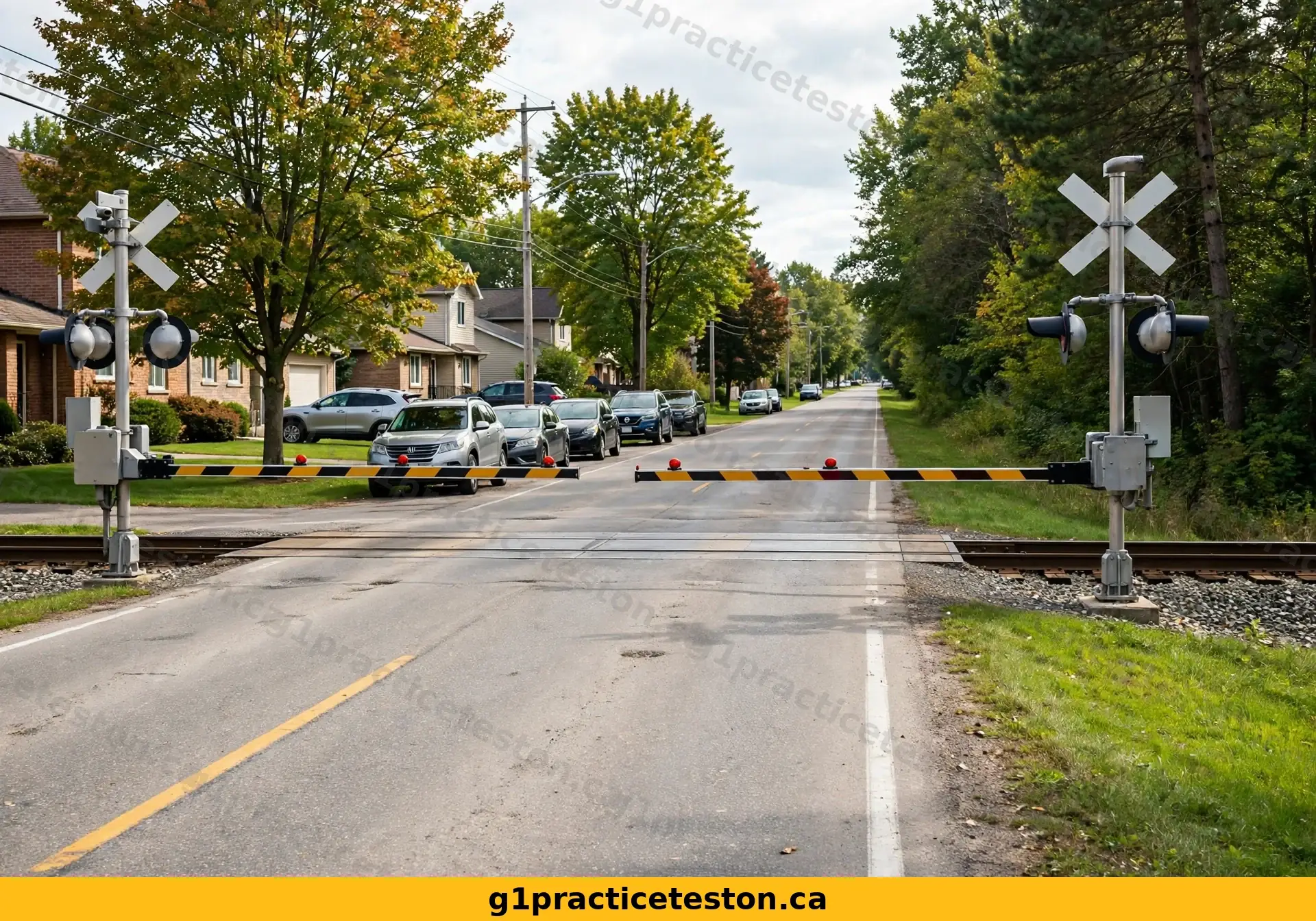
g1practiceteston.ca -
Q18. You want to park in front of a theatre while a show is on. What does the handbook say?
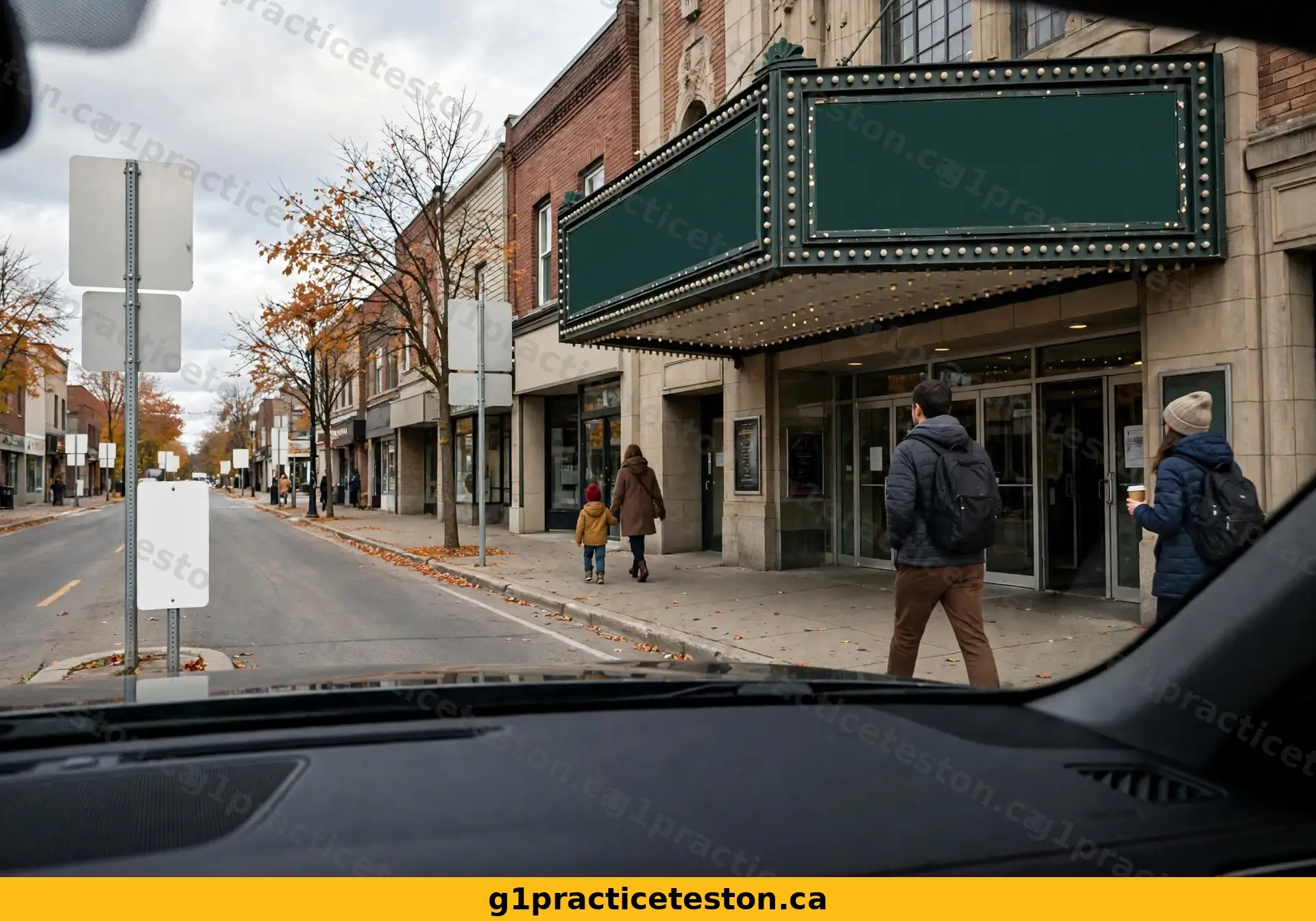
g1practiceteston.ca -
Q19. A blue square sign shows a white wheelchair symbol. What does this sign mark?
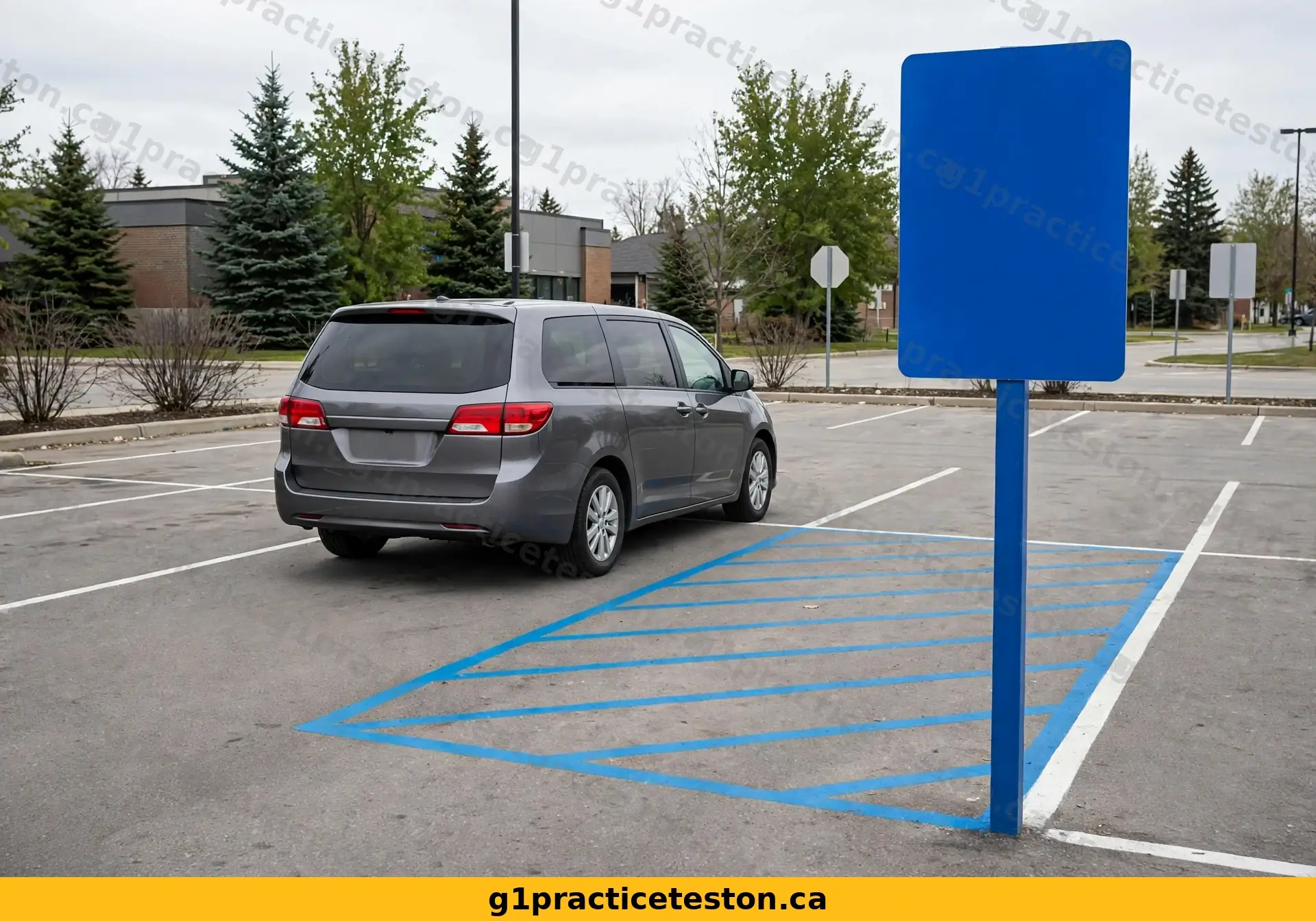
g1practiceteston.ca -
Q20. Where must a valid Accessible Parking Permit be displayed, and when may it be used?
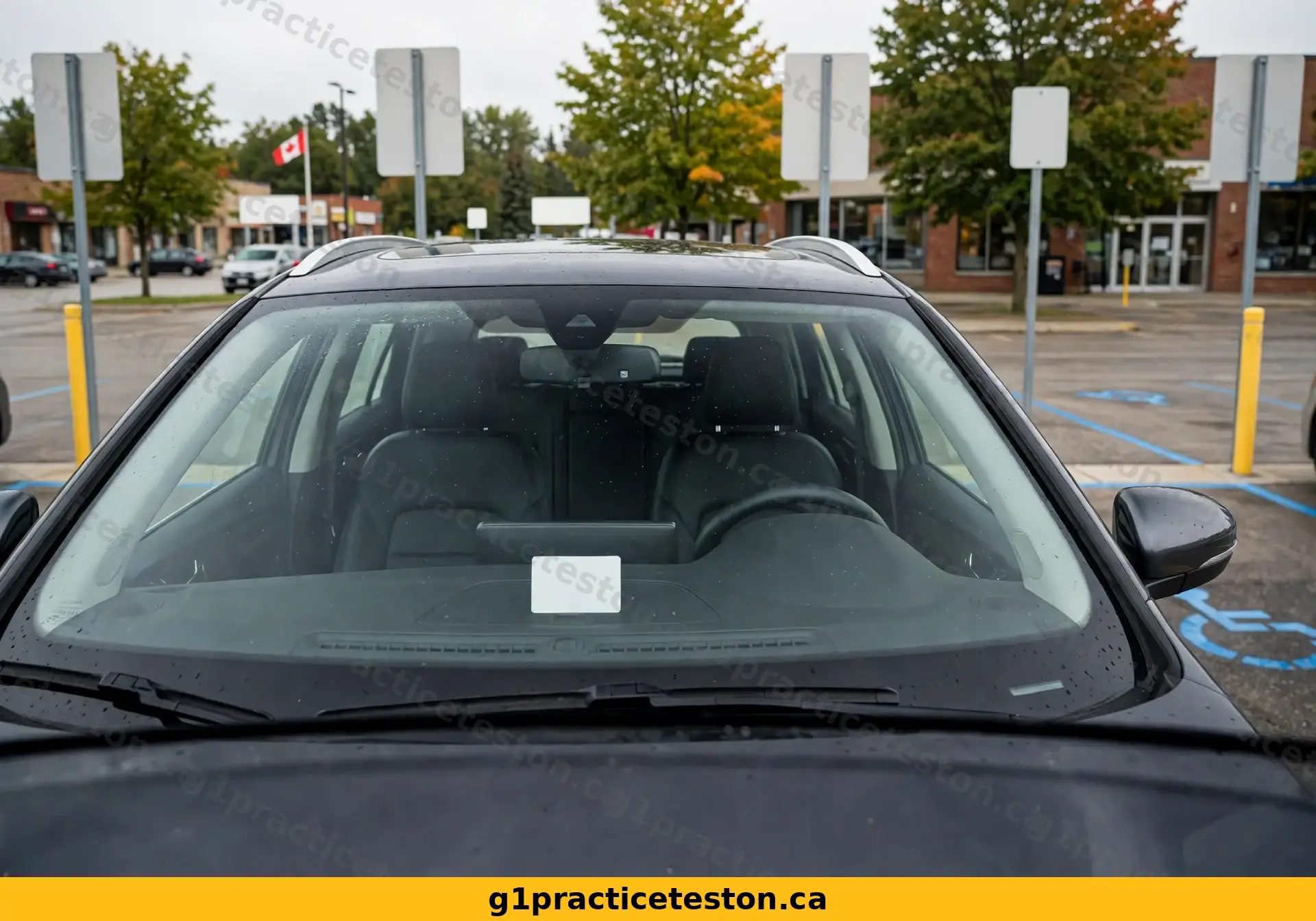
g1practiceteston.ca -
Q21. What is the fine for parking in an accessible parking space without a valid permit in Ontario?

g1practiceteston.ca -
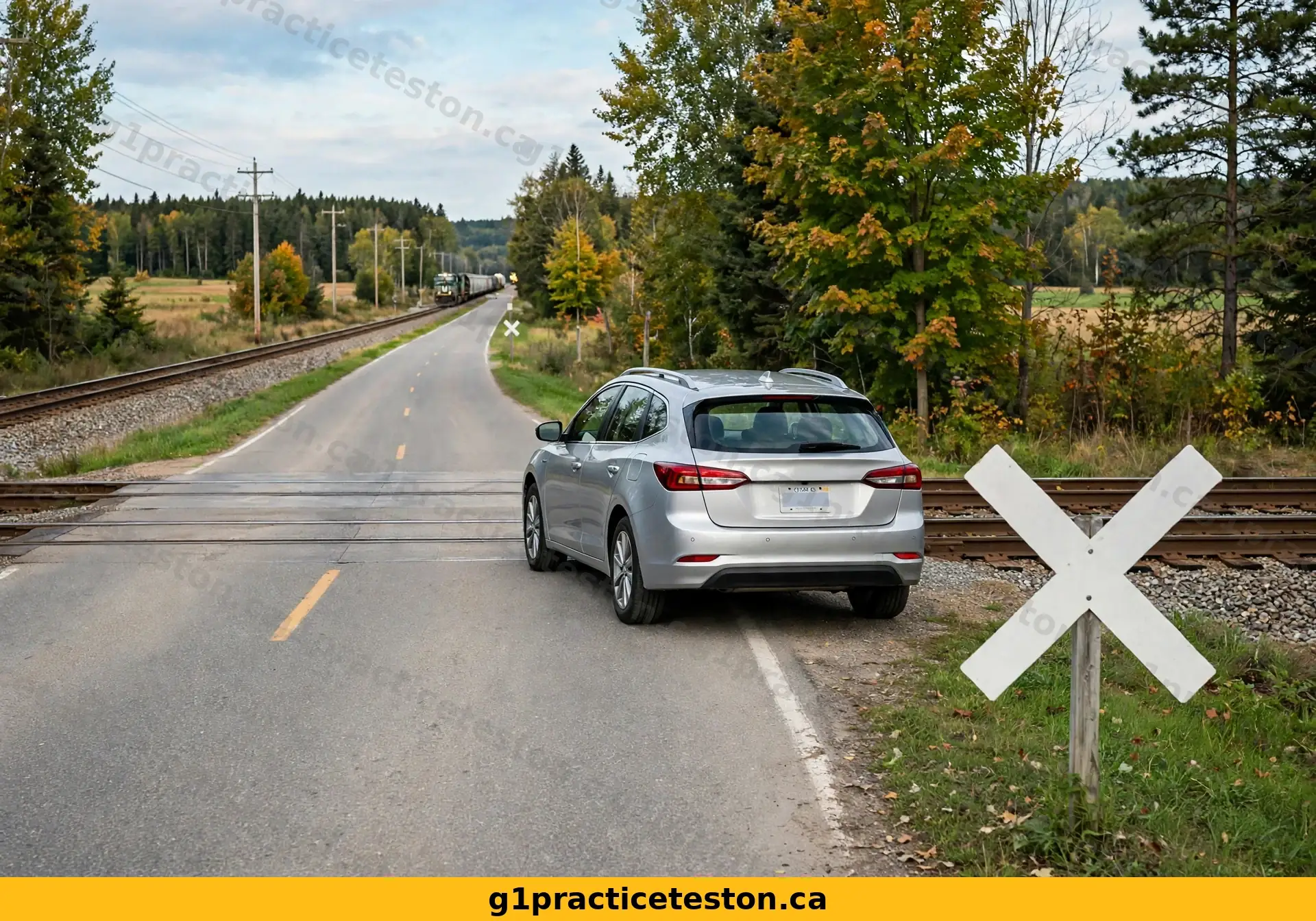
Q22. You approach a railway crossing marked with a white X-shaped sign that reads "RAILWAY CROSSING" (a crossbuck), and a train is approaching. Where must you stop?
g1practiceteston.ca -
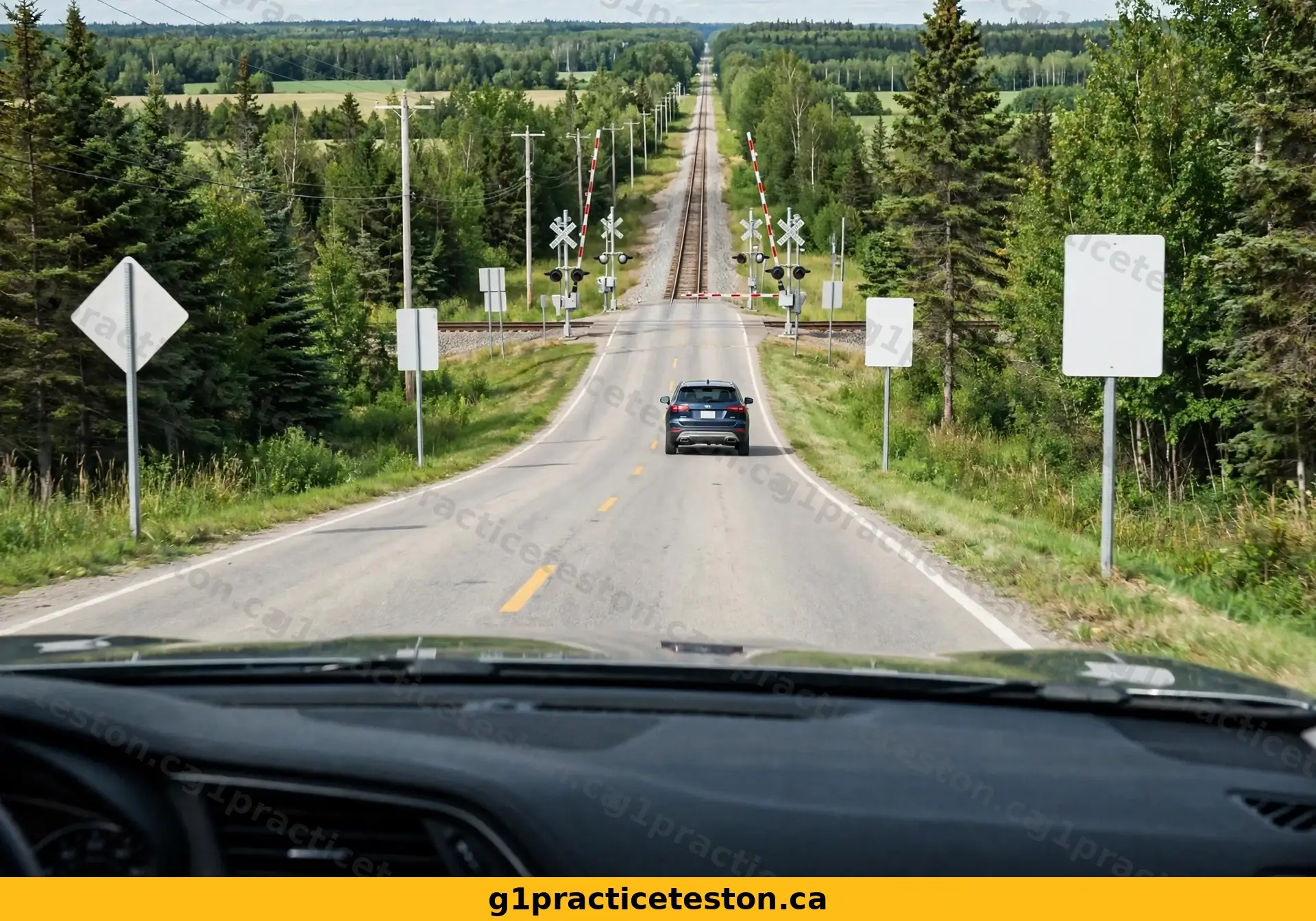
Q23. A round yellow sign shows a black X with the letter R on each side. What is this sign telling you?
g1practiceteston.ca -
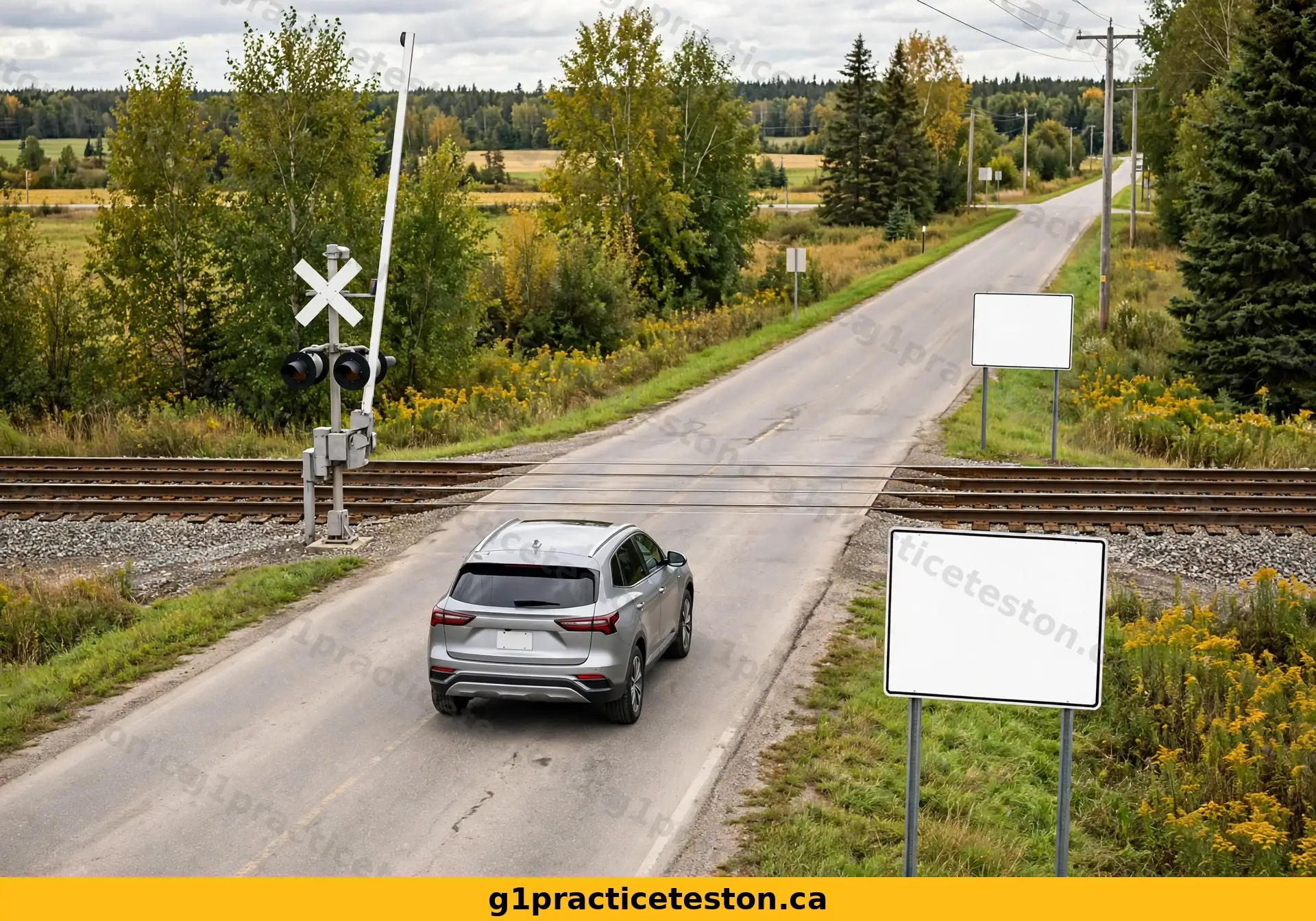
Q24. Below a crossbuck at a railway crossing, a small sign reads "2 TRACKS". What does this tell you?
g1practiceteston.ca -
Q25. A white rectangular sign shows two black arrows pointing up with one black arrow pointing down between them. What lane is this describing?

g1practiceteston.ca -
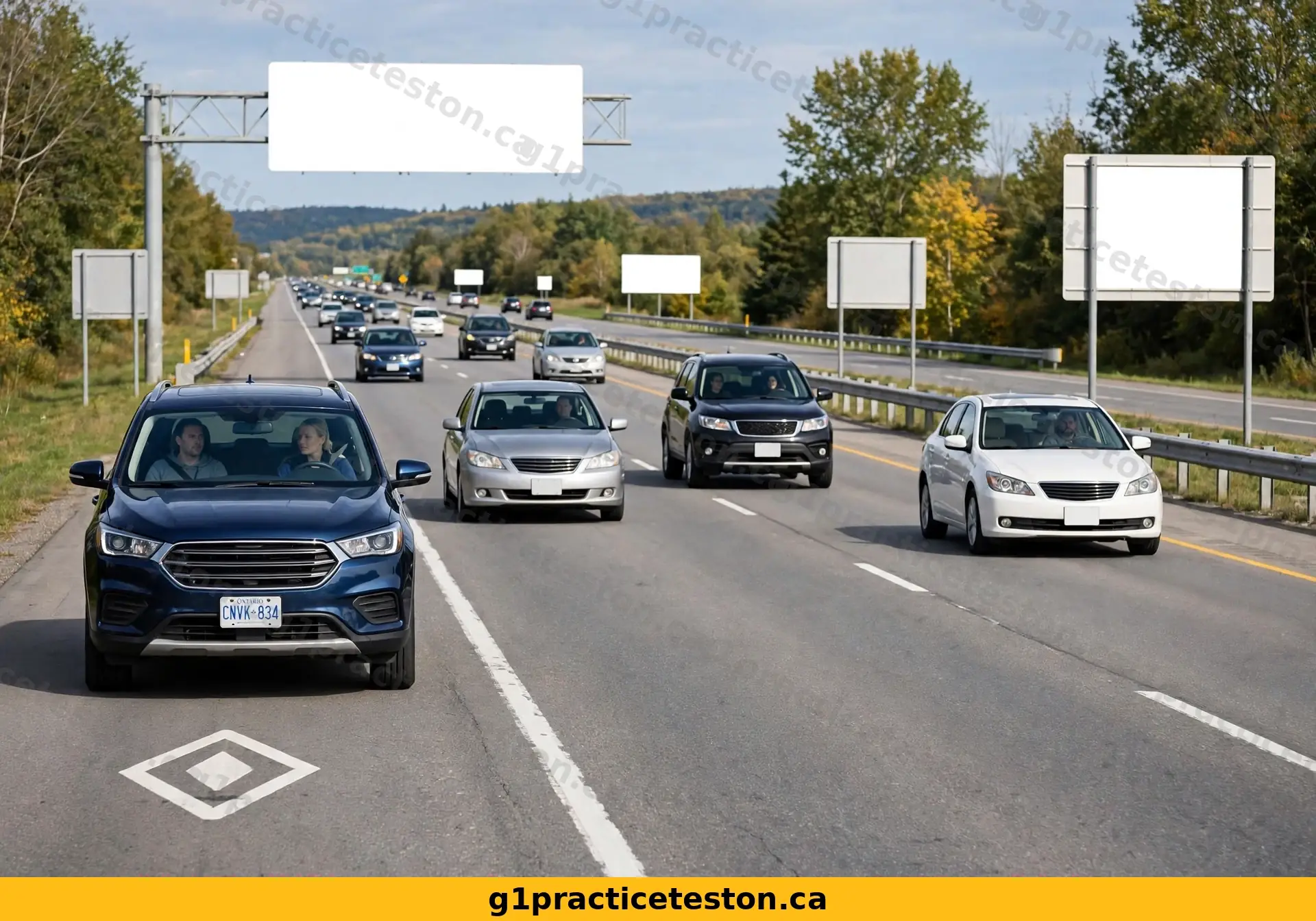
Q26. A sign shows a white diamond with a black car symbol and the number "2" inside it. What does this sign mean?
g1practiceteston.ca -
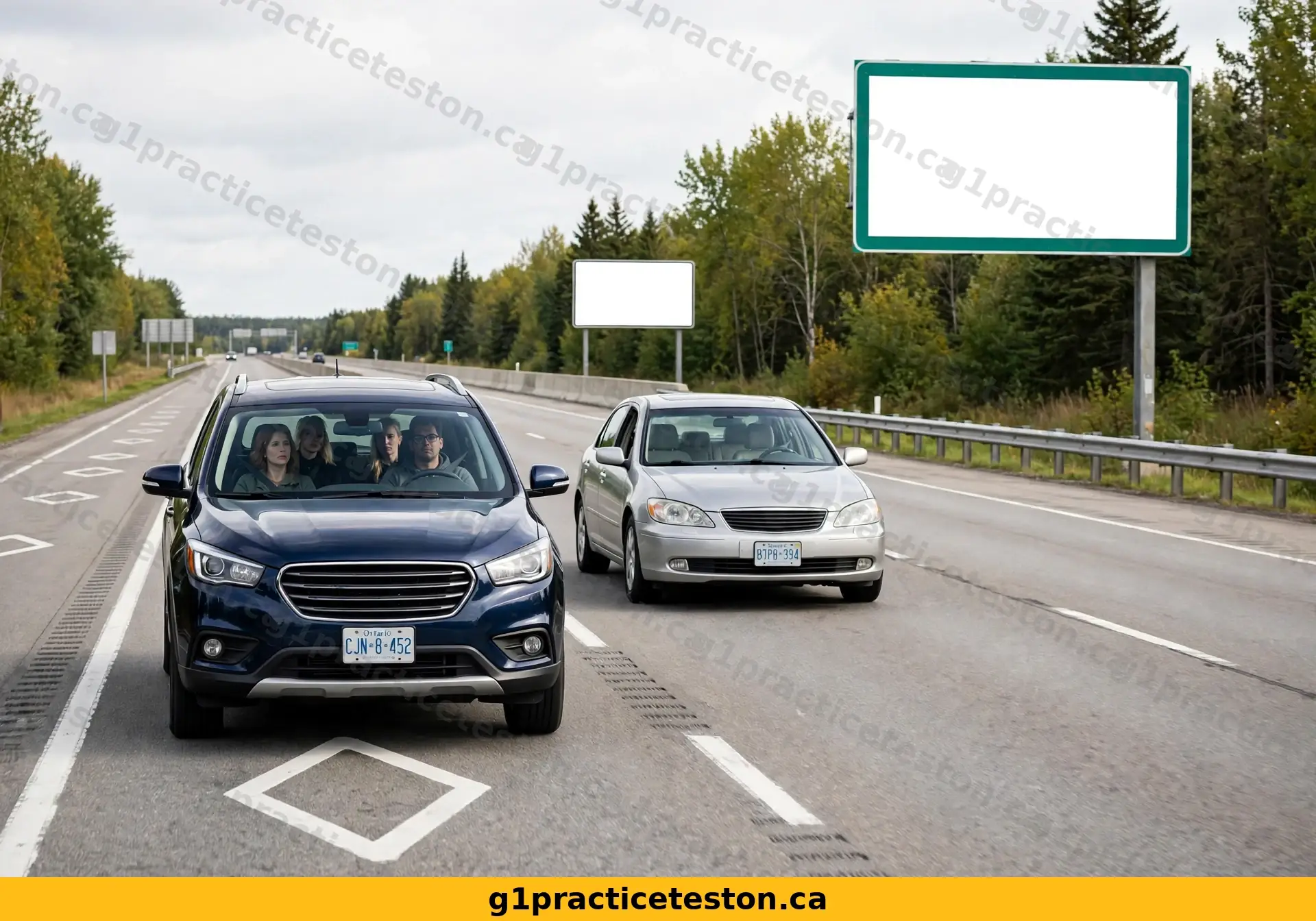
Q27. You are driving alone in your car and see an HOV lane marked "3+". May you use it?
g1practiceteston.ca -
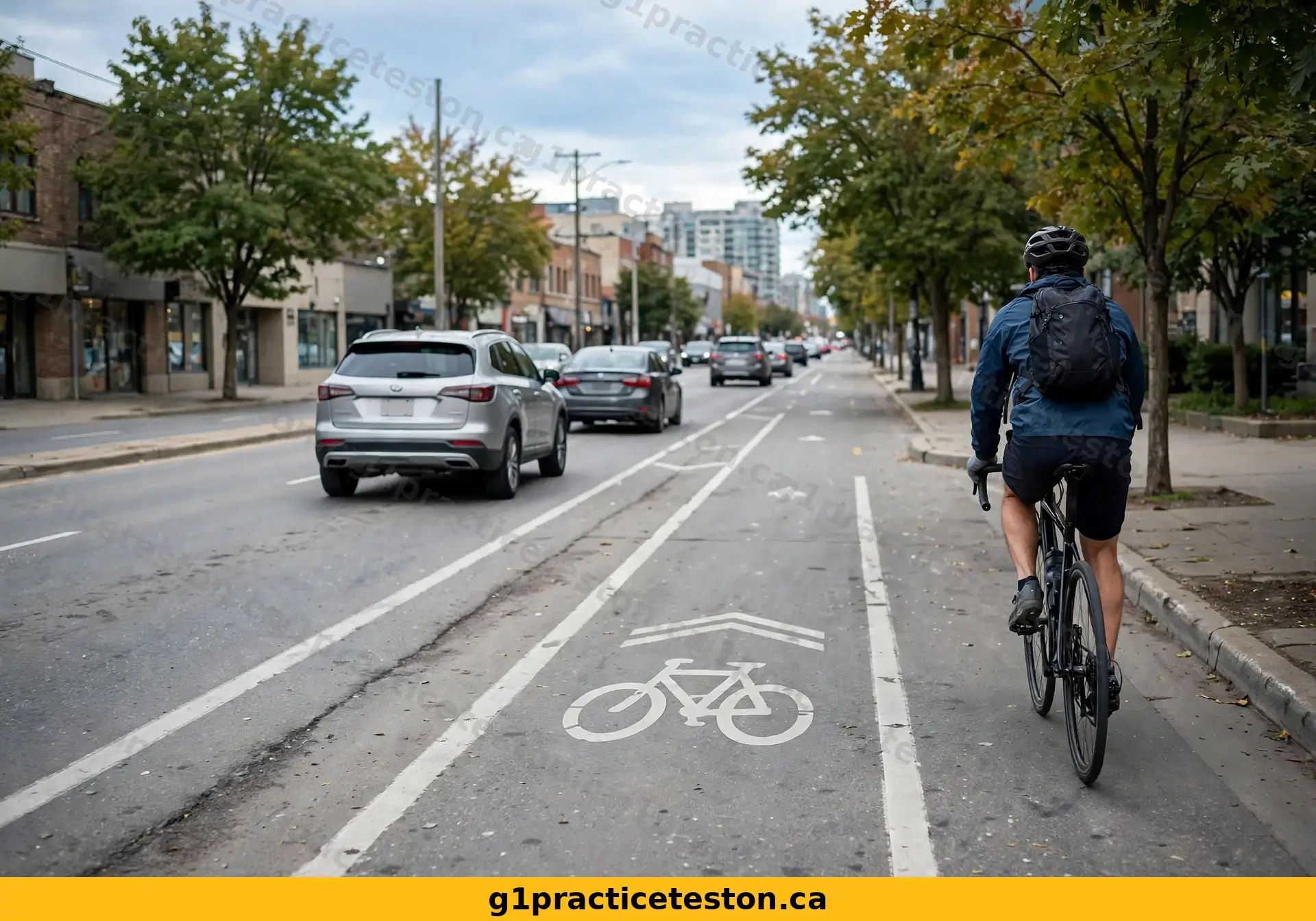
Q28. A white sign shows a bicycle symbol with the words "BICYCLE LANE" and a downward arrow. What must motorists do?
g1practiceteston.ca -
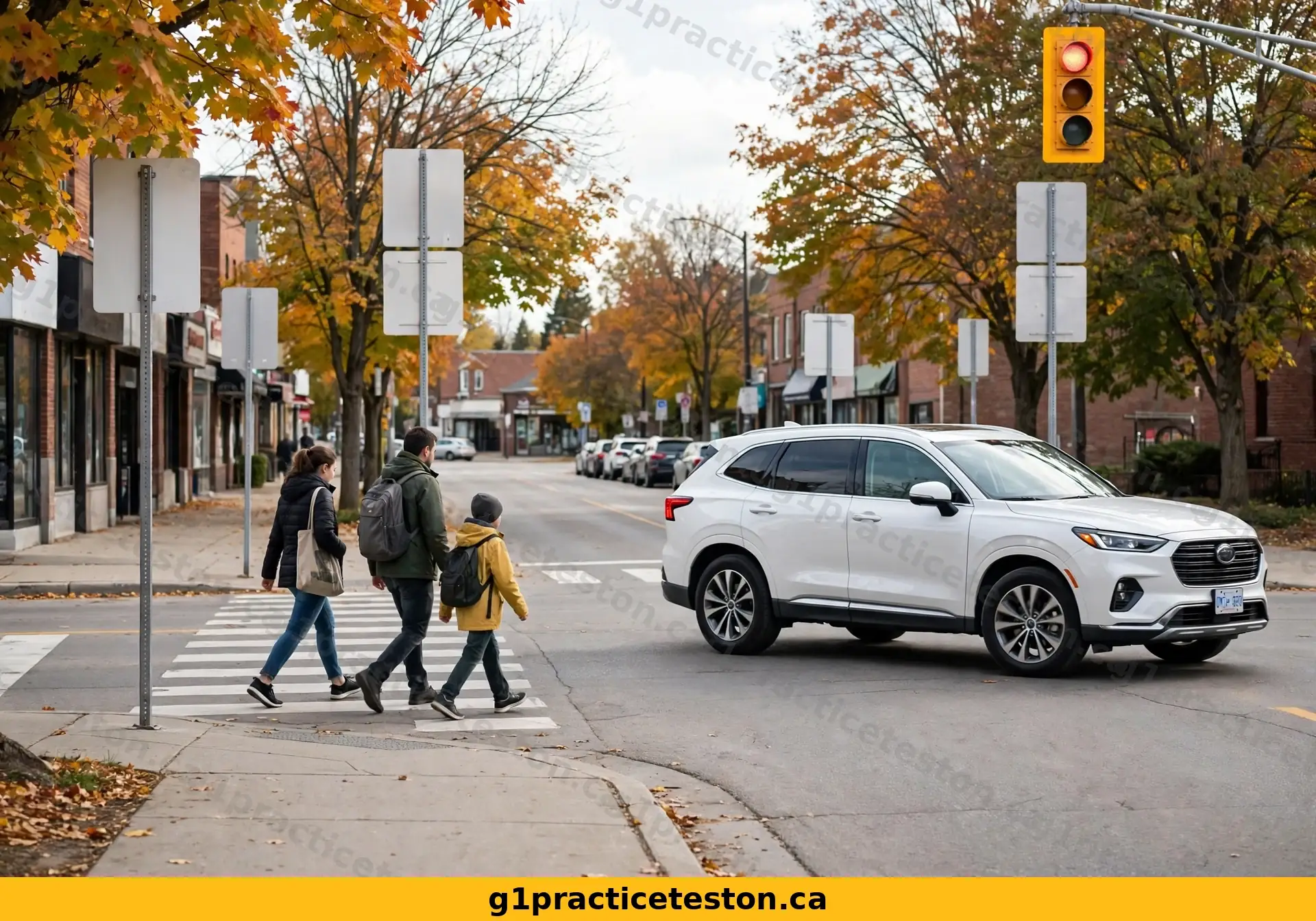
Q29. You are stopped at a red light and want to turn right. No sign prohibits it. What may you do?
g1practiceteston.ca -
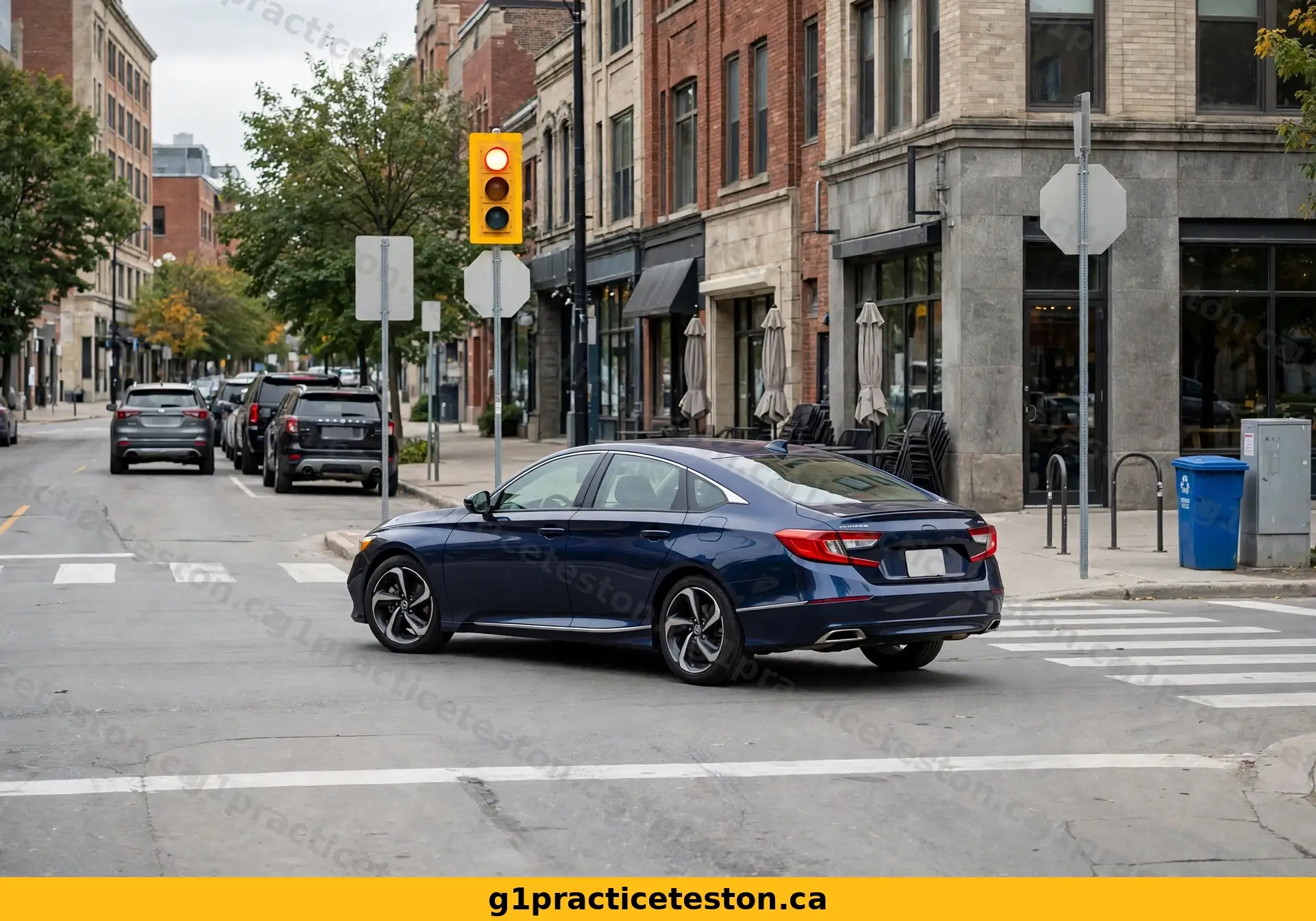
Q30. You are on a one-way street and want to turn left onto another one-way street at a red light. No sign prohibits the turn. Is it allowed?
g1practiceteston.ca -
Q31. A white sign reads "DO NOT BLOCK INTERSECTION". What is it telling you?

g1practiceteston.ca -
Q32. You approach a stop sign. There is a painted stop line, then a marked crosswalk, then the intersection. Where must you stop?

g1practiceteston.ca -
Q33. You arrive at an all-way stop at the same time as the driver to your right. Who goes first?

g1practiceteston.ca -
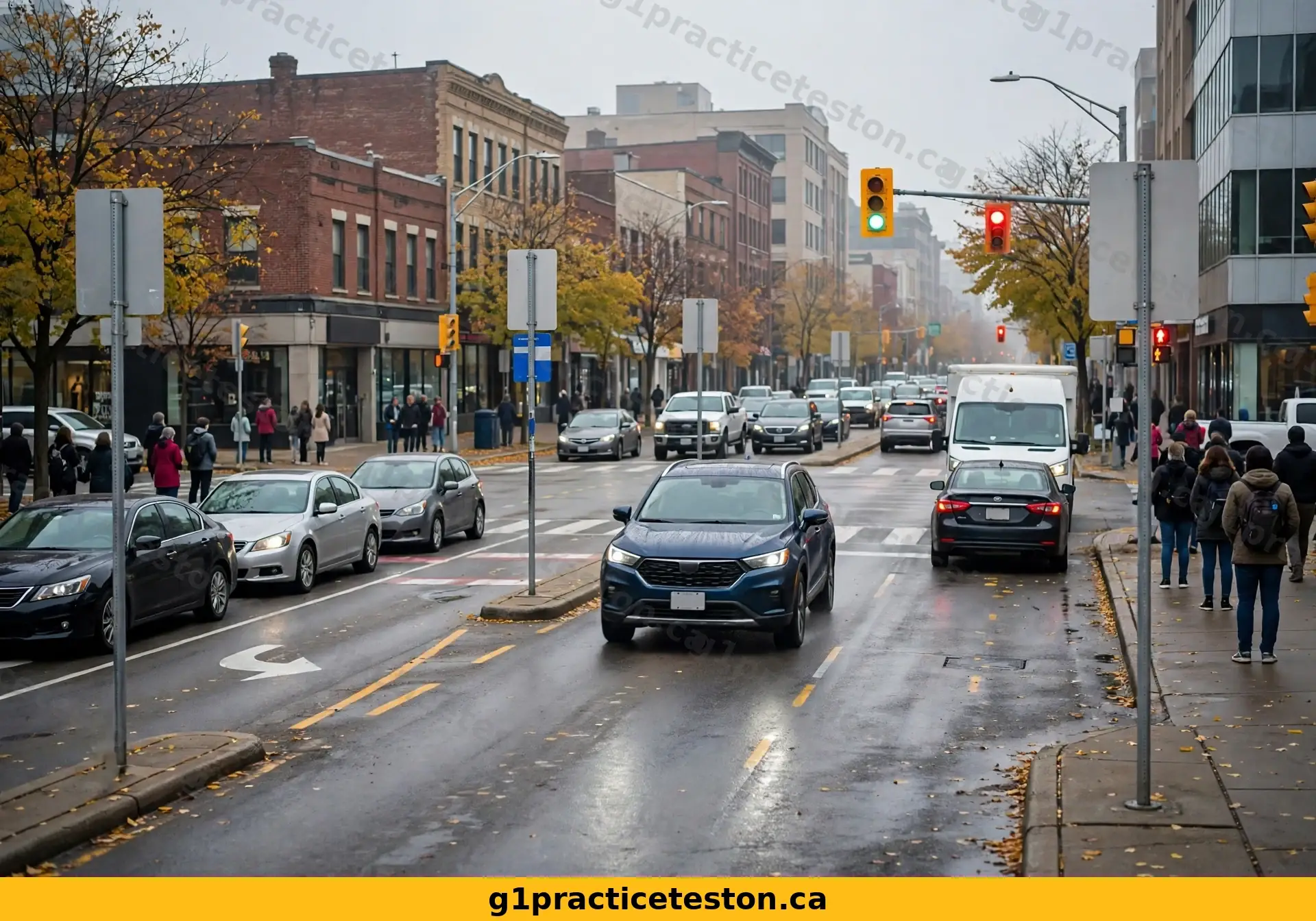
Q34. A "NO LEFT TURN" sign has a tab below it reading "7:00 AM – 9:00 AM, MON – FRI". What does this mean?
g1practiceteston.ca -
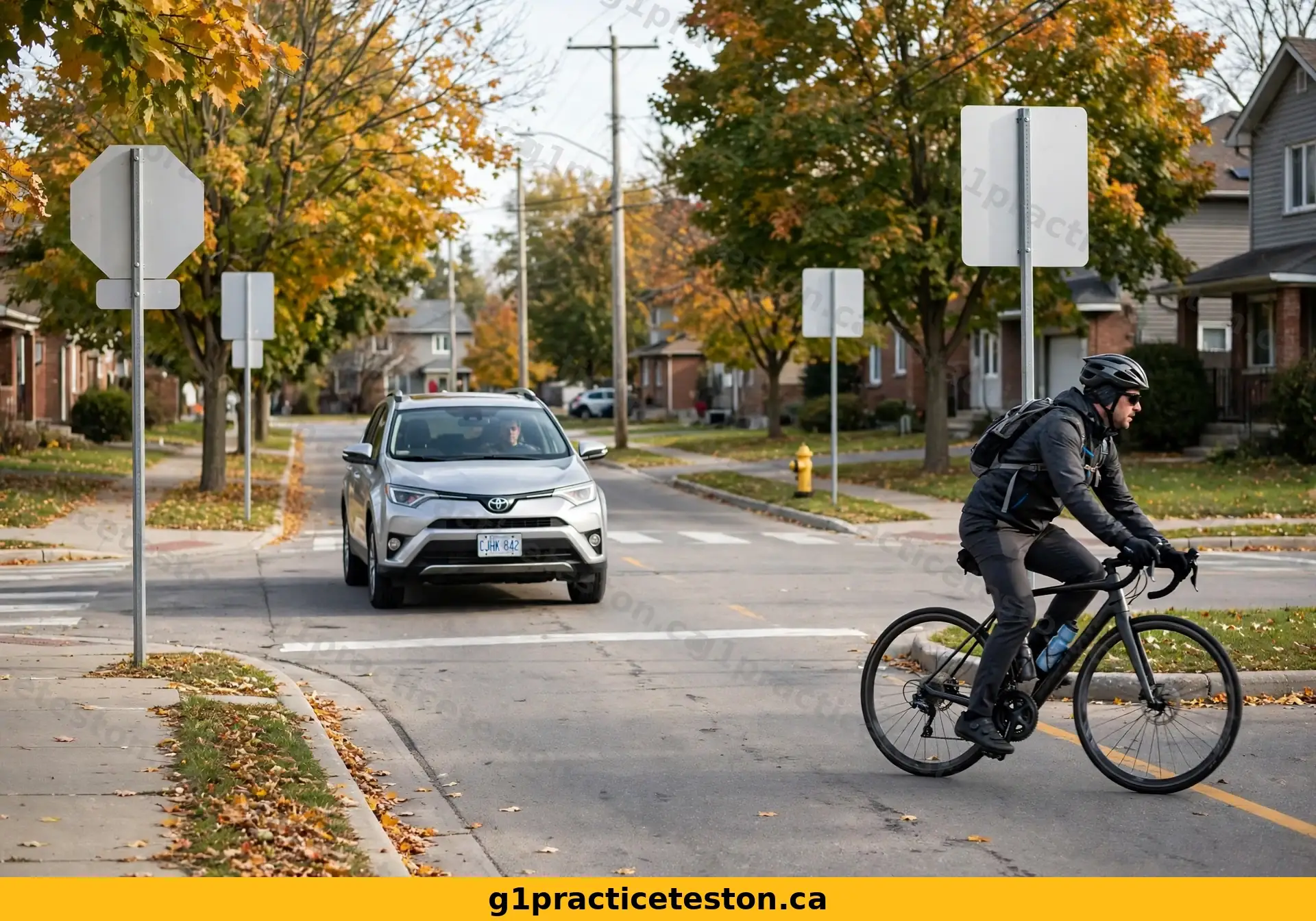
Q35. A "NO RIGHT TURN" sign has a small tab below it reading "EXCEPT BICYCLES". What does this mean?
g1practiceteston.ca -
Q36. No speed limit sign is posted. What is the maximum speed in a city, town or village — and on a rural road?

g1practiceteston.ca -
Q37. You are about to cross the street and the pedestrian signal shows a flashing orange hand. What should you do?

g1practiceteston.ca -
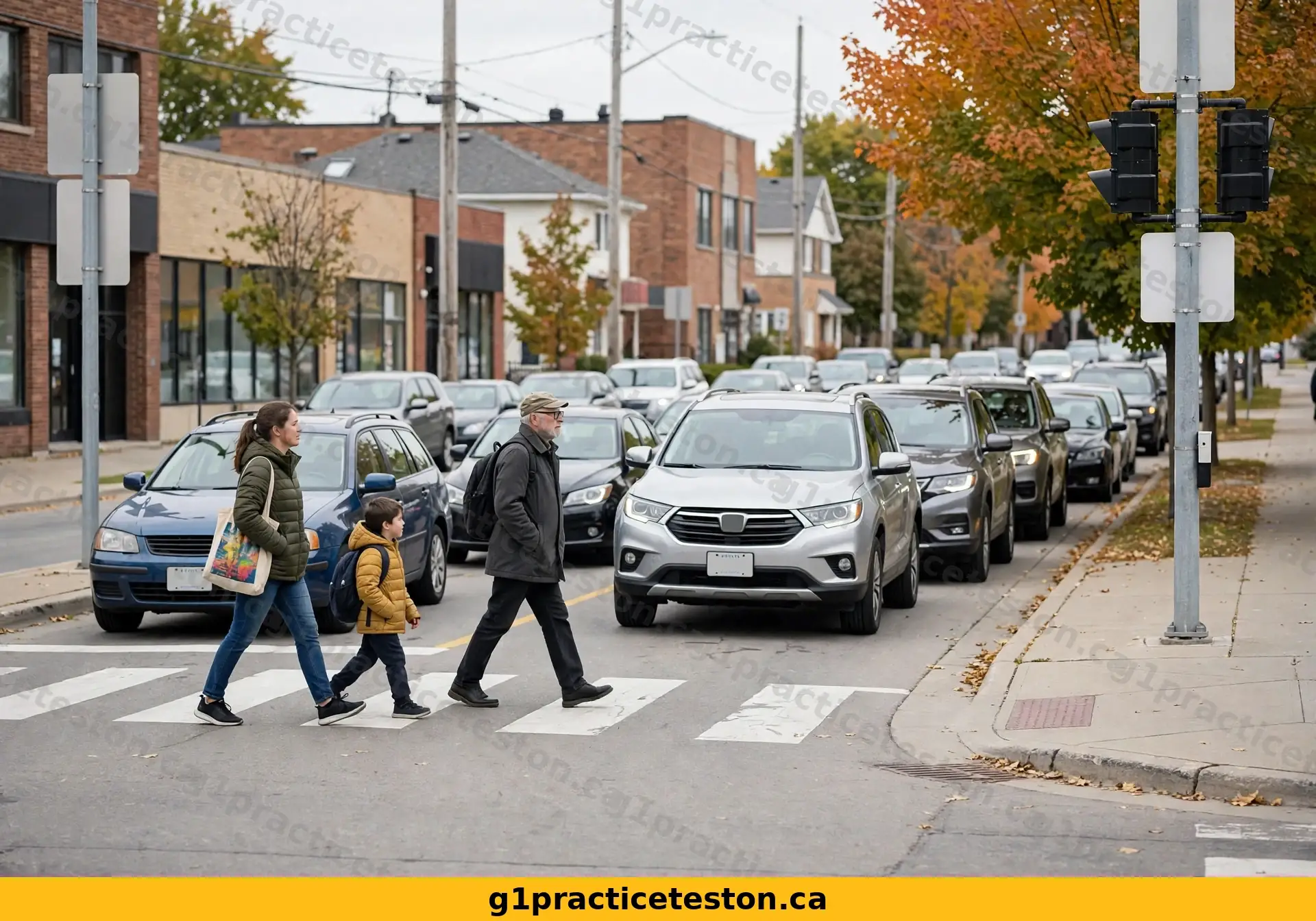
Q38. The pedestrian signal shows a steady white walking person. What does it mean?
g1practiceteston.ca -
Q39. A white rectangular sign shows two cars side by side with an arrow indicating one must wait for the other, reading "YIELD TO ONCOMING TRAFFIC". Where would you see this, and what must you do?

g1practiceteston.ca -
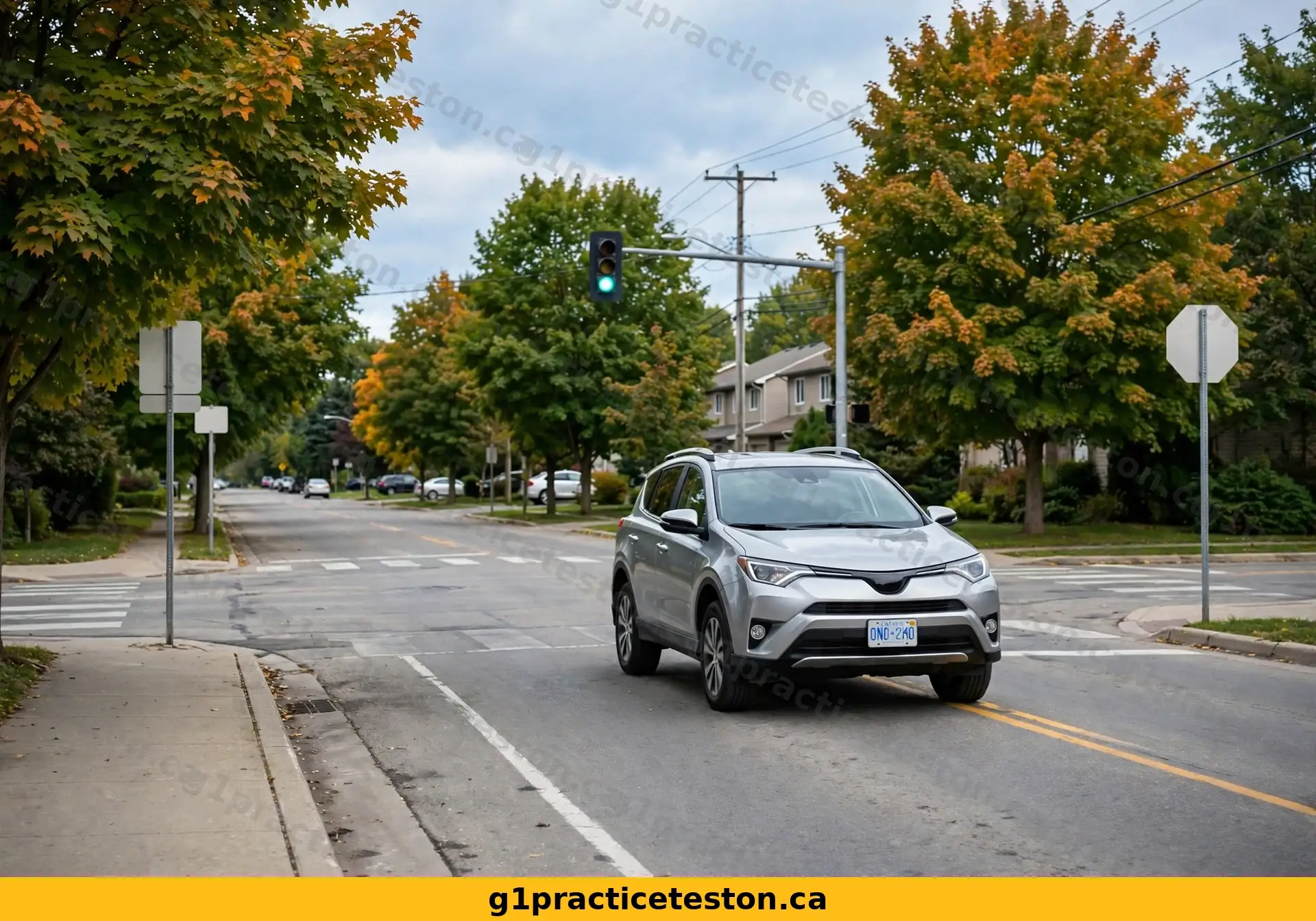
Q40. A sign shows both a left-turn arrow and a right-turn arrow inside a red circle, with a red diagonal line across them. What does this sign mean?
g1practiceteston.ca -
Q41. You approach an intersection where your red octagon STOP sign has a smaller red-and-white rectangular sign mounted directly underneath it that reads "ALL-WAY". What does this extra sign tell you?

g1practiceteston.ca -
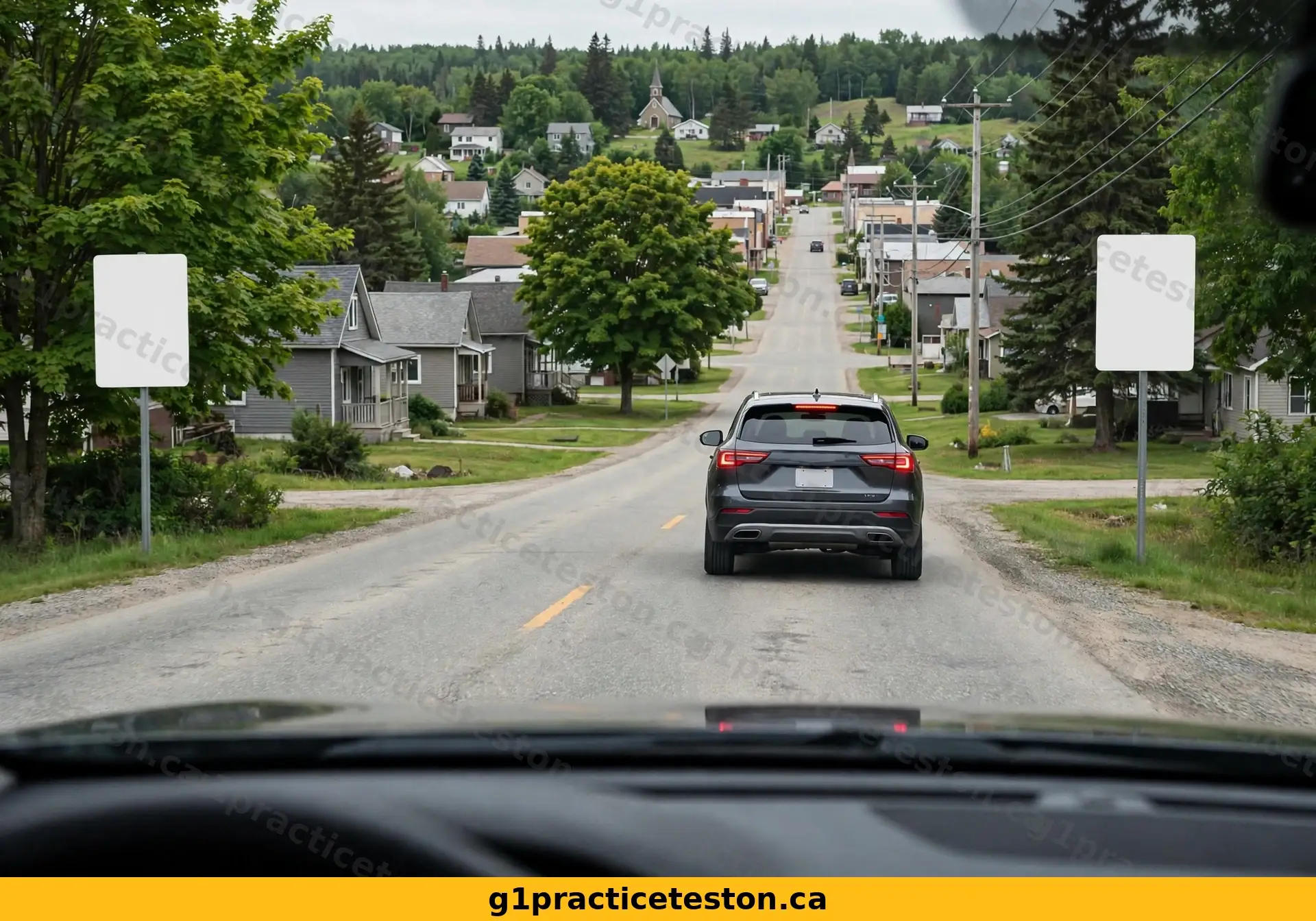
Q42. You are driving in an 80 km/h zone. Ahead, you see a white rectangular sign that reads "MAXIMUM 50", with a smaller sign directly below it that reads "BEGINS". What does this mean?
g1practiceteston.ca -
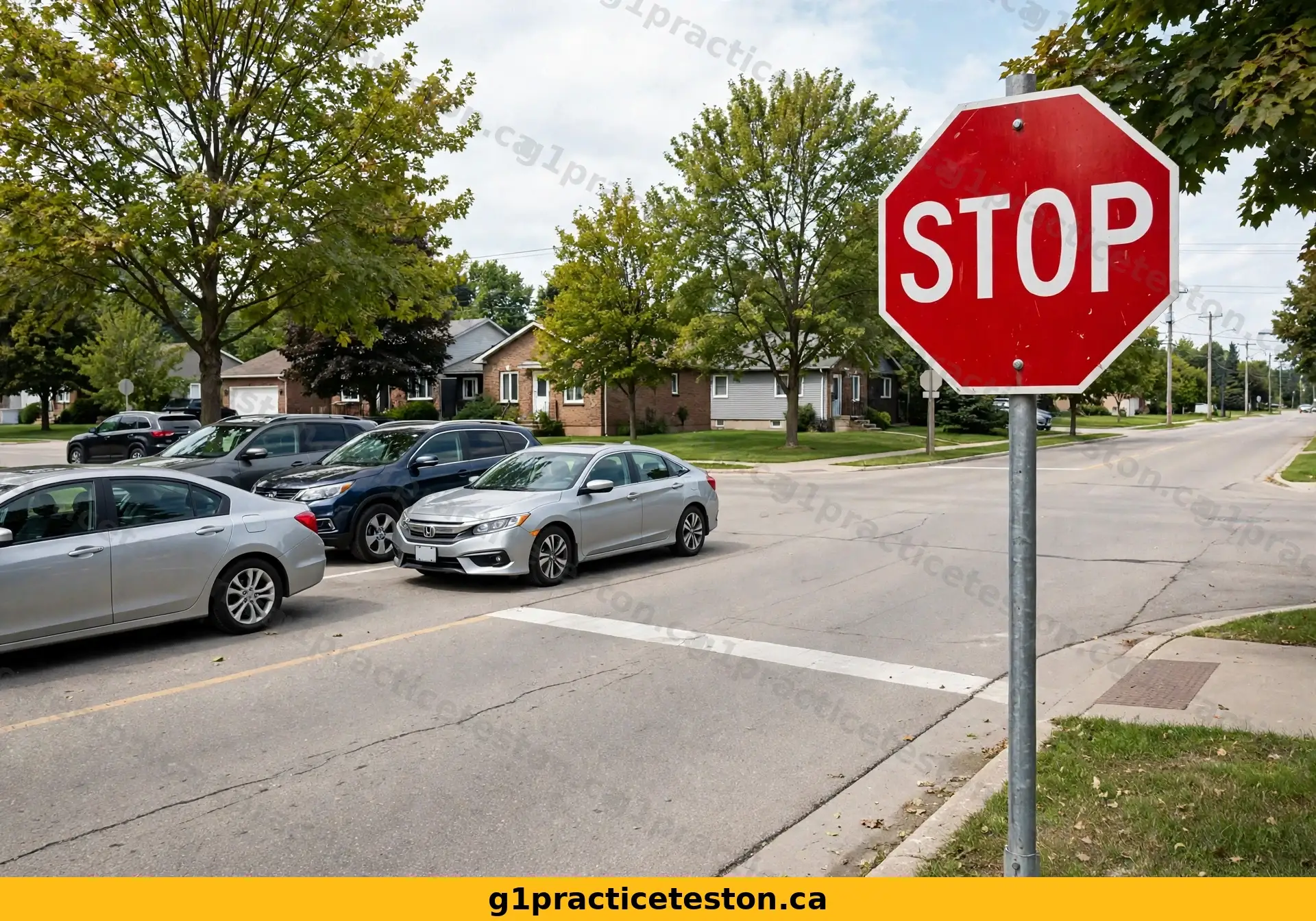
Q43. What shape is a Stop sign in Ontario?
g1practiceteston.ca -
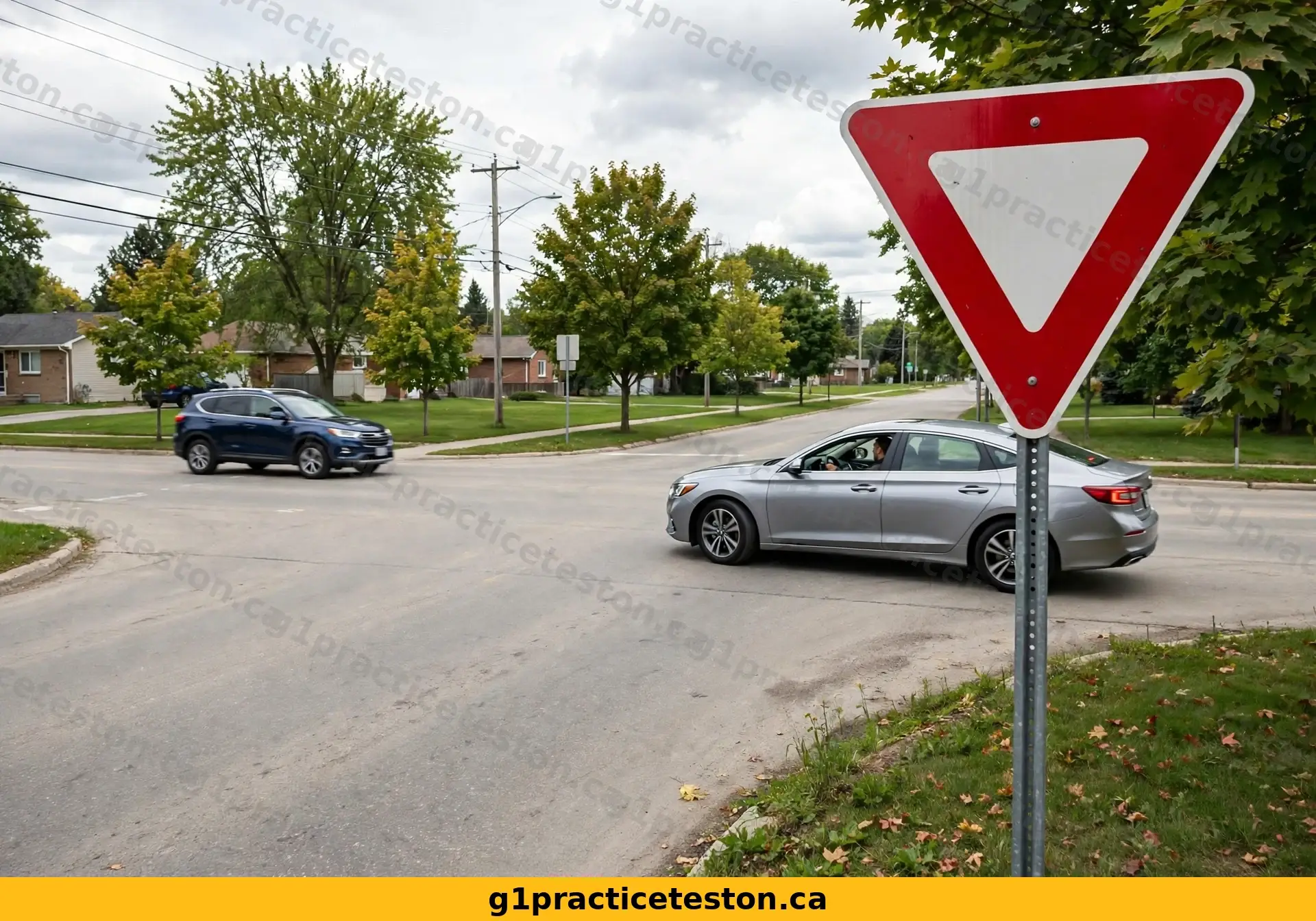
Q44. What does a red and white inverted triangle sign mean?
g1practiceteston.ca -
Q45. At a Yield sign, when must you come to a complete stop?

g1practiceteston.ca -
Q46. A small rectangular tab below a stop sign reading "4-WAY" means:

g1practiceteston.ca -
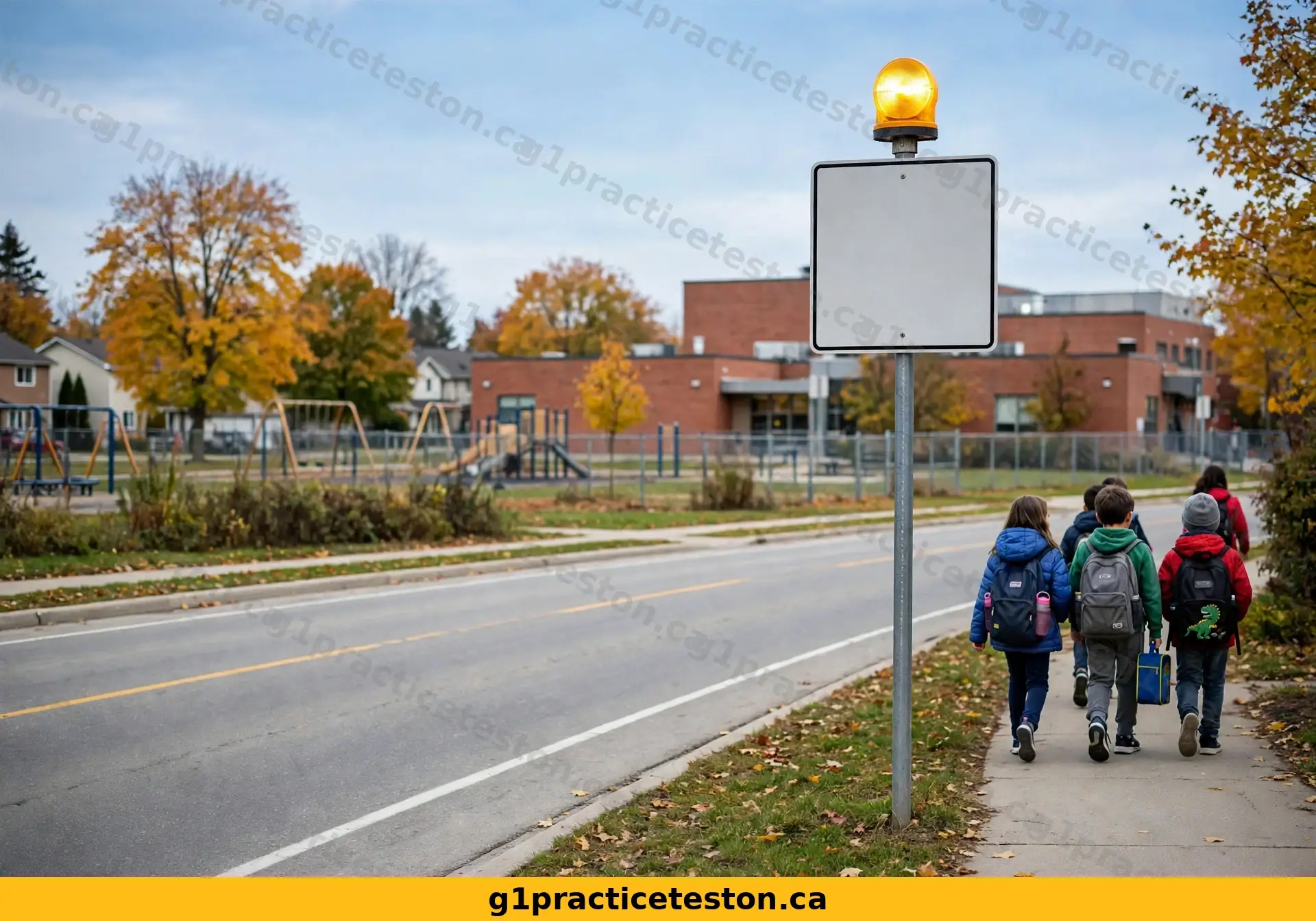
Q47. School zone speed limit signs are often paired with
g1practiceteston.ca -
Q48. What does a red circle with a black left-turn arrow and a diagonal slash mean?

g1practiceteston.ca -
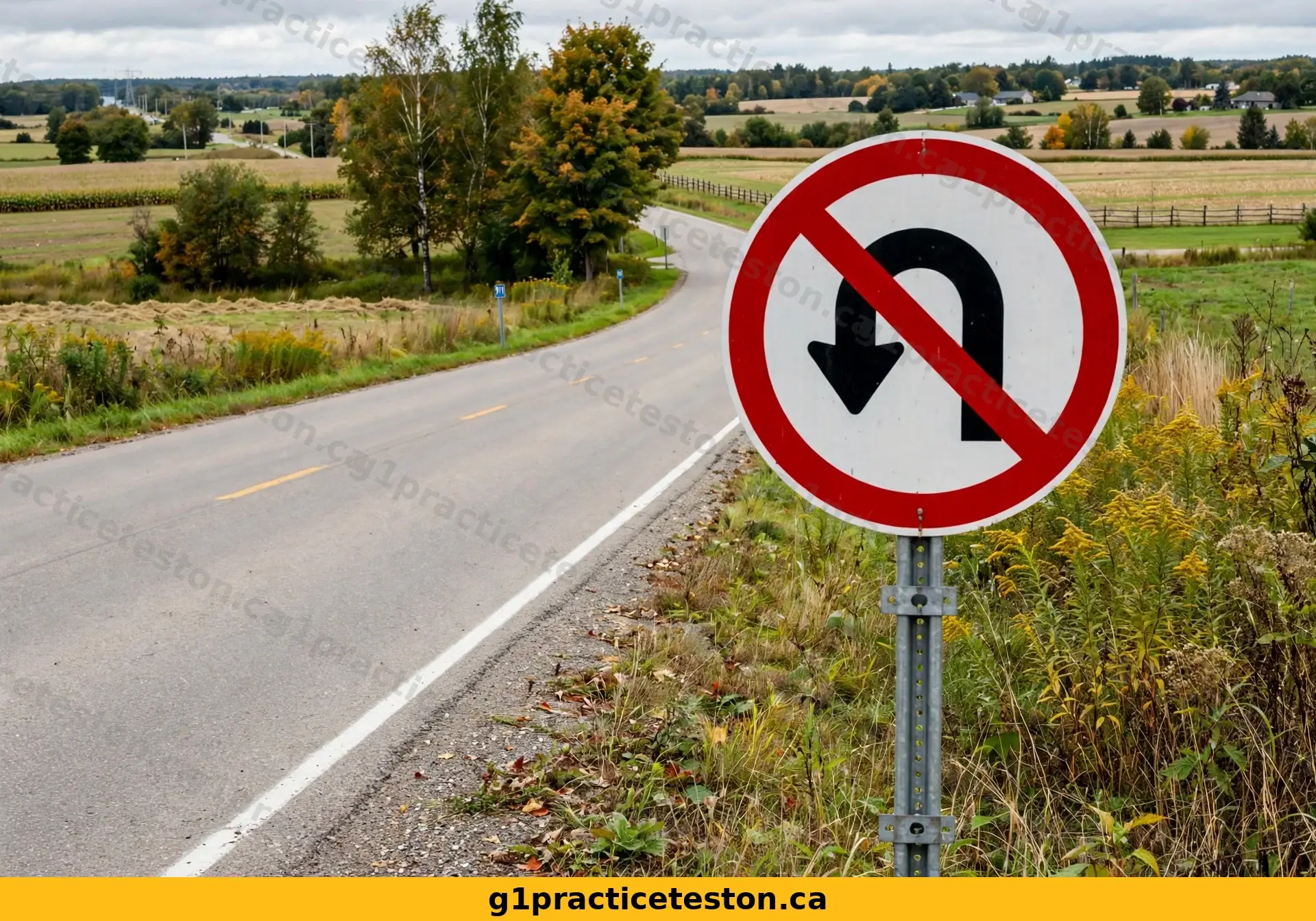
Q49. A red circle containing a U-shaped arrow with a slash through it means:
g1practiceteston.ca
Your score
Review — which answers were right and which were wrong
Tap any question below to jump to it and see the correct answer and explanation.
Regulatory Signs — Frequently Asked Questions
What exactly is a regulatory sign?
A regulatory sign states a law or legal requirement — it does not just suggest; it instructs. Stop, yield, speed limit, one-way and no-parking signs are all regulatory signs. Most are white with black lettering, red is used for prohibitions, and a green circle means the action shown is permitted.
What is the difference between No Parking, No Standing and No Stopping?
No Stopping is the strictest: you may not stop at all, except to avoid a collision or obey a police officer. No Standing allows stopping only to pick up or drop off passengers, while No Parking still lets you stop briefly to load or unload. Mixing these three up is one of the most common sign mistakes, and this quiz drills them directly.
Do regulatory signs appear on both sections of the real G1 test?
The signs themselves are asked about in the 20-question signs section, where you identify what a pictured sign means. The laws behind them — fines, demerit points and licence conditions — can also appear as rules of the road questions. Practising this quiz alongside the rules quiz covers both angles.
Which regulatory signs should I make sure I know?
The essentials are stop and yield, maximum speed signs — including school zone and community safety zone limits — one-way signs, turn prohibitions, lane-use and HOV signs, and the parking, standing and stopping family. All 49 questions in this quiz are built around signs in these groups. If one group keeps tripping you up, its explanations point you to the exact rule to review.
Why do regulatory signs matter after I pass the test?
Because they are laws, not suggestions. Disobeying a regulatory sign while driving is breaking the law and can result in a fine and demerit points on your licence. Learning what each sign requires now builds the habit of reading signs automatically once you are out on the road.