
The Full Ontario G1 Test Simulator
This simulator is your dress rehearsal for the real G1 knowledge test. It contains 40 questions — 20 on road signs and 20 on the rules of the road — in the same two-part format DriveTest uses, and it is scored the way the real test is scored: each section separately. Just like the real test, you need at least 80% in each section — 16 out of 20 — and a strong section cannot carry a weak one. Every question is based on the Official MTO Driver’s Handbook, the source the real test draws from.
Take the simulator after you have worked through the practice quizzes, not before. Its job is to answer one question honestly: are both halves of your knowledge ready at the same time? Sit down somewhere quiet, put your phone away, and work through all 40 questions in one sitting without checking the handbook — the same focus you will need at the test centre. The real test has no time limit and is marked right away, so there is no need to rush; what matters is steady, careful reading of each question.
How to Use the Simulator
When you finish, look at your two section scores separately, not just your total. If one section falls below 80%, go back to that section’s practice quiz, read the explanations for the topics you missed, and then run the simulator again when you feel ready. If the same topic keeps tripping you up — one family of signs, or one right-of-way rule — that is your signal to revisit it in the handbook before another attempt. Every question here has an explanation, so a simulator run doubles as a study session once your score is in.
What to Do After the Simulator
Once you are passing both sections comfortably, you are ready for the real thing. Review what to bring and how the visit works in our G1 driving test requirements guide, and brush up one last time with the Traffic Signs practice test and the Rules of the Road practice test. The knowledge test is offered at DriveTest centres across Ontario, and no appointment is needed for the computerized test. Before your next run, put every key number on one page with our G1 cheat sheet.
-
Q1. Rules: Unless signs show a different limit, what is the maximum speed limit in Ontario inside a city, town or village, and outside a built-up area?

g1practiceteston.ca -
Q2. Rules: Where a school zone speed limit is posted in Ontario, what is the maximum speed in that zone when the limit is in effect?

g1practiceteston.ca -
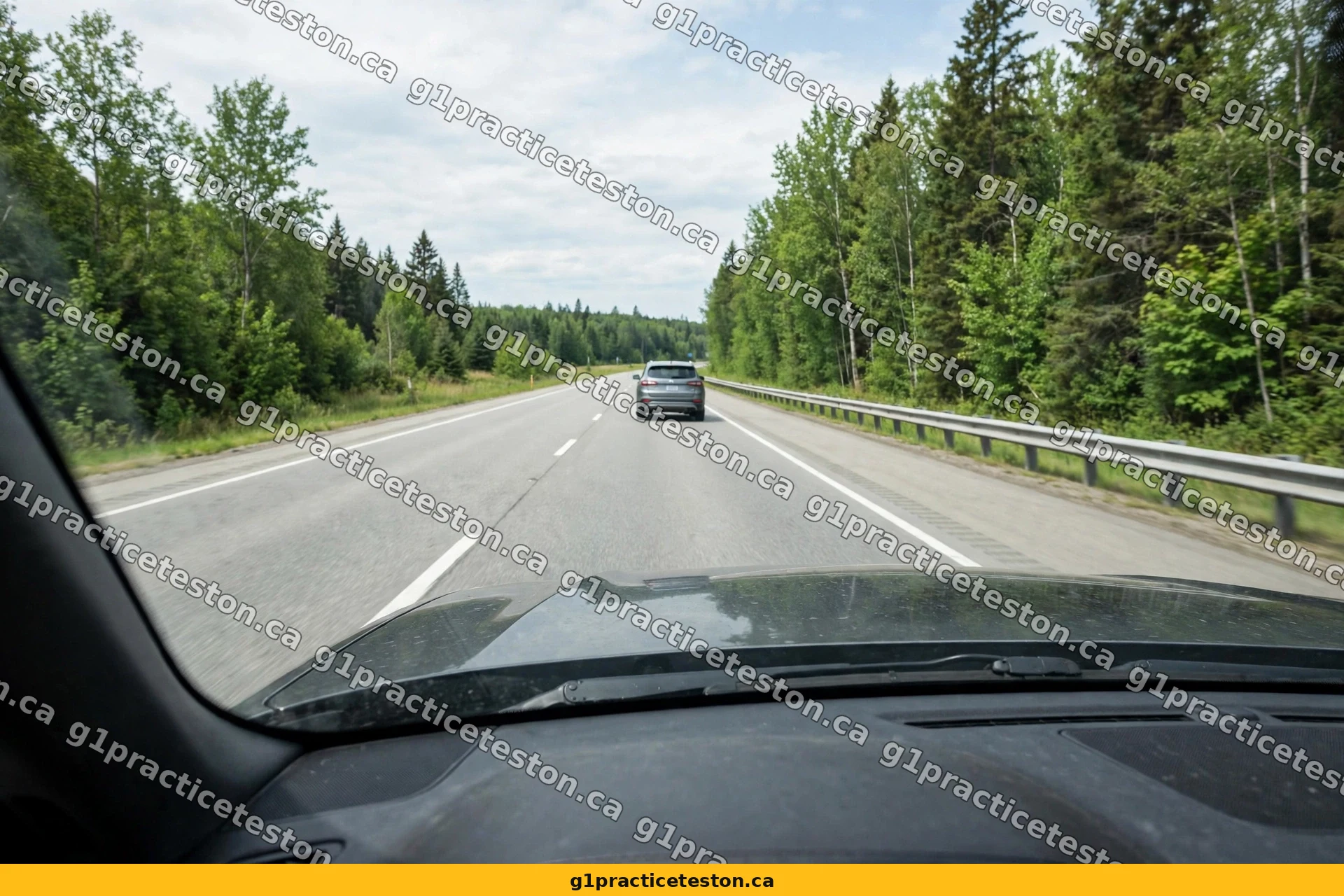
Q3. Rules: In good weather, what is the minimum following distance you should keep behind the vehicle ahead, using the time-interval method?
g1practiceteston.ca -
Q4. Rules: A flashing red traffic light at an intersection means:

g1practiceteston.ca -
Q5. Rules: A flashing amber (yellow) traffic light means:

g1practiceteston.ca -
Q6. Rules: At a red light in Ontario, when may you turn right?

g1practiceteston.ca -
Q7. Rules: You stop at a stop sign where there is no stop line, no crosswalk and no sidewalk. Where must you stop?

g1practiceteston.ca -
Q8. Rules: The light ahead is green, but traffic in front of you is stopped and there is no room for your vehicle on the other side of the intersection. What should you do?

g1practiceteston.ca -
Q9. Rules: At an all-way stop (four-way stop), which driver should go first?

g1practiceteston.ca -
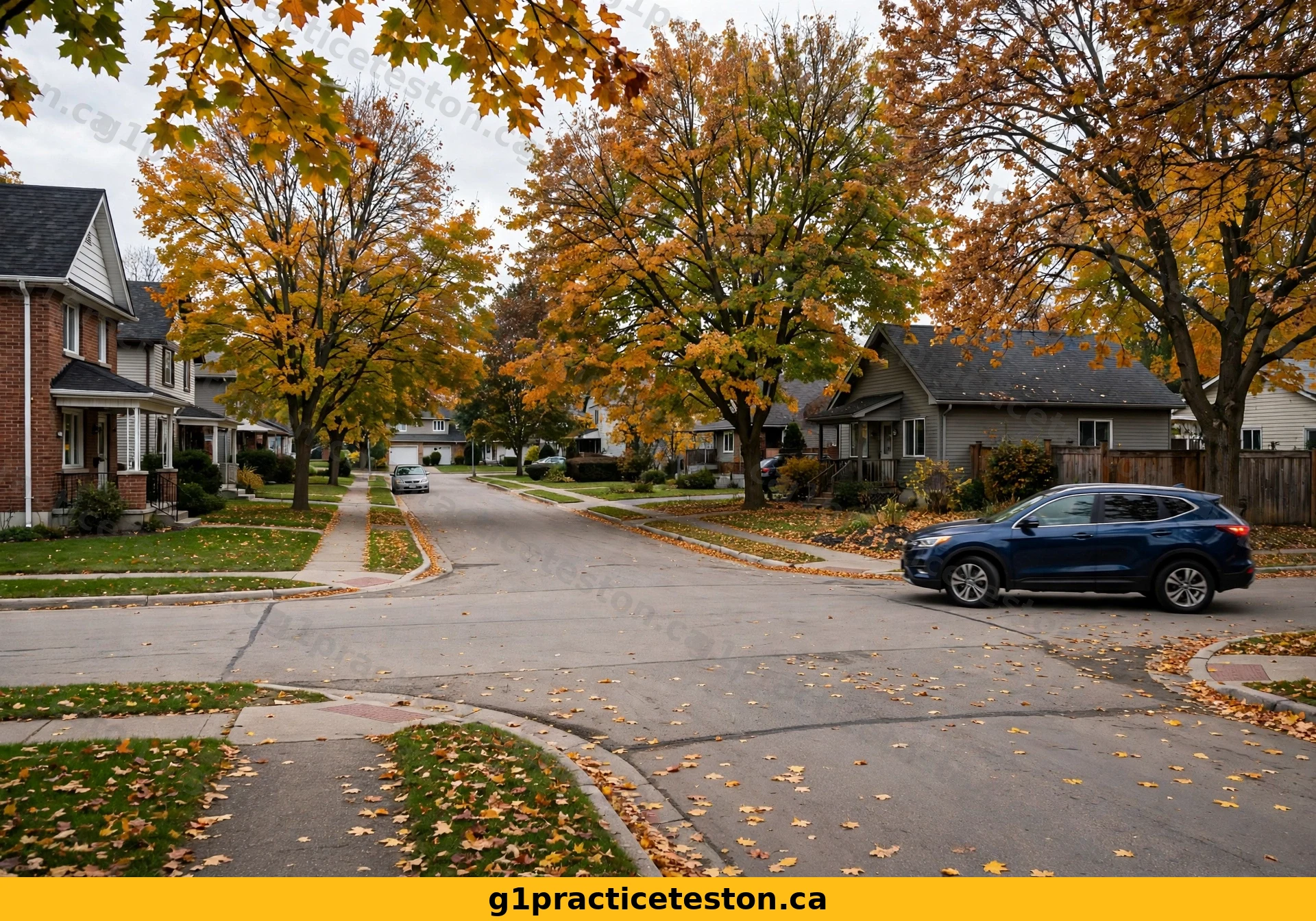
Q10. Rules: At an intersection with no traffic lights, no stop signs and no yield signs, you must yield to:
g1practiceteston.ca -
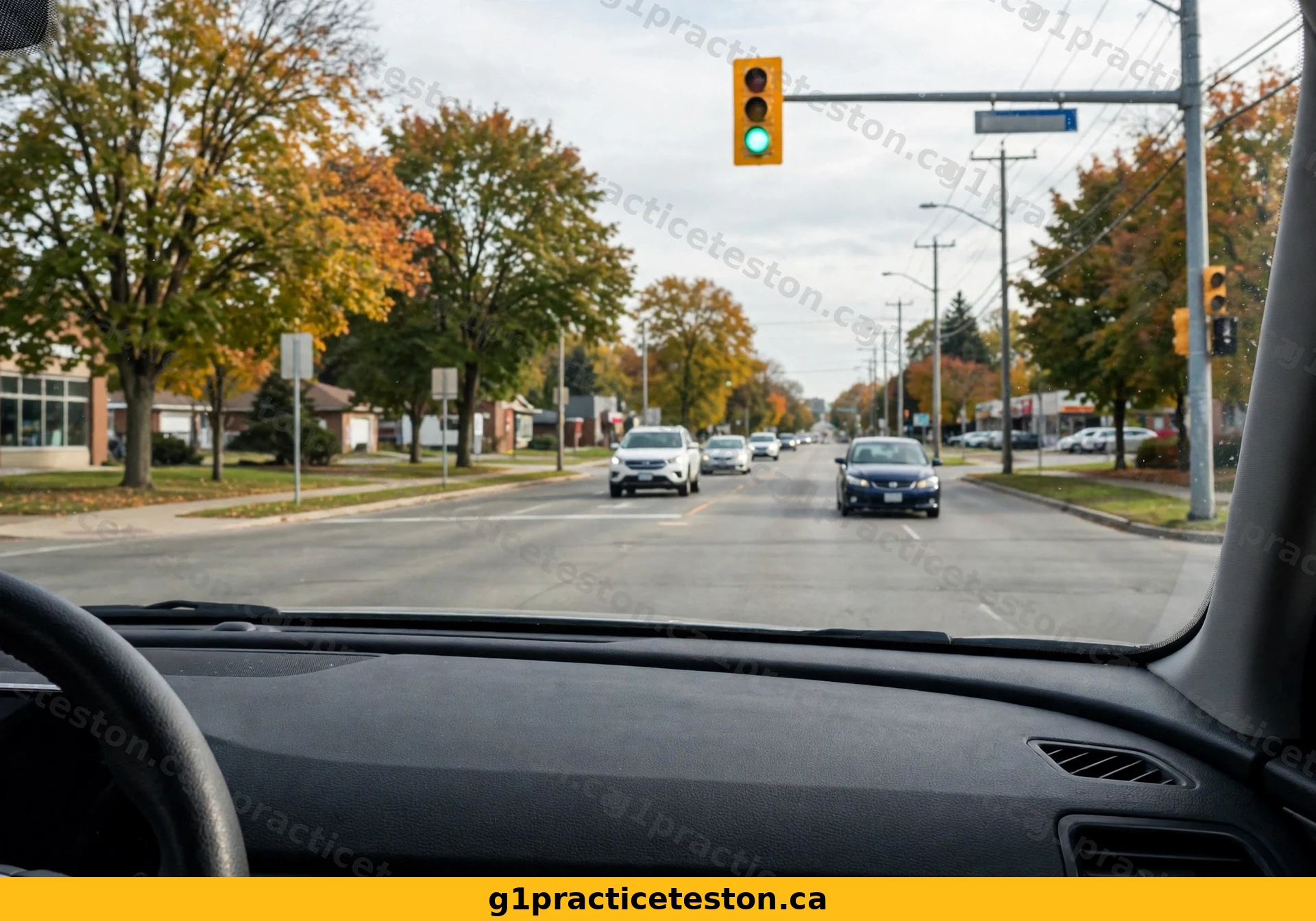
Q11. Rules: When making a left turn, you must yield the right-of-way to:
g1practiceteston.ca -
Q12. Rules: When you turn right at an intersection, you should finish your turn in:

g1practiceteston.ca -
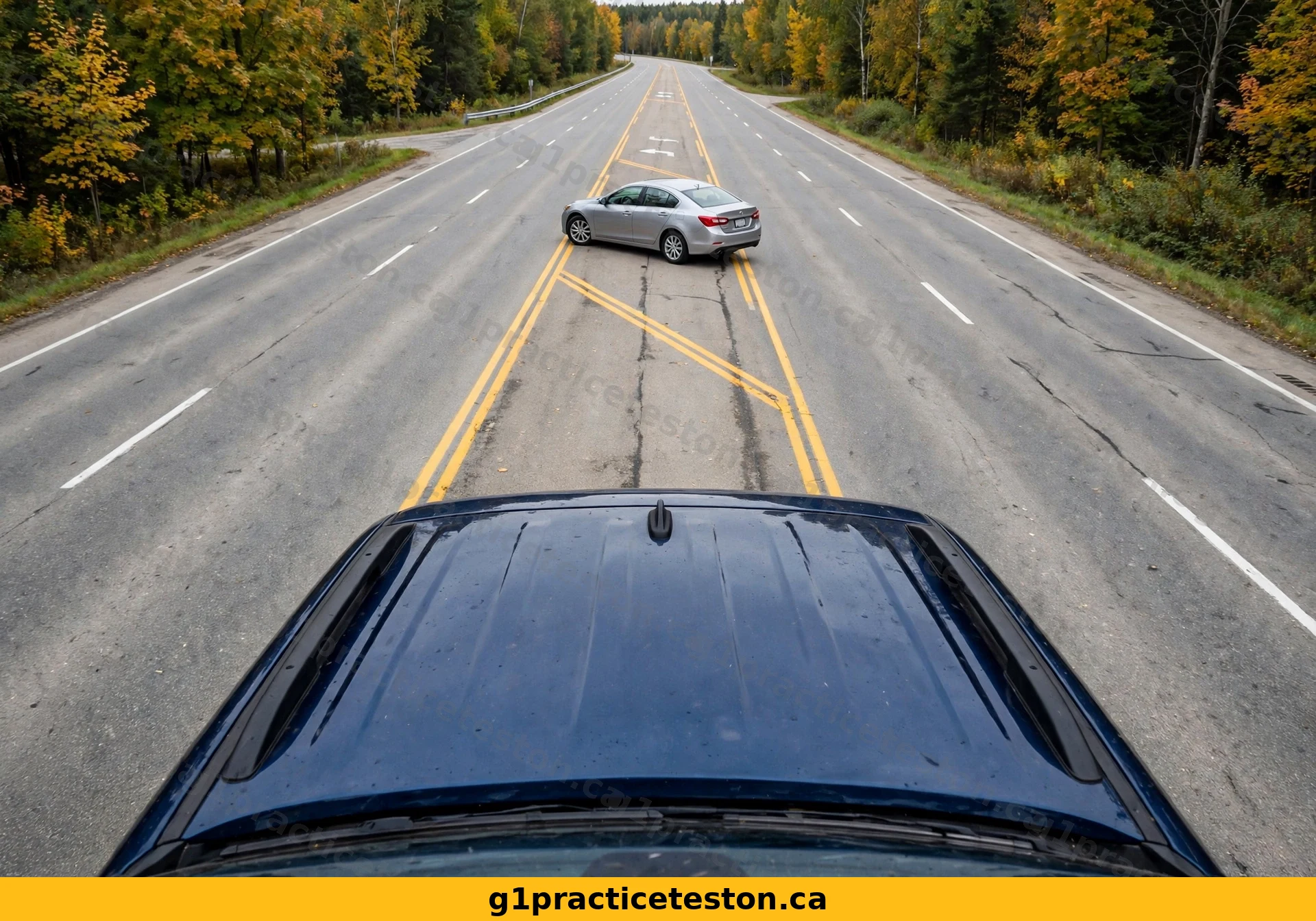
Q13. Rules: The wide centre lane marked with both solid and broken yellow lines on a five-lane road is:
g1practiceteston.ca -
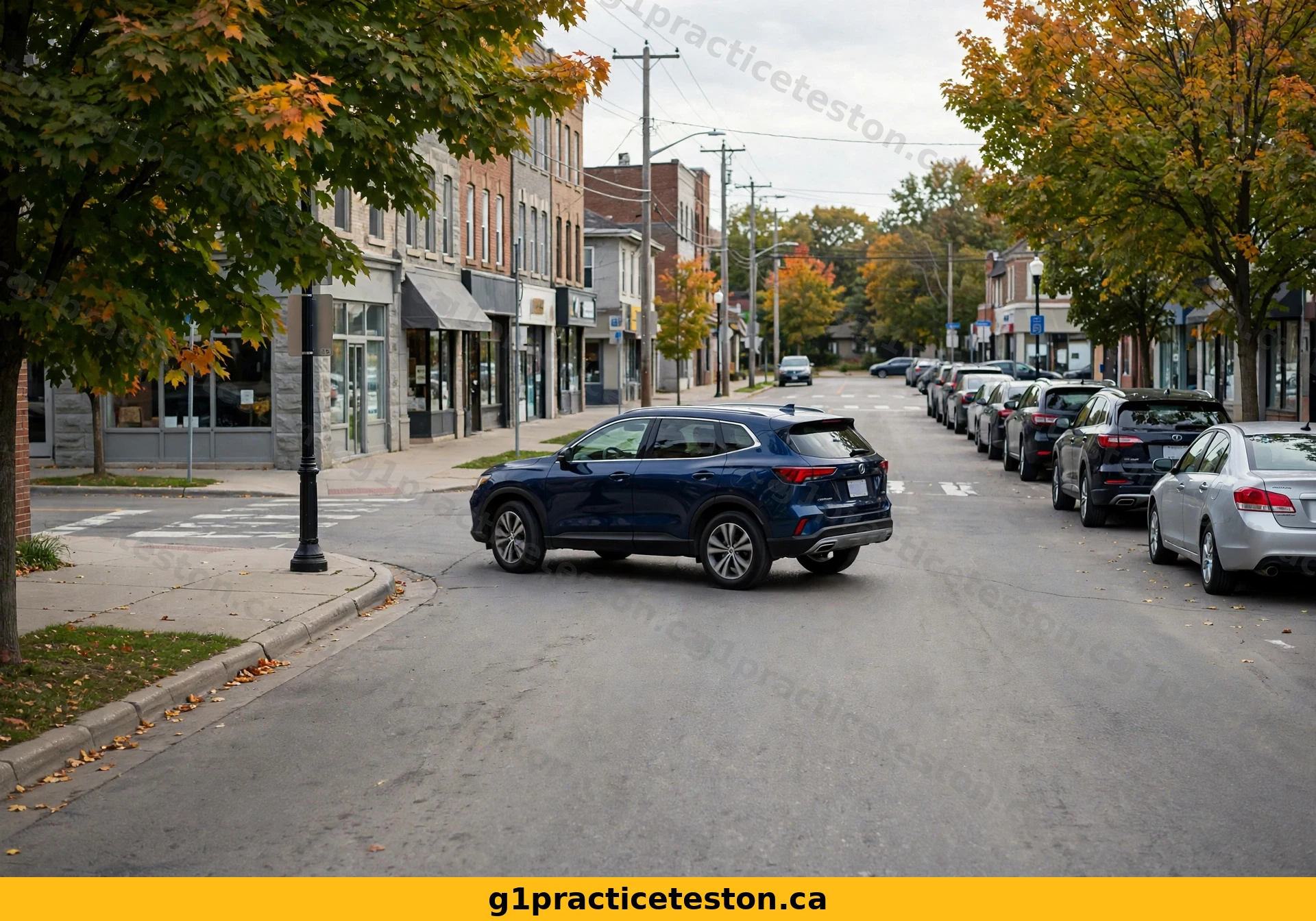
Q14. Rules: In Ontario, making a U-turn is prohibited:
g1practiceteston.ca -
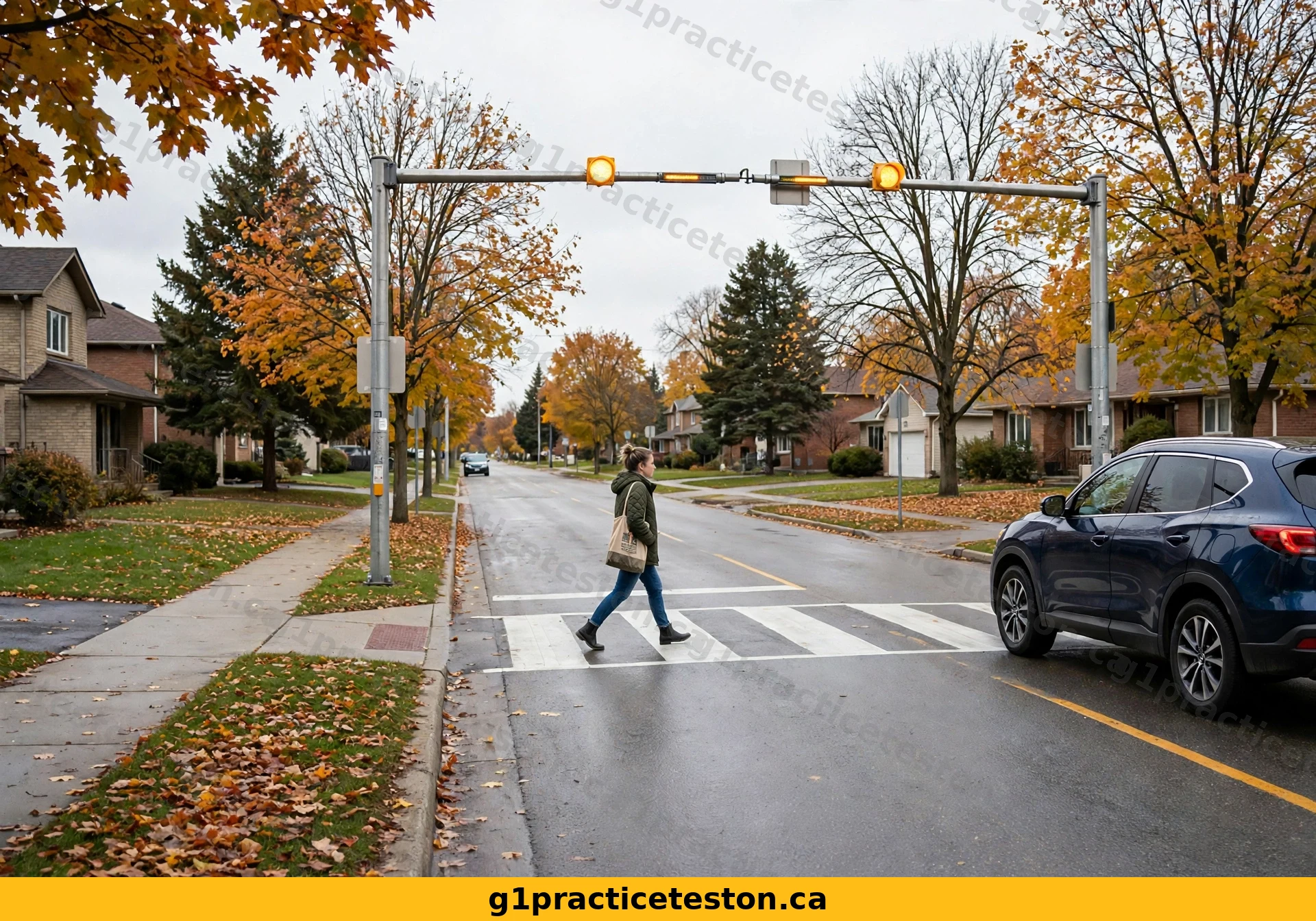
Q15. Rules: At a pedestrian crossover (with overhead lights and a marked crossing), a driver must:
g1practiceteston.ca -
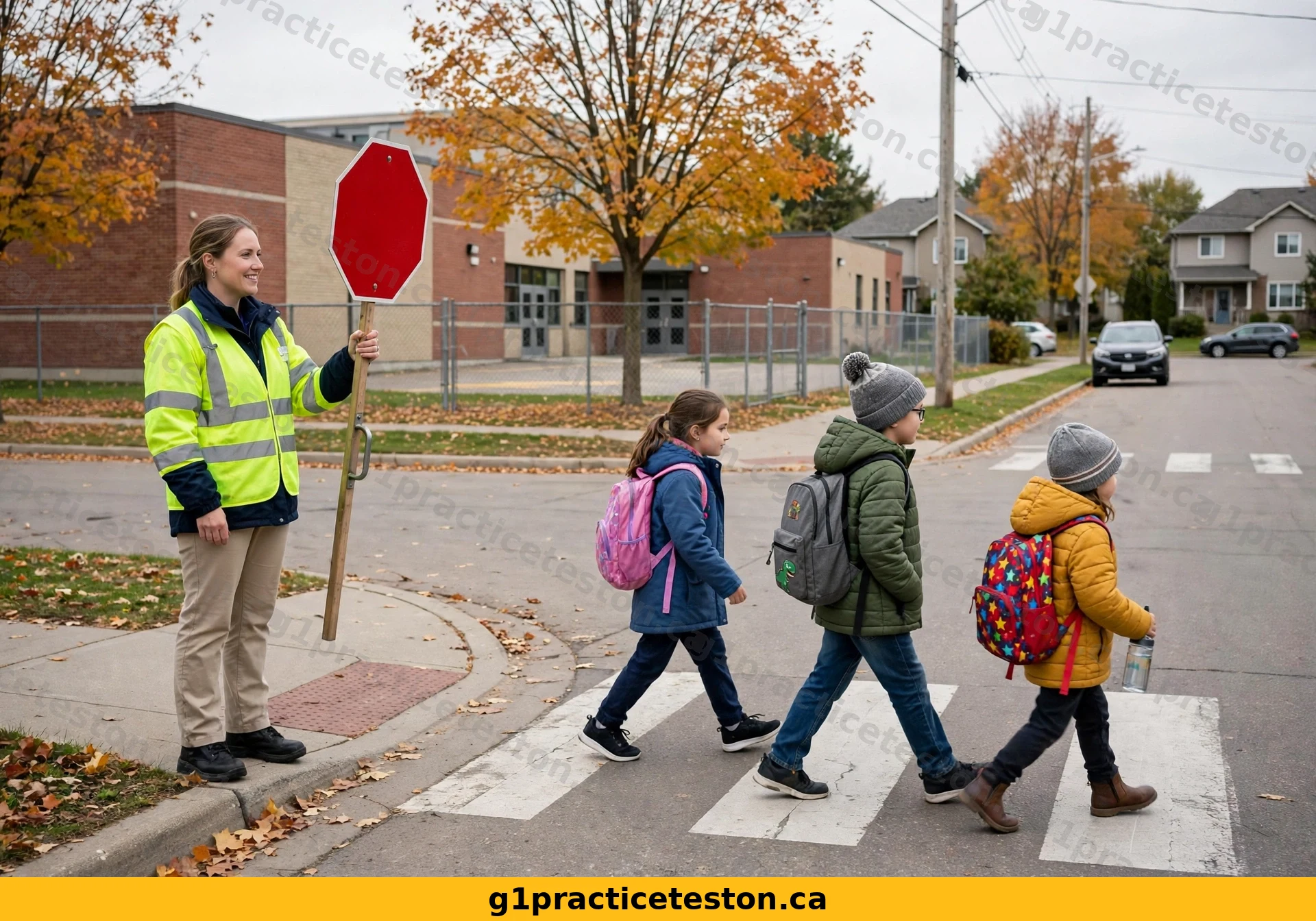
Q16. Rules: A school crossing guard is holding up a stop sign in a school crossing. When may drivers proceed?
g1practiceteston.ca -
Q17. Rules: You are driving in the opposite direction from a stopped school bus with its red lights flashing, on a highway divided by a median. What does Ontario law require?

g1practiceteston.ca -
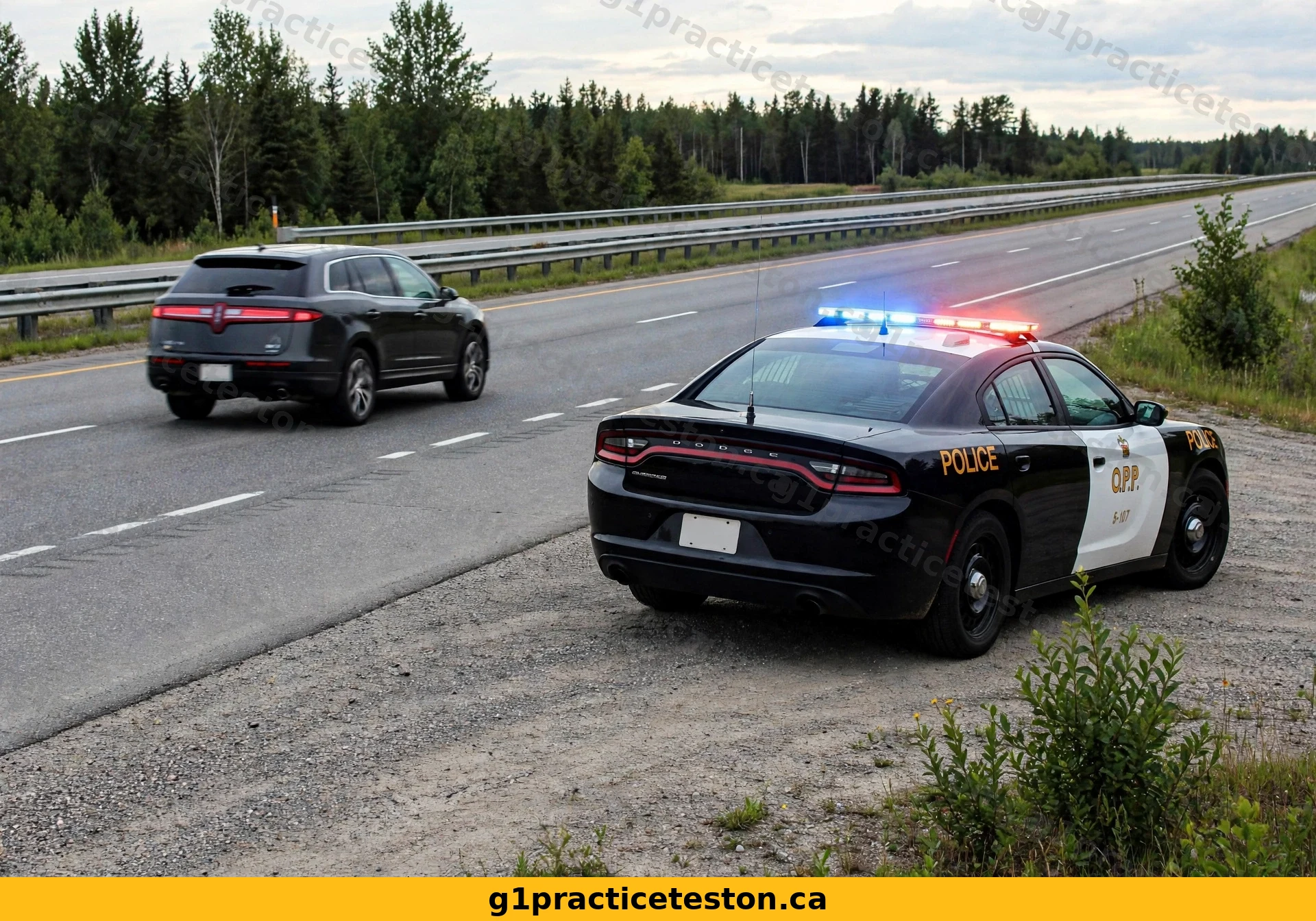
Q18. Rules: You approach an emergency vehicle (or tow truck) stopped at the side of the road with its flashing lights on. Ontario's "Move Over" law requires you to:
g1practiceteston.ca -
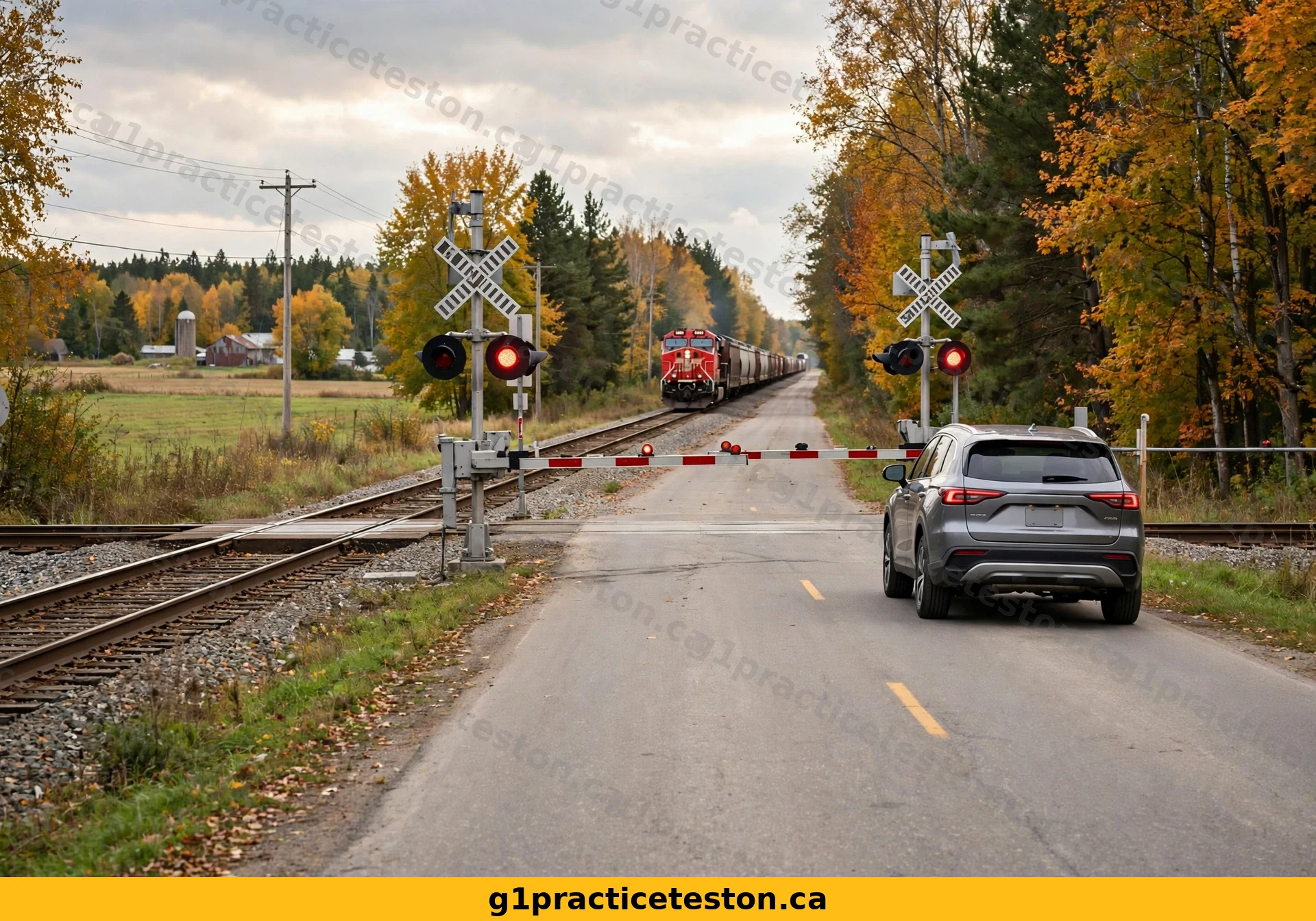
Q19. Rules: A train is approaching a railway crossing and you are required to stop. How close to the nearest rail may you stop?
g1practiceteston.ca -
Q20. Rules: In Ontario, a child may stop using a booster seat and use a regular seatbelt when they reach ANY ONE of these — which set is correct?

g1practiceteston.ca -
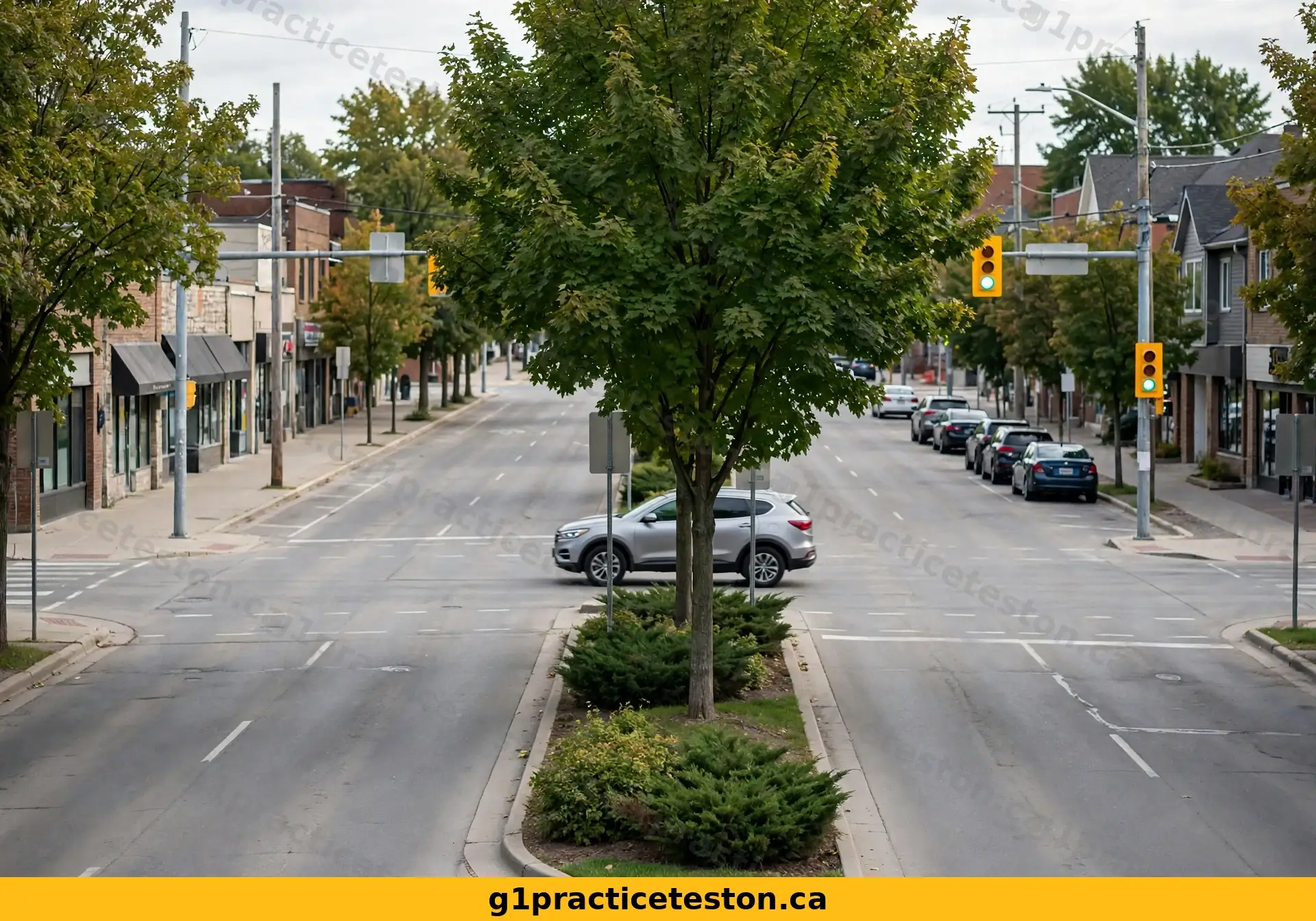
Q21. Signs: A white rectangular sign shows a black U-turn arrow (an arrow curving back on itself) inside a red circle, with a red diagonal line through it. What does this sign mean?
g1practiceteston.ca -
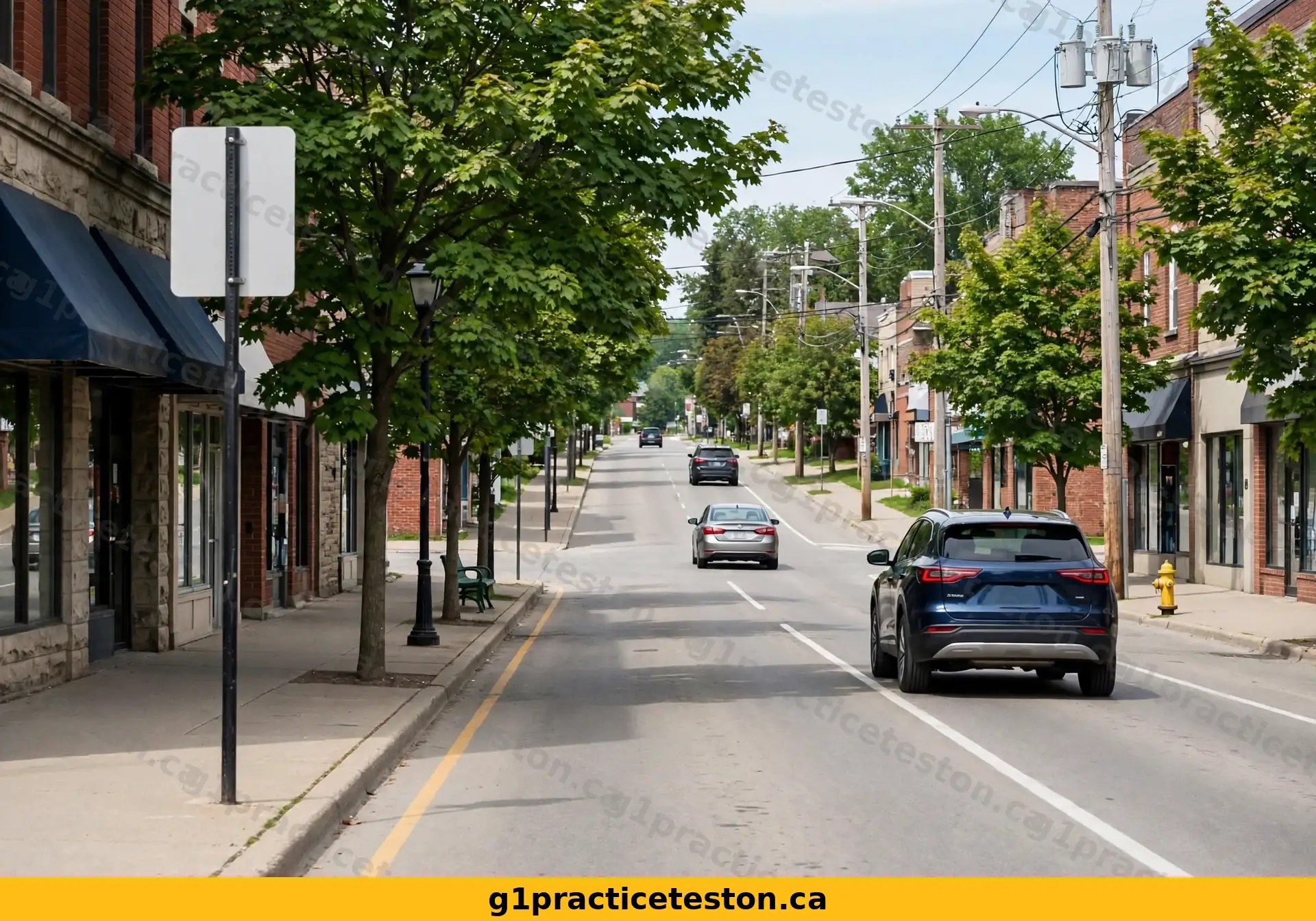
Q22. Signs: A sign shows a bright red circle with a thick white horizontal bar across the middle, and the words "DO NOT ENTER" below it. What does this sign mean?
g1practiceteston.ca -
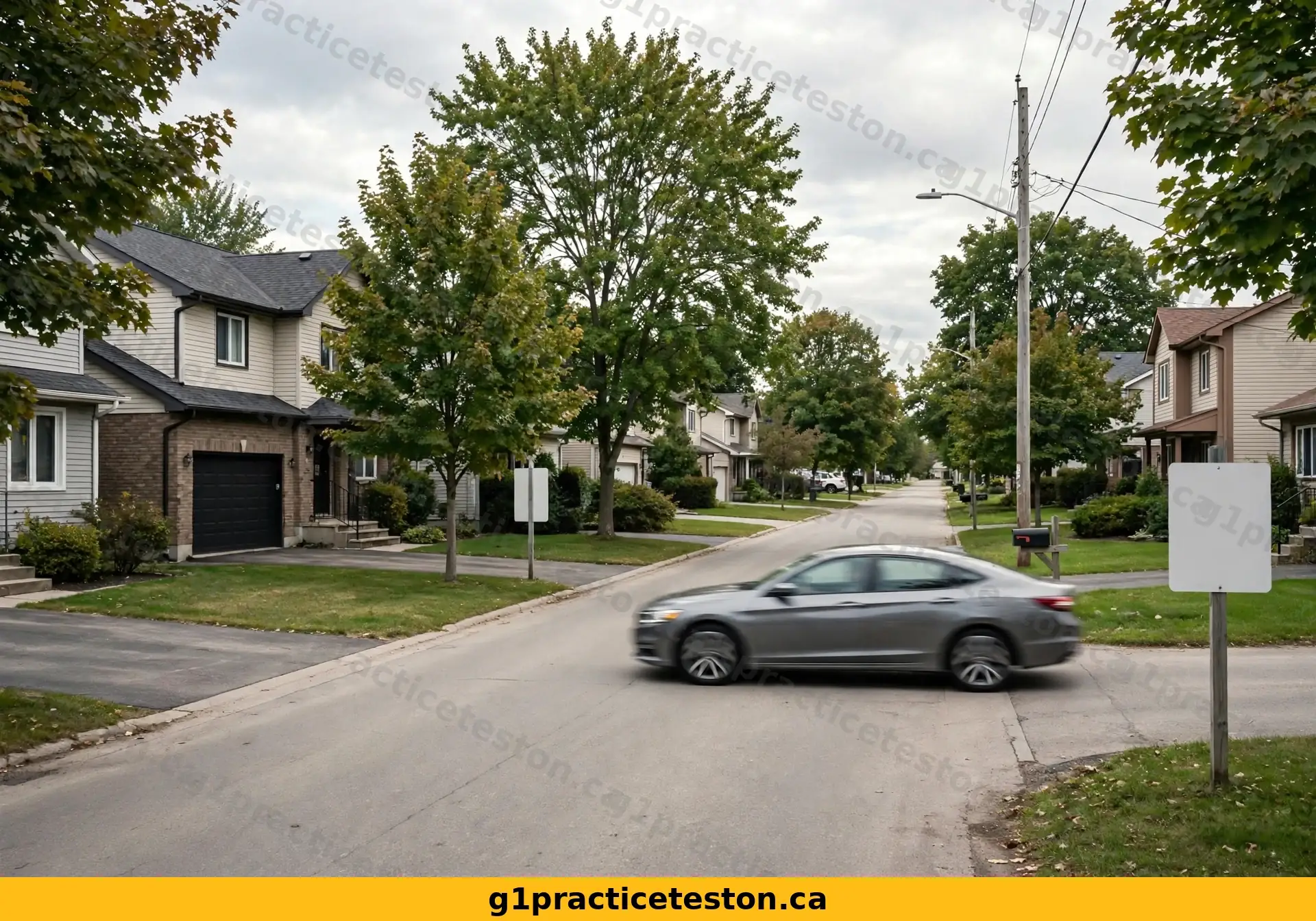
Q23. Signs: A white rectangular sign with a black border reads "MAXIMUM 50". What does this sign tell you?
g1practiceteston.ca -
Q24. Signs: A sign shows a black letter "P" inside a red circle, with a red diagonal line through the P. What does this sign mean?
g1practiceteston.ca -
Q25. Signs: A rectangular sign shows a large black arrow pointing to the right, with the words "ONE WAY" on it. What does this sign mean?
g1practiceteston.ca -
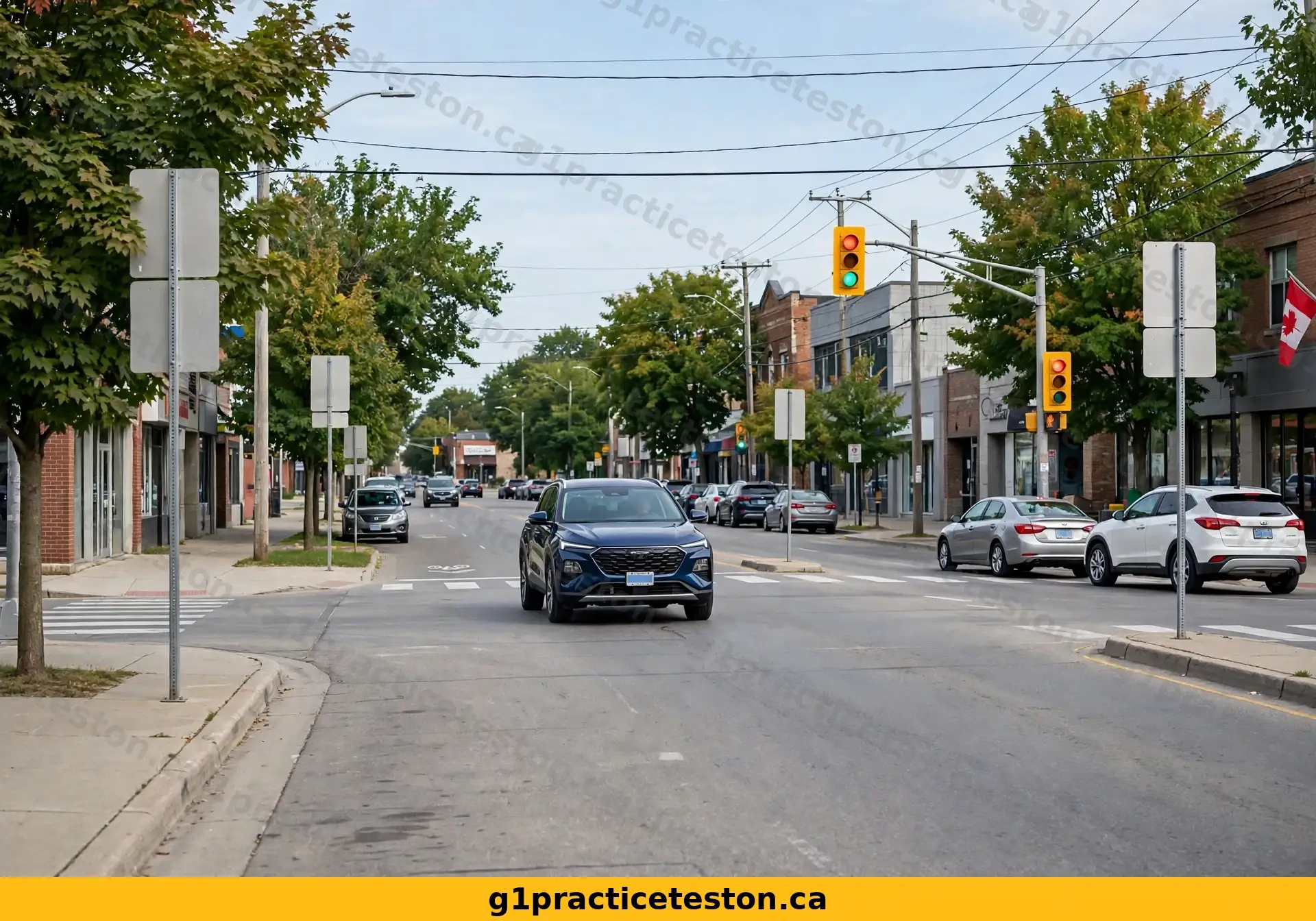
Q26. Signs: A white rectangular sign shows a black arrow turning left, inside a red circle with a red diagonal line through it. What does this sign mean?
g1practiceteston.ca -
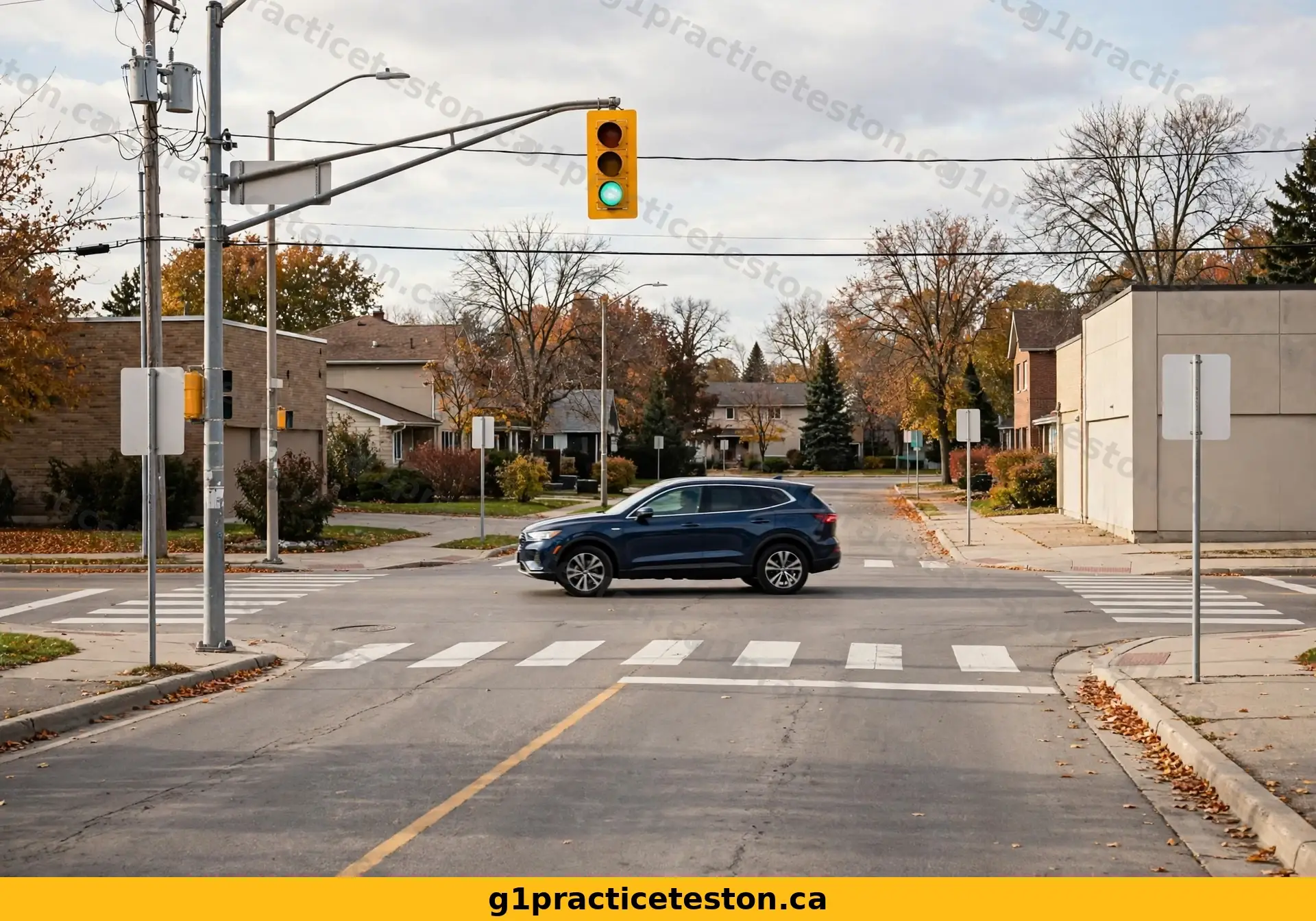
Q27. Signs: In Ontario, a regulatory sign that has a green circle around the symbol shown on it tells you what?
g1practiceteston.ca -
Q28. Signs: A sign shows a black bicycle symbol inside a red circle, with a red diagonal line through it. What does this sign mean?

g1practiceteston.ca -
Q29. Signs: A yellow diamond-shaped sign shows a black arrow that bends forward and then curves sharply back in the opposite direction, like a hairpin. What is this sign warning you about?
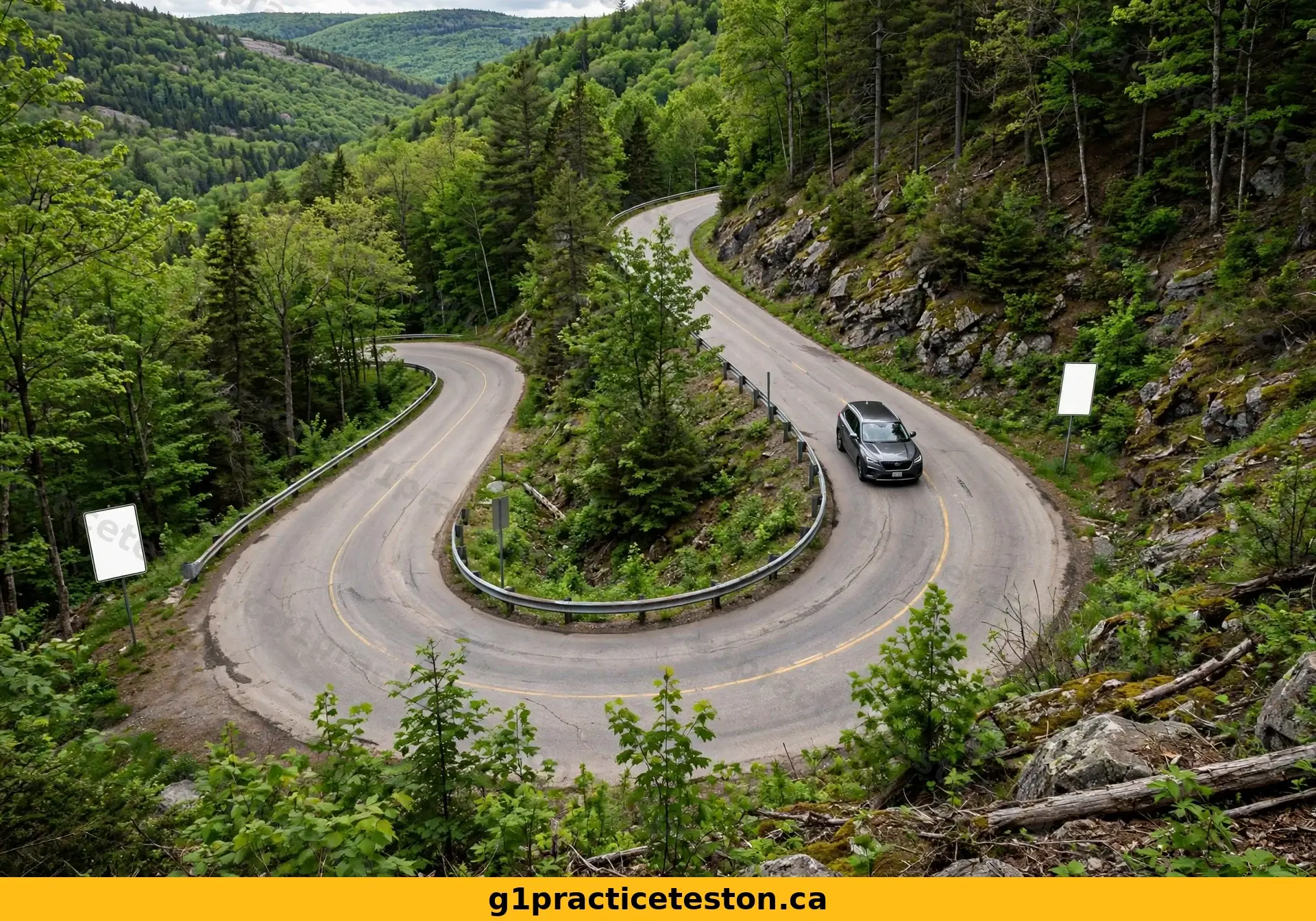
g1practiceteston.ca -
Q30. Signs: A yellow diamond-shaped sign shows a black truck symbol on a steep downward slope, with a percentage number below it. What does this sign warn you about?

g1practiceteston.ca -
Q31. Signs: A yellow diamond-shaped sign shows two vertical lanes, and the right-hand lane narrows and ends against the left lane. What does this sign mean?
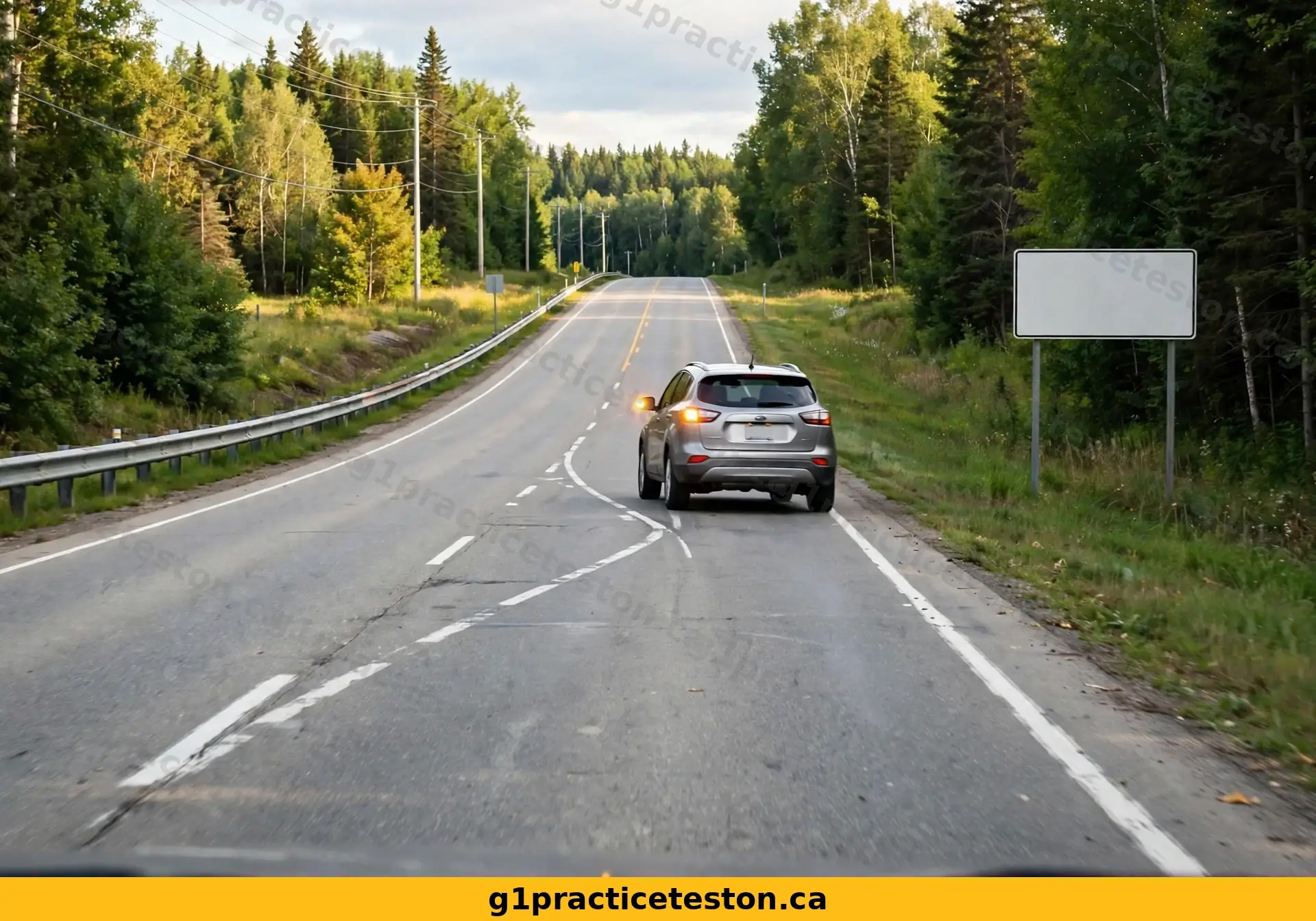
g1practiceteston.ca -
Q32. Signs: A yellow diamond-shaped sign shows two wide horizontal bars moving closer together, with a narrow gap between them in the middle. What is this sign warning you about?

g1practiceteston.ca -
Q33. Signs: A yellow diamond-shaped sign shows a black silhouette of a deer leaping. What does this sign mean?

g1practiceteston.ca -
Q34. Signs: A yellow diamond-shaped sign shows a black traffic light symbol with red, yellow and green circles. What does this sign warn you about?
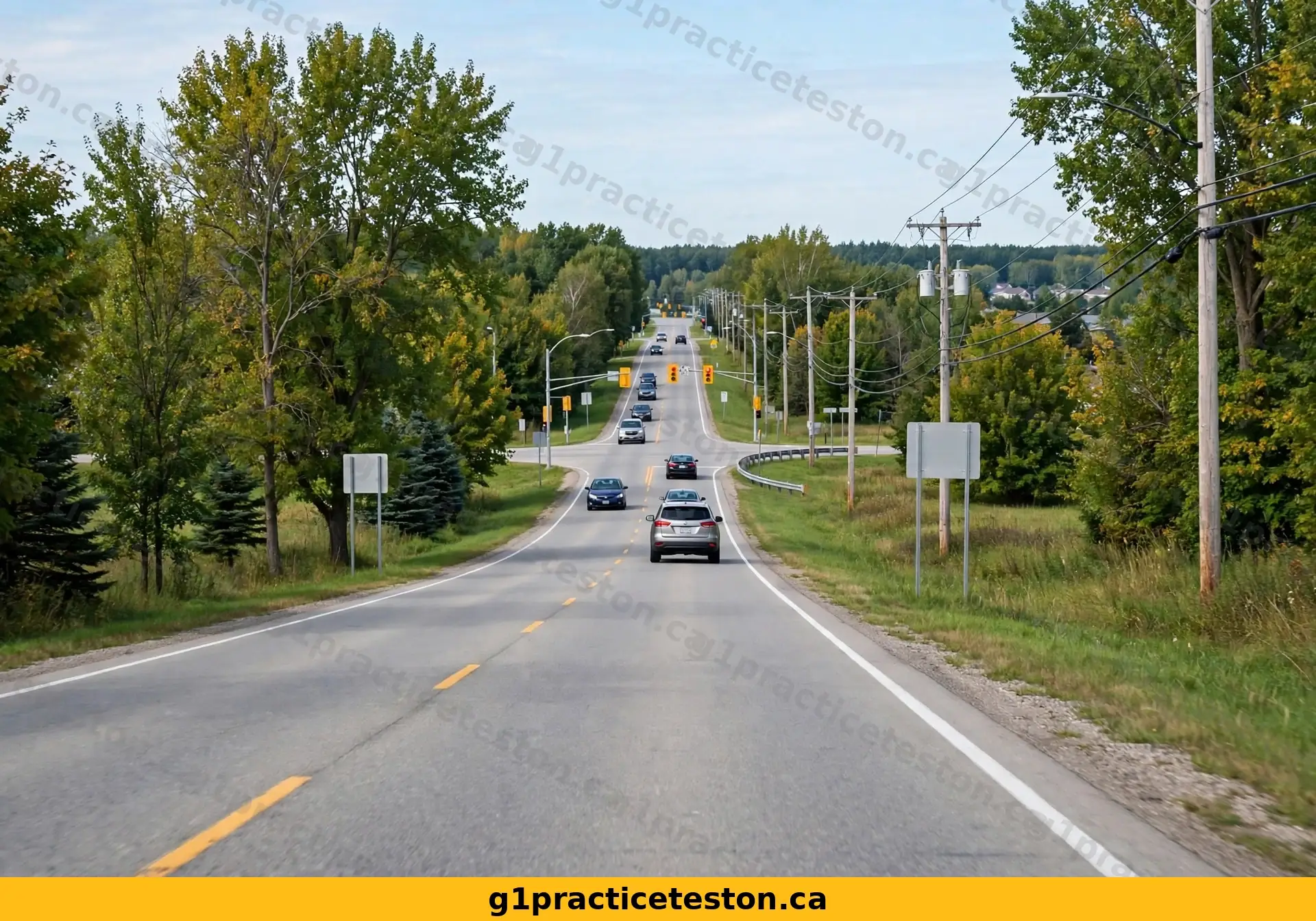
g1practiceteston.ca -
Q35. Signs: A yellow diamond-shaped sign shows two parallel lanes at the top that join together into one lane at the bottom. What does this sign mean?
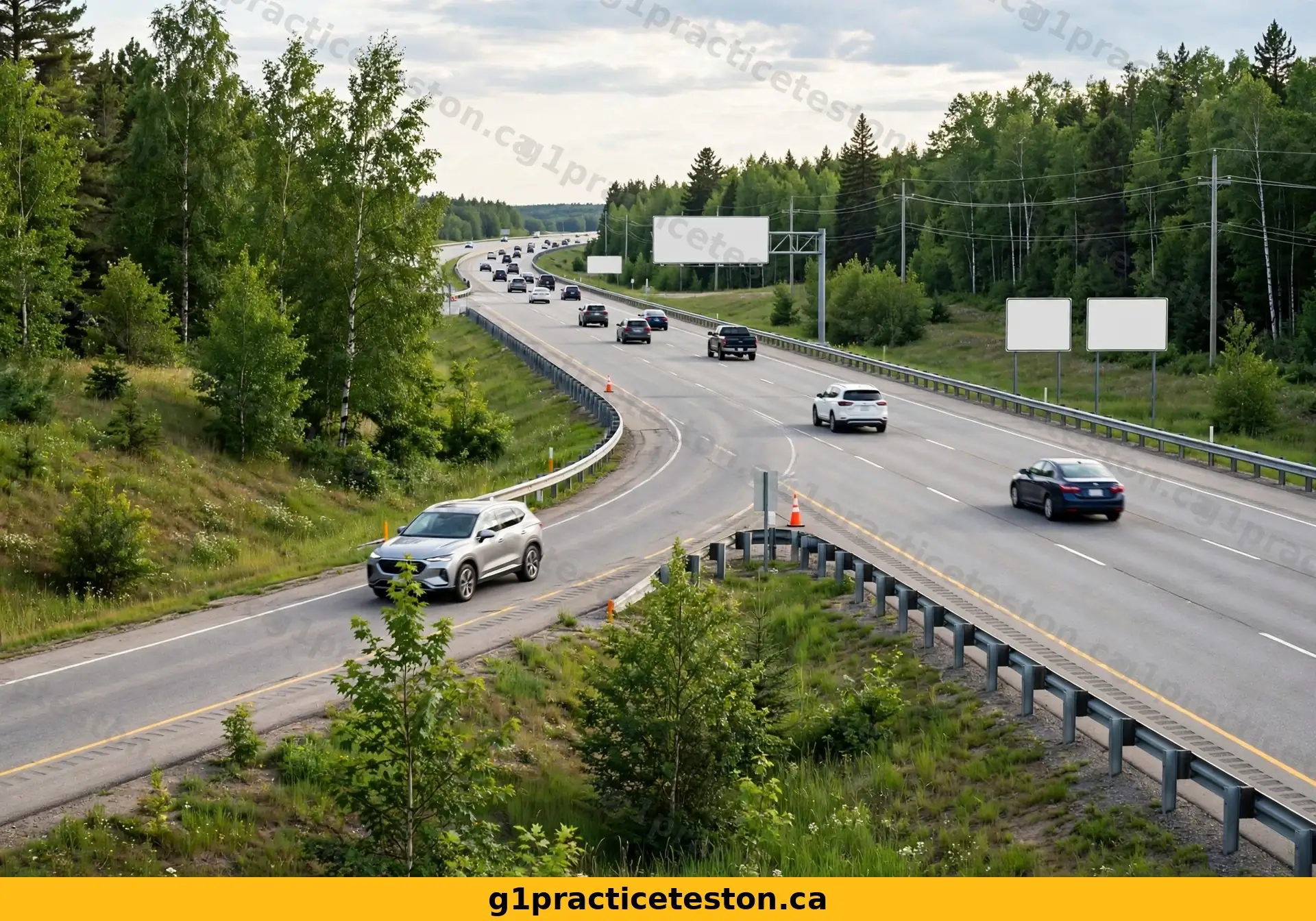
g1practiceteston.ca -
Q36. Signs: A yellow diamond-shaped sign shows a black car with a hump (bump) shape under its wheels, like the road surface rising in a wave. What does this sign warn you about?

g1practiceteston.ca -
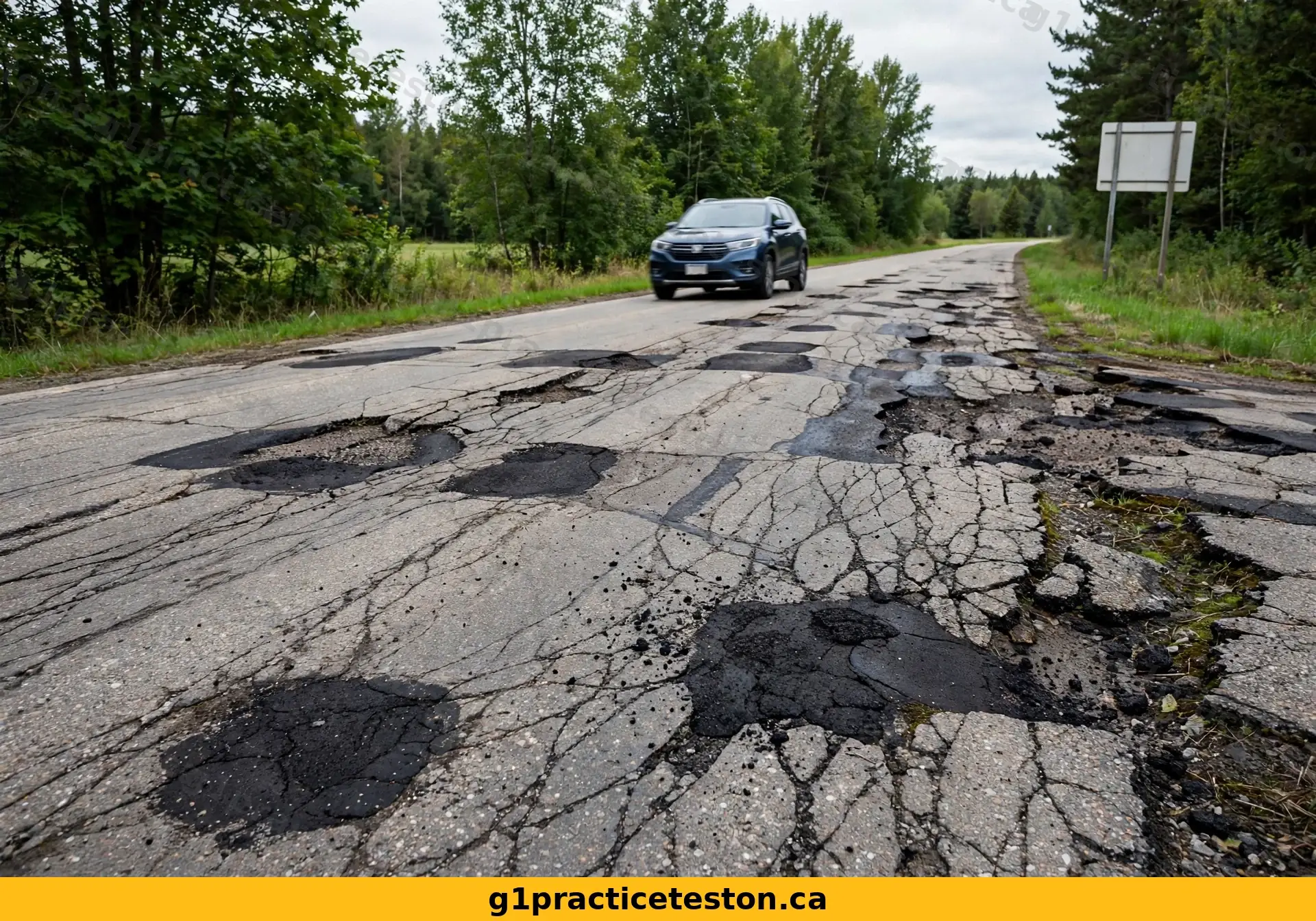
Q37. Signs: A yellow diamond-shaped sign shows a road drawn smooth at the top and rough, broken-up at the bottom. What does this sign mean?
g1practiceteston.ca -
Q38. Signs: A yellow diamond-shaped sign shows a black railway track symbol crossing the road (two parallel lines crossed by an X-shaped crossbuck symbol). What is this sign warning you about?

g1practiceteston.ca -
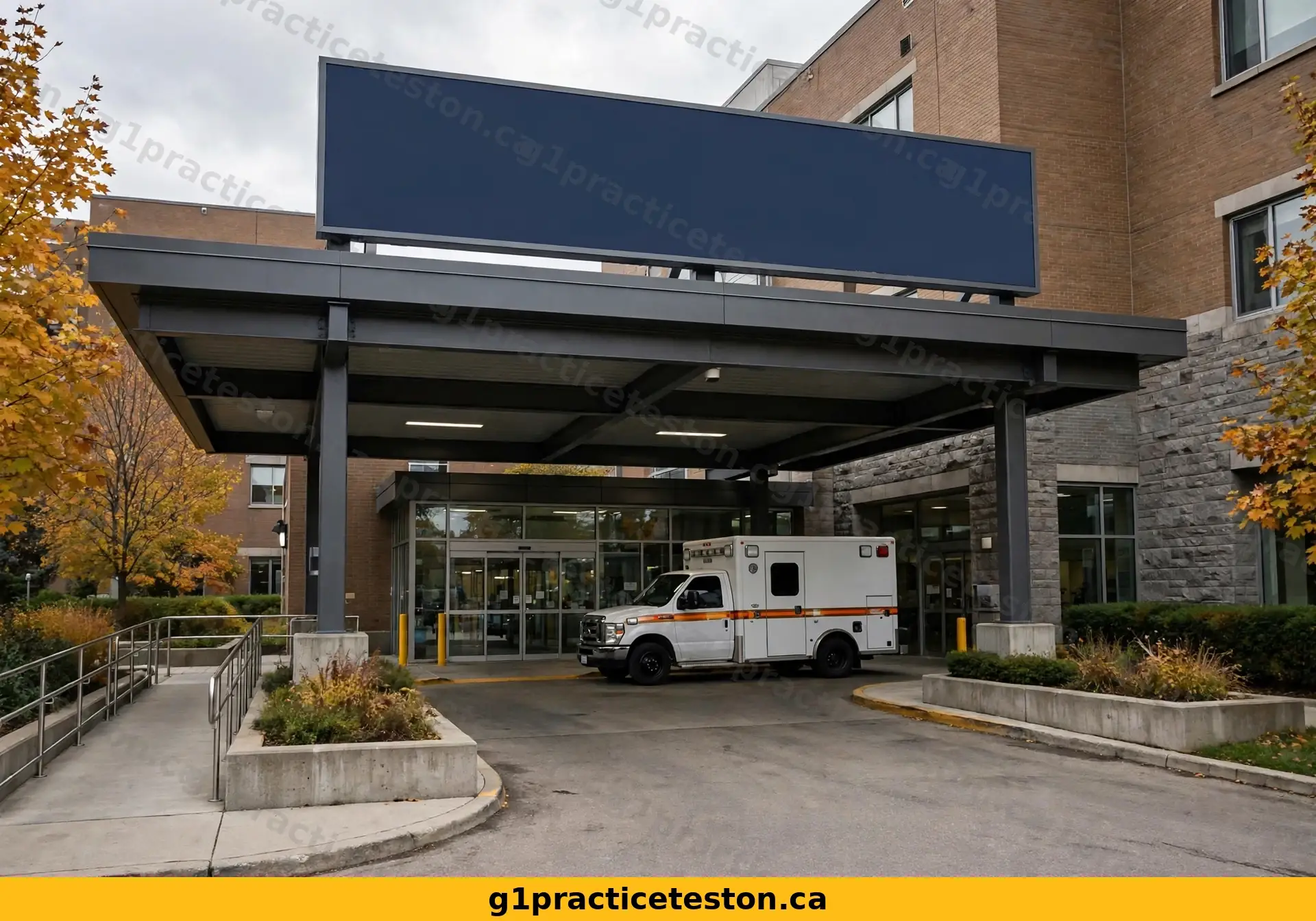
Q39. Signs: A blue square sign shows a large white letter "H". What does this sign tell you?
g1practiceteston.ca -
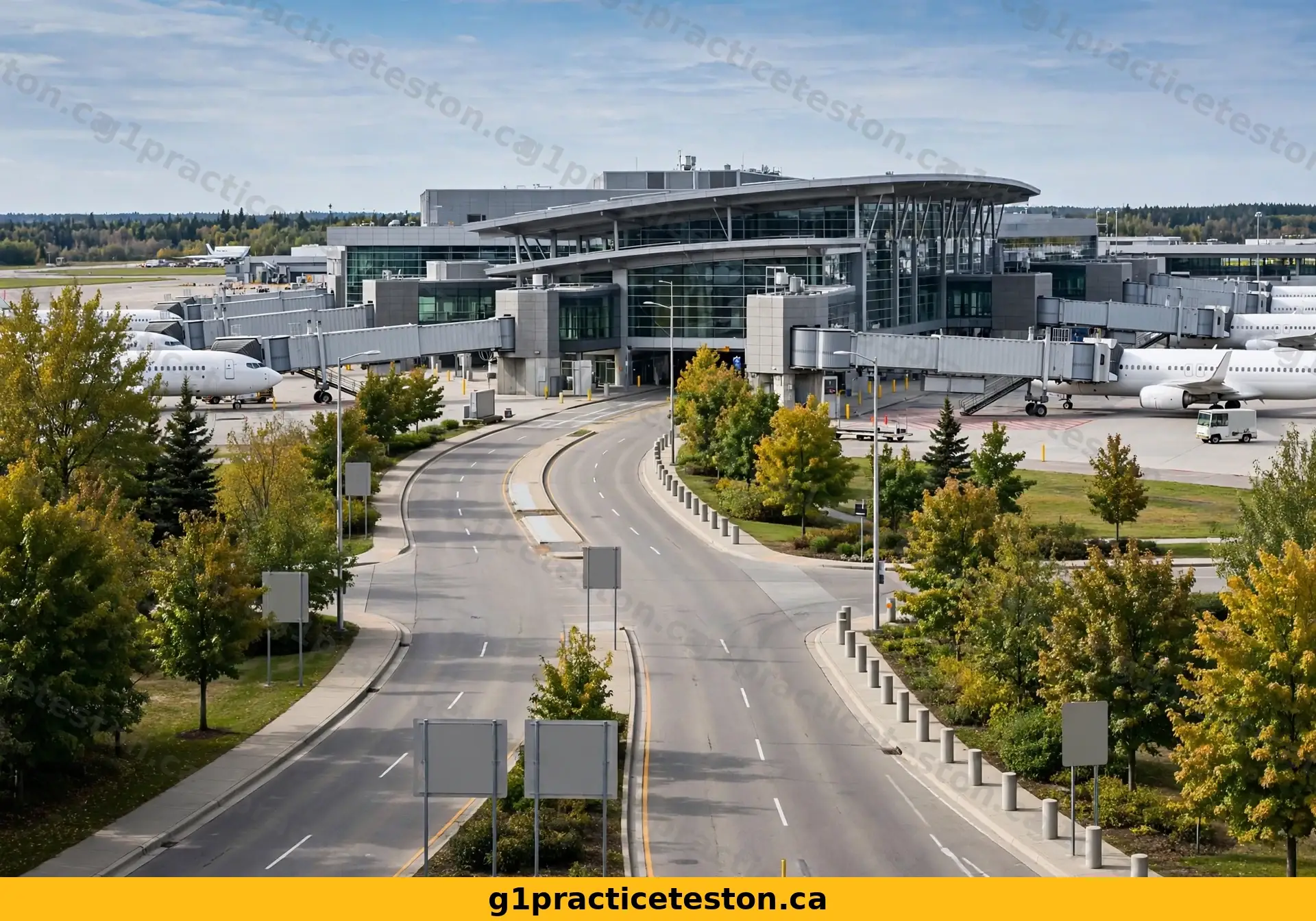
Q40. Signs: A guide sign shows a white airplane symbol on it. What does this sign direct you to?
g1practiceteston.ca
Your score
Review — which answers were right and which were wrong
Tap any question below to jump to it and see the correct answer and explanation.
G1 Test Day — Frequently Asked Questions
How is the real G1 knowledge test formatted?
The real test has 40 multiple-choice questions in two sections: 20 on road signs and 20 on the rules of the road. You need at least 80% — 16 out of 20 — in each section; the sections are scored separately and both must be passed. This simulator follows the same format and the same pass rule.
Is the real G1 test timed?
No — the real knowledge test has no time limit, and most people finish in about 20 to 30 minutes. Your test is marked as soon as you finish, so you know your result before you leave the centre. Use the time you need and read each question fully; rushing causes more mistakes than anything else.
Where do I take the real test, and do I need an appointment?
You take it at a DriveTest Centre. The computerized knowledge test is offered on a first-come, first-served basis, so no appointment is needed — DriveTest recommends arriving at least one hour before the office closes so you have time to apply and finish. In downtown Toronto, the ServiceOntario Bay and College location also offers knowledge tests, by appointment only.
What do I need to bring on test day, and what does it cost?
Bring two pieces of identification — originals, not photocopies — plus your glasses or contact lenses if you need them for driving, because you will also take a vision test. The Class G1 licence package costs $159.75 and covers the knowledge test, your first Class G2 road test and a five-year licence. The full checklist is in our G1 driving test requirements guide.
What happens if I fail one section of the real test?
You keep the section you passed — results stay valid for one year, and a rewrite within that year only covers the section that did not pass. Each extra knowledge test attempt costs $16.00. When you do pass both sections, you are issued your G1 licence and can start practising with a qualified accompanying driver.