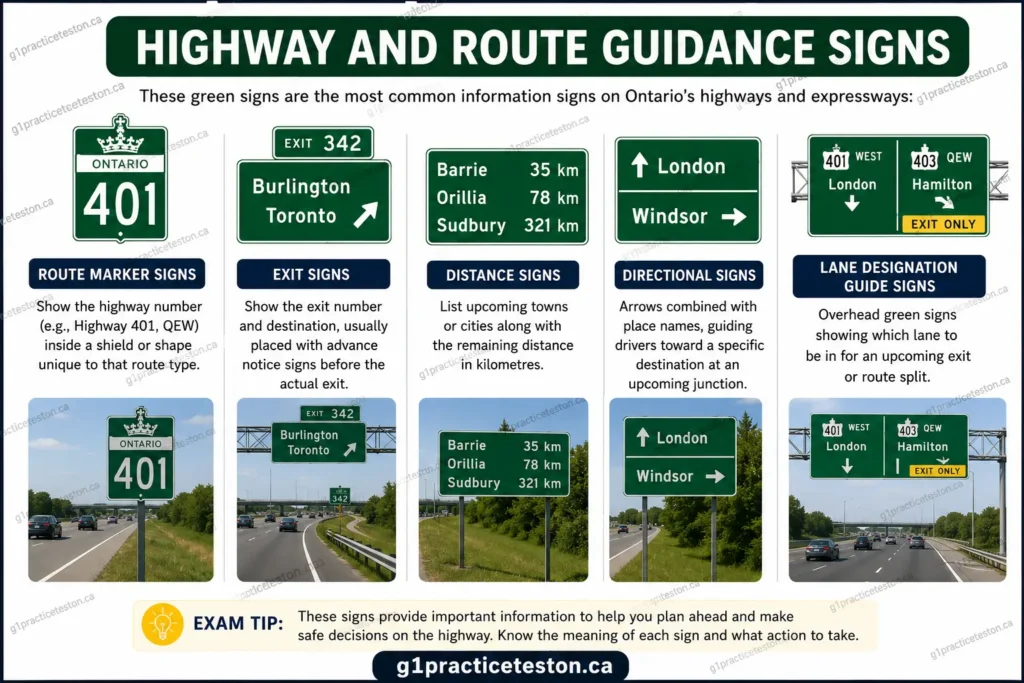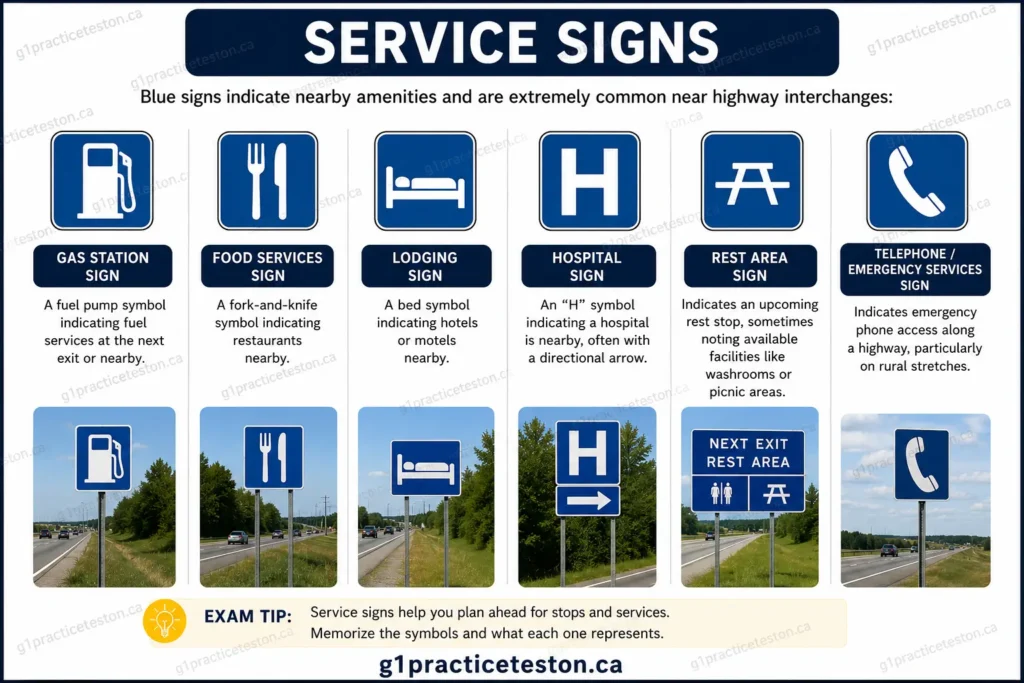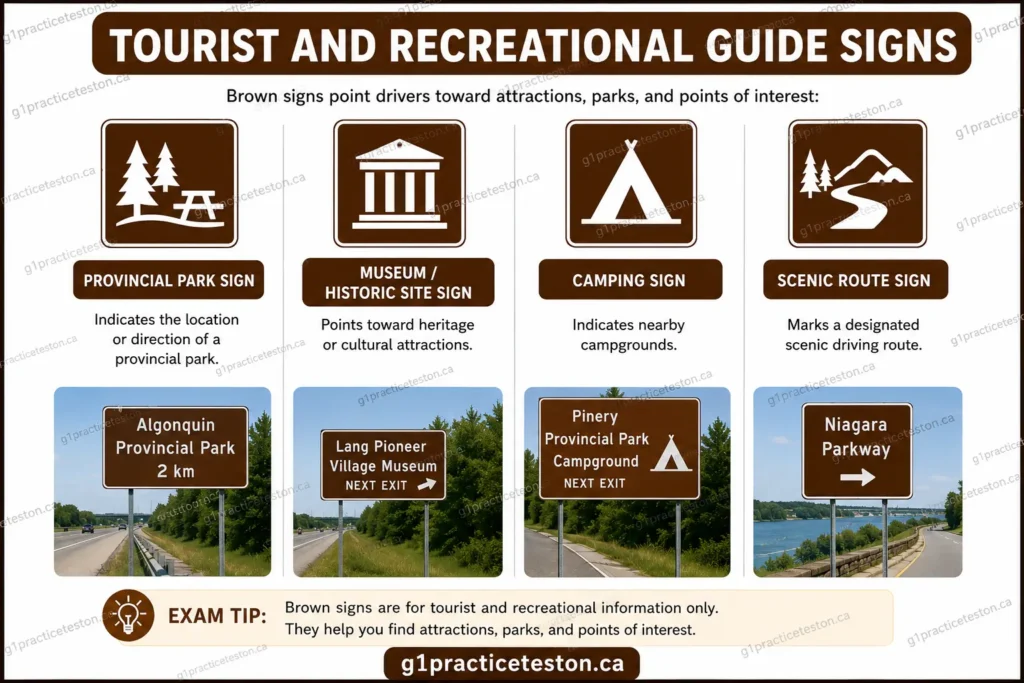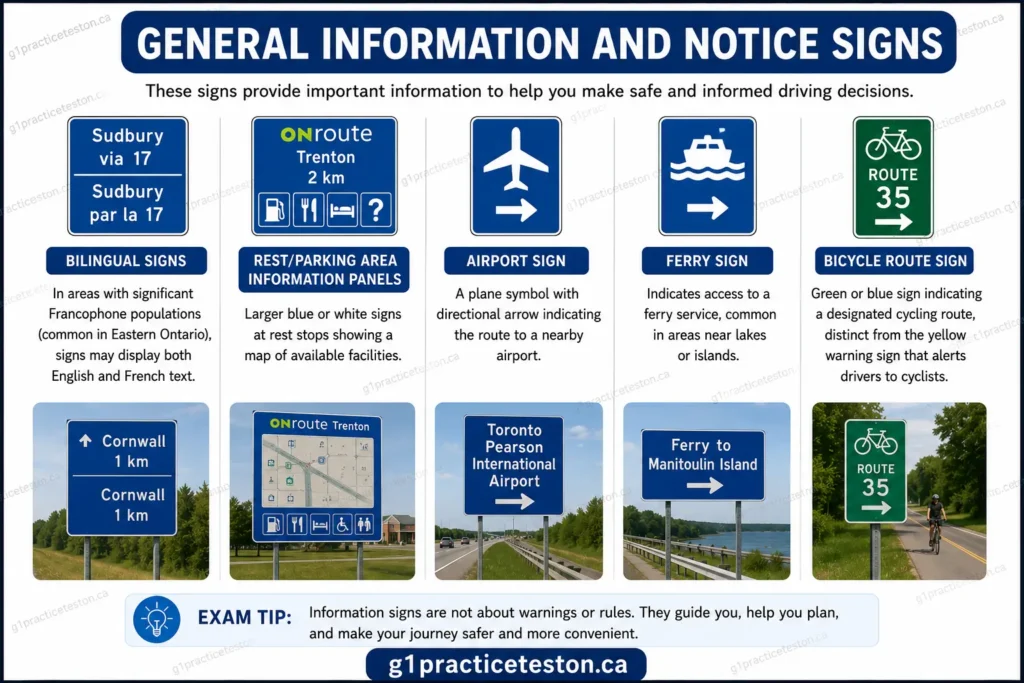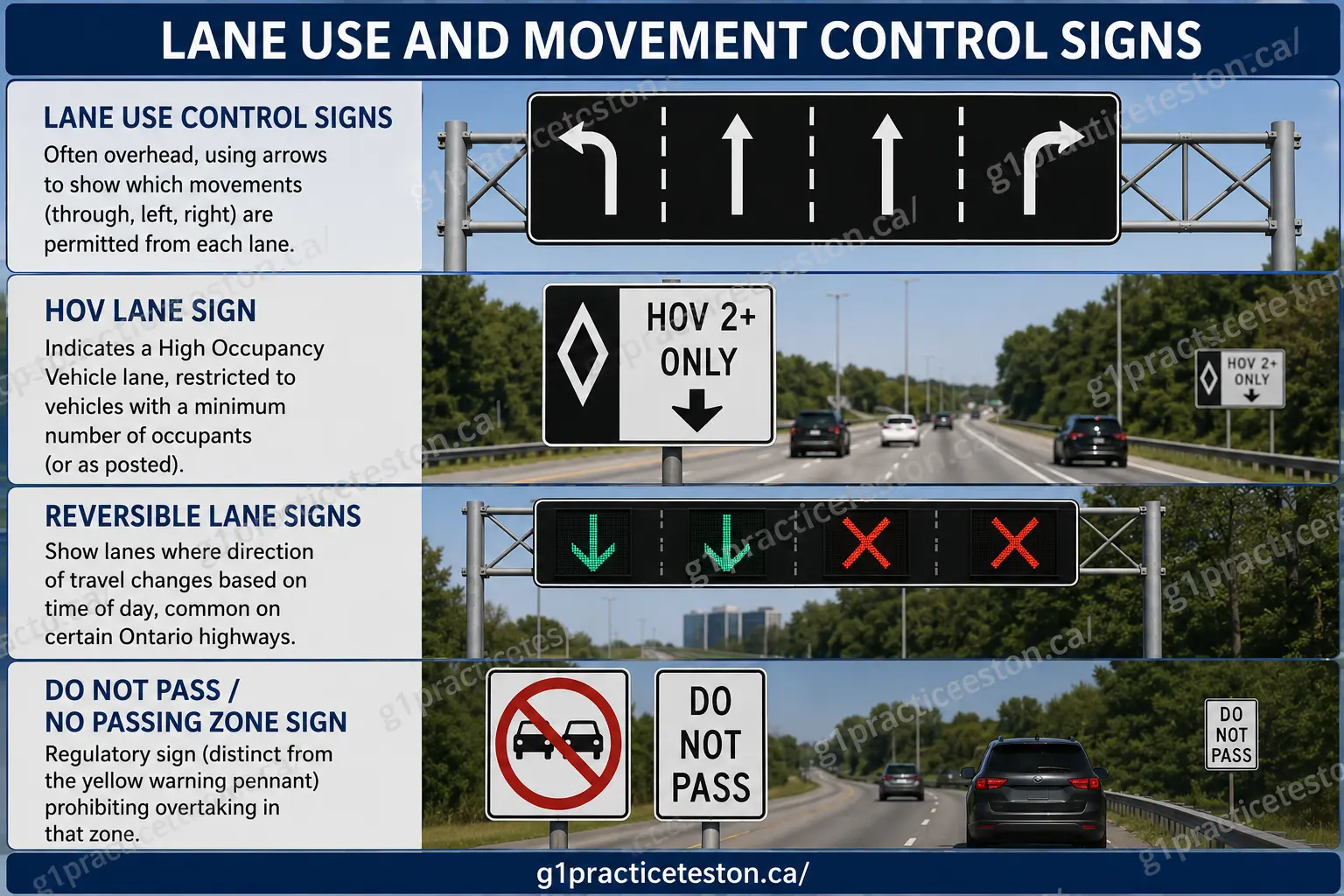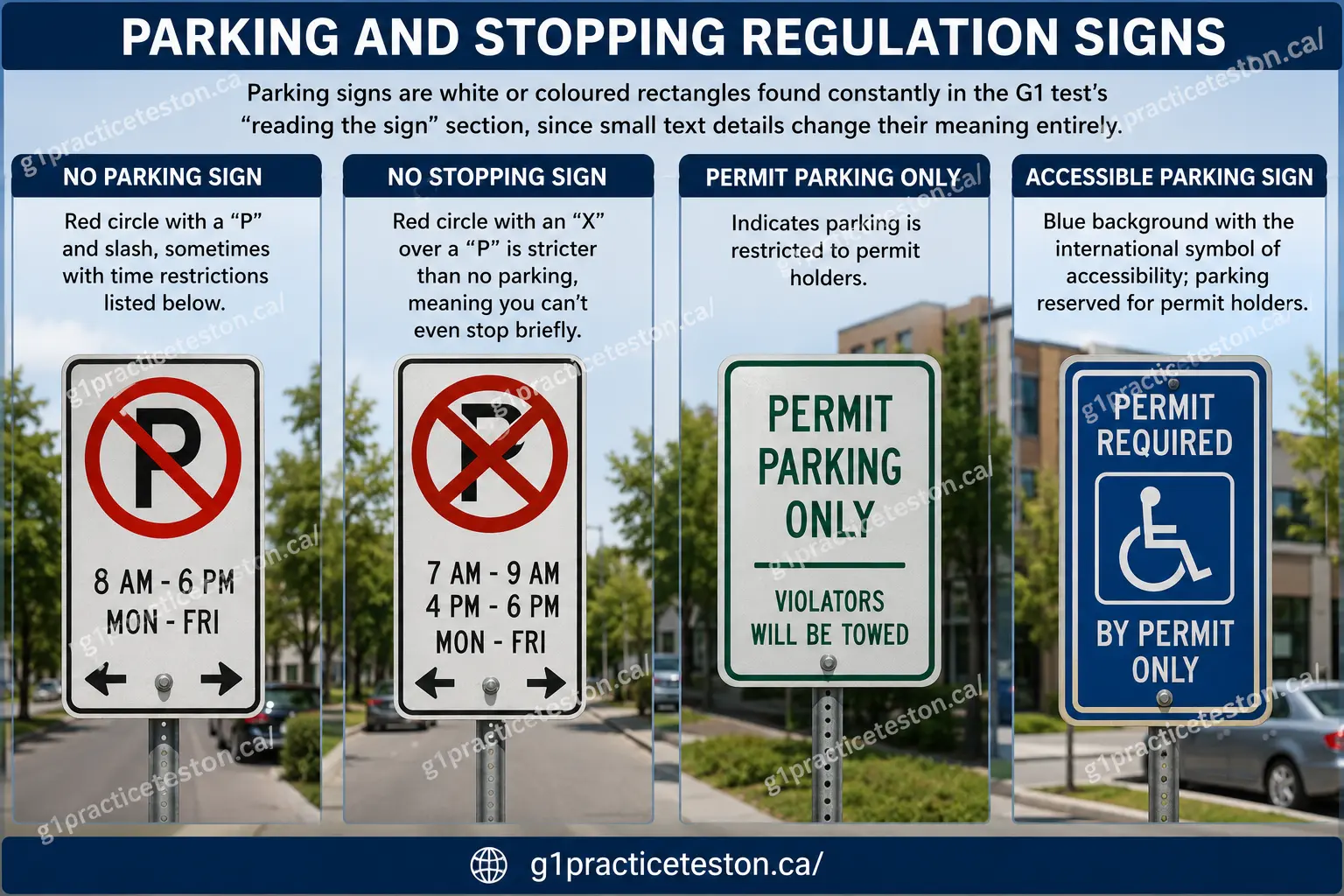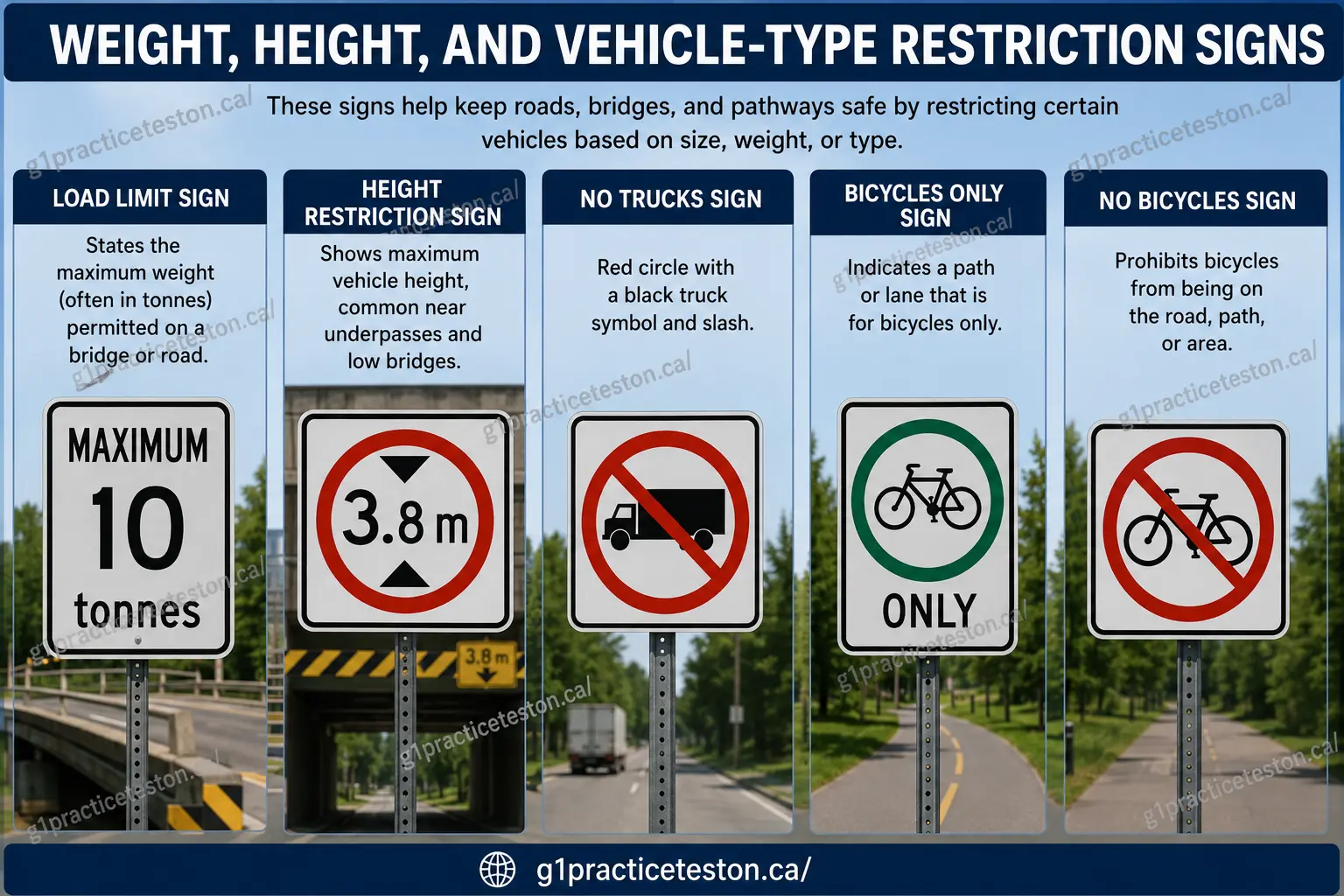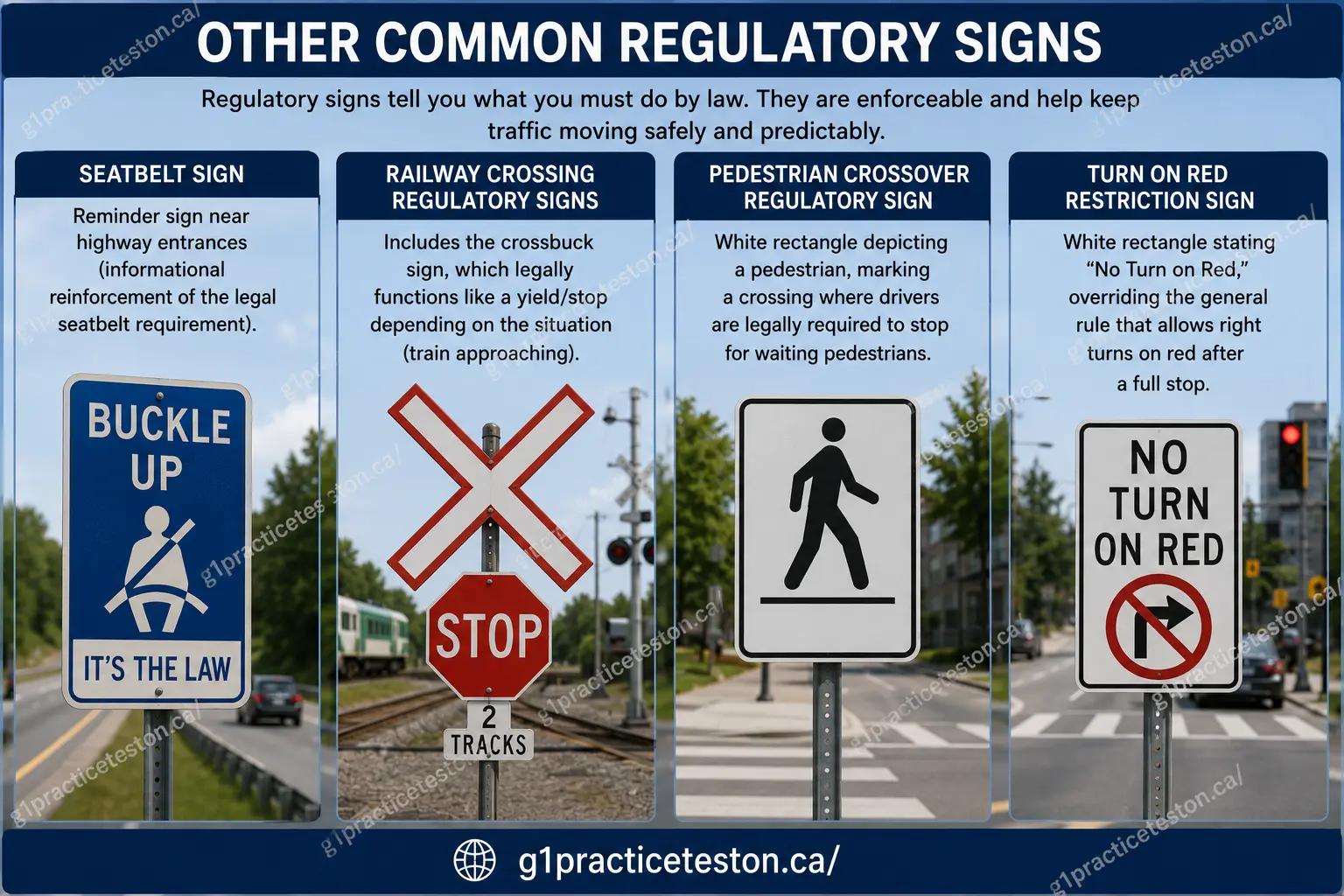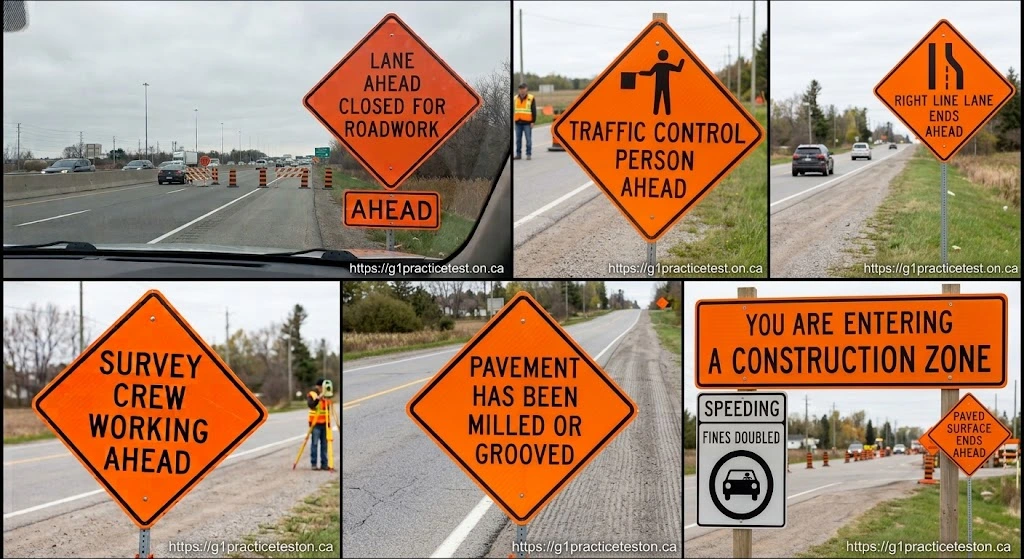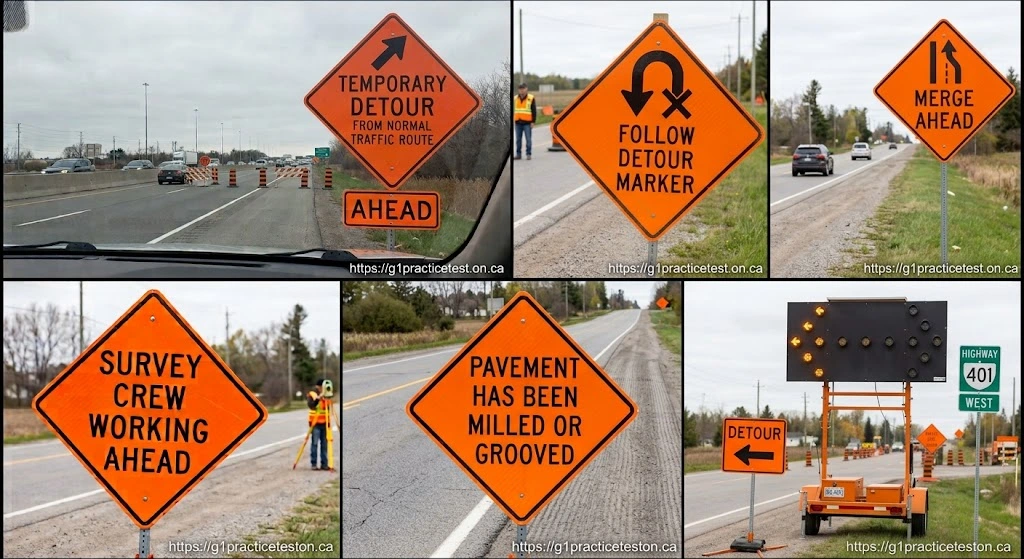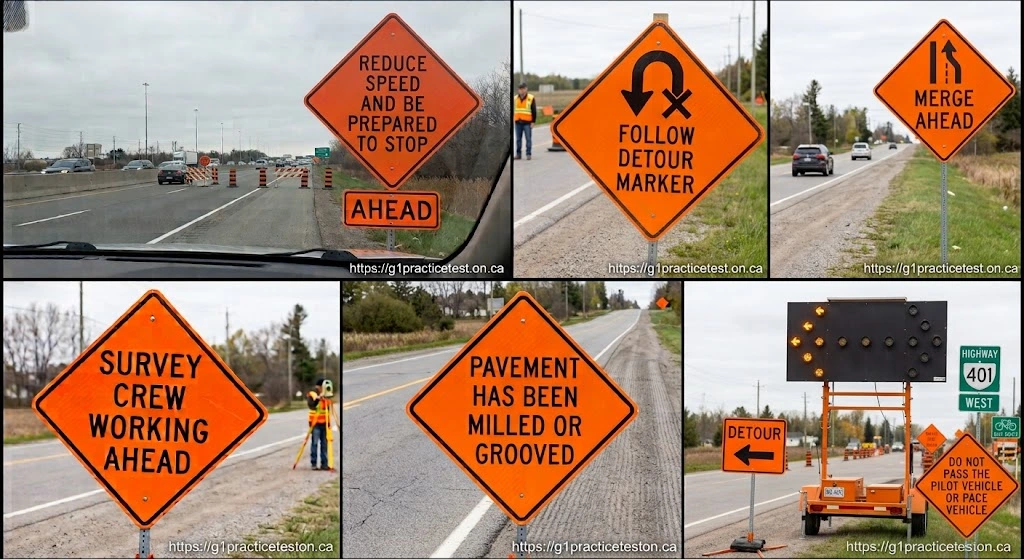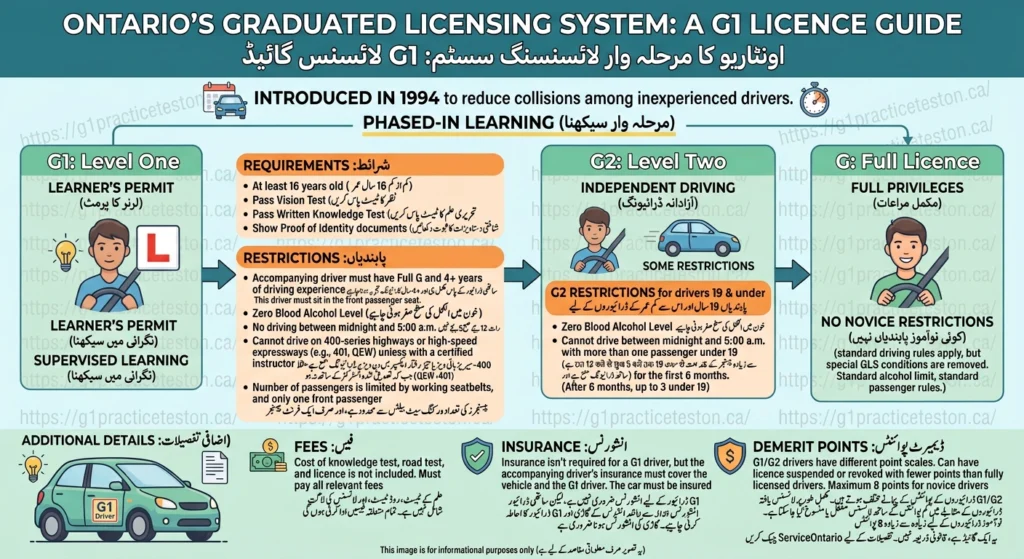
If you’ve been searching for a specifically focused G1 practice test road signs, you’re already ahead of most first-time test-takers. Road signs are one of the three core knowledge areas on Ontario’s G1 exam, alongside rules of the road and general driving knowledge.
And they’re also the section where memorization actually pays off the most, because the signs themselves don’t change from test to test. What changes is whether you’ve actually trained yourself to recognize them quickly.
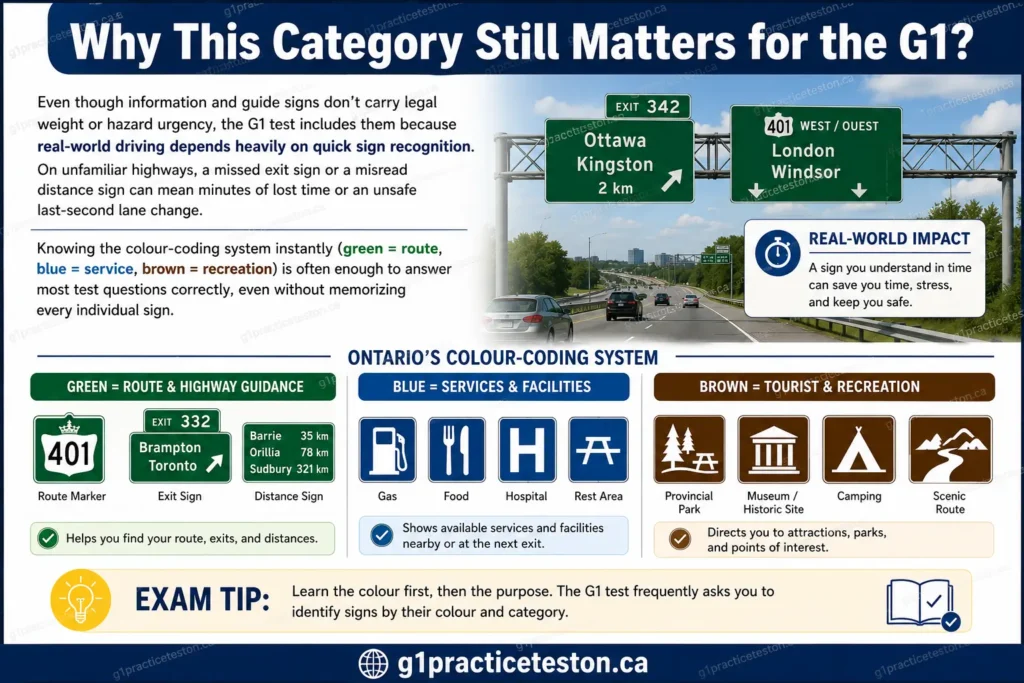
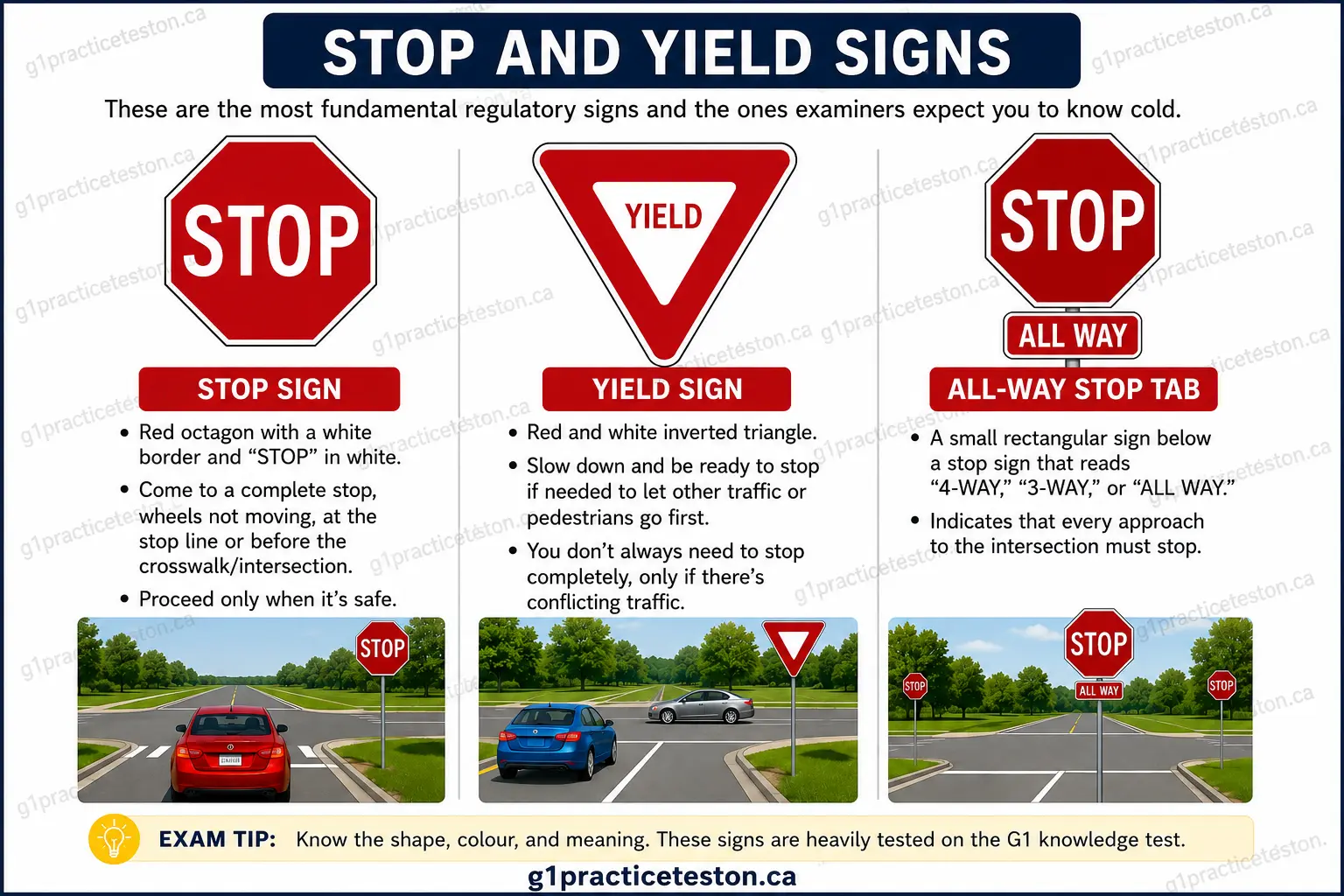
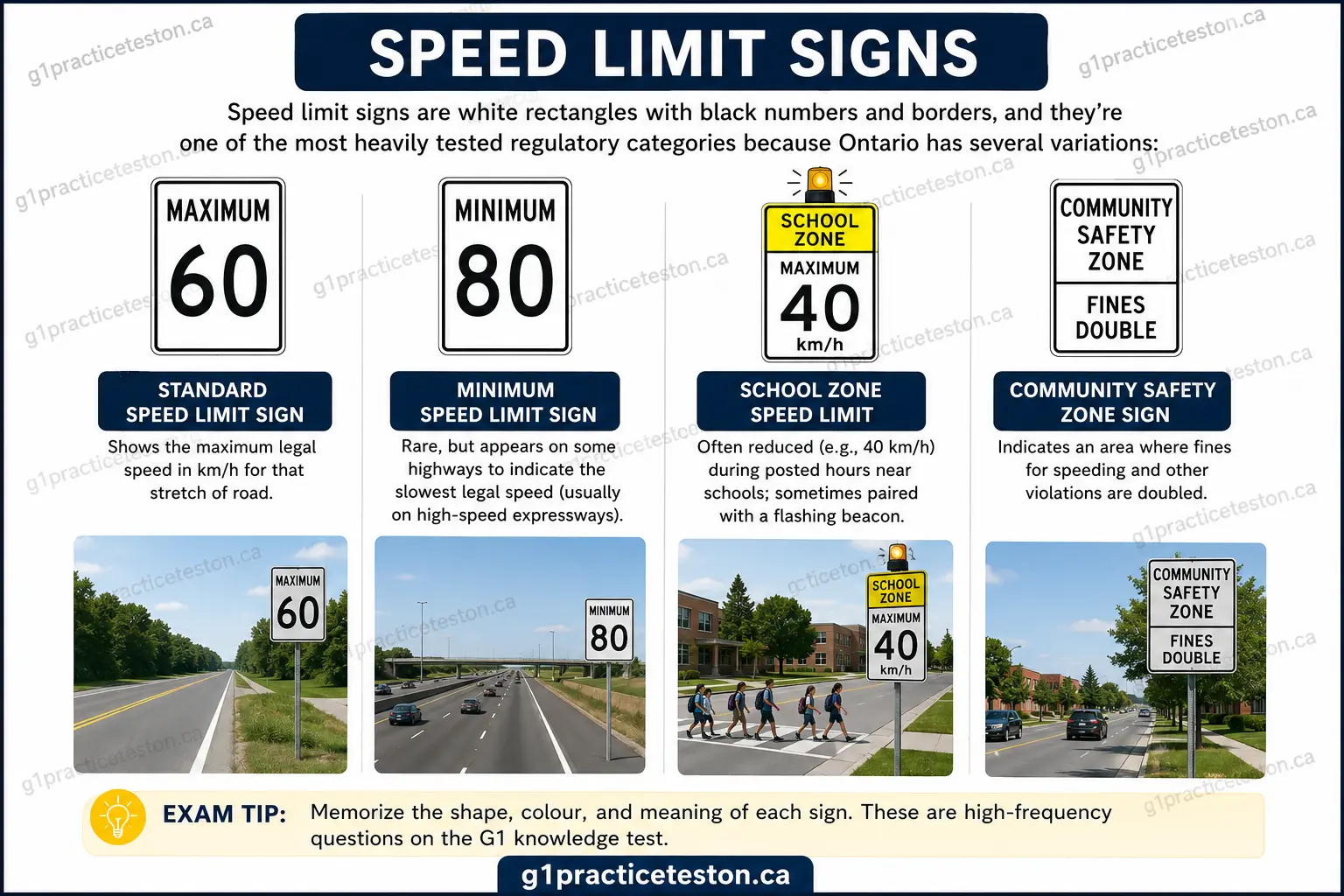
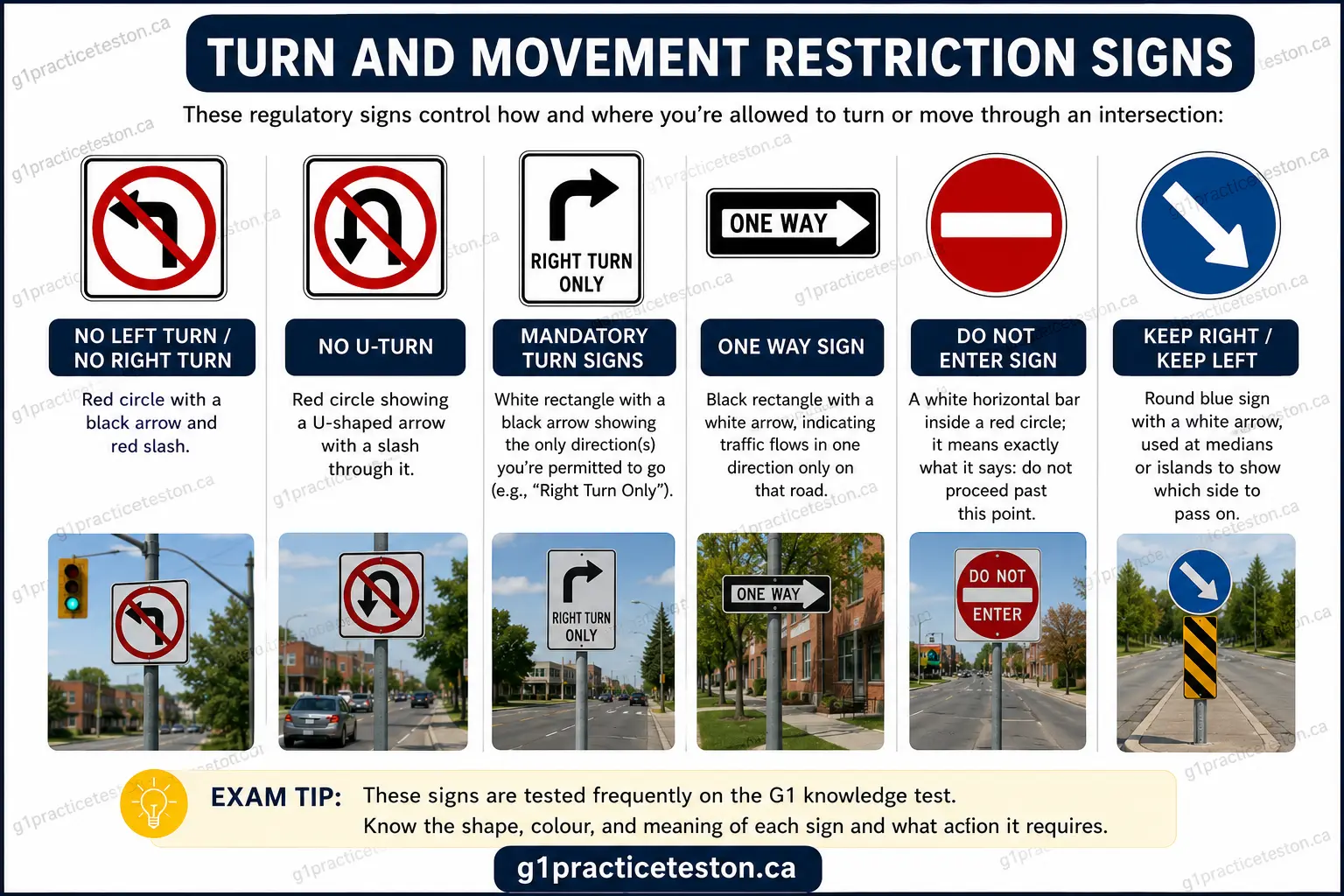
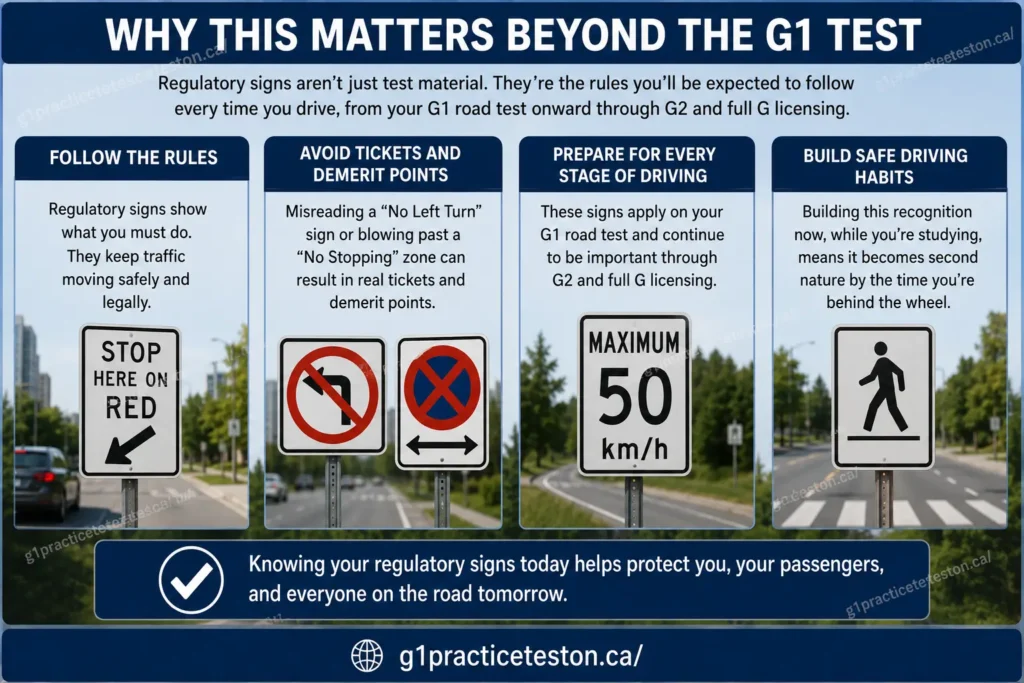
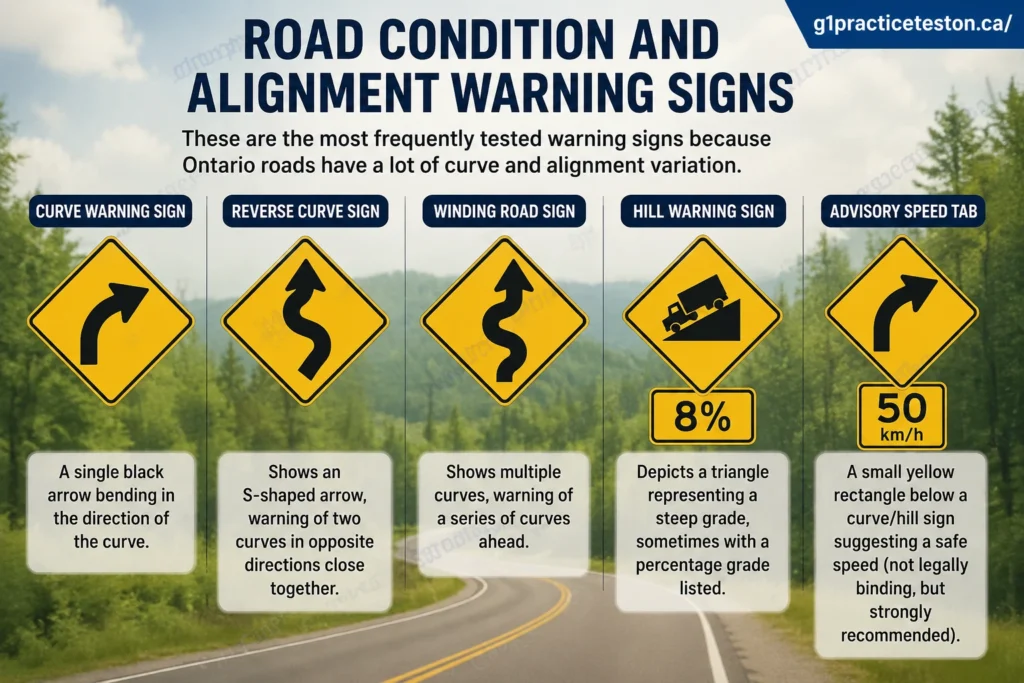
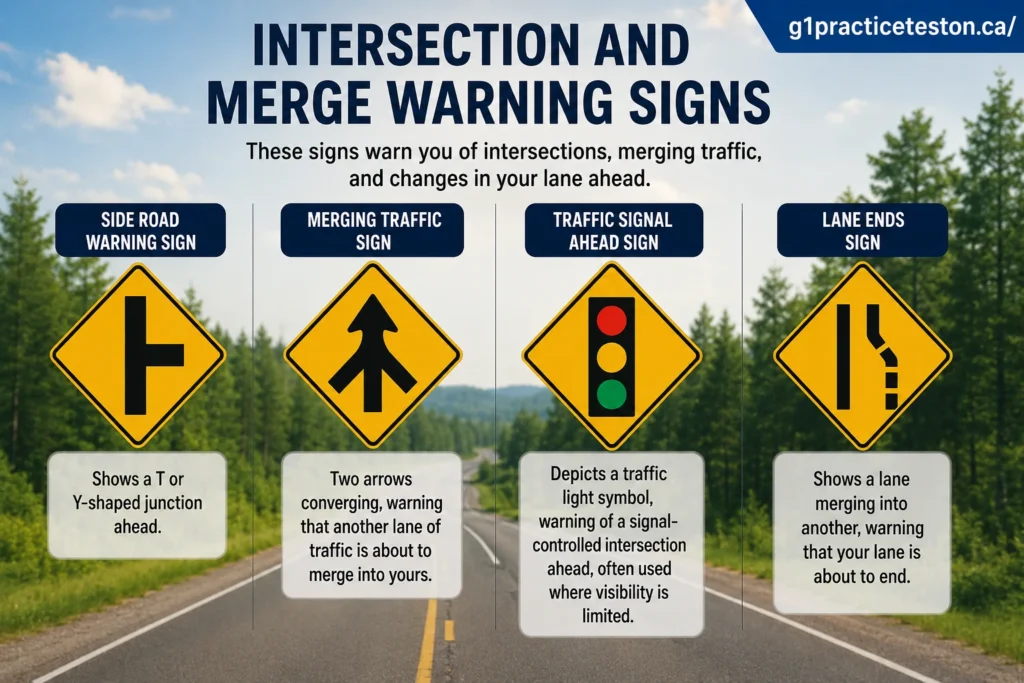
This edition pulls together everything from our full sign-category guides — regulatory signs, warning signs, and information and guide signs — into one combined practice experience, based directly on the official MTO Driver’s Handbook and real recurring question patterns from the Ontario G1 knowledge test.
How Road Signs Are Tested on the G1 Exam
The G1 knowledge test is a computer-based, multiple-choice exam administered at DriveTest centres across Ontario. It covers rules of the road and road signs in two separate sections, and you’re required to pass both to receive your G1 licence. Road sign questions typically show an image of a sign and ask you to identify its meaning, or describe a sign and ask you to identify the correct category (regulatory, warning, or information).
Because sign questions are visual and pattern-based, the most common reason people lose marks isn’t lack of studying. It’s studying signs individually instead of by category, shape, and colour, which is exactly how the guides in this cluster are structured.

Sample Practice Questions (Mixed Categories)
Here’s a short mixed sample pulling from all three sign categories, including one of the more commonly searched sign-recognition questions test takers run into:
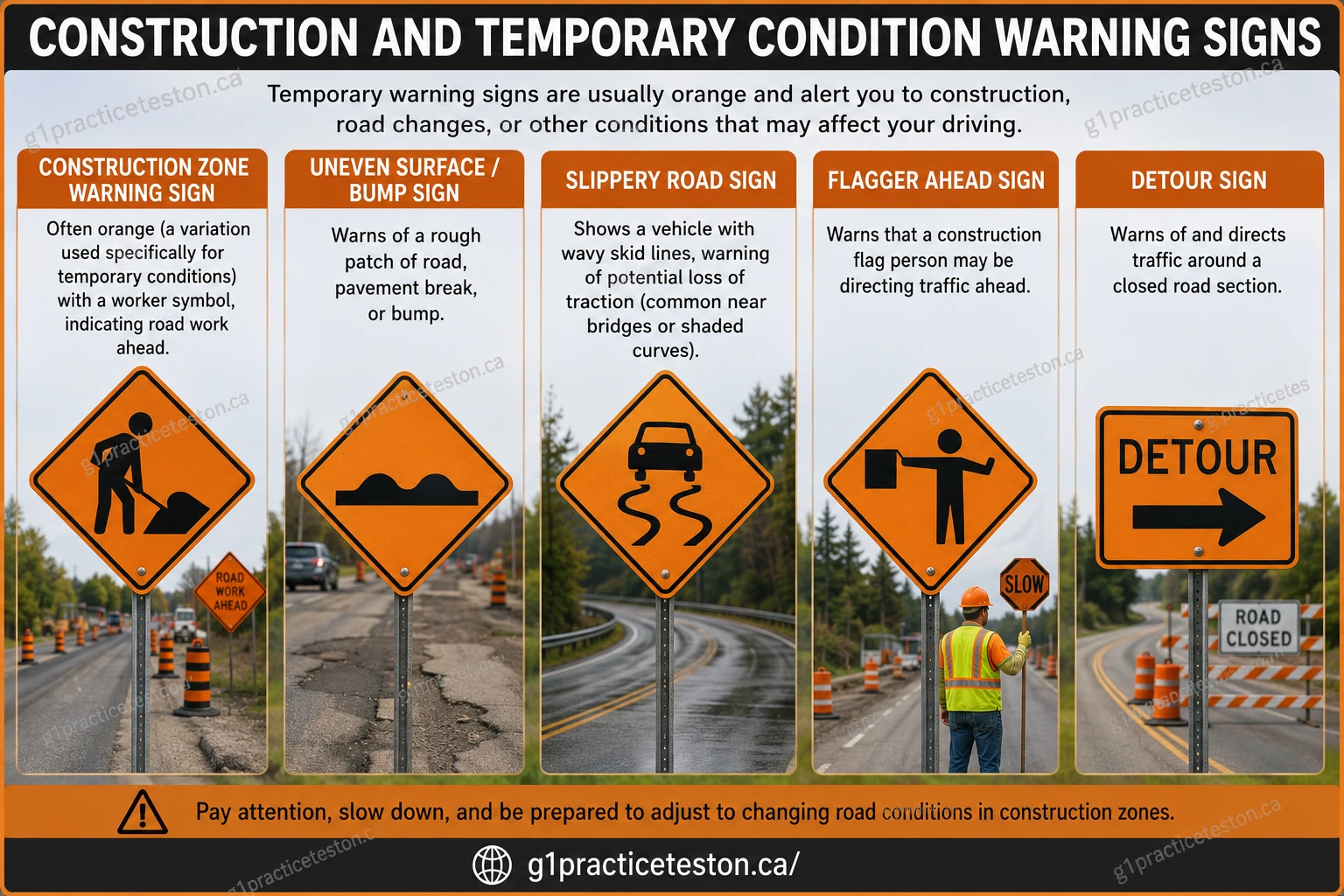
This orange diamond-shaped sign shows a car with a driver on the left. On the right, black objects of various sizes and shapes are emerging from the area around the car’s wheels, connected to the wheels by black lines. What does this sign mean?
- Wet roads
- Slippery when wet
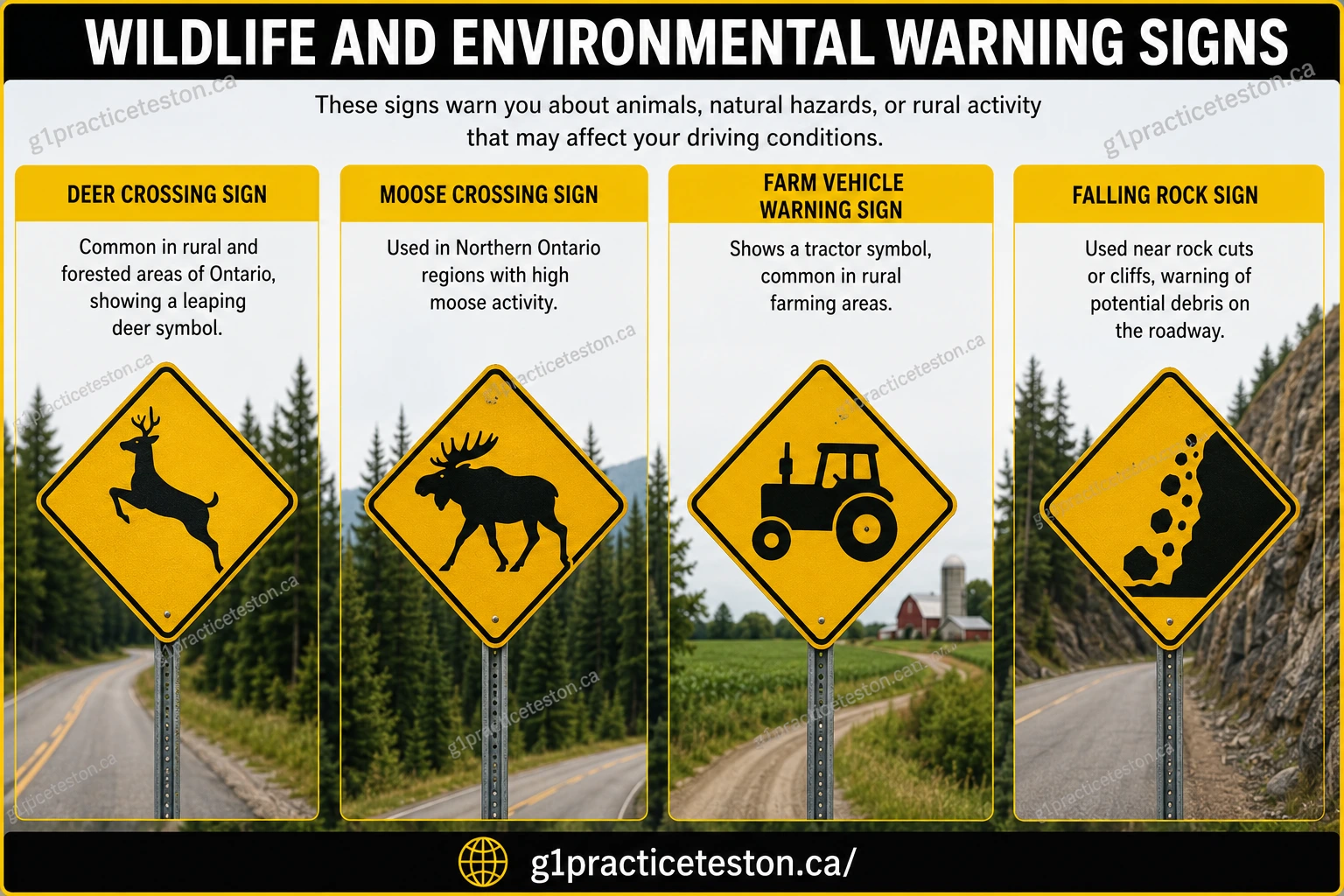
- Falling rocks
- Flying stones
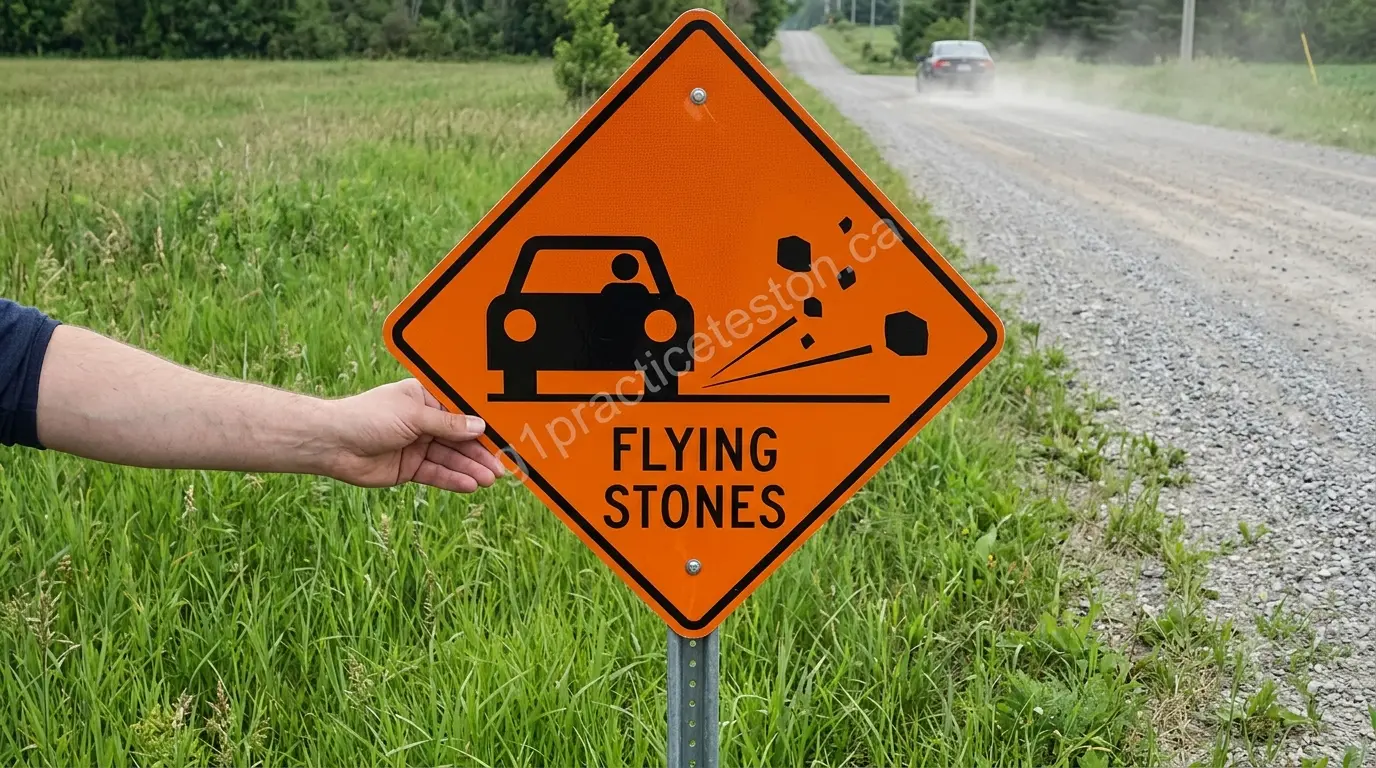
Correct Answer: D) Flying Stones
This sign warns that loose stones or gravel may be thrown up by passing vehicles’ tires, which is different from a Falling Rocks sign (which warns of rock debris falling from a cliff or rock cut onto the roadway, not being kicked up by tires).
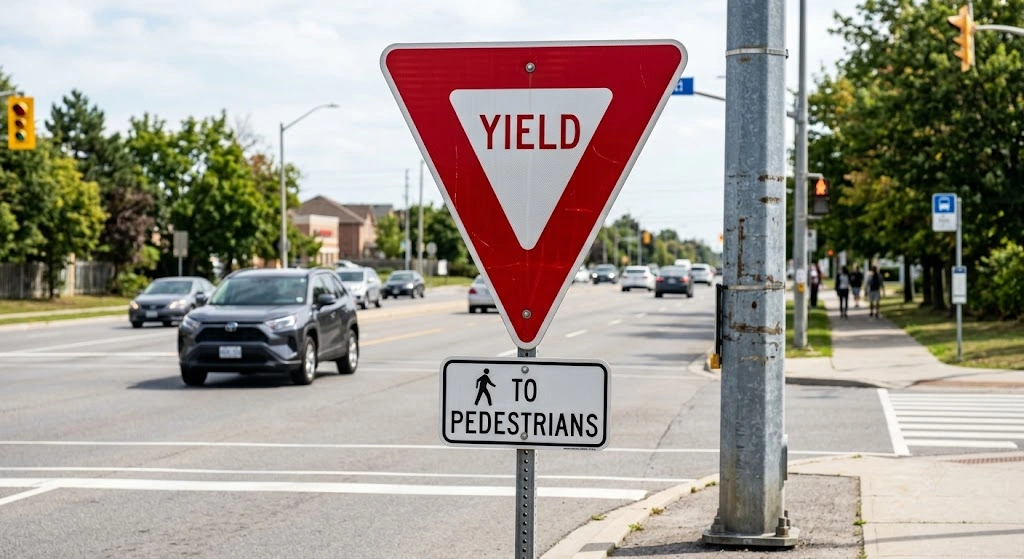
What shape is a Yield sign in Ontario?
- Octagon
- Red and white inverted triangle
- Yellow diamond
- Circle
Correct Answer: B) Red and white inverted triangle
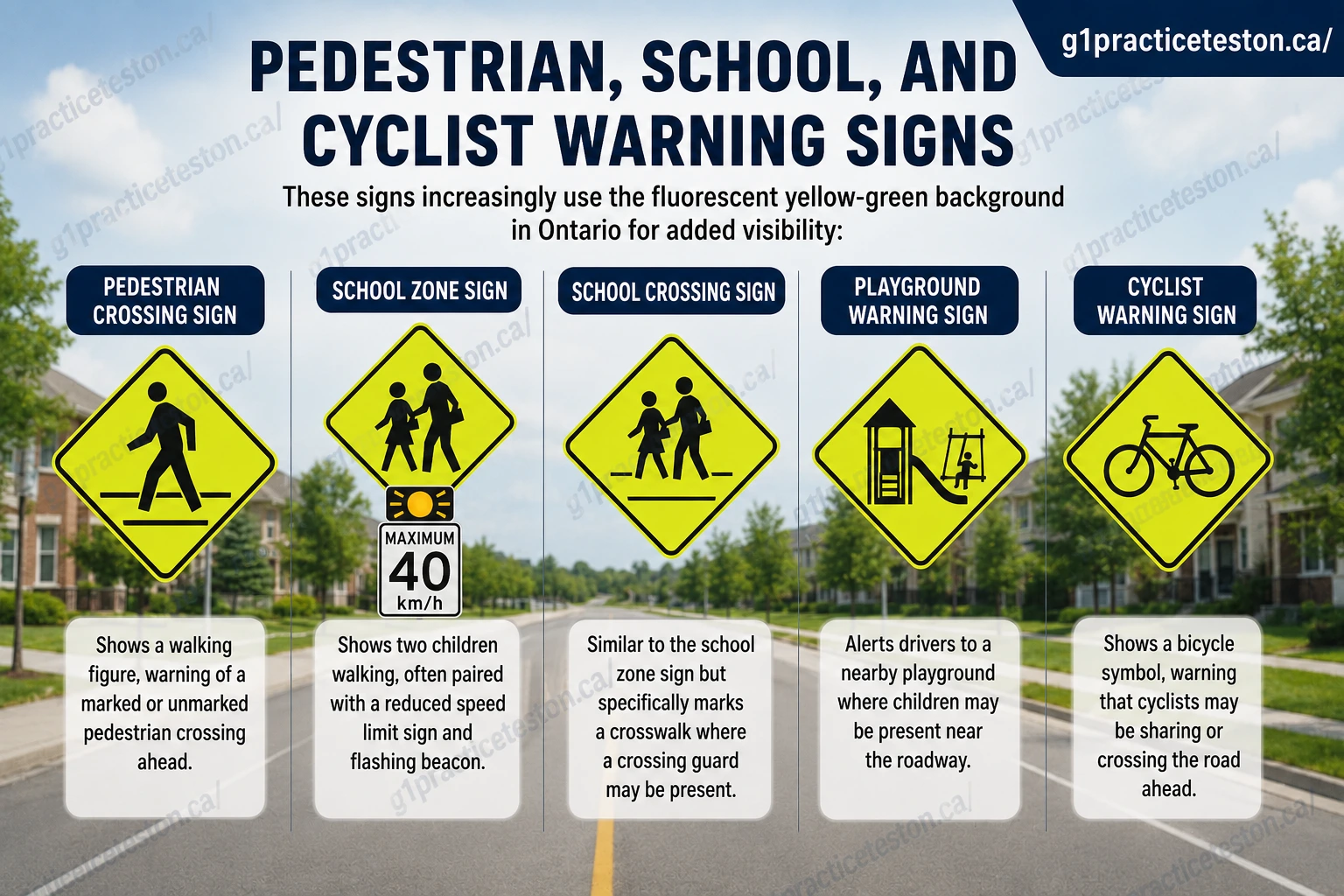
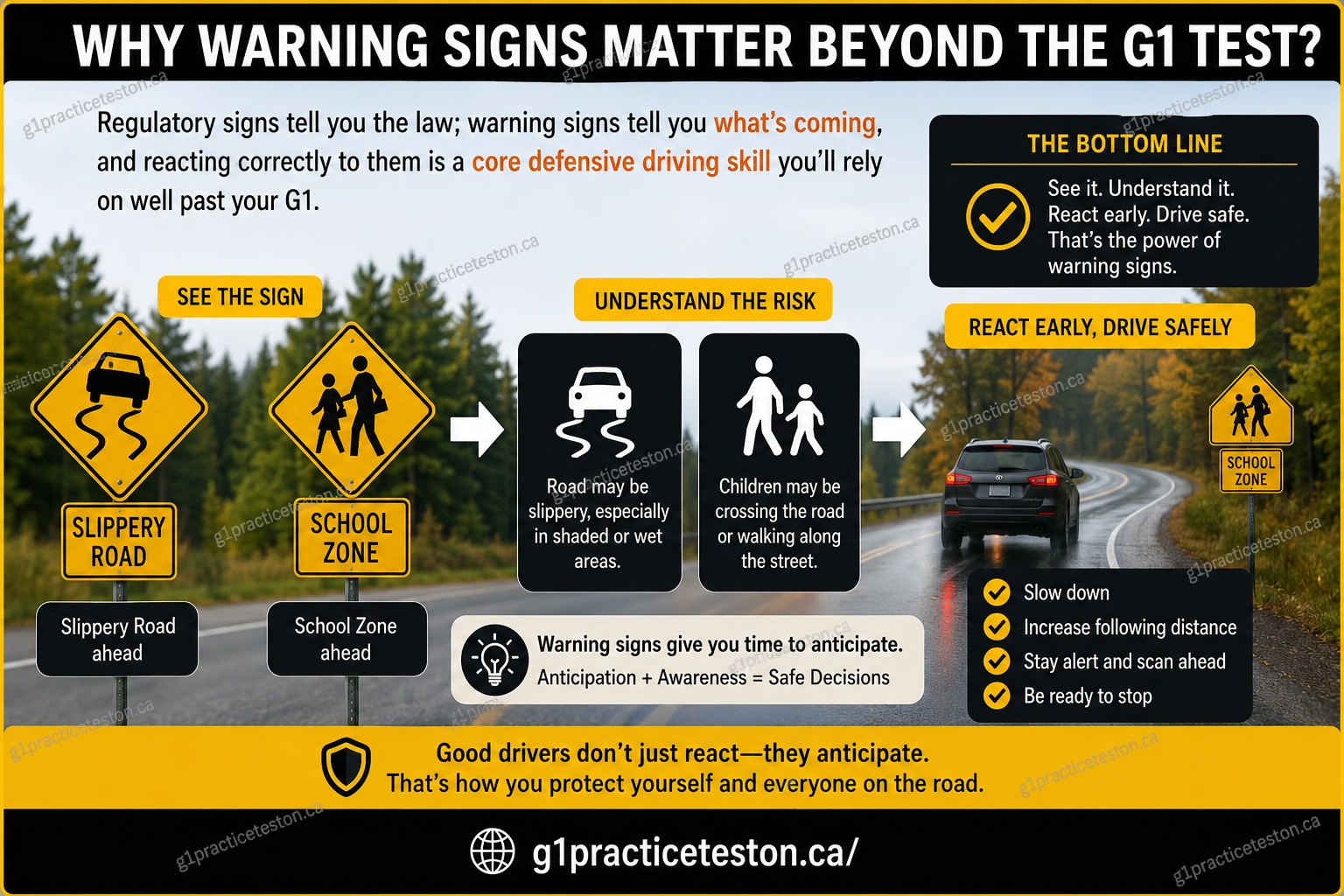
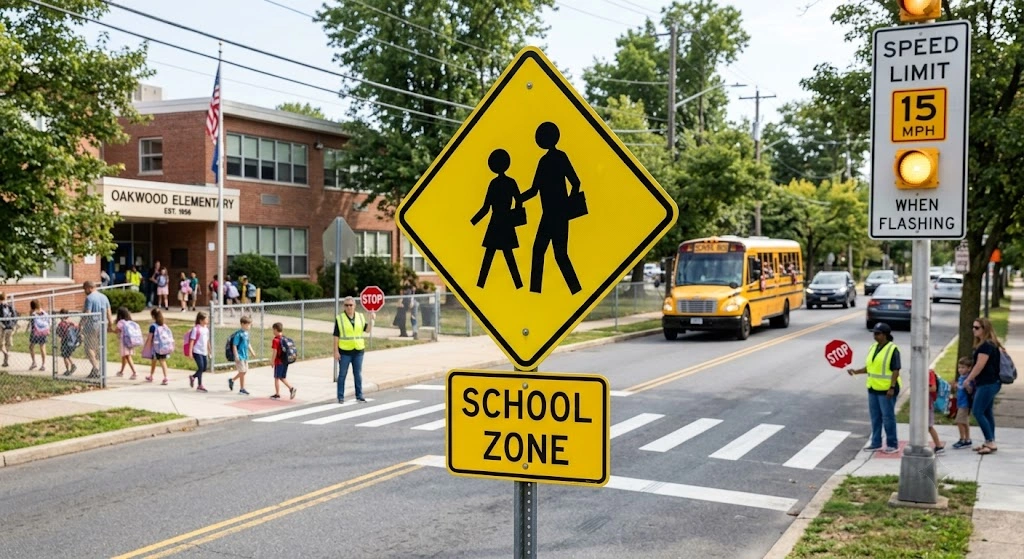
A yellow diamond sign showing two children walking, often paired with a reduced speed limit, indicates:
- A playground
- A school zone
- A pedestrian crossing
- A school crossing
Correct Answer: B) A school zone
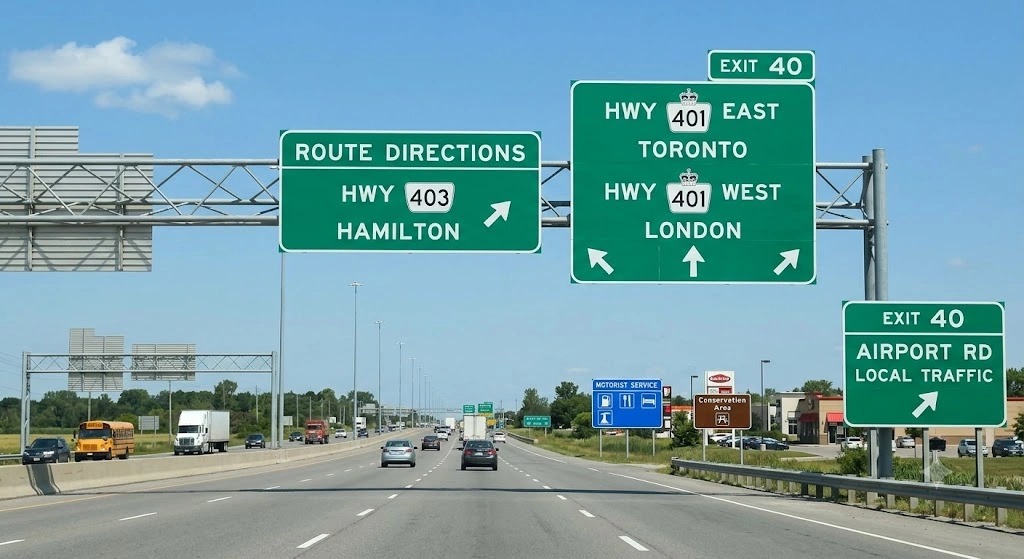
What colour are Ontario highway guide signs showing exits and route directions?
- Blue
- Brown
- Green
- Yellow
Correct Answer: C) Green
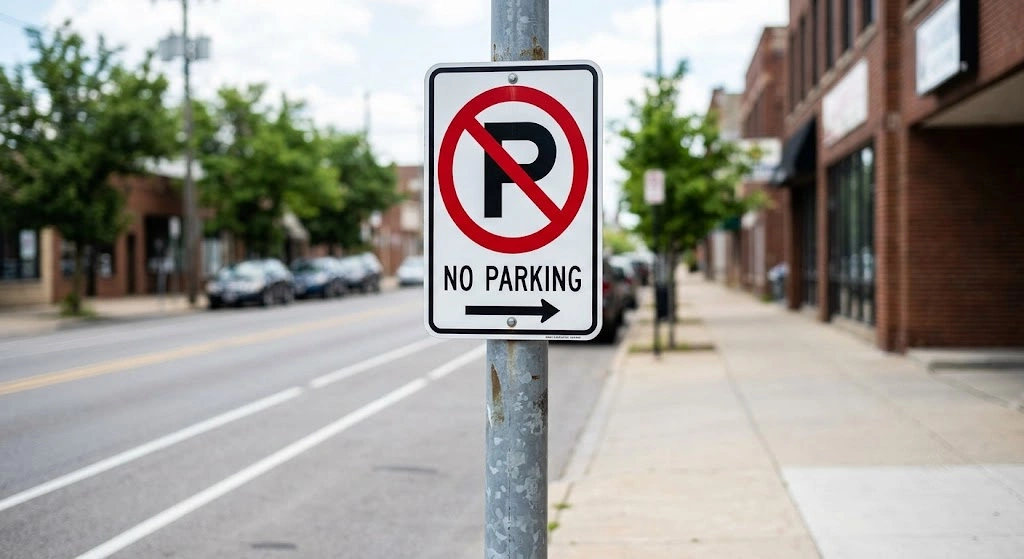
A red circle with a “P” and a diagonal slash means:
- Paid parking only
- No Parking
- No Stopping
- Permit parking
Correct Answer: B) No Parking
For the complete question banks behind each category, see our full
Quick Answers to Common G1 Test Questions
How many road sign questions are on the G1 test?
The G1 test includes a mix of rules-of-the-road and road sign questions across its two sections. Road sign questions typically focus on recognizing regulatory, warning, and information/guide signs by shape, colour, and symbol.
Is there a time limit for the G1 knowledge test?
Yes, the test is timed, though most people finish well within the allotted time if they’ve studied the sign categories and rules of the road in advance. Exact timing can vary slightly by DriveTest location.
How many mistakes are allowed on the G1 test?
You need a minimum passing score on both the rules-of-the-road section and the road signs section to pass. Missing too many questions in either section means you’ll need to retake that section.
What documents do I need to bring to my G1 test?
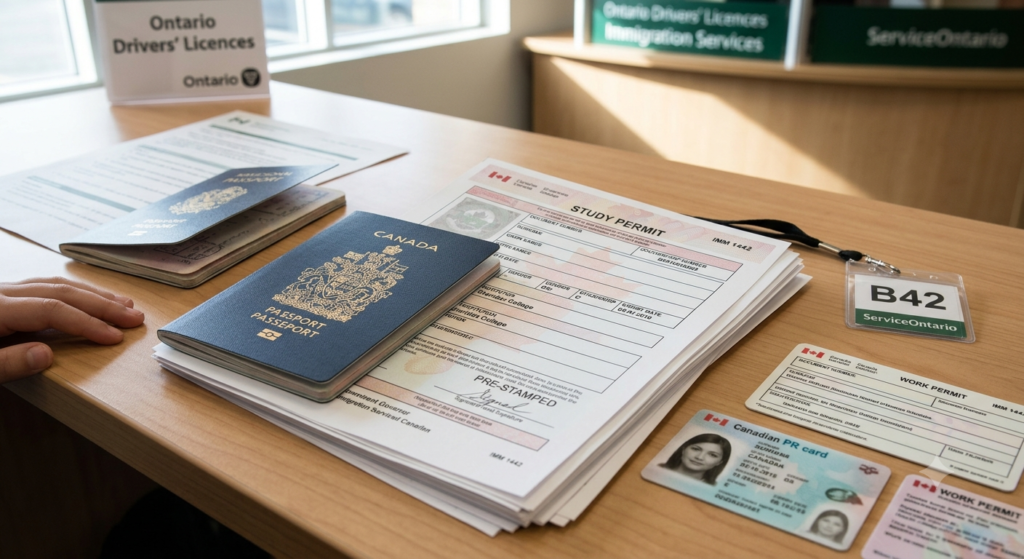
You’ll generally need acceptable identification and, in some cases, additional documents depending on your immigration or residency status. ID requirements can vary and are strictly enforced by DriveTest centres. It’s worth confirming the latest accepted document list directly with DriveTest or the Ontario Ministry of Transportation before your appointment.
Are demerit points tested on the G1 knowledge test?
Demerit points aren’t usually a heavily tested topic on the G1 itself, but understanding the concept that traffic violations add points to your record and can lead to licence suspension. It is a part of general rules-of-the-road knowledge covered in the handbook.

Study Strategy for the Road Signs Section
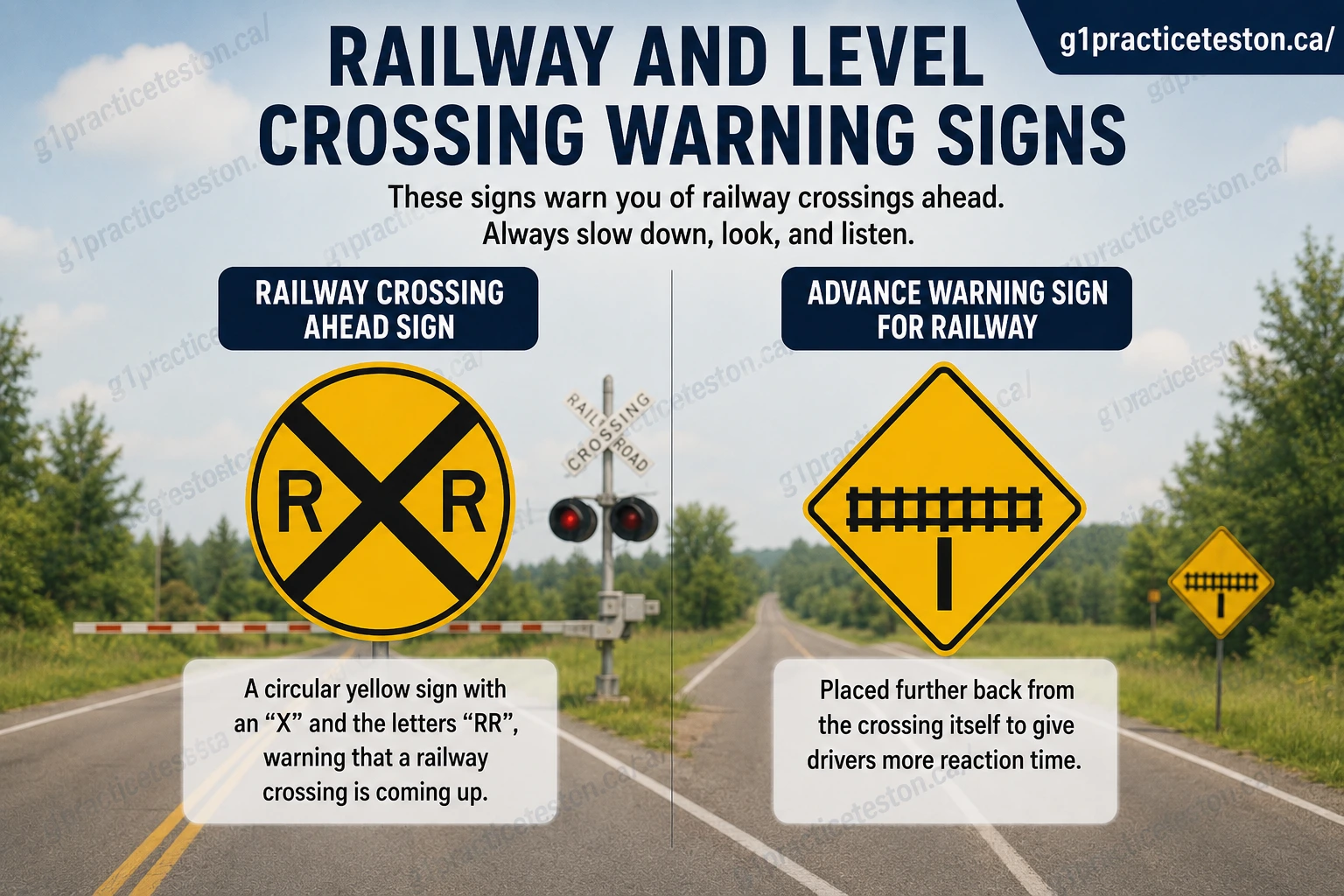
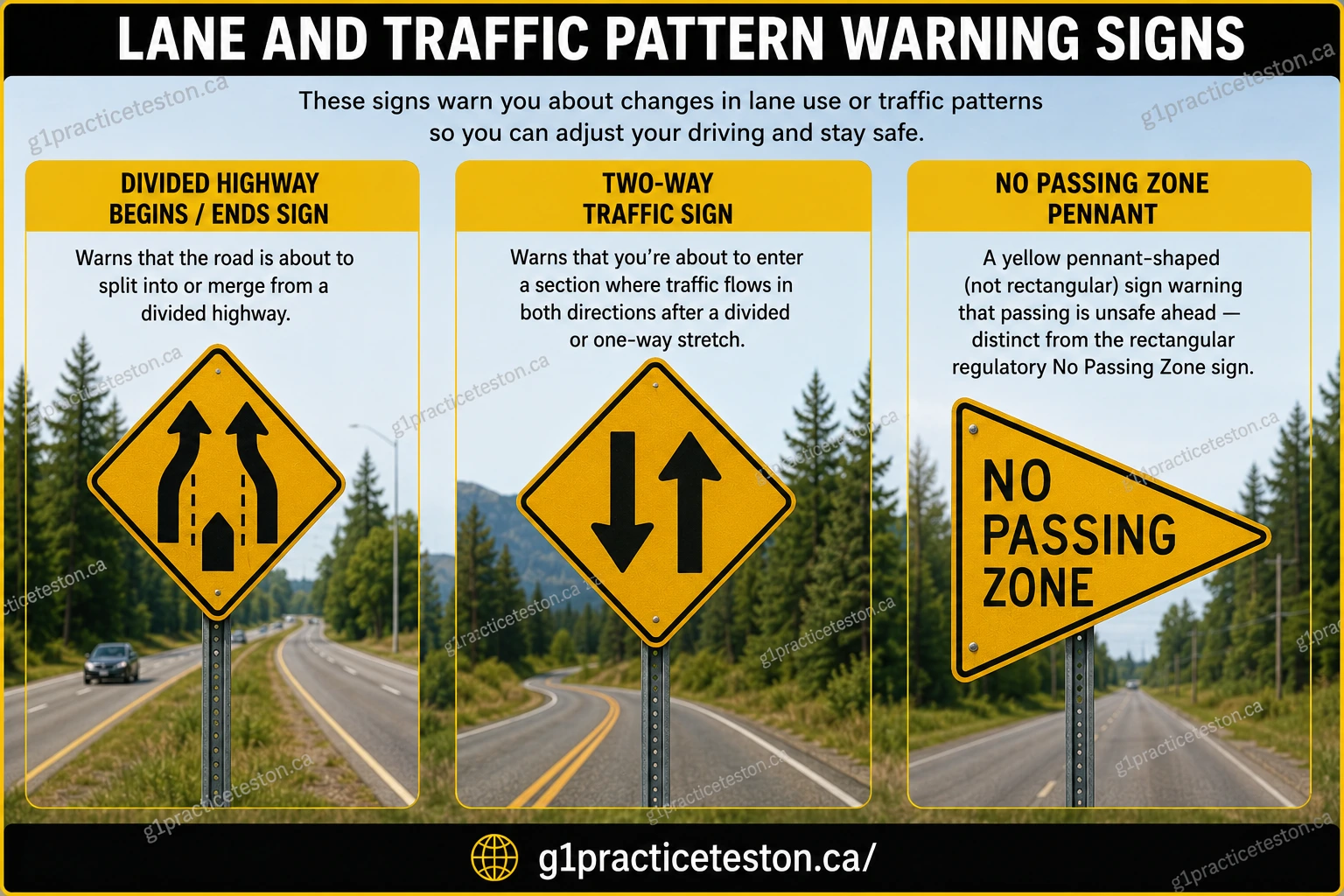
- Learn by category, not in isolation. Group signs by regulatory, warning, and information; the colour and shape tell you the category before you even read the sign.
- Focus on commonly confused pairs. No Parking vs. No Stopping, School Zone vs. School Crossing, Falling Rocks vs. Flying Stones. These recurring point-losers show up again and again in real test experiences.
- Practice with images, not just text. The real exam shows you the sign. Test yourself the same way rather than just reading descriptions.
- Take full-length practice quizzes. Work through our complete Regulatory Signs Quiz and Warning Signs Quiz to simulate real exam conditions.
Conclusion
Road signs are one of the most learnable parts of the entire G1 test. There’s no ambiguity, no judgment calls, just consistent shapes, colours, and meanings straight from the MTO handbook. Working through mixed practice questions like the ones above, alongside the full category quizzes in this cluster, is the fastest way to walk into your test confident instead of guessing.