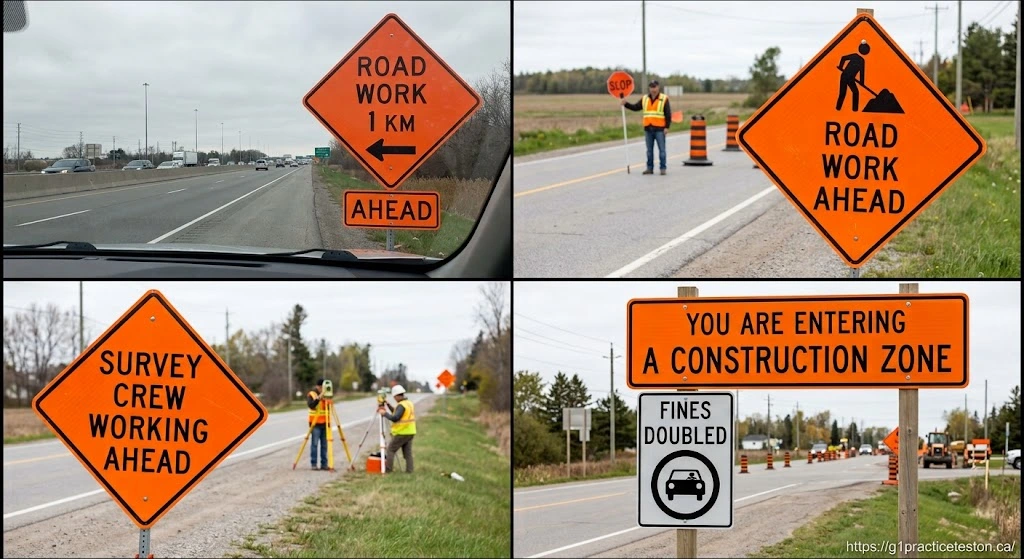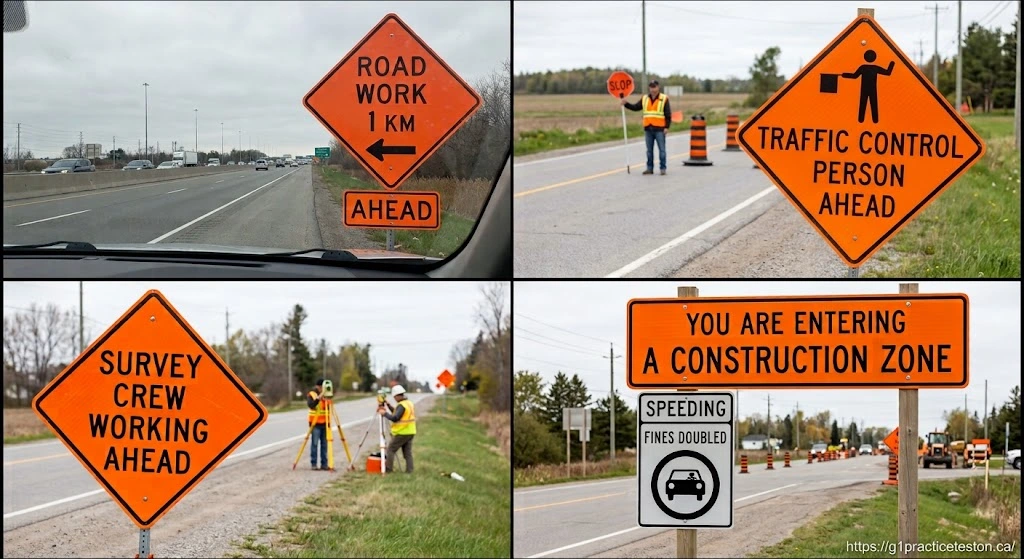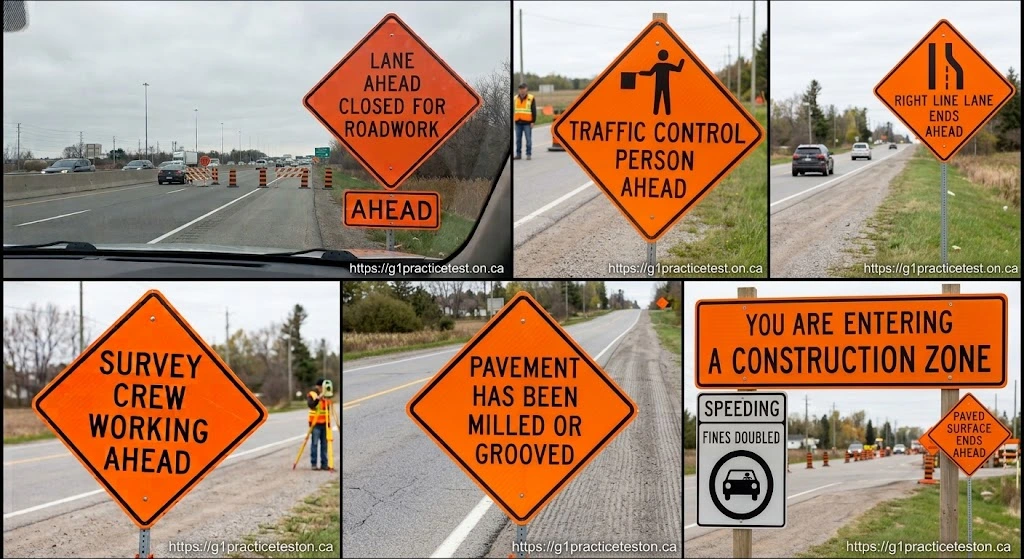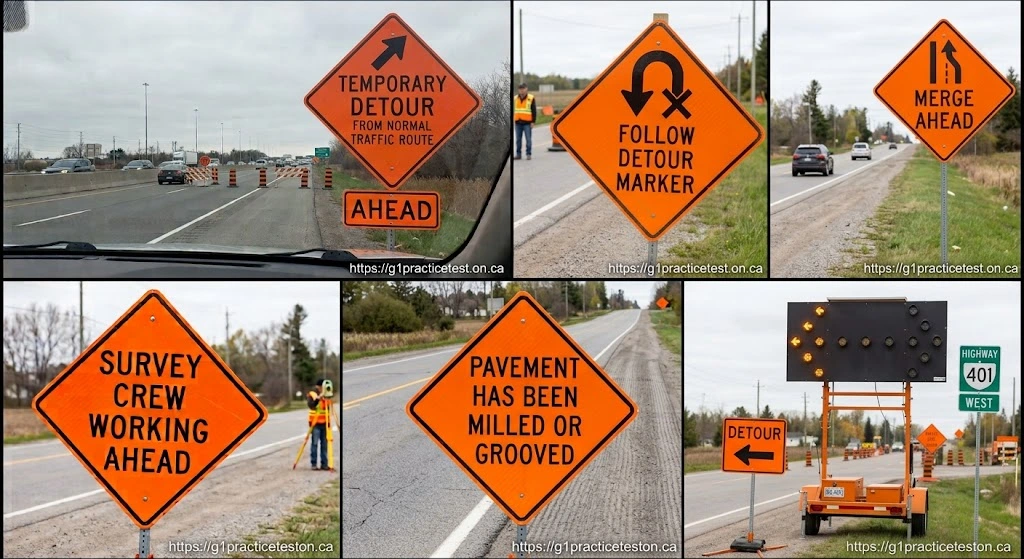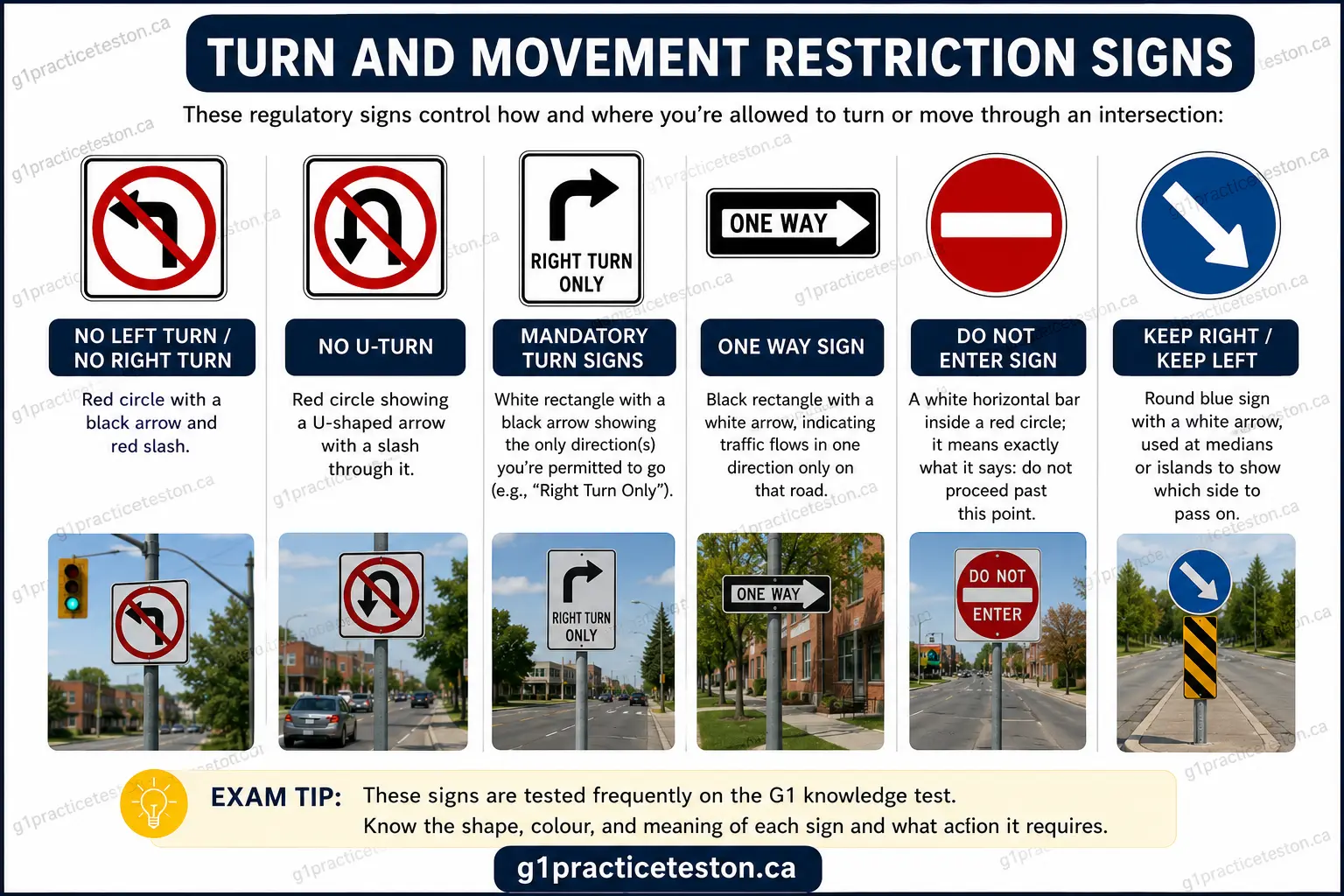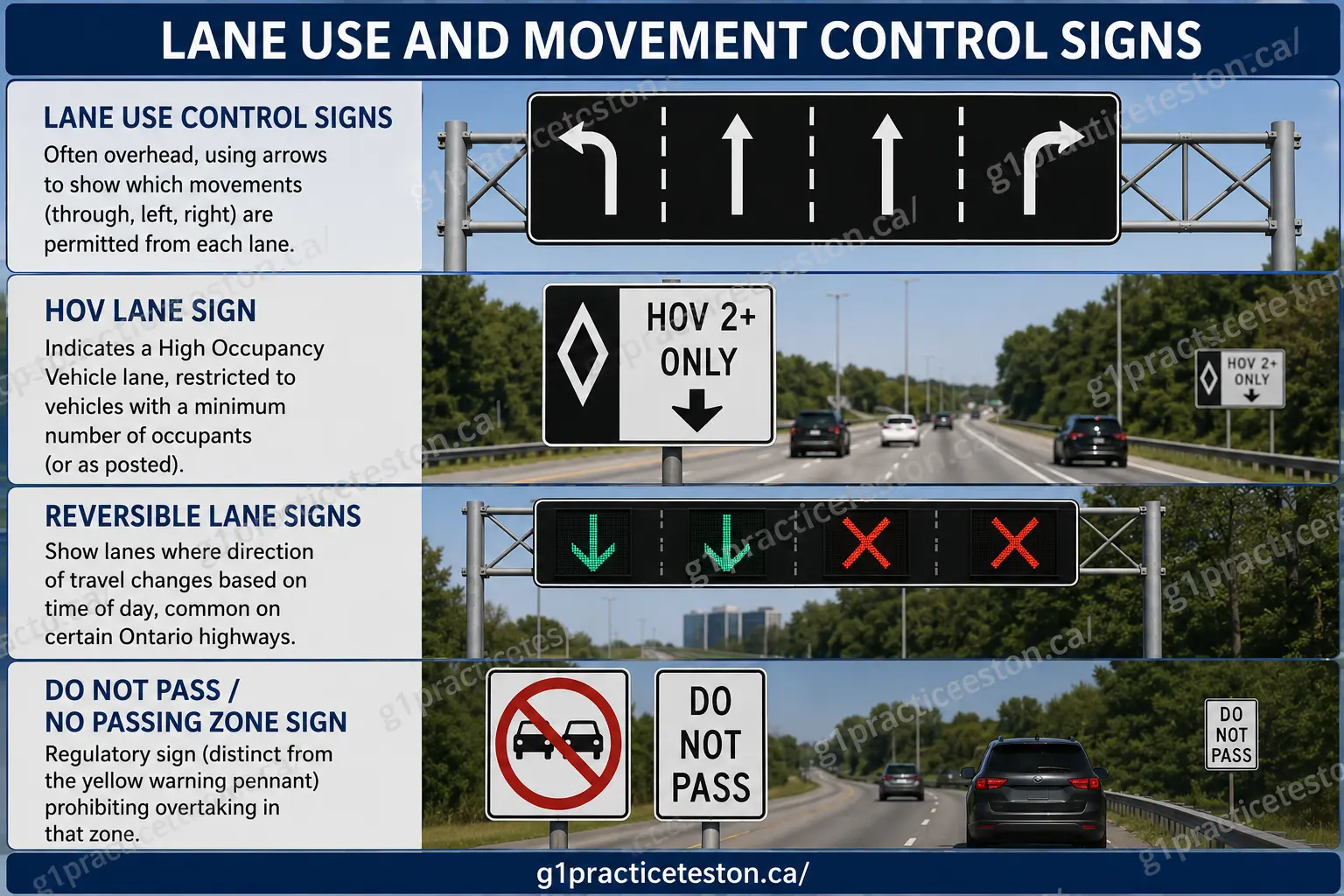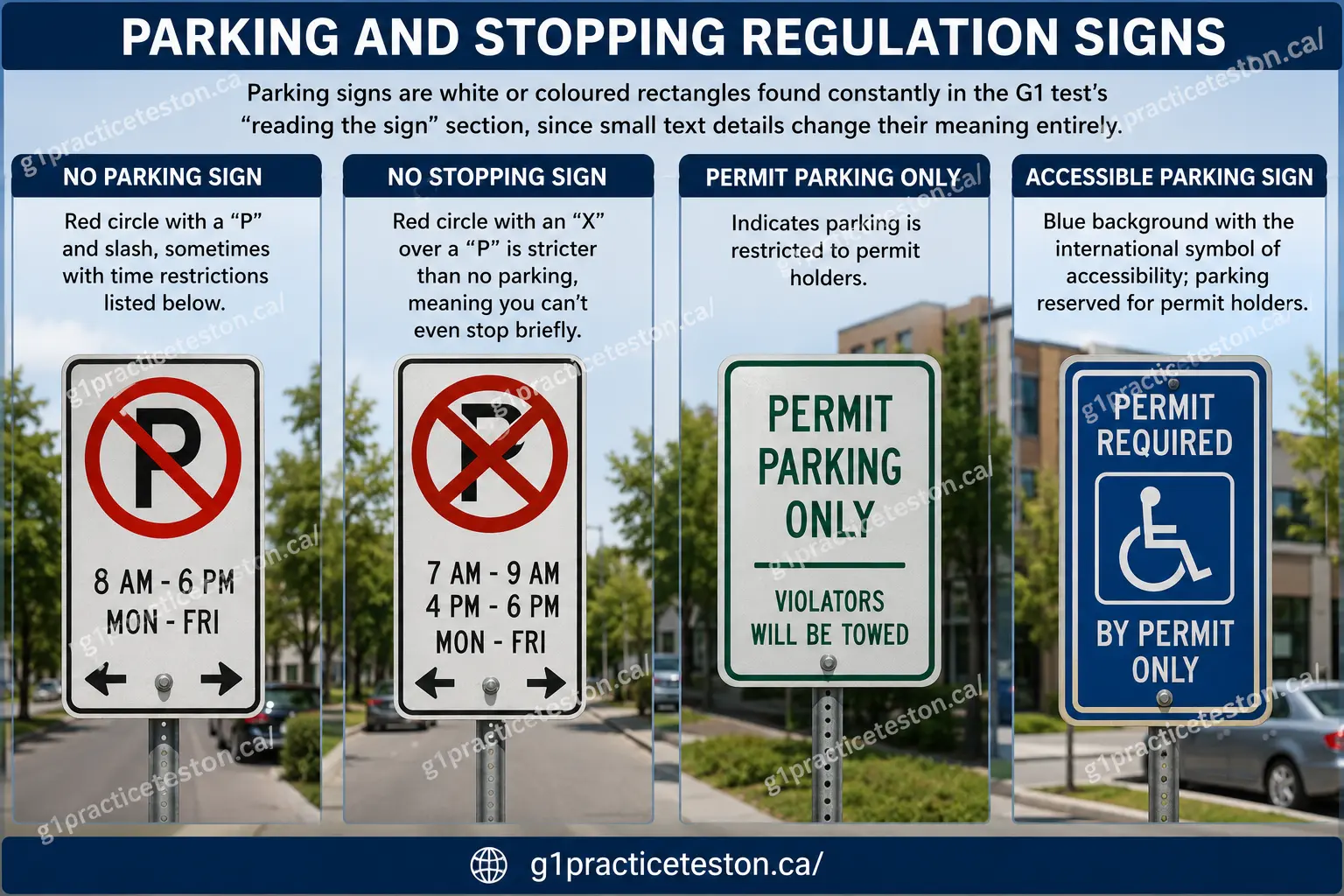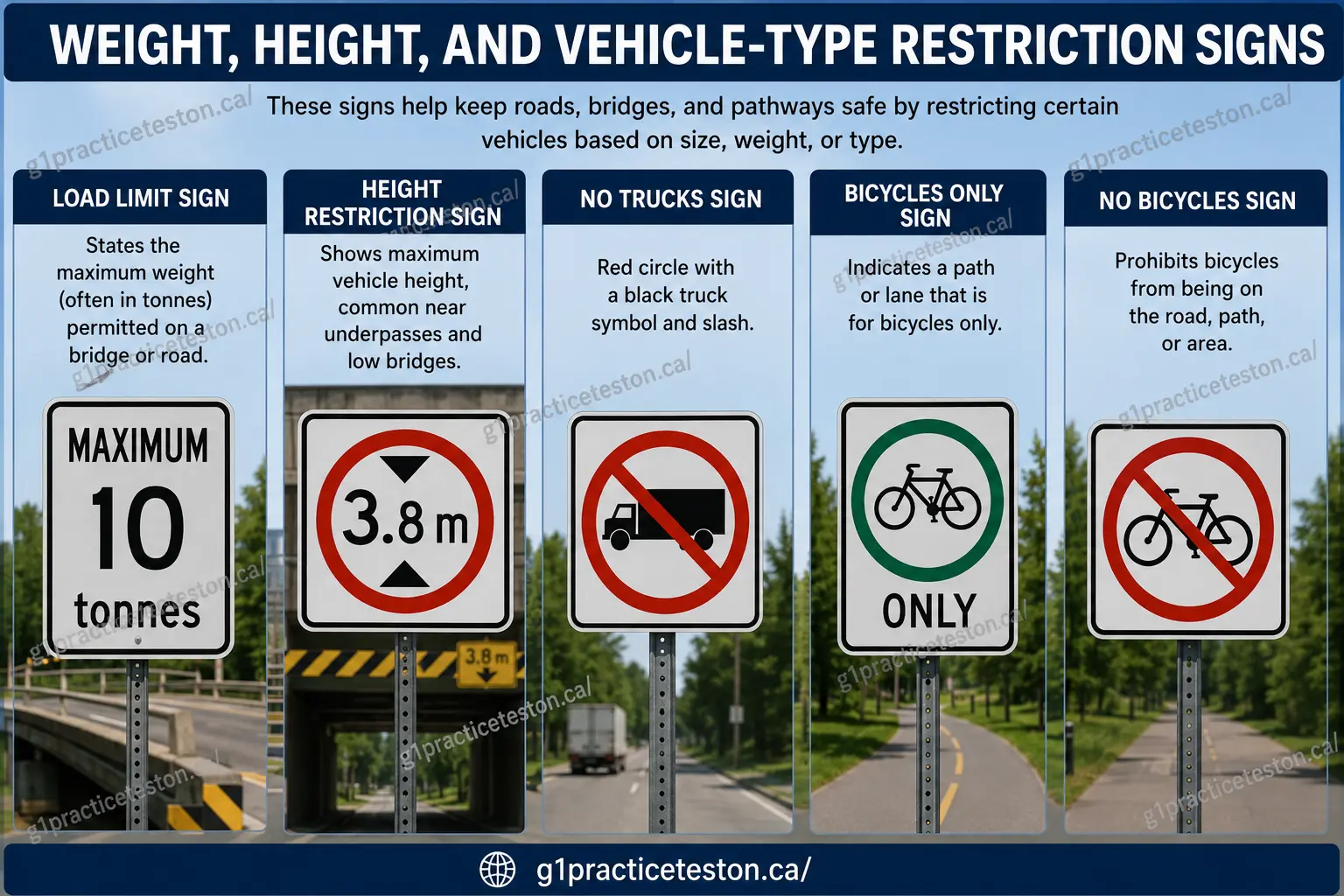
By the time most people get to the information and guide signs section while studying for their G1, they usually relax a little and honestly, that’s fair. These signs aren’t testing your reflexes for a hazard or your knowledge of a legal rule.
They’re testing whether you can quickly find your way, locate services, or understand where you are heading to your destination. But the G1 test still includes a handful of questions from this category, and it’s often where people lose easy points simply because they never studied it seriously.
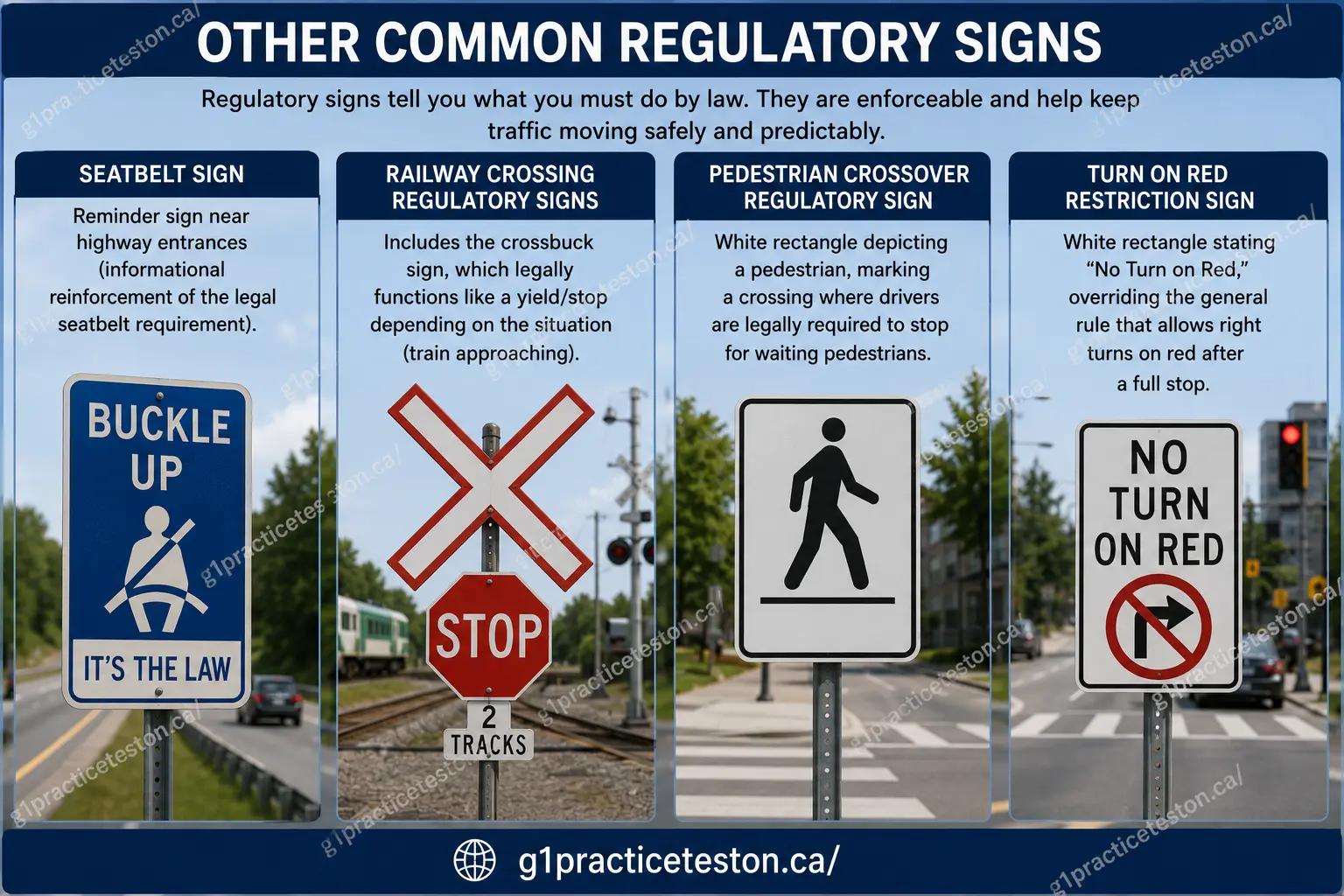
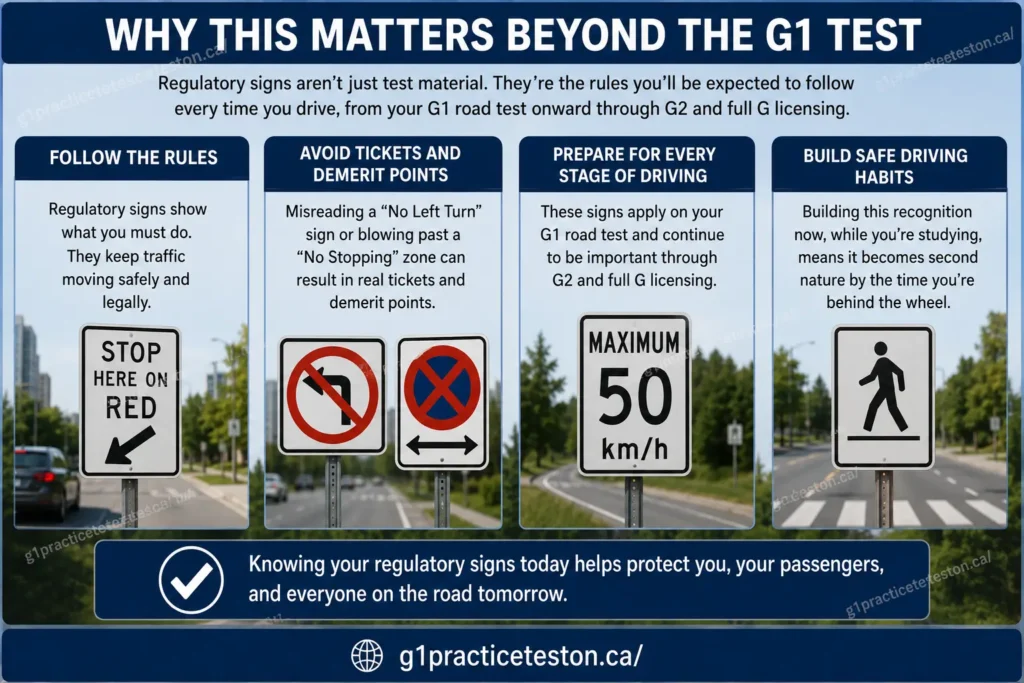
This guide walks through every major type of information and guide sign you’ll see across Ontario, following the same structure as our other sign guides. If you haven’t already, check out our Ontario Road Signs — Complete Guide, our Regulatory Road Signs guide, and our Warning Signs guide to round out all three categories tested on the G1.
What Makes a Sign an “Information” or “Guide” Sign?
Unlike regulatory signs or warning signs, information and guide signs exist purely to help you navigate showing directions, distances, services, and points of interest. They’re not asking you to do anything specific; they’re simply telling you what’s around you or how to get somewhere.
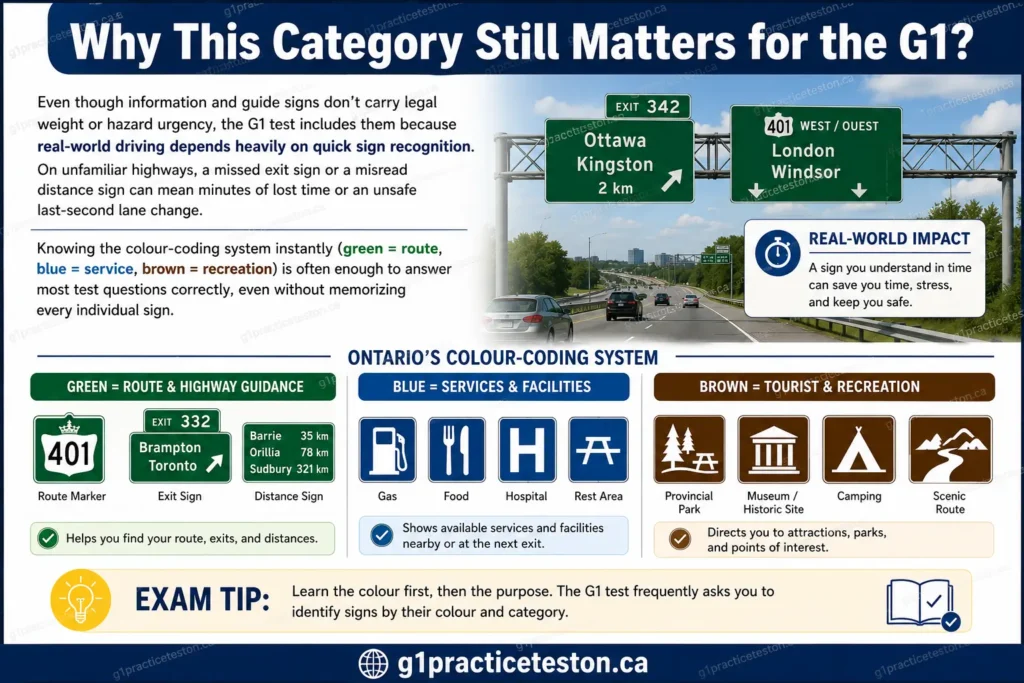
In Ontario, these signs generally follow a consistent colour code:
- Green — Highway and route guidance (directions, exits, distances)
- Blue — Services (gas, food, lodging, hospitals, rest areas)
- Brown — Tourist attractions, parks, and recreational sites
- White or black text on a light background — General information notices
Recognizing the colour first tells you the category of information before you even read the text.

Highway and Route Guidance Signs
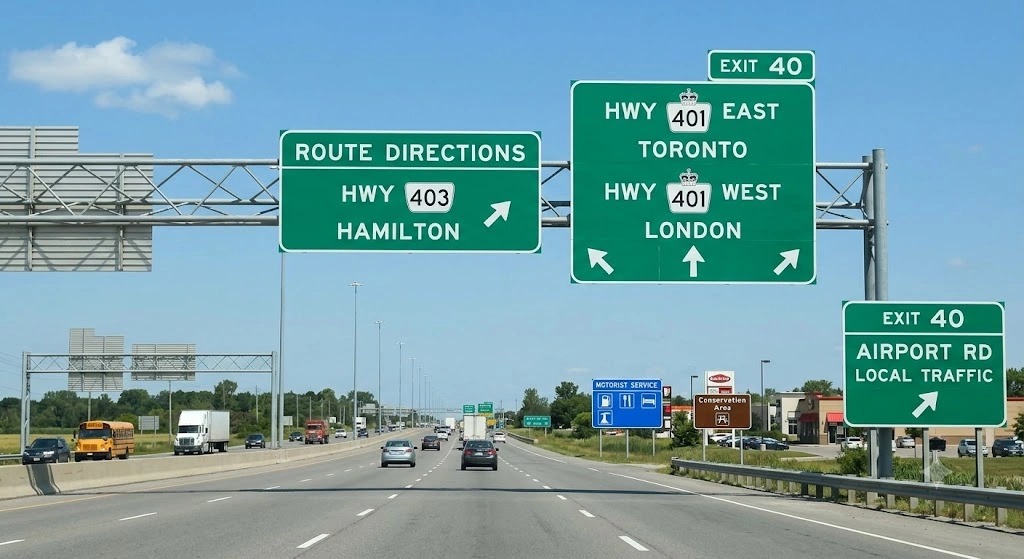
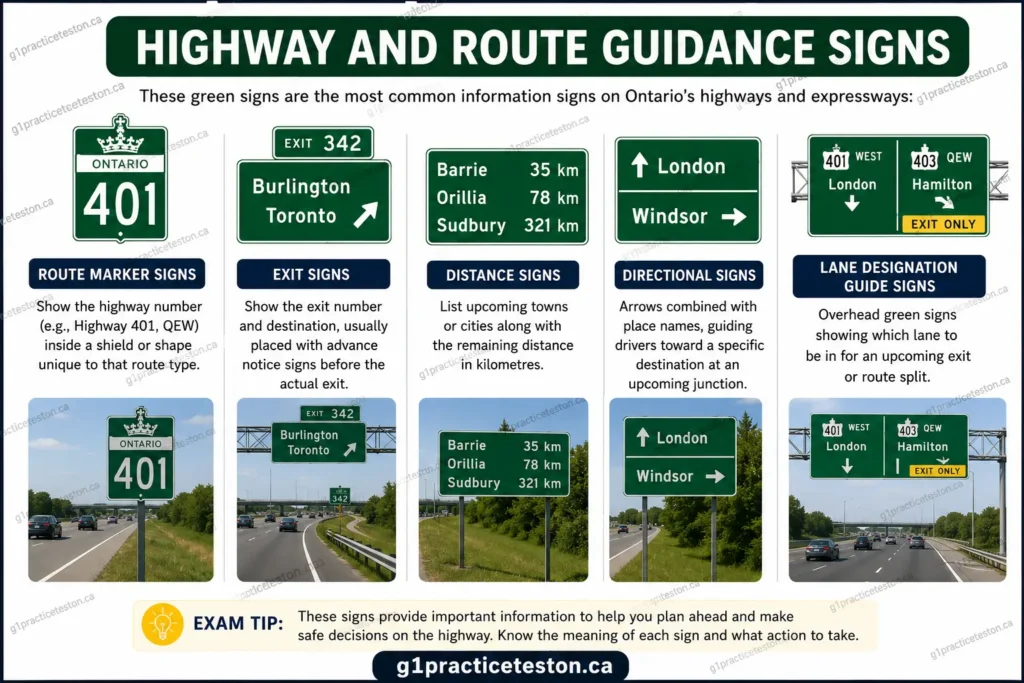
These green signs are the most common information signs on Ontario’s highways and expressways:
- Route Marker Signs — Show the highway number (e.g., Highway 401, QEW) inside a shield or shape unique to that route type.
- Exit Signs — Show the exit number and destination, usually placed with advance notice signs before the actual exit.
- Distance Signs — List upcoming towns or cities along with the remaining distance in kilometres.
- Directional Signs — Arrows combined with place names, guiding drivers toward a specific destination at an upcoming junction.
- Lane Designation Guide Signs — Overhead green signs showing which lane to be in for an upcoming exit or route split.
Service Signs
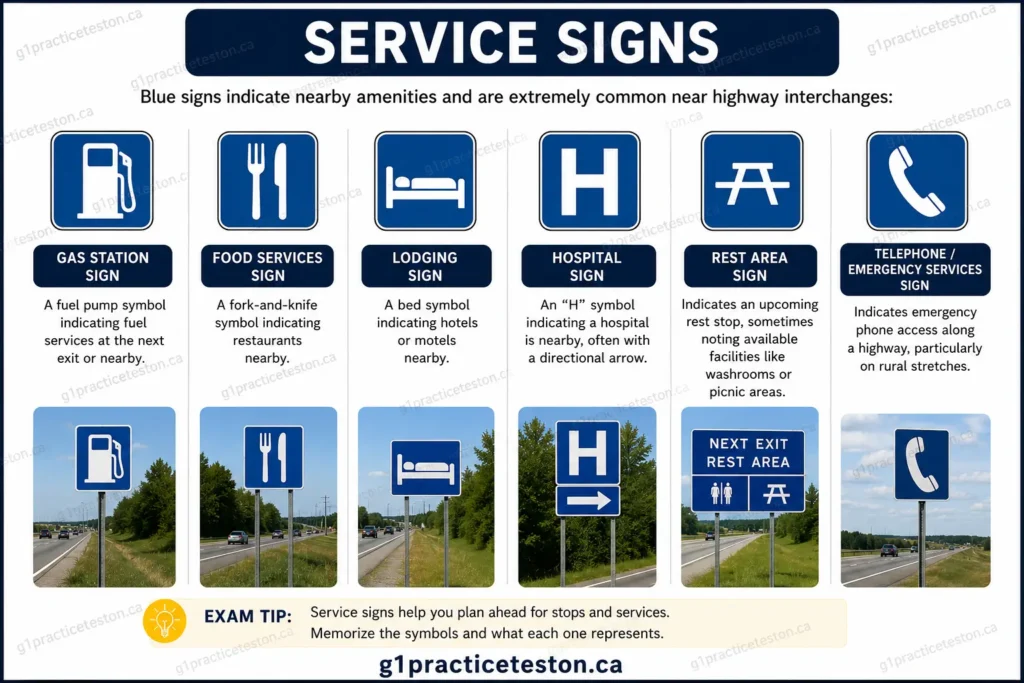
Blue signs indicate nearby amenities and are extremely common near highway interchanges:
- Gas Station Sign — A fuel pump symbol indicating fuel services at the next exit or nearby.
- Food Services Sign — A fork-and-knife symbol indicating restaurants nearby.
- Lodging Sign — A bed symbol indicating hotels or motels nearby.
- Hospital Sign — An “H” symbol indicating a hospital is nearby, often with a directional arrow.
- Rest Area Sign — Indicates an upcoming rest stop, sometimes noting available facilities like washrooms or picnic areas.
- Telephone/Emergency Services Sign — Indicates emergency phone access along a highway, particularly on rural stretches.
Tourist and Recreational Guide Signs
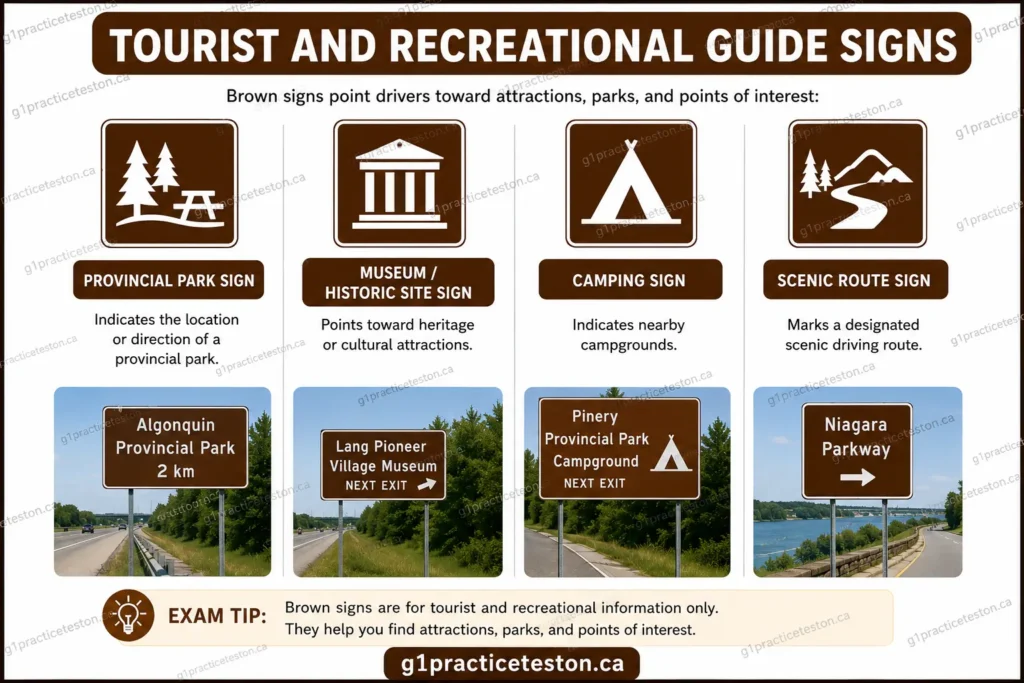
Brown signs point drivers toward attractions, parks, and points of interest:
- Provincial Park Sign — Indicates the location or direction of a provincial park.
- Museum/Historic Site Sign — Points toward heritage or cultural attractions.
- Camping Sign — Indicates nearby campgrounds.
- Scenic Route Sign — Marks a designated scenic driving route.
General Information and Notice Signs
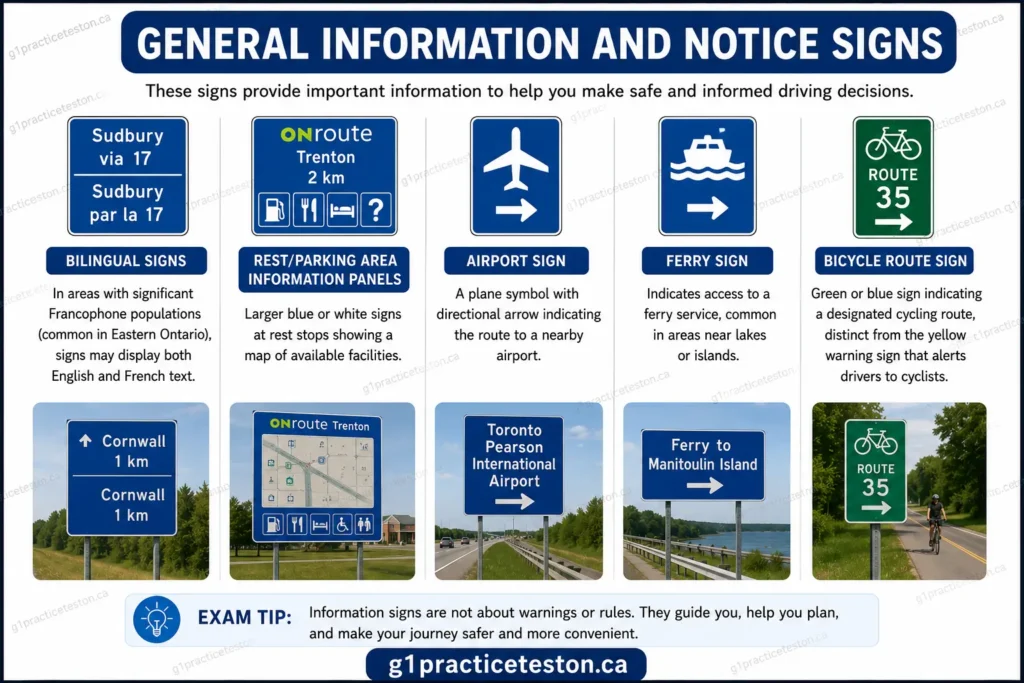
- Bilingual Signs — In areas with significant Francophone populations (common in Eastern Ontario), signs may display both English and French text.
- Rest/Parking Area Information Panels — Larger blue or white signs at rest stops showing a map of available facilities.
- Airport Sign — A plane symbol with directional arrow indicating the route to a nearby airport.
- Ferry Sign — Indicates access to a ferry service, common in areas near lakes or islands.
- Bicycle Route Sign — Green or blue sign indicating a designated cycling route, distinct from the yellow warning sign that alerts drivers to cyclists.
Why This Category Still Matters for the G1?
Even though information and guide signs don’t carry legal weight or hazard urgency, the G1 test includes them because real-world driving depends heavily on quick sign recognition especially on unfamiliar highways where a missed exit sign or misread distance sign can mean minutes of lost time or an unsafe last-second lane change. Knowing the colour-coding system instantly (green = route, blue = service, brown = recreation) is often enough to answer most test questions correctly, even without memorizing every individual sign.
Frequently Asked Questions
Conclusion
Information and guide signs round out the third and final sign category tested on your G1 exam. They’re the easiest to master once you understand the colour-coding logic behind them green for routes, blue for services, brown for recreation and they matter just as much for real-world driving as they do for the test, especially on unfamiliar highways where quick recognition saves both time and stress.
Related Posts:
- Ontario Road Signs — Complete Guide
- Regulatory Road Signs in Ontario — Full List & Meanings
- Warning Signs in Ontario — Full List & Meanings
- G1 Practice Test: Road Signs Edition (coming soon)